4v4 High-Intensity Transition Small-Sided Game
A fast-paced 4v4 small-sided game designed to improve your team's reaction time and tactical organization during attacking and defensive transitions.
Equipment Needed
1. Overview
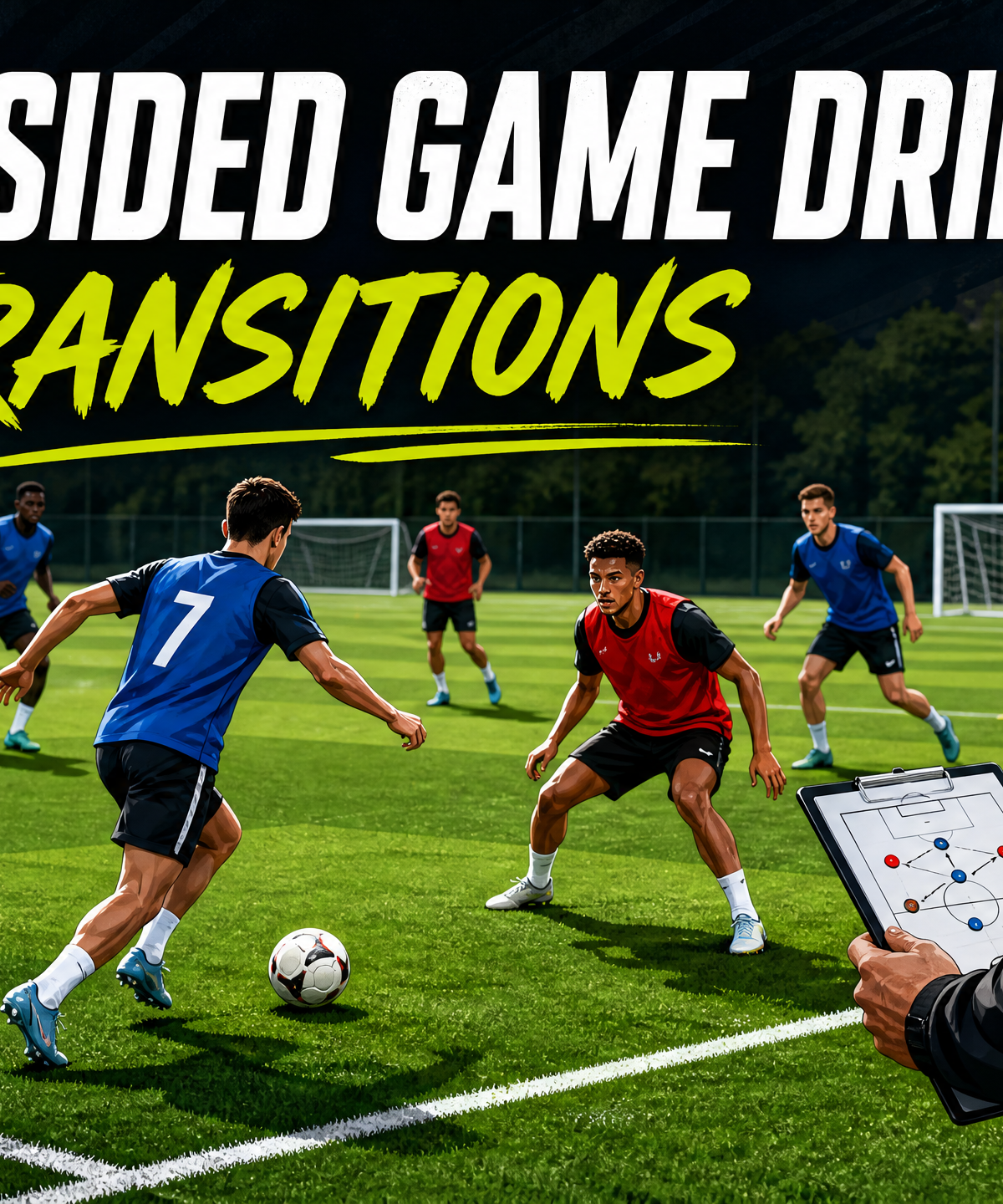
The 4v4 High-Intensity Transition Small-Sided Game (SSG) is a foundational drill for developing rapid reactions when possession changes hands. In modern football, the moments immediately following winning or losing the ball—the transition phases—are often where matches are won or lost. This drill places players in a continuous, fast-paced environment where they must instantly switch from attacking to defending, or defending to attacking.
By keeping the player numbers small (4v4) and removing goalkeepers, every player is heavily involved in both phases of play. Coaches should use this drill to improve physical conditioning, spatial awareness, and the psychological readiness required to react to turnovers without hesitation.
2. Setup
Proper setup is crucial for maintaining the intensity and flow of the drill. Ensure all equipment is ready before the players arrive.
- Pitch Dimensions: Create a rectangular playing area measuring 30 meters in length by 20 meters in width.
- Goals: Place two small goals (approximately 3 meters wide) at opposite ends of the pitch on the shorter sides. No goalkeepers are used.
- Players: Divide 8 players into two equal teams of 4 (e.g., Team A in Red, Team B in Blue).
- Equipment: Marker cones, two sets of colored bibs, two small goals, and an ample supply of footballs placed around the perimeter to ensure quick restarts.
- Starting Positions: Teams start in a 2-2 formation or a diamond shape, depending on your tactical preference.
3. Step-by-Step Instructions
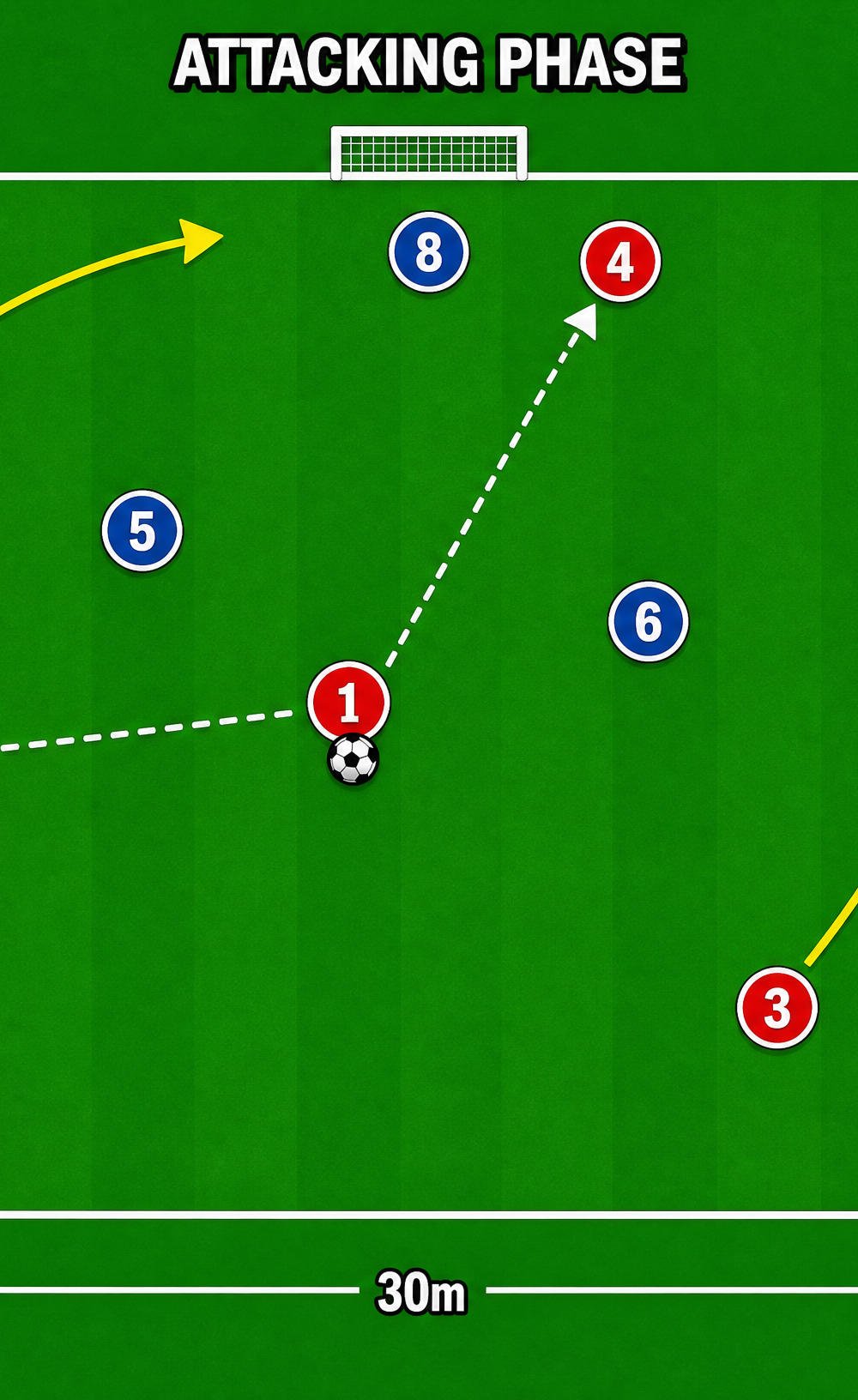
- Initiate Play: The coach starts the drill by serving a ball into the center of the pitch, or by passing to one of the teams to begin the attacking phase.
- Attacking Objective: The team in possession (Team A) attempts to score in the opponent's small goal through quick passing, movement off the ball, and exploiting space. They should look to maintain width and depth.
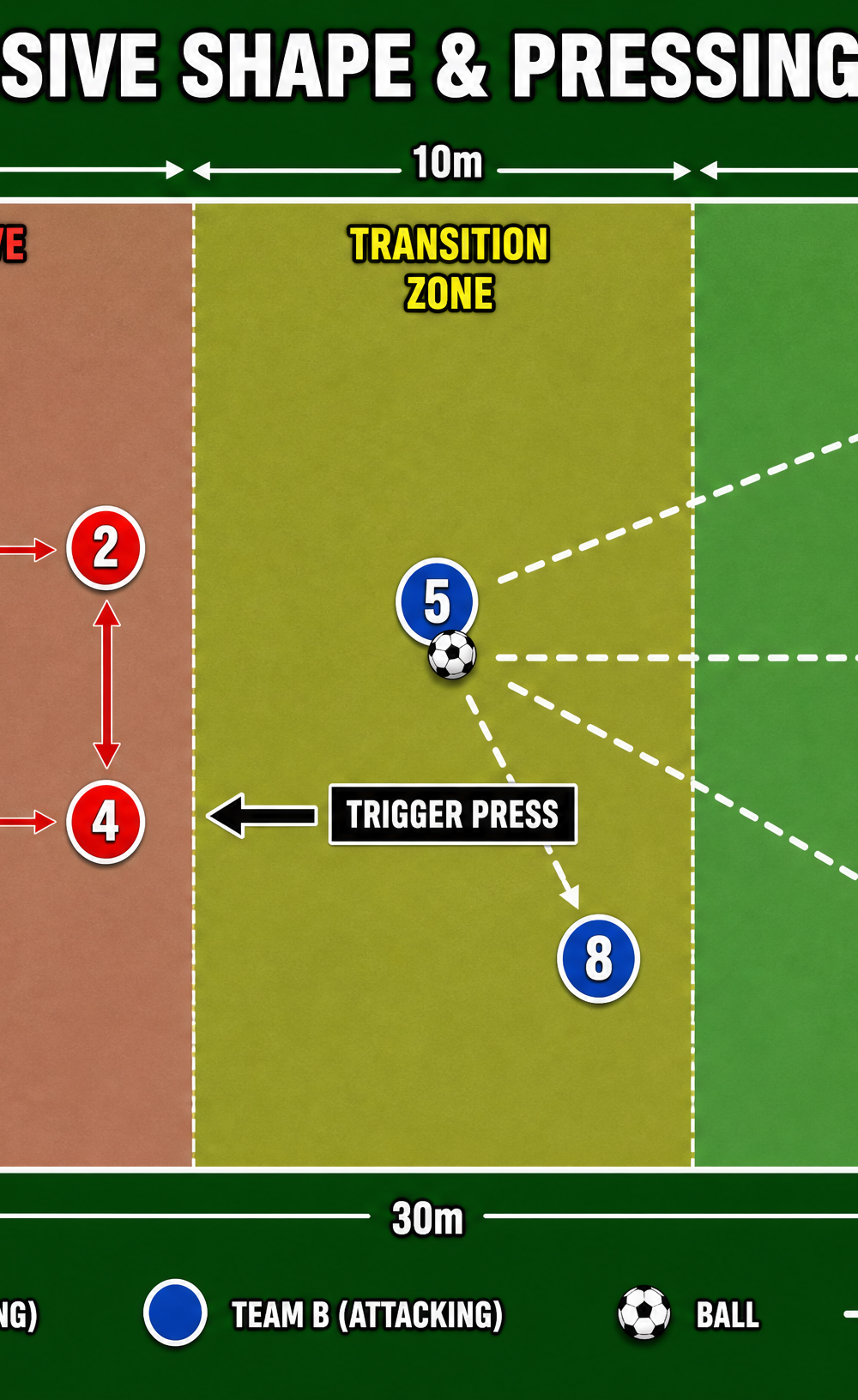
- Defending Objective: The team out of possession (Team B) must work together to press the ball carrier, close down passing lanes, and remain compact to prevent penetration.
- The Turnover (Transition): When the defending team (Team B) wins the ball—either through a tackle, interception, or if the attacking team shoots wide—the roles instantly reverse.
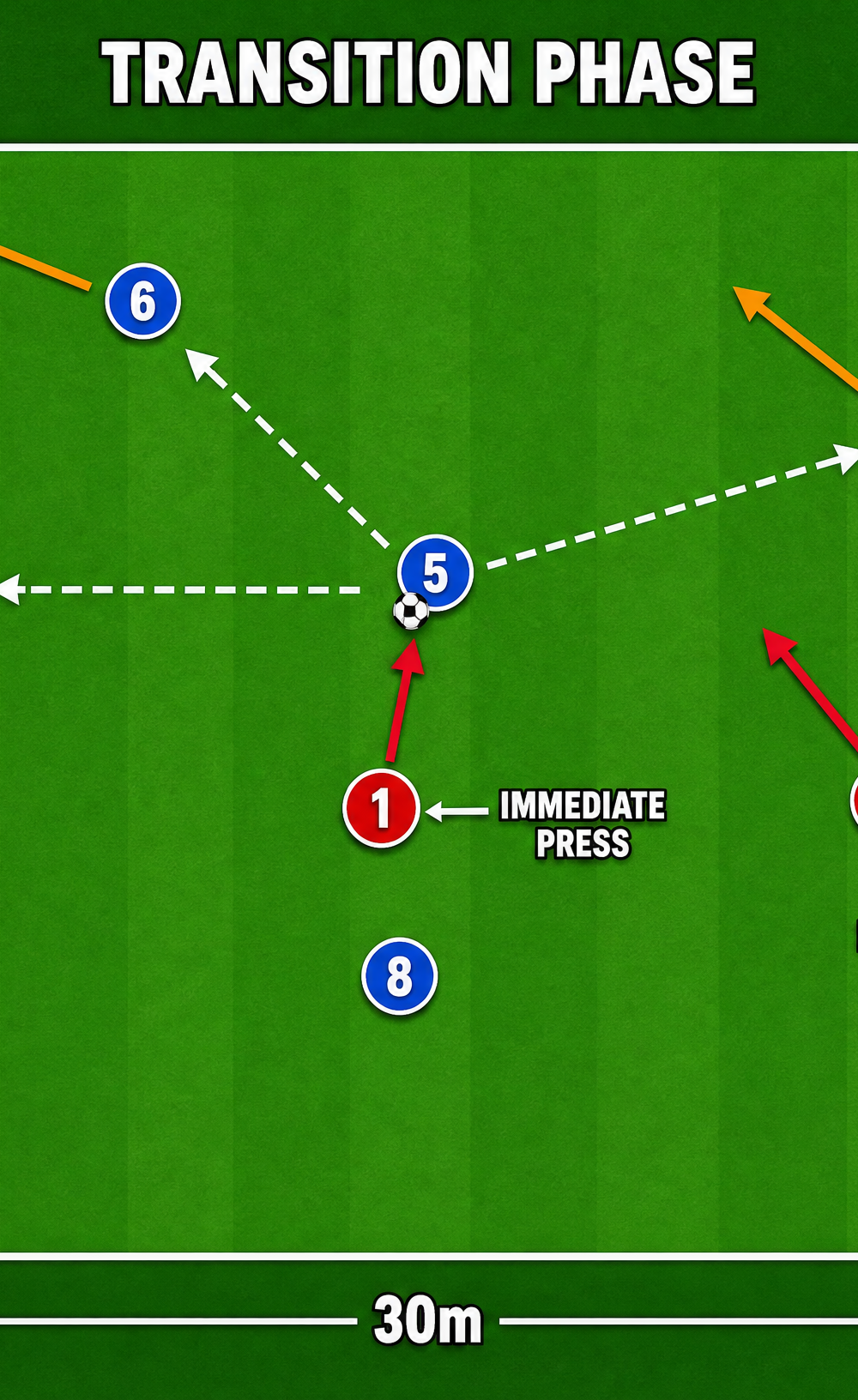
- Attacking Transition (Team B): Upon winning the ball, Team B must immediately look to counter-attack and score in the opposite goal before Team A can organize their defense.
- Defensive Transition (Team A): The moment Team A loses possession, the player nearest the ball must apply immediate pressure (counter-press) to delay the attack, while the remaining three players sprint back to establish a compact defensive shape.
- Continuous Play: If a goal is scored or the ball goes out of bounds, the coach immediately serves a new ball to the team that should be in possession, ensuring there is no downtime and the intensity remains high.
4. Key Coaching Points
- Immediate Reaction: The most critical element is the speed of thought. Players must mentally switch from attack to defense (or vice versa) the exact millisecond the ball changes hands.
- Counter-Pressing: Upon losing the ball, the nearest player must apply aggressive pressure on the new ball carrier to force a mistake or delay the forward pass, allowing teammates time to recover.
- Attacking Speed: When winning the ball, the first thought should be forward. Look for the quickest route to goal before the opposition can set their defensive block.
- Compactness: In the defensive phase, players must stay close together (compact) to deny space through the middle, forcing the opposition wide.
- Communication: Constant verbal communication is required to organize the press, track runners, and call for passes during chaotic transition moments.
5. Common Mistakes
- Lingering on Mistakes: Players dropping their heads or complaining after losing the ball instead of instantly fighting to win it back.
- Lack of Width in Attack: Teams bunching up in the center when they win the ball, making it easy for the recovering defense to contain them.
- Individual Pressing: One player pressing the ball while the rest of the team drops off, creating massive gaps for the attacking team to exploit.
- Slow Restarts: Taking too long to retrieve a ball when it goes out of play, allowing the defense to organize and killing the transitional element of the drill.
6. Variations & Progressions
- Touch Limit: Introduce a 2-touch or 3-touch limit to increase the speed of play and force quicker decision-making in possession.
- Time Limit to Score: Once a team wins the ball, they have a maximum of 8 seconds to score. This heavily emphasizes rapid attacking transitions.
- Add Goalkeepers (4v4+GKs): Increase the pitch size slightly (e.g., 40m x 25m) and use full-size goals with goalkeepers to make the finishing aspect more realistic.
7. Age Adaptations
- Under 8 – Under 10: Focus primarily on the fun and chaos of the game. Encourage dribbling and quick reactions without overloading them with complex tactical pressing triggers. Use a slightly smaller pitch if necessary to keep them engaged.
- Under 12 – Under 14: Begin introducing the concepts of team shape and the counter-press. Demand that the closest player always pressures the ball upon a turnover.
- Under 16 – Open (Adult): Expect high tactical execution. Focus on the speed of the transition, specific pressing traps, and maintaining a compact defensive block. The intensity should mirror a real match environment.