

Basketball
Baseline Inbound: The 'Box' Set for High-Percentage Layups
Master the 'Box' set to generate wide-open layups, open perimeter shots, and maintain offensive flow directly from baseline inbound situations.
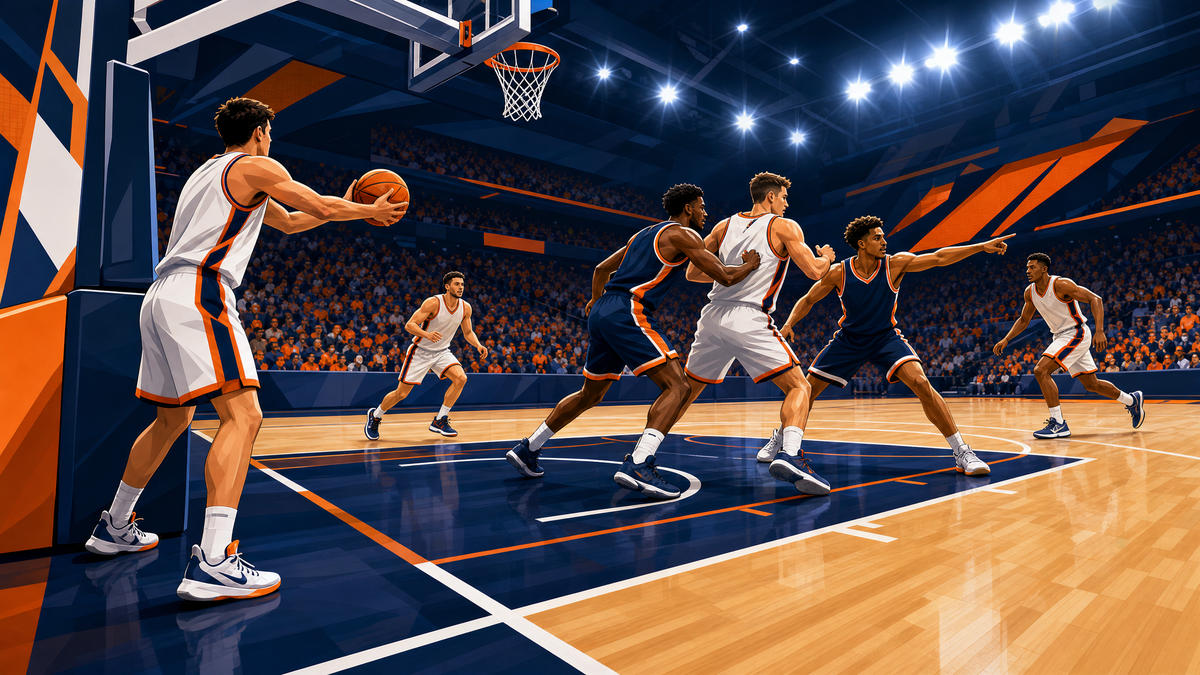
What you need
Basketball, Half-court
Baseline Inbound: The "Box" Set
1. Overview
The "Box" set is a highly effective Baseline Out of Bounds (BLOB) play designed to generate a high-percentage shot right at the rim. By positioning four players in a tight square formation inside the paint, it creates immediate screening angles that force defenders into difficult decisions. When executed correctly, the primary option yields an uncontested layup, while secondary options provide open perimeter shots and seamless flow into your regular half-court offense. This play is particularly useful when you need a quick score or want to capitalize on a defensive mismatch in the paint.
2. Setup
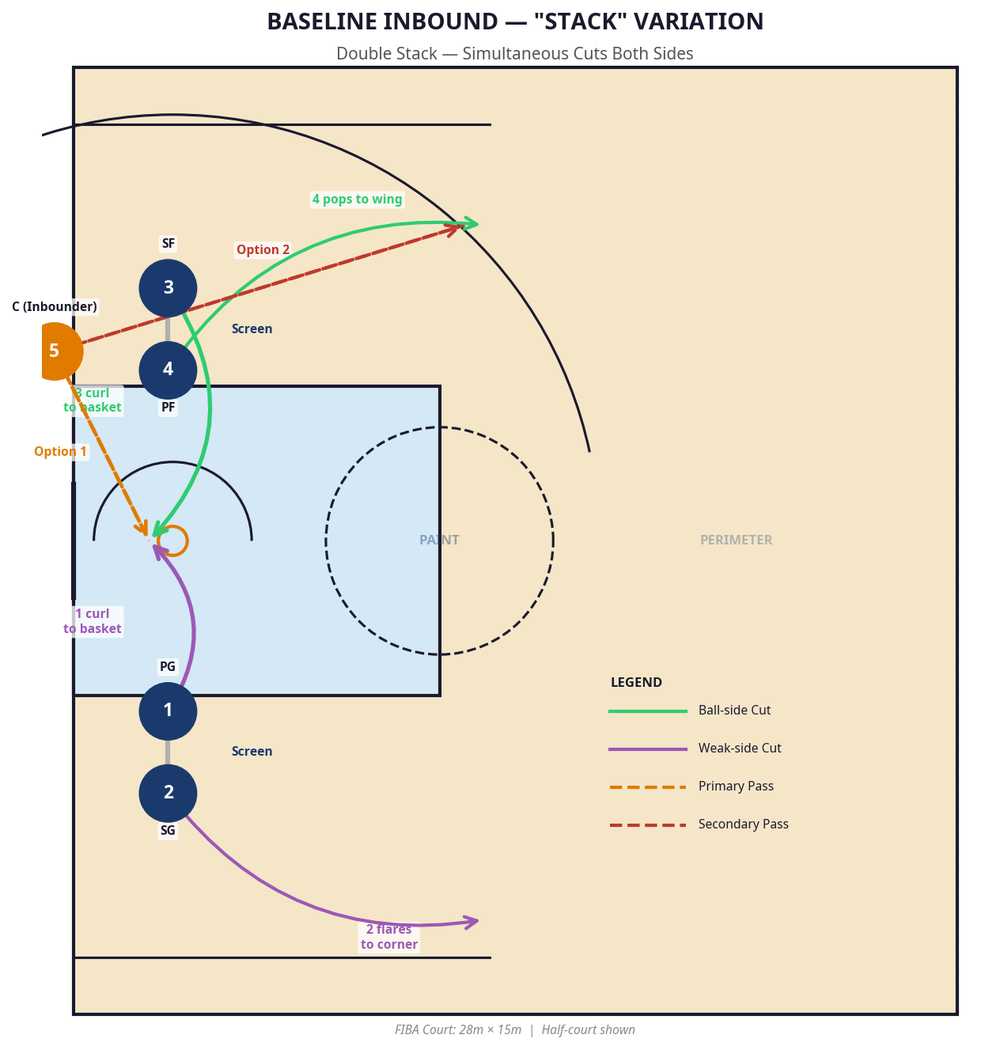
- Court Position: Baseline, directly under the basket (FIBA dimensions: 28m x 15m).
- Formation: Four players form a "box" shape inside the paint. Two players start on the low blocks, and two players start at the elbows (high post).
- Player Positions:
- 5 (Center): The inbounder, positioned out of bounds on the baseline.
- 4 (Power Forward): Positioned at the strong-side elbow (closest to the inbounder).
- 3 (Small Forward): Positioned at the strong-side low block.
- 2 (Shooting Guard): Positioned at the weak-side low block.
- 1 (Point Guard): Positioned at the weak-side elbow.
3. Step-by-Step Instructions
Phase 1: Initial Setup & Screening Action
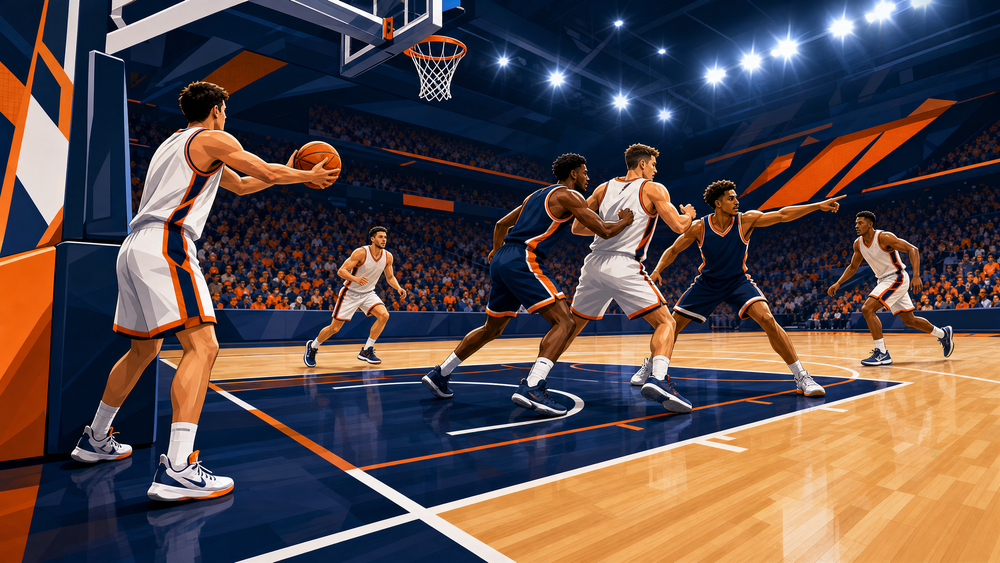
- The Trigger: The play begins when the referee hands the ball to the inbounder (5). The inbounder should slap the ball to signal the start of the movement.
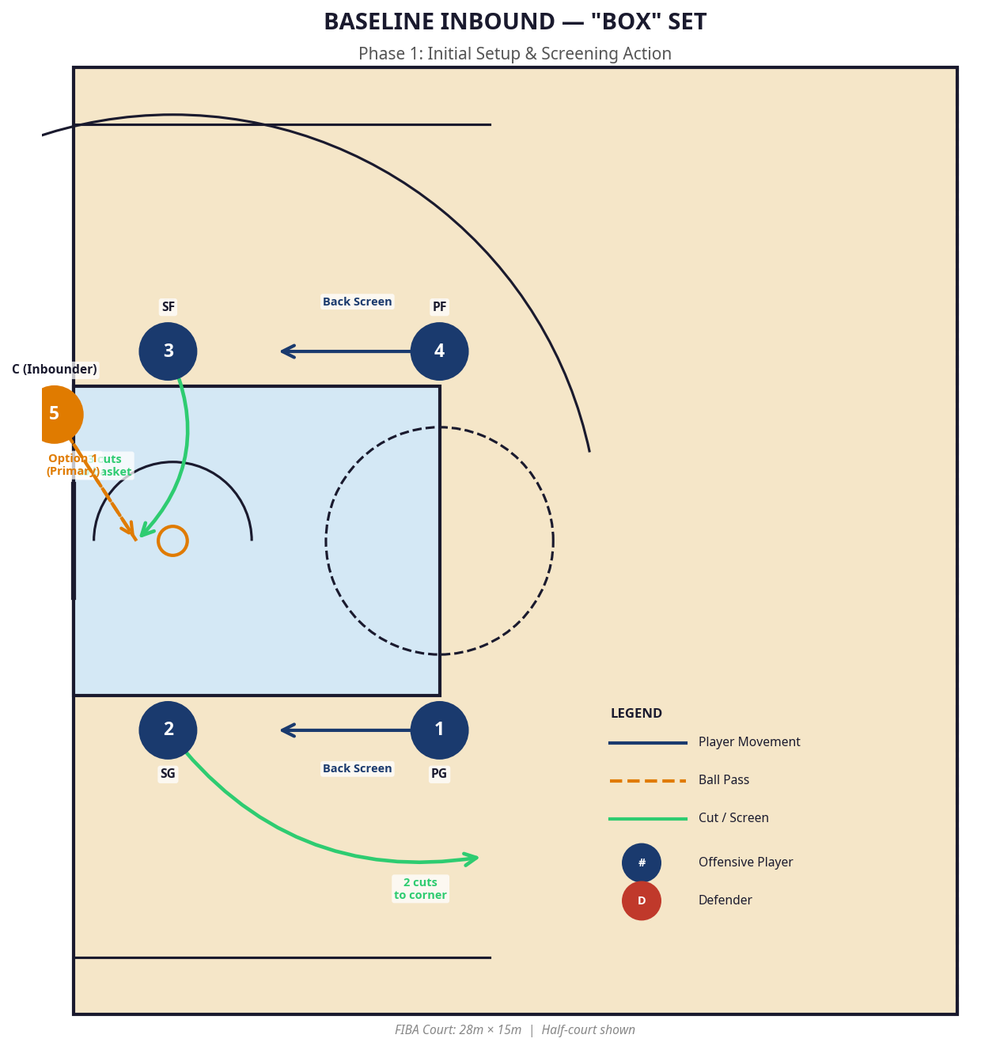
- The Screens: Simultaneously, the top players (1 and 4) move down to set down-screens for the bottom players (2 and 3).
- 4 sets a screen for 3.
- 1 sets a screen for 2.
- The Cuts:
- 3 uses 4's screen to curl tightly to the basket, looking for the immediate pass.
- 2 uses 1's screen to cut hard to the weak-side corner.
- The Primary Read: The inbounder (5) looks first to 3 cutting to the rim. If open, this is an immediate layup.
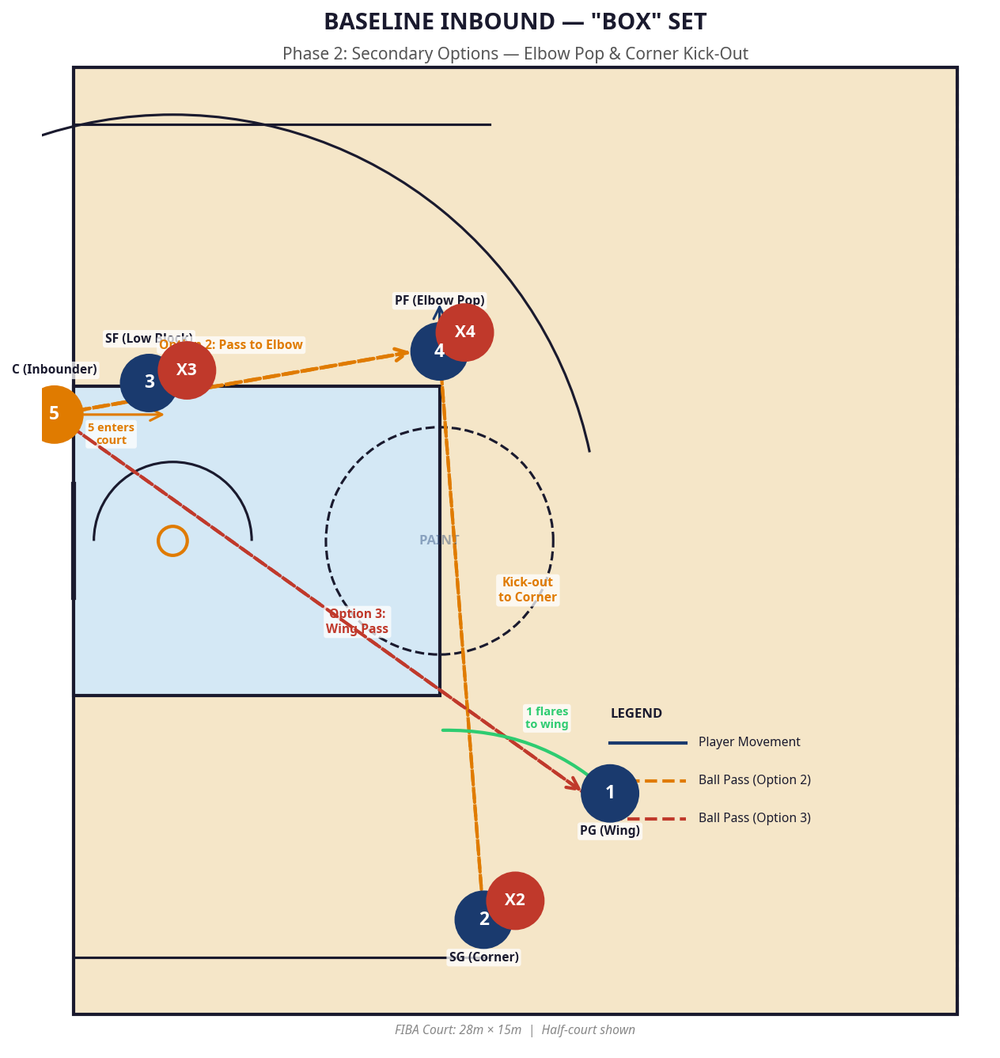
Phase 2: Secondary Options & Ball Reversal
- The Pop: If the primary cut by 3 is covered, the screeners must react. 4, after setting the screen for 3, immediately pops back to the strong-side elbow or wing.
- The Flare: 1, after setting the screen for 2, flares out to the weak-side wing.
- The Secondary Reads: The inbounder (5) now has two perimeter options:
- Pass to 4 popping to the elbow. 4 can shoot, drive, or kick to 2 in the corner.
- Skip pass to 1 flaring to the wing.
- The Safety Valve: After passing, 5 steps inbounds to become a safety valve or to establish post position.
4. Key Coaching Points
- Screening Angles: The effectiveness of the play relies entirely on the angle of the screens. Screeners must set their feet wide and create a solid barrier, forcing the defender to go over or under.
- Patience by the Inbounder: The inbounder must not panic. They have 5 seconds. They should read the primary option first, then progress through the reads systematically.
- Cutting Hard: Cutters must sprint shoulder-to-shoulder off the screens. A slow or wide cut allows the defender to recover.
- Reading the Defense: Players must read how the defense plays the screen. If the defense switches, the screener (4 or 1) should immediately seal their new, smaller defender and demand the ball inside.
5. Common Mistakes
- Moving Screens: Screeners moving before the cutter has passed them, resulting in an offensive foul.
- Telegraphing the Pass: The inbounder staring directly at the primary cutter (3) the entire time, allowing the defense to anticipate and intercept the pass.
- Poor Spacing: Players bunching up after the initial cuts, clogging the passing lanes and making it easy for one defender to guard two offensive players.
6. Variations & Progressions
Variation: The "Stack"
Instead of a box, align players in two stacks on the low blocks. The bottom players screen for the top players, creating different cutting angles and confusing a defense prepared for the standard box.
Progression: Slip the Screen
If the defense starts anticipating the down-screens and aggressively jumping the passing lanes to the cutters, have the screeners (1 and 4) "slip" the screen—faking the screen and cutting immediately to the basket themselves.
7. Age Adaptations
- Under 10 / Under 12: Focus heavily on the fundamentals of setting a legal screen and making a strong, two-handed chest or bounce pass from out of bounds. Simplify the reads to just the primary cutter and a safety outlet.
- Under 14 / Under 16: Introduce the secondary reads (the pop and flare). Teach players how to read defensive switches and exploit mismatches.
- Open / Advanced: Incorporate complex variations like the "Stack" or slipping screens. Emphasize split-second decision-making and seamless transition into motion offense if no immediate shot is available.
