The Box Set: A Comprehensive Guide to Under-Basket Inbound Plays
Master the Box Set inbound play with step-by-step instructions, tactical variations, and key coaching points to secure high-percentage scoring opportunities under the basket.
Equipment Needed
1. Overview
The Box Set is a foundational baseline out-of-bounds (BLOB) play designed to create immediate scoring opportunities close to the basket. By positioning four offensive players in a tight "box" formation around the paint, this set play forces the defense to navigate multiple screens and rapid cuts within a confined space. It is highly effective for generating high-percentage layups, open mid-range jump shots, and drawing fouls. Coaches at all levels utilize the Box Set because of its simplicity in setup and its versatility in execution, allowing for numerous reads and variations based on defensive reactions.
2. Setup
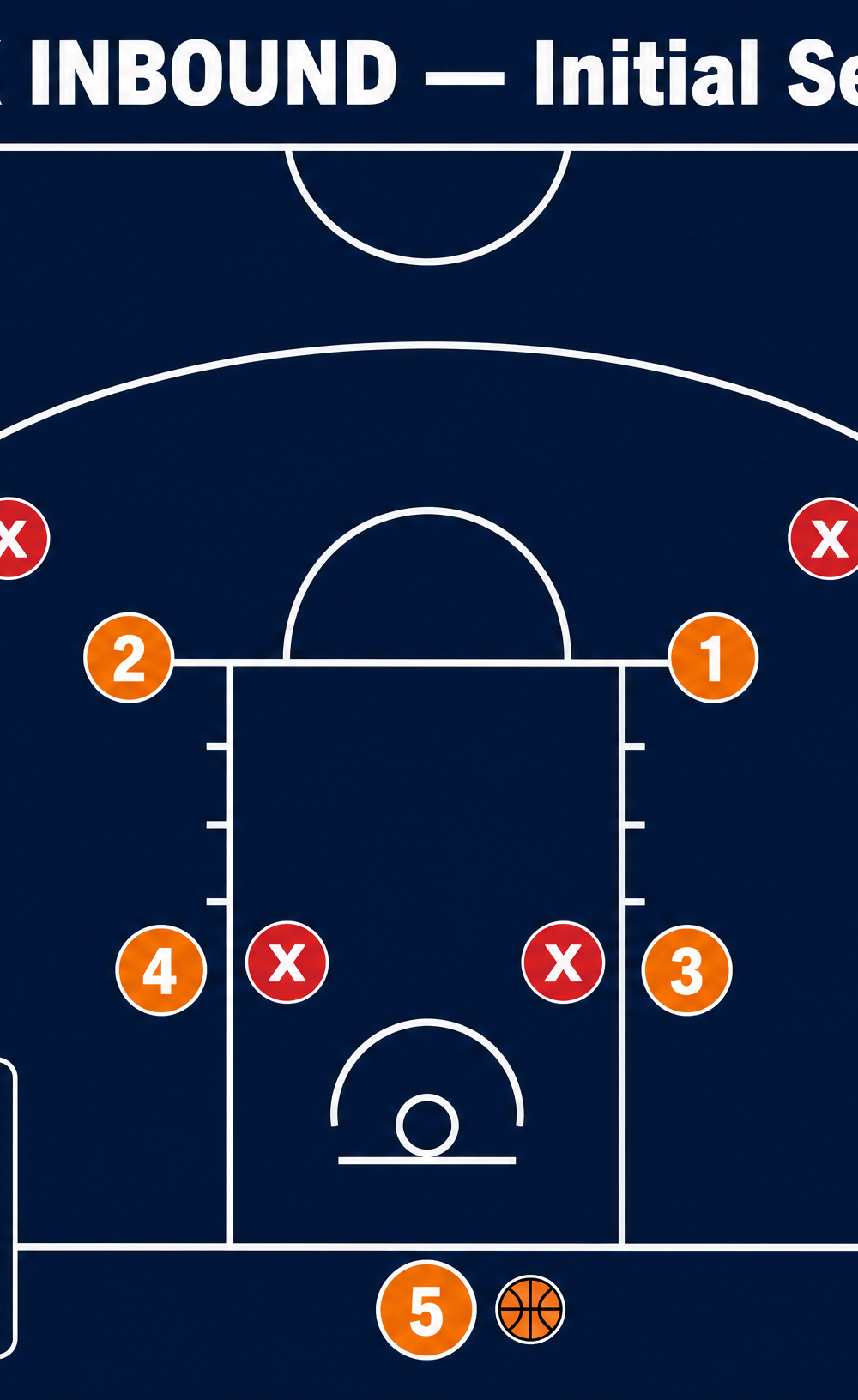
Proper setup is critical for the success of the Box Set. The tight spacing requires precise positioning to ensure screens are effective and cuts are sharp.
- Court Position: Baseline out-of-bounds (BLOB) under the offensive basket.
- Player 5 (Inbounder): Positioned out of bounds on the baseline, typically centered or slightly shaded to the side of the preferred primary action.
- Player 4 (Power Forward): Positioned on the ball-side low block.
- Player 3 (Small Forward): Positioned on the weak-side low block.
- Player 2 (Shooting Guard): Positioned at the ball-side elbow (free-throw line extended).
- Player 1 (Point Guard): Positioned at the weak-side elbow (free-throw line extended).
3. Step-by-Step Instructions
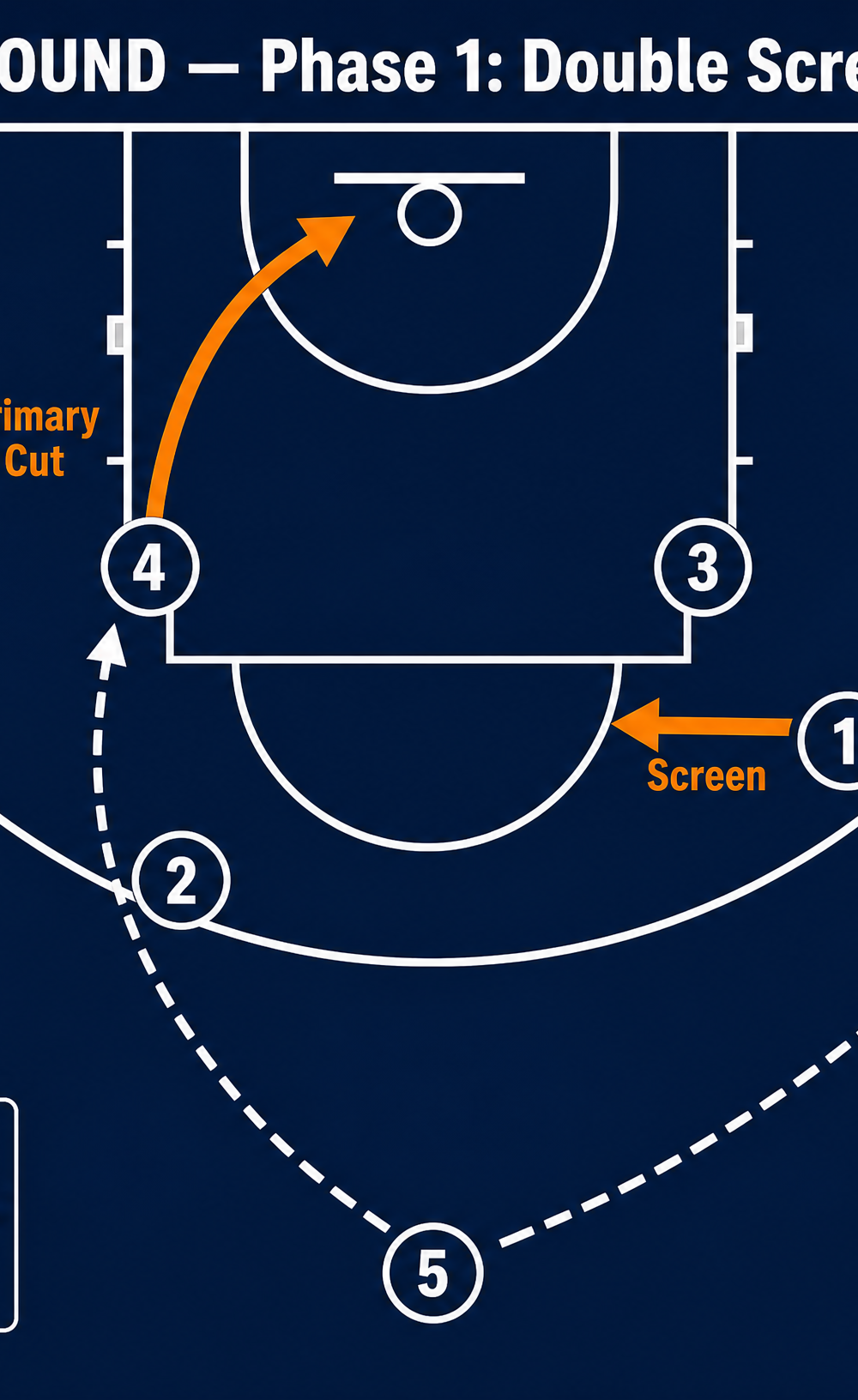
The standard execution of the Box Set relies on a double screen and coordinated cuts to free up the primary scorer.
- The Trigger: The play initiates when Player 5 slaps the basketball or yells a designated trigger word (e.g., "Go!" or "Box!").
- The Primary Cut: Immediately upon the trigger, Player 4 (ball-side low block) makes a hard, explosive cut directly toward the front of the rim, looking for a quick lob or bounce pass from Player 5. This is the primary scoring option.
- The Cross Screen: Simultaneously, Player 3 (weak-side low block) sprints across the lane to set a firm screen on the defender guarding Player 1 (weak-side elbow).
- The Secondary Cut: Player 1 uses the screen set by Player 3, cutting hard toward the ball-side corner or short wing. Player 5 looks to pass to Player 1 if the primary cut by Player 4 is covered.
- The Safety Valve: Player 2 (ball-side elbow) pops out toward the top of the key or the weak-side wing to provide a safety outlet pass if all primary options are denied, ensuring the team retains possession and can transition into their regular half-court offense.
4. Key Coaching Points
To maximize the effectiveness of the Box Set, coaches must emphasize the following details during practice:
- Screening Angle and Contact: Screeners (Player 3) must establish a wide base and make solid contact. The angle of the screen should force the defender to go over the top, trailing the cutter.
- Patience by the Inbounder: Player 5 has 5 seconds to inbound the ball. They must not rush the pass. They should fake a pass to one option to shift the defense before delivering the ball to the actual target.
- Cutting with Purpose: Cutters (Player 4 and Player 1) must sprint. A slow cut allows the defense to recover. They must show their hands and be ready to catch and shoot or finish immediately.
- Reading the Defense: Players must be taught to read how the defense plays the screens. If the defense switches, the screener (Player 3) should immediately seal the smaller defender and roll to the basket for a mismatch.
5. Common Mistakes
Watch for these frequent errors and correct them promptly:
- Moving Screens: Screeners often lean or shuffle their feet to maintain contact, resulting in an offensive foul. Emphasize jumping to a stop and holding the position.
- Telegraphing the Pass: The inbounder staring directly at the primary option allows the defense to anticipate and intercept the pass. Use pass fakes.
- Poor Spacing: If the initial box formation is too loose, the screens become ineffective, and the timing of the cuts is disrupted. Keep the box tight around the paint.
- Curving the Cuts: Cutters taking rounded paths rather than sharp, straight lines give defenders time to recover. Cuts must be sharp and direct.
6. Variations & Progressions
Once the team masters the basic Box Set, introduce variations to keep the defense guessing.
The Stack Variation
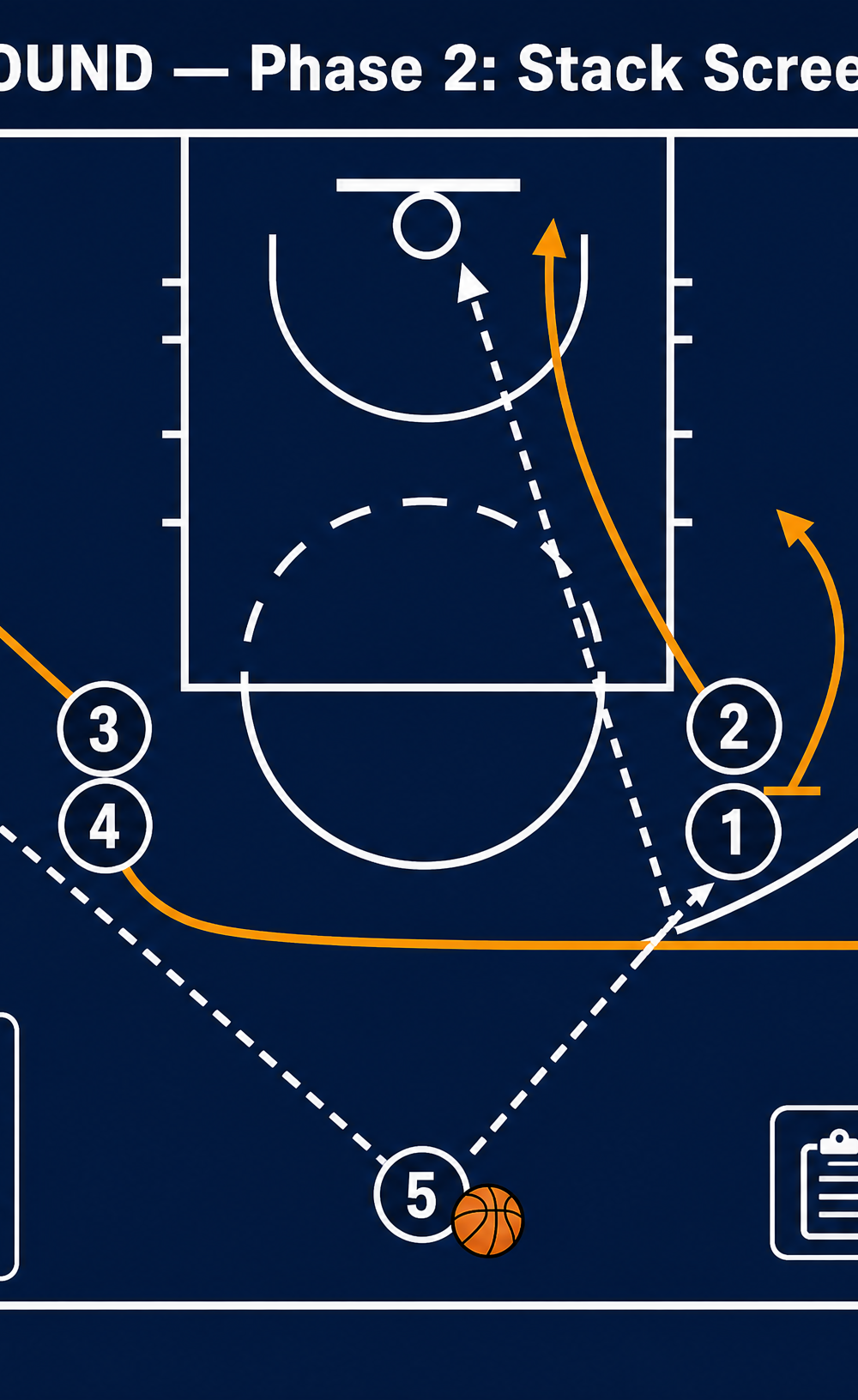
Instead of a standard box, players stack vertically on the low blocks.
- Setup: Players 4 and 3 stack on the left low block; Players 1 and 2 stack on the right low block.
- Action: Player 4 cuts baseline for a backdoor option. Player 3 pops to the wing. Player 1 cuts to the basket using a screen from Player 2. Player 2 rolls to the elbow after screening.
Screen the Screener (STS)
This progression is highly effective against aggressive switching defenses.
- Action: After Player 3 sets the cross screen for Player 1, Player 2 immediately drops down from the elbow to set a down screen for Player 3. Player 3 uses this second screen to pop to the top of the key for an open jump shot.
7. Age Adaptations
Tailor the complexity of the play based on the age and skill level of your team.
- Under 10s / Under 12s: Focus purely on the primary cut (Player 4 to the basket) and a simple safety pop-out. Do not introduce complex cross screens yet. Emphasize the inbounder making a strong, accurate pass.
- Under 14s / Under 16s: Introduce the standard double screen action. Teach the concept of reading the defense (e.g., slipping the screen if the defense overplays).
- Open / Advanced: Implement multiple variations (Stack, STS) and require players to read the defense and make automatic adjustments (e.g., if the defense switches, exploit the mismatch immediately).