

Cricket
Mastering the Crease: Batting Stance and Footwork Fundamentals Drill
A foundational drill designed to help coaches build perfect batting stances and decisive footwork patterns in their players.

What you need
Cricket Bats, Marker Cones, Cricket Balls (optional), Batting Gloves (optional), Batting Pads (optional)
1. Overview
A strong batting technique begins before the ball is even bowled. This drill is designed to establish a rock-solid foundation at the crease, focusing on the perfect batting stance, optimal weight distribution, and the initial trigger movements required to play both front and back foot shots effectively. It is an essential drill for pre-season training or as a regular technical check-up during the season. By breaking down the complex movements of batting into repeatable steps, coaches can isolate and correct fundamental flaws before they become ingrained habits.
2. Setup
Equipment Needed:
- Bats for all participating players
- Batting gloves and pads (optional for shadow drills, but recommended for match realism)
- 4-6 marker cones (various colors)
- Cricket balls (for progression phases)
- 22-yard cricket pitch or net lane
Pitch/Field Setup:
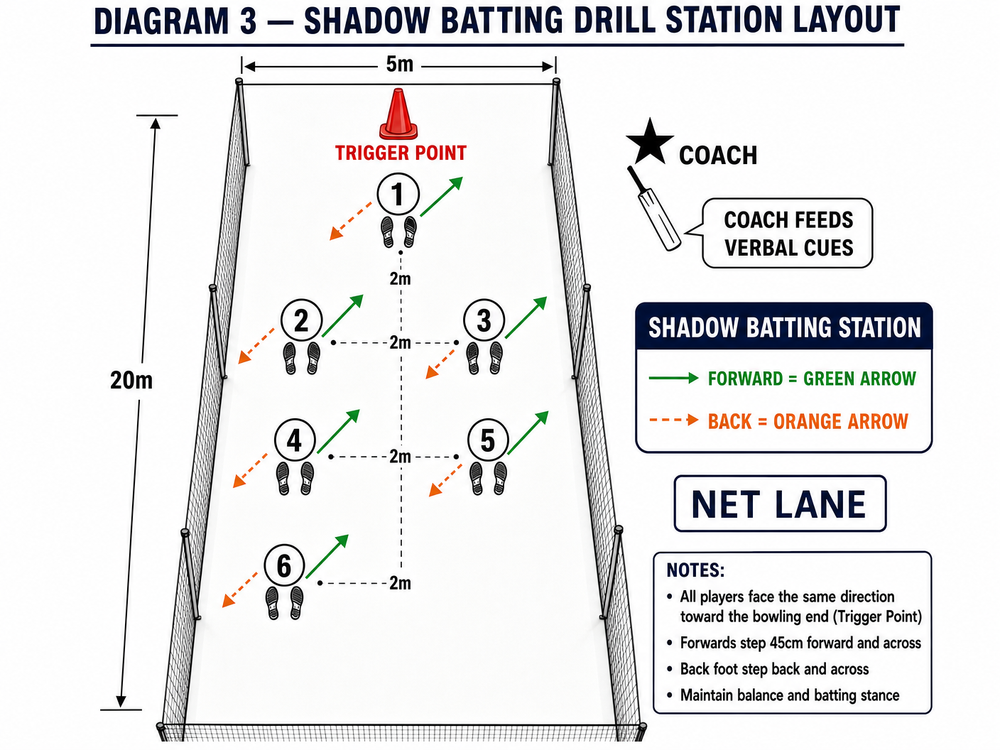
Set up the drill in a standard net lane or on the square. If using a net lane, ensure there is at least 5 meters of width. Mark the batting crease and popping crease clearly.

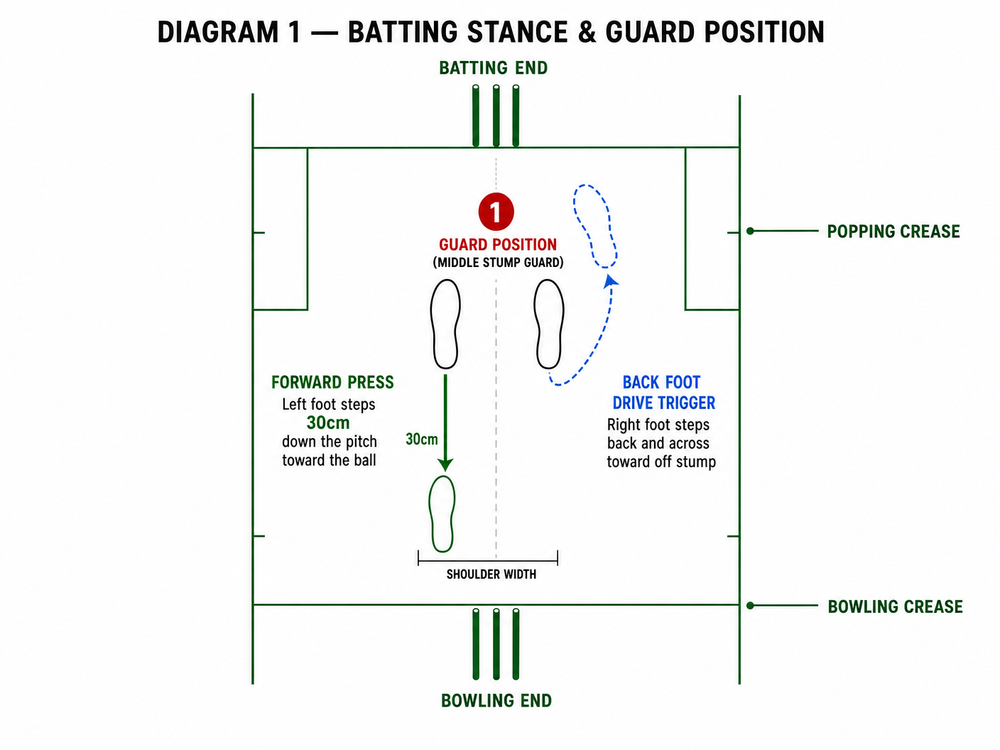
As shown in Diagram 1, the batsman will take guard at the batting crease.
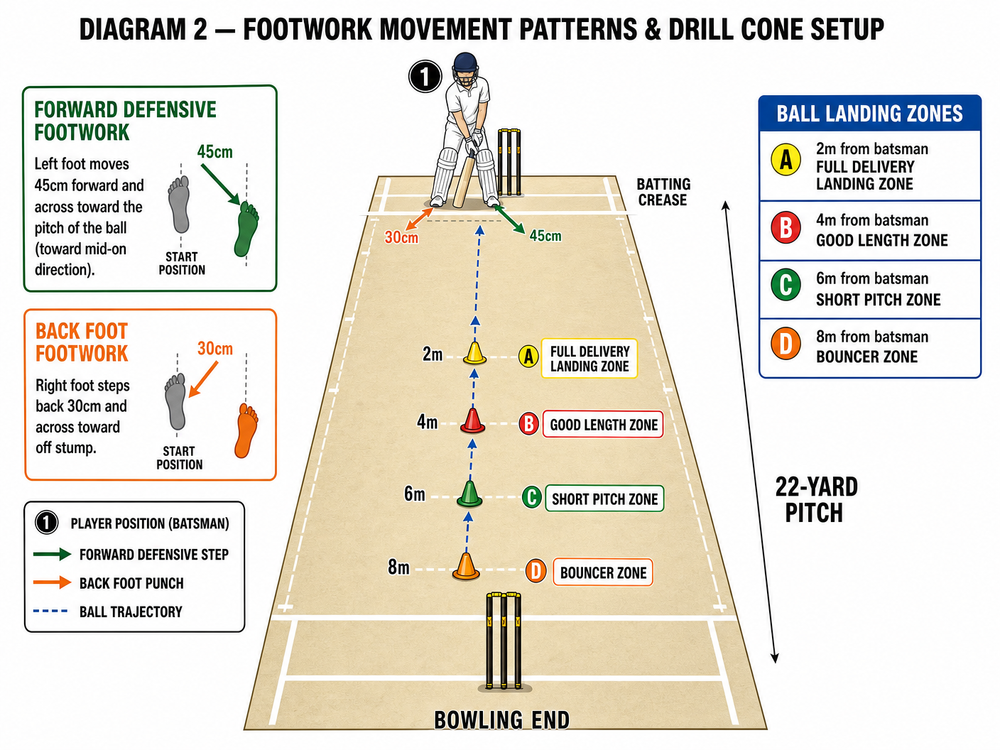
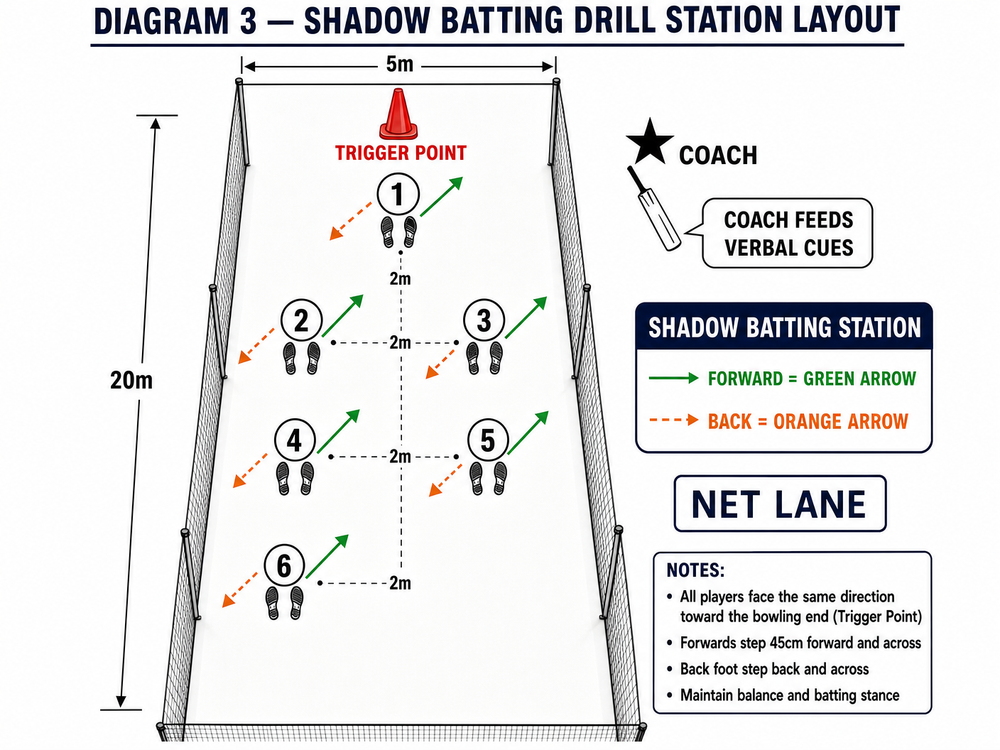
For the shadow batting station layout, arrange players in rows facing the bowling end, spaced 2 meters apart, as illustrated in Diagram 3.
3. Step-by-Step Instructions
- The Stance (Position 1): Instruct the player to take a middle-stump guard. Feet should be parallel to the popping crease, shoulder-width apart. Knees slightly flexed, weight evenly distributed on the balls of the feet. The bat should be tapped just behind the back foot, with the head perfectly still and eyes level, looking straight down the pitch.
- The Forward Press (Front Foot): On the coach's call of "Forward!", the player executes a decisive step forward and slightly across with the front foot (left foot for a right-hander). The step should be approximately 30-45cm down the pitch toward the ball's line. The head must lead the movement, staying over the front knee. The bat remains in the backlift position.
- The Back Foot Trigger (Back Foot): On the coach's call of "Back!", the player steps back and across toward the off-stump with the back foot (right foot for a right-hander). The movement should be sharp, transferring weight onto the back leg while keeping the head still and eyes forward.
- Reset and Repeat: After each movement, the player holds the position for 2 seconds so the coach can check their balance and alignment, then resets to the initial stance on the command "Reset!".
- Continuous Flow: Once players master the isolated movements, the coach can call out random sequences (e.g., "Forward, Reset, Back, Reset, Forward!") to test reaction time and balance.
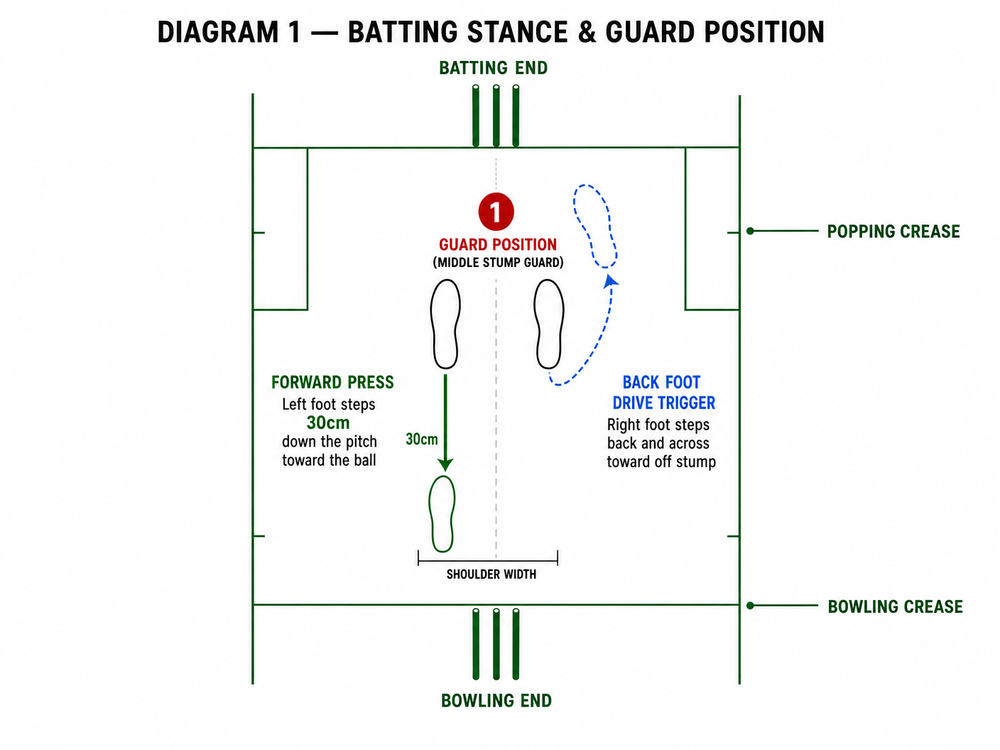
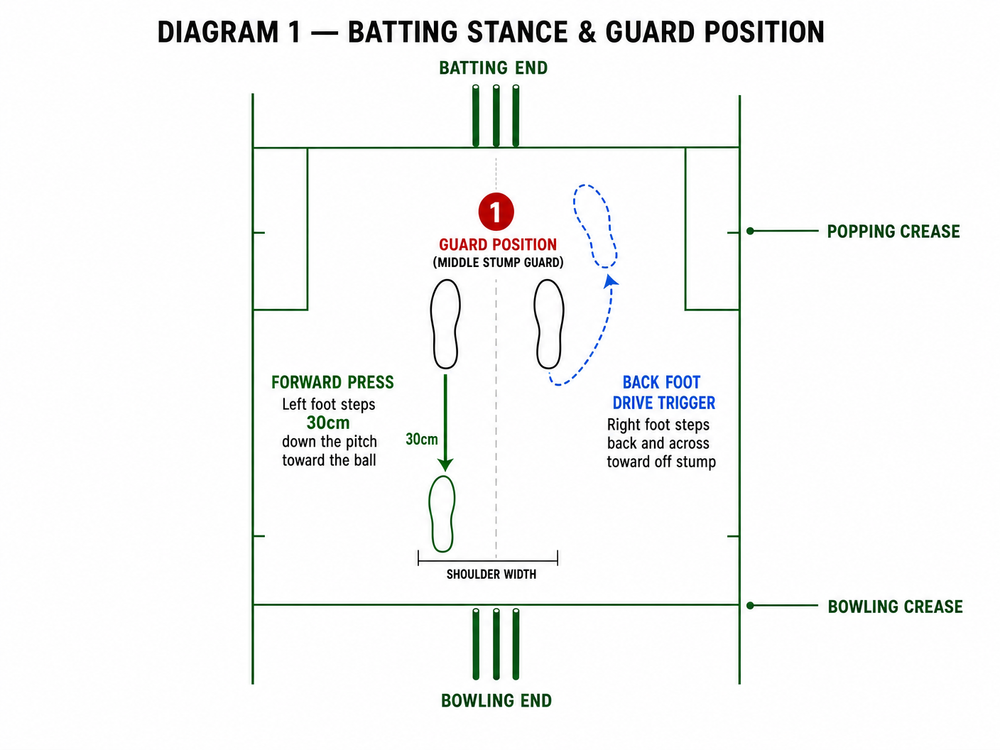
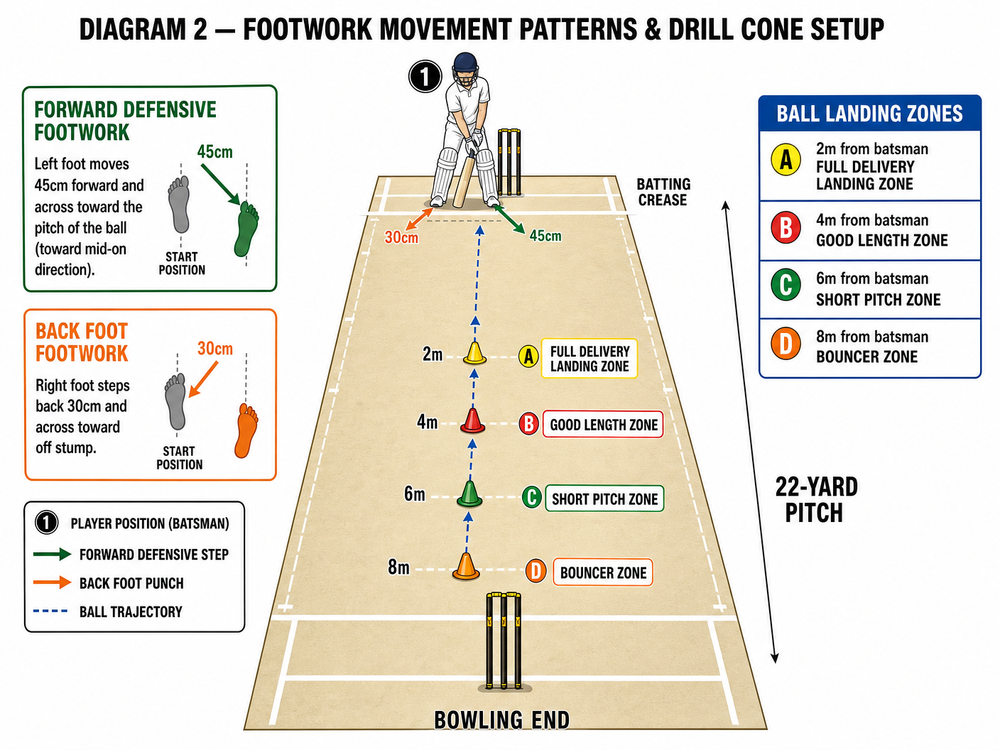
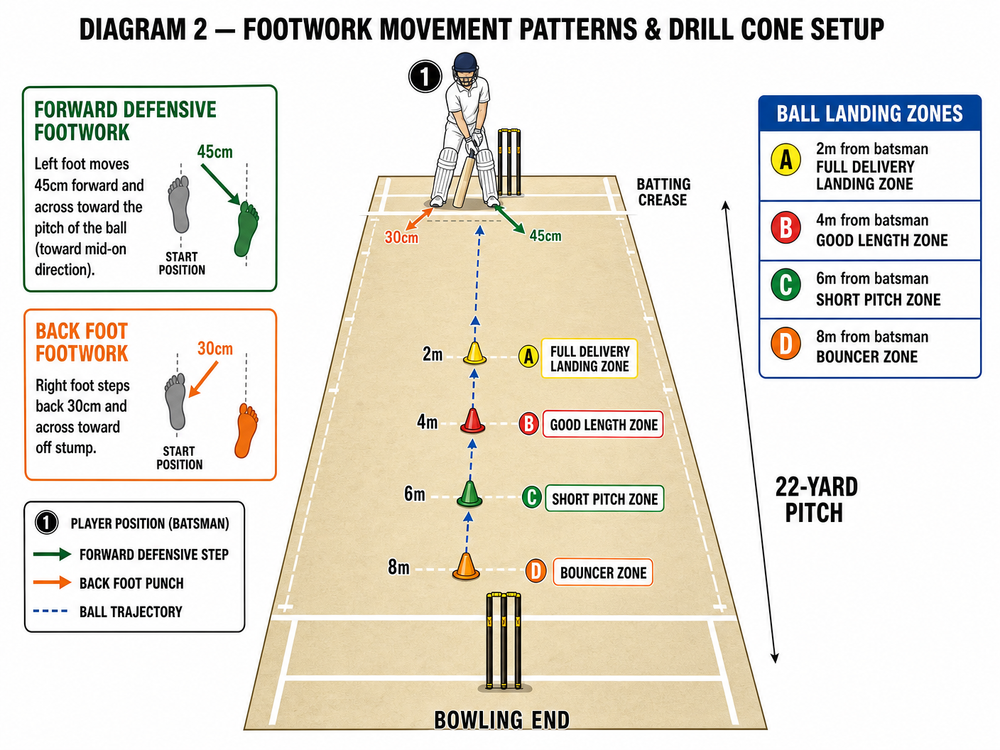
Diagram 2 illustrates the footwork movement patterns in relation to different ball landing zones on the 22-yard pitch.
4. Key Coaching Points
- Head Position: The head is the heaviest part of the body. It must remain still and level throughout the stance and initial movements. If the head falls over, the body will follow, compromising balance.
- Weight Distribution: In the initial stance, weight should be 50/50 on the balls of the feet, not the heels. This allows for explosive movement in any direction.
- Shoulder Alignment: The front shoulder should point directly down the pitch toward the bowler. Dipping or opening the front shoulder too early will lead to technical errors.
- Base Width: Ensure the stance is shoulder-width. Too wide restricts movement; too narrow causes instability.
- The First Movement: The initial step (whether forward or back) must be decisive and balanced. It is a movement to the ball, not just a step for the sake of moving.
5. Common Mistakes
- Weight on Heels: Players standing flat-footed or with weight on their heels will be slow to react and struggle to transfer weight into their shots.
- Head Falling Over: The head dropping toward the off-side during the forward press, causing the player to play around their front pad and become vulnerable to LBW.
- Over-striding: Taking too large a step forward, which locks the hips and prevents smooth bat swing and weight transfer.
- Bat Tapping Too Far Away: Tapping the bat too far away from the feet, which unbalances the stance and alters the backlift path.
6. Variations & Progressions
- Progression 1: Drop Ball Drill. Once the shadow movements are solid, the coach drops a ball in the 'Full Delivery Landing Zone' (Cone A, 2m from batsman). The player executes the forward press and drives the ball back to the coach.
- Progression 2: Bobble Feed. The coach kneels 5-10 meters away and rolls or underarms the ball. The player must read the length and execute either the forward or back foot movement accordingly.
- Variation 1: The Blindfold Balance. Have the player take their stance and close their eyes. The coach gently pushes their shoulders. The player must maintain their balance, emphasizing the importance of a solid base.
7. Age Adaptations
- Under 8s & Under 10s: Focus purely on the stance and balance. Use visual markers (like chalk outlines for feet) to help them understand where to stand. Keep the language simple (e.g., "Feet like train tracks").
- Under 12s & Under 14s: Introduce the forward and back foot movements as separate, isolated drills. Emphasize head position and weight transfer.
- Under 16s & Open: Combine the movements with decision-making drills (e.g., the coach feeds different lengths, and the player must react instantly). Focus on the speed and precision of the footwork.
