Mastering the Ground Fielding & Pick-Up: The Ultimate Cricket Drill
Equip your players with the essential mechanics for a clean, fast pick-up and accurate return throw to save runs and create run-out opportunities.
Equipment Needed
1. Overview
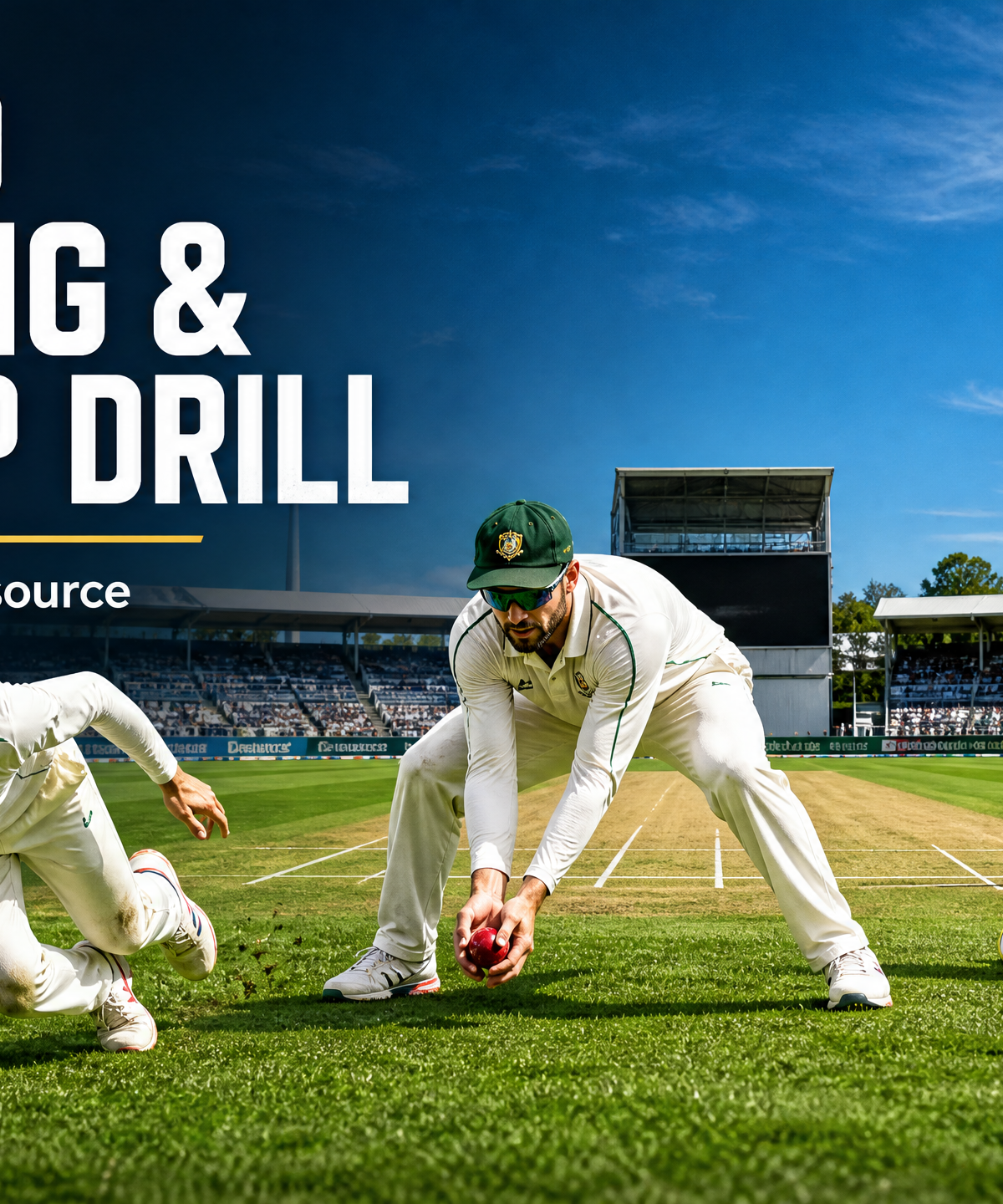
Ground fielding is the bedrock of any successful cricket team's defensive strategy. A clean pick-up not only saves crucial runs but also creates the pressure needed for run-outs. This drill focuses on the fundamental mechanics of approaching the ball, executing a clean two-handed pick-up, and transitioning seamlessly into a powerful, accurate throw. It is designed to be highly repetitive, allowing players to build muscle memory, and can be easily scaled from basic technique reinforcement to high-pressure competitive scenarios.
Coaches should use this drill early in a session to warm up the shoulders and legs, or as a dedicated fielding block to refine technique before moving into game-scenario fielding.
2. Setup
Equipment Needed:
- 10-15 Cricket balls (or softer balls for juniors)
- 1 set of stumps (target)
- Fielding markers or cones
Field Setup:
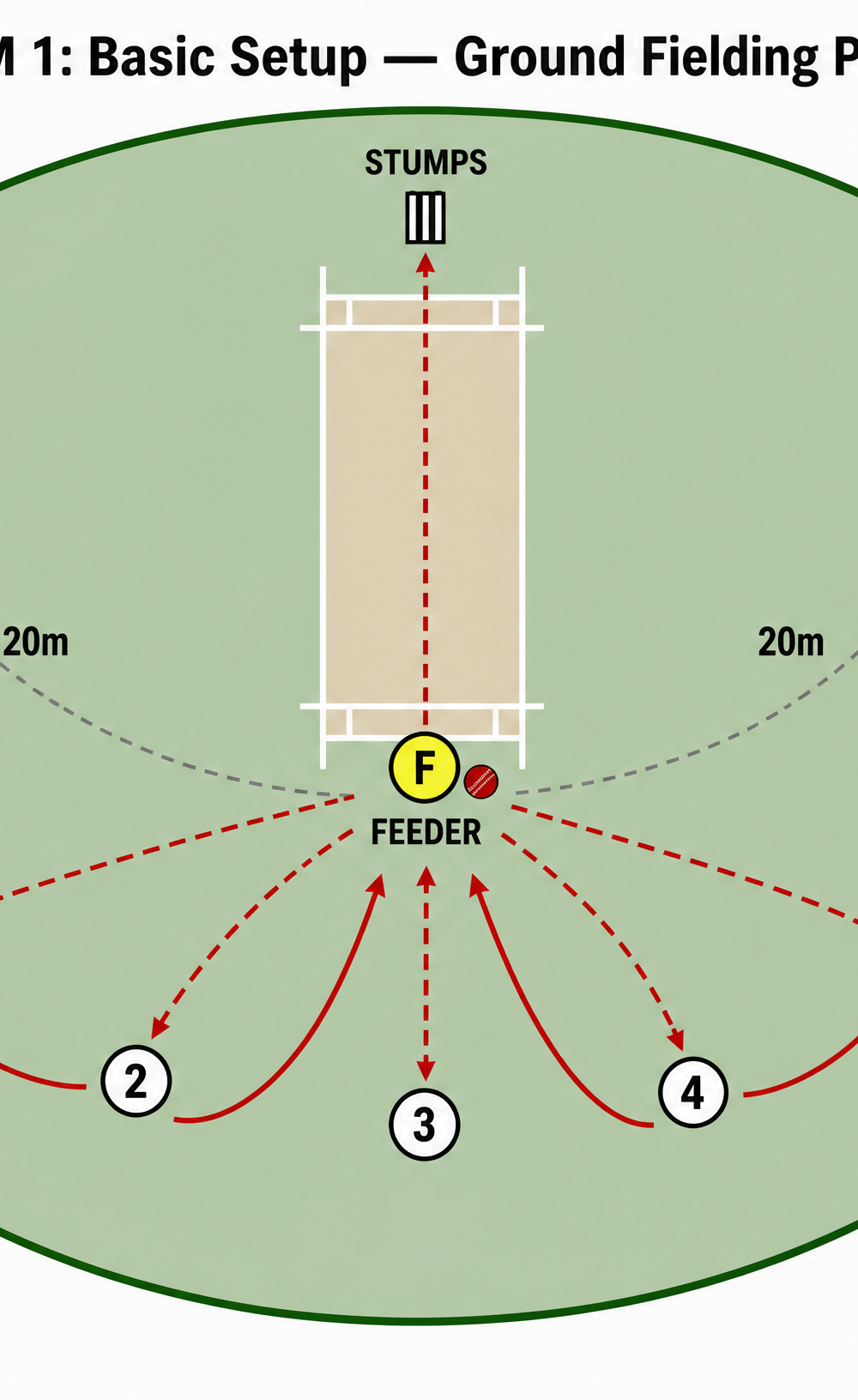
- Set up on a standard cricket oval or any open grass area. If using the centre square, place the target stumps at the striker's end.
- Mark a 'Feeder' position at the bowling crease.
- Place 5 cones in a semi-circle arc, approximately 20-30 metres away from the feeder. These are the starting positions for the fielders.
3. Step-by-Step Instructions
- Positioning: The coach (or a designated feeder) stands at the 'Feeder' mark with a bucket of balls. Five players take up positions at the cones on the 20-30m arc.
- The Feed: The feeder rolls the ball firmly along the ground toward the first fielder (Position 1).
- The Approach: The fielder sprints aggressively toward the ball, maintaining a low centre of gravity.
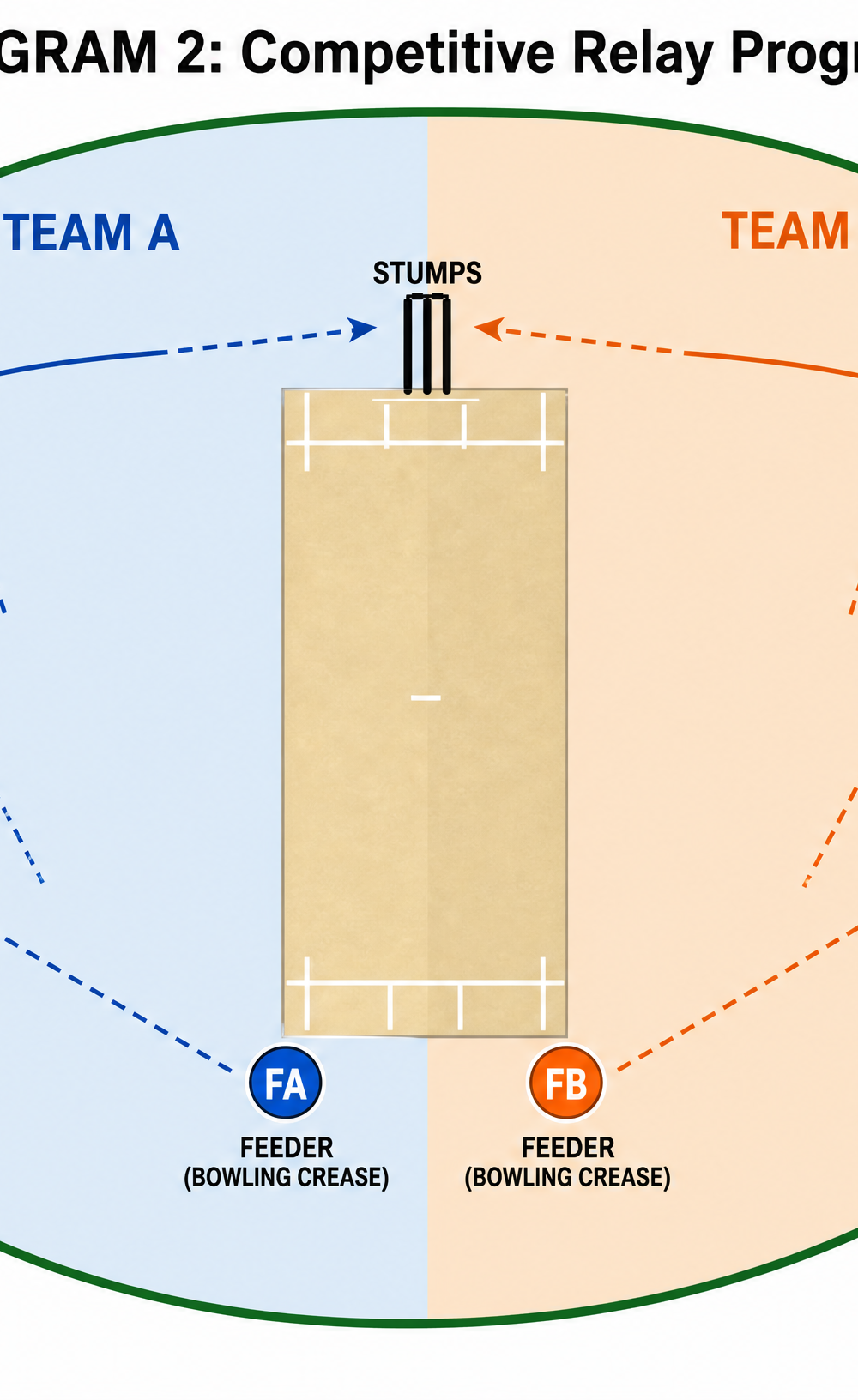
- The Pick-Up: As the fielder reaches the ball, they must position their dominant foot (right foot for a right-hander) alongside the ball. With a deep knee bend, they scoop the ball cleanly using two hands (fingers pointing down).
- The Throw: Without breaking stride, the fielder transfers their weight, rises into a throwing position, and executes a hard, flat throw aimed at the base of the stumps.
- Rotation: After throwing, the fielder jogs to the back of the line or rotates to the next position. The feeder immediately rolls the next ball to Position 2, keeping the drill moving at a high tempo.
4. Key Coaching Points
- Attack the Ball: Fielders must sprint to meet the ball rather than waiting for it to come to them. This cuts down the angle and saves time.
- Get Low Early: Emphasize dropping the hips and bending the knees well before reaching the ball. Bending at the waist alone leads to fumbles.
- Right Foot to the Ball (for Right-Handers): Positioning the dominant foot next to the ball ensures the body is aligned correctly for a quick transition into the throwing stride.
- Soft Hands, Fingers Down: Hands should be relaxed and cupped together with fingers pointing toward the ground, acting as a ramp for the ball.
- Follow Through: After releasing the ball, the fielder's momentum should continue toward the target. This adds power and accuracy to the throw.
5. Common Mistakes
- "Alligator Arms": Reaching for the ball with stiff arms instead of bending the knees and getting the body behind the ball.
- Taking the Eye Off the Ball: Looking up at the target before the ball is securely in the hands. This is the most common cause of fumbles.
- Throwing off the Wrong Foot: Failing to align the feet properly during the pick-up, resulting in an off-balance, weak throw.
- Decelerating: Slowing down right before picking up the ball. Fielders must learn to pick up at pace.
6. Variations & Progressions
- Progression 1: The One-Handed Pick-Up (Advanced): For balls hit slightly to the side, have players practice the one-handed pick-up on the run, transitioning instantly into a throw.
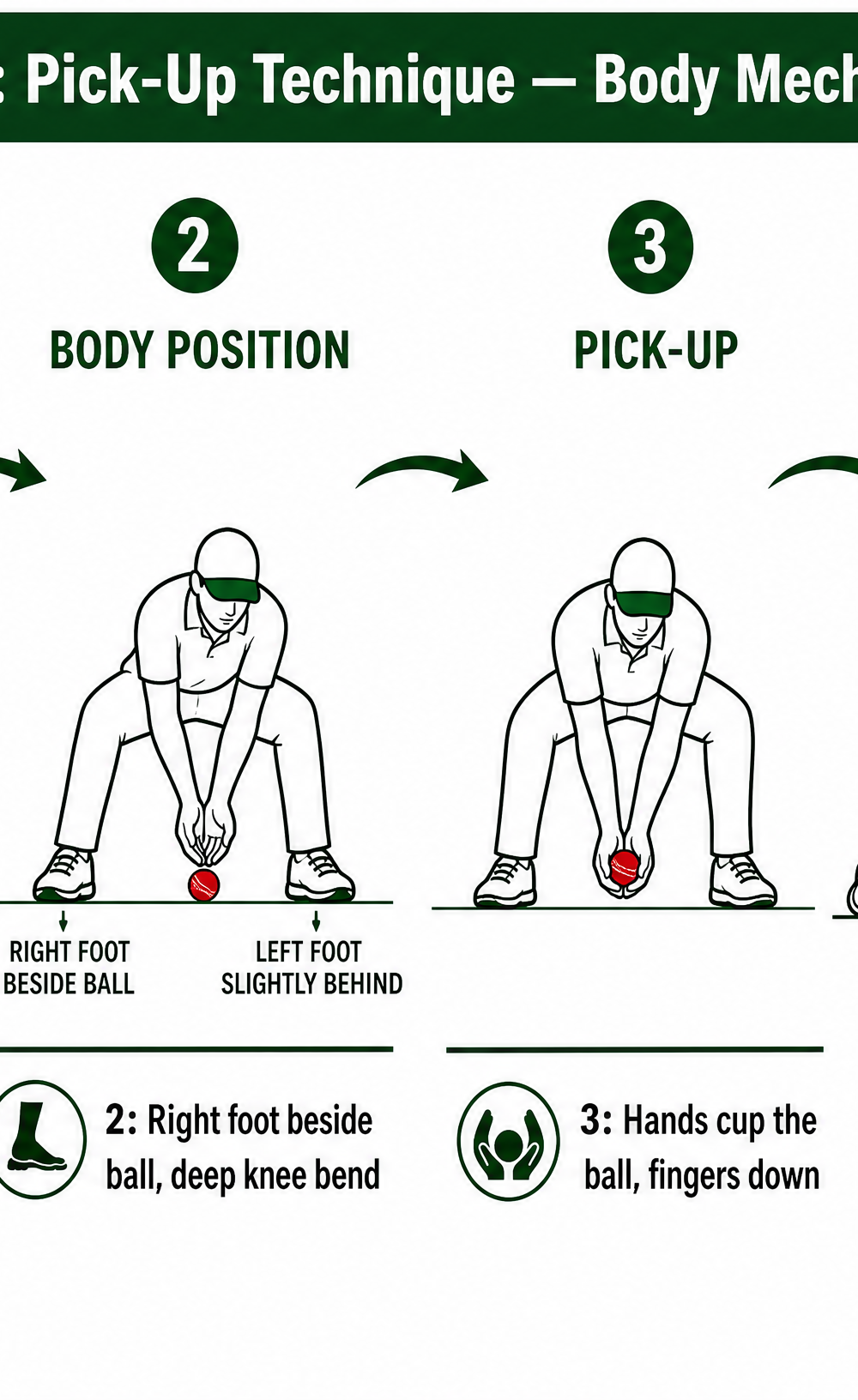
- Progression 2: Competitive Relay (Team vs Team): Split the squad into two teams. Set up two parallel relay lines. The feeder rolls the ball, and teams must execute a clean pick-up and relay throw back to the stumps. First team to hit the stumps wins the point.
- Variation 1: Variable Feeds: Instead of a smooth roll, the feeder can introduce bounces, spin, or harder hits to simulate unpredictable match conditions.
7. Age Adaptations
- Under 8s / Under 10s: Use softer incrediballs or tennis balls. Reduce the distance to 10-15 metres. Focus purely on the two-handed "crocodile" catch technique and stopping the ball safely.
- Under 12s / Under 14s: Introduce standard cricket balls. Emphasize the speed of the approach and the transition from pick-up to throw. Start timing the drill to add pressure.
- Under 16s / Open: Full match intensity. Introduce the competitive relay progression and variable feeds. Demand flat, hard throws directly over the stumps.