Middle-Overs Run Chase: Rotation, Pressure and the Two-Run Squeeze
Coach a batting pair to turn middle overs into controlled momentum through decisive calling, soft-hand placement and repeatable one-to-two running patterns.

Equipment Needed
Overview
This set play gives batting pairs a repeatable method for winning the middle overs of a chase without gambling wickets. It is designed for the period after the powerplay, when boundary options are protected and the fielding side is trying to create dot-ball pressure. The pair’s job is not to manufacture a heroic shot every ball. It is to keep the score moving: identify the safe single early, run the first hard, and immediately assess whether the return is on.
Use it when your side is chasing at a manageable rate but has allowed two or three quiet balls to build pressure, or when a new batter needs a low-risk way to settle. The desired outcome is a pair that can score 8–10 runs per over from rotation before boundaries, preserve strike for the better match-up, and force fielders to defend larger areas. This is a decision-and-running play, not a premeditated shot drill.
Coach’s cue: “See it early, say it early, finish the first run, then earn the second.”
Setup
Set the activity on a regulation 22-yard (20.12 m) pitch; the MCC defines the playing pitch as 22 yards long and 10 ft wide.1 Use a full oval if available. On a smaller ground, keep the pitch regulation for the age group where possible, but bring the boundary cones in to the distances below.
| Item | Coach setup | Purpose |
|---|---|---|
| Batting pair | 1 Striker and 2 Non-striker, both helmeted and carrying bats | They own the call and complete every run. |
| Delivery team | 3 Bowler, 4 Wicketkeeper, inner ring at 5 Point, 6 Cover, 7 Mid-off, 8 Mid-on, 9 Midwicket, 10 Square leg | Gives realistic stopping and throwing pressure. |
| Boundary roles | 11 Long-off/Deep point and 12 Long-on/Deep square leg, rotated each set | Creates genuine one-versus-two decisions. |
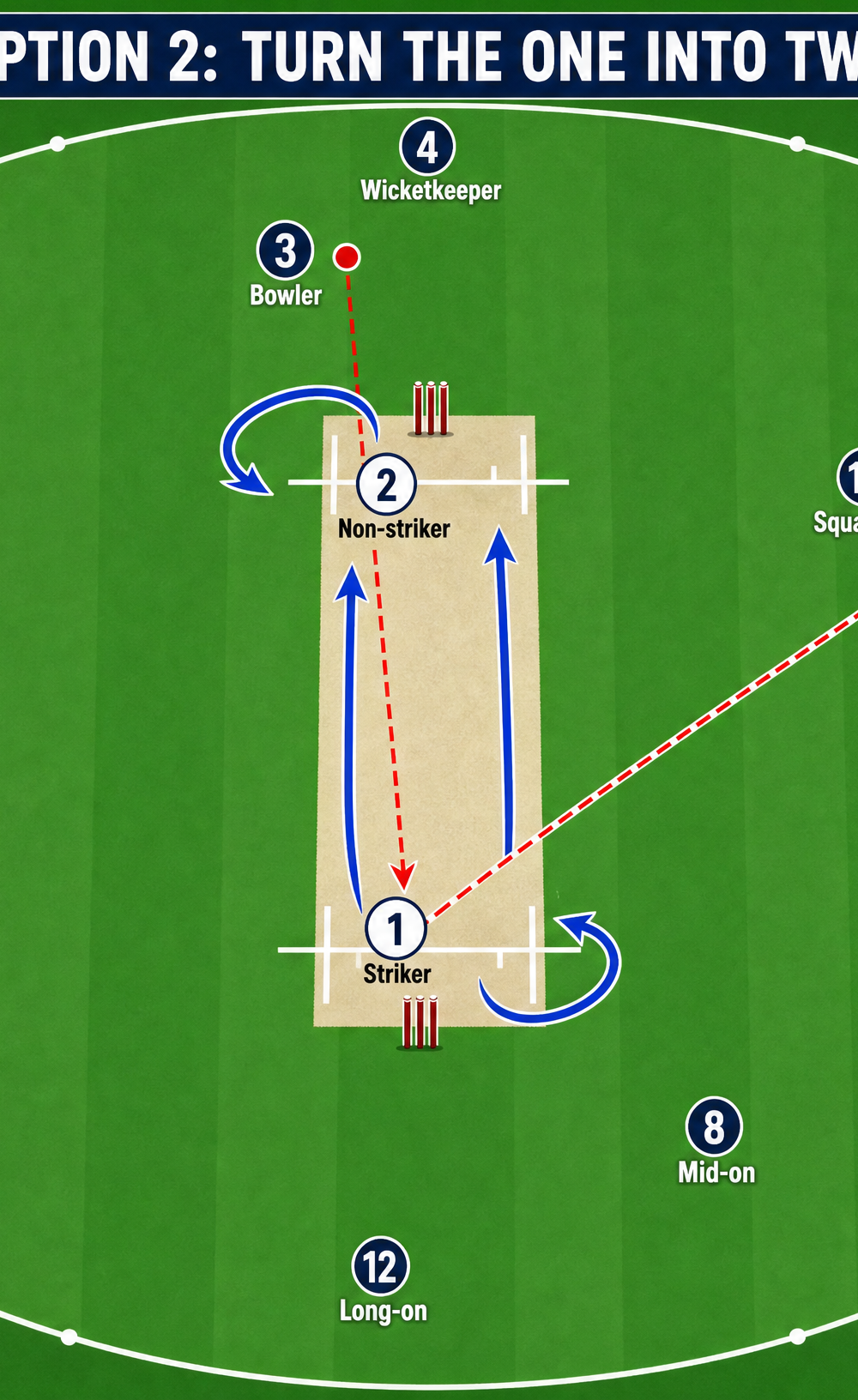
| Zones | Cone a 12 m-wide off-side gap between Point and Cover, and a 15 m-wide leg-side two-run zone behind Square leg | Makes the desired options visible before the live phase. |
Place the inner ring 18–25 m from the striker, adjusted for age and ground speed. Put the two deeper fielders 45–60 m out on an adult oval, or 30–40 m for junior groups. Give the batting pair a live target: for example, 54 from 6 overs with 6 wickets in hand. One coach feeds from the bowling end at first; progress to a bowler when the pair can execute the calls cleanly.

Diagram 1 — the release single
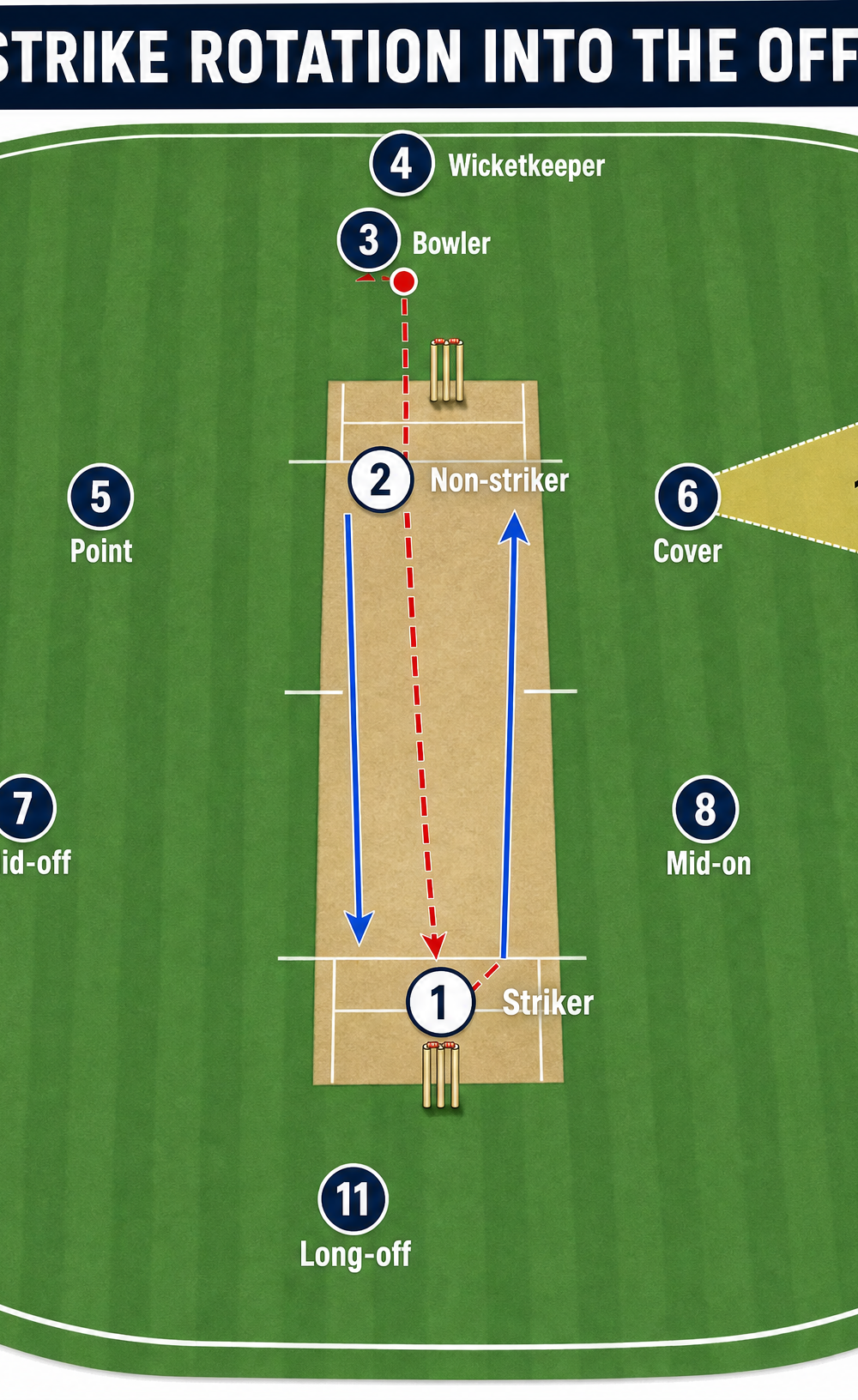
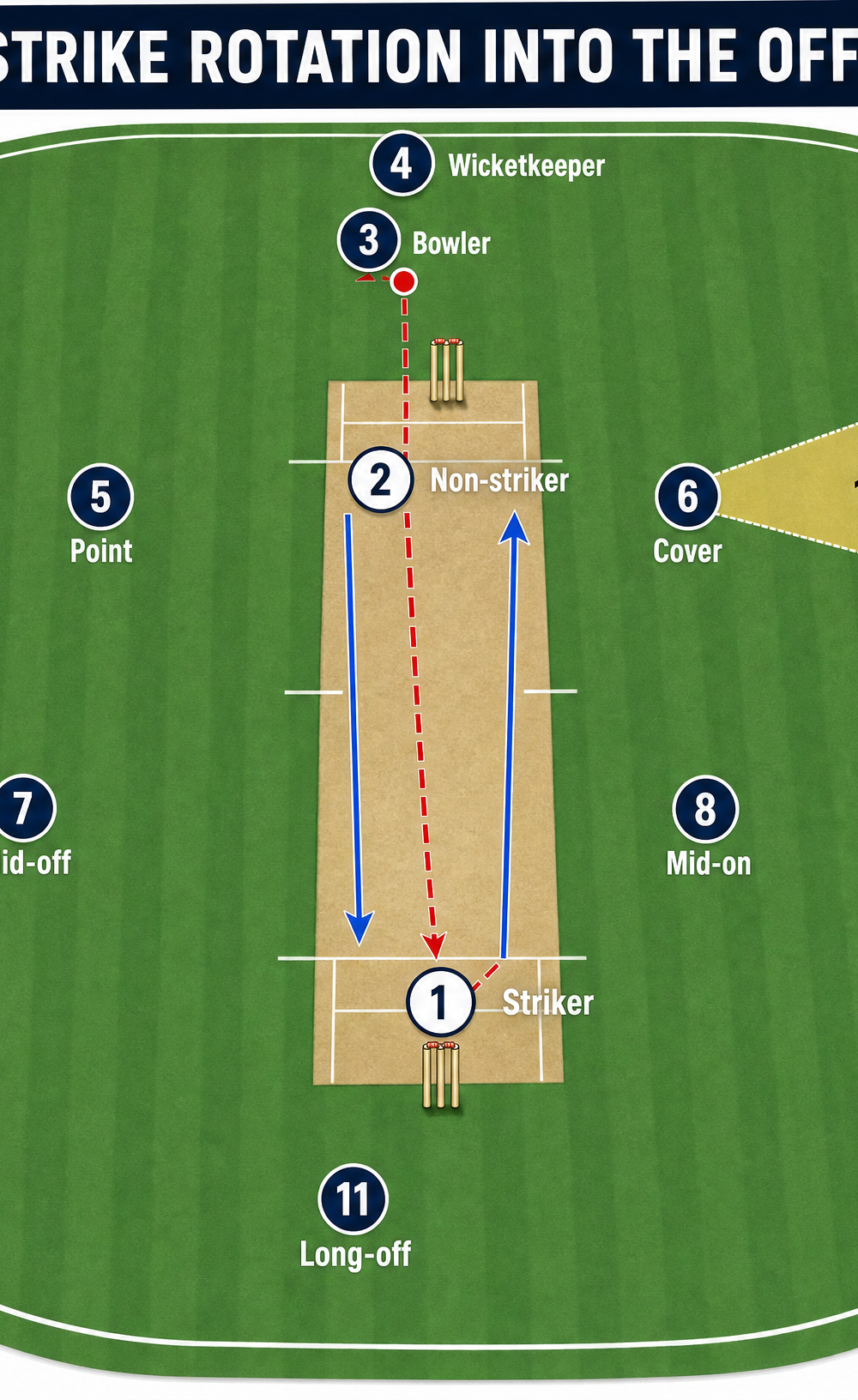
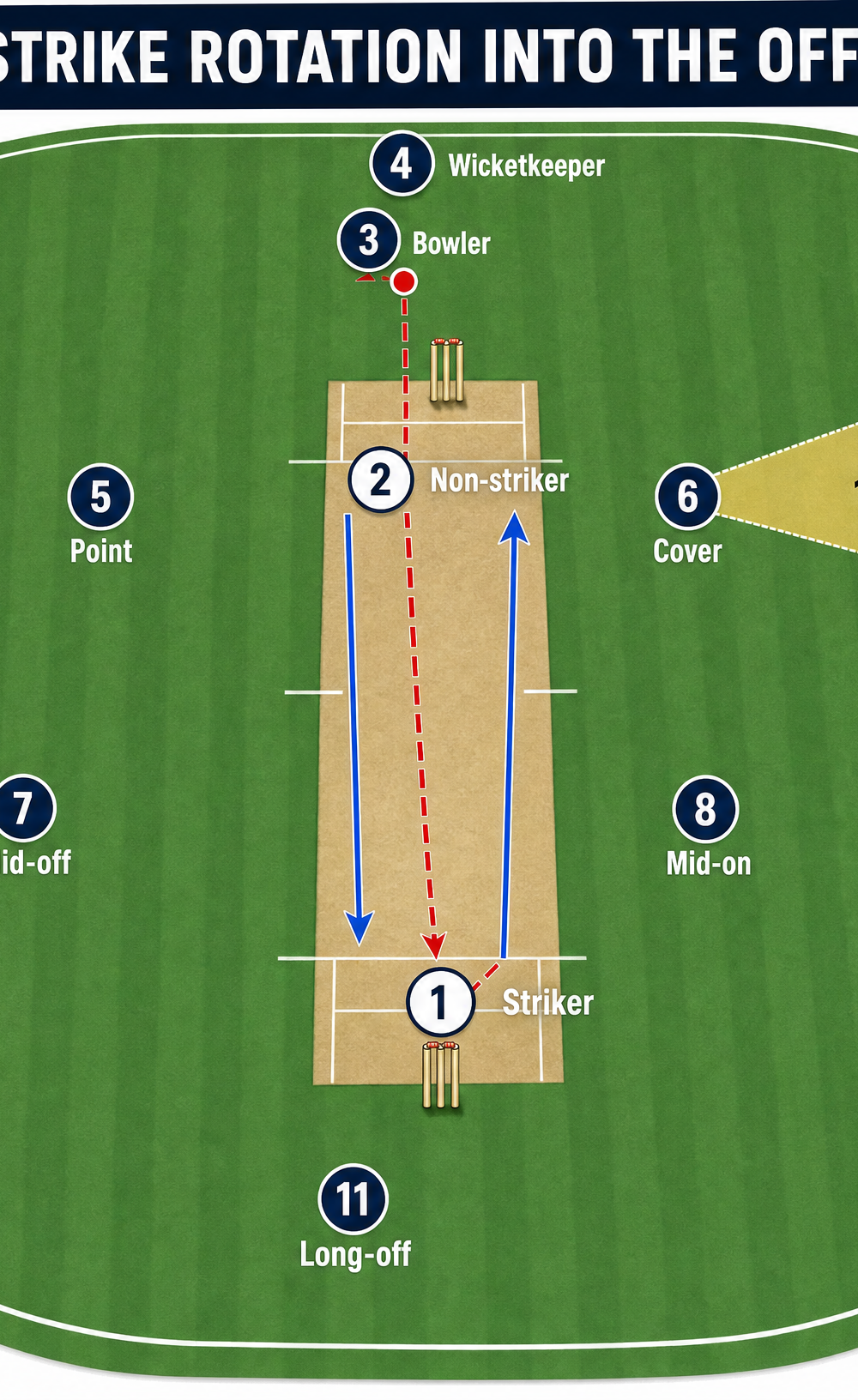
The first scoring option is a soft-handed push into the Point–Cover gap. The striker calls “Yes” immediately after seeing the ball pass the inner fielder’s dive line. The non-striker listens, commits for the first three strides and runs directly through the far crease. A run is completed only when each batter has crossed and made good their ground, so coach bat grounding and full crease penetration rather than a casual slide past the line.2
Step-by-Step Instructions
Frame the chase. Put the target and balls remaining on a whiteboard. Tell the pair that a dot ball is only acceptable if it follows a deliberate no-call, not a hesitant call. Set a six-ball target of 8 runs: four singles, one two and one boundary or extra is a strong result.
Rehearse the language without a ball. Walk both batters through three calls: “Yes” means commit; “No” means stop and reset; “Wait” means take two checking steps before the final call. The striker owns the call in front of the wicket; the non-striker owns the call when the ball travels behind the striker. Demand one loud word only—no conversations halfway down.
Run the off-side release. Feed a good-length ball on off stump. The striker uses an open bat face and soft hands to guide the ball 5–10 m either side of Cover. As soon as the ball clears the inner ring, they call “Yes,” accelerate for three strides, then run hard through the crease. The non-striker turns side-on at the crease, keeps eyes on the ball and presents the bat low.
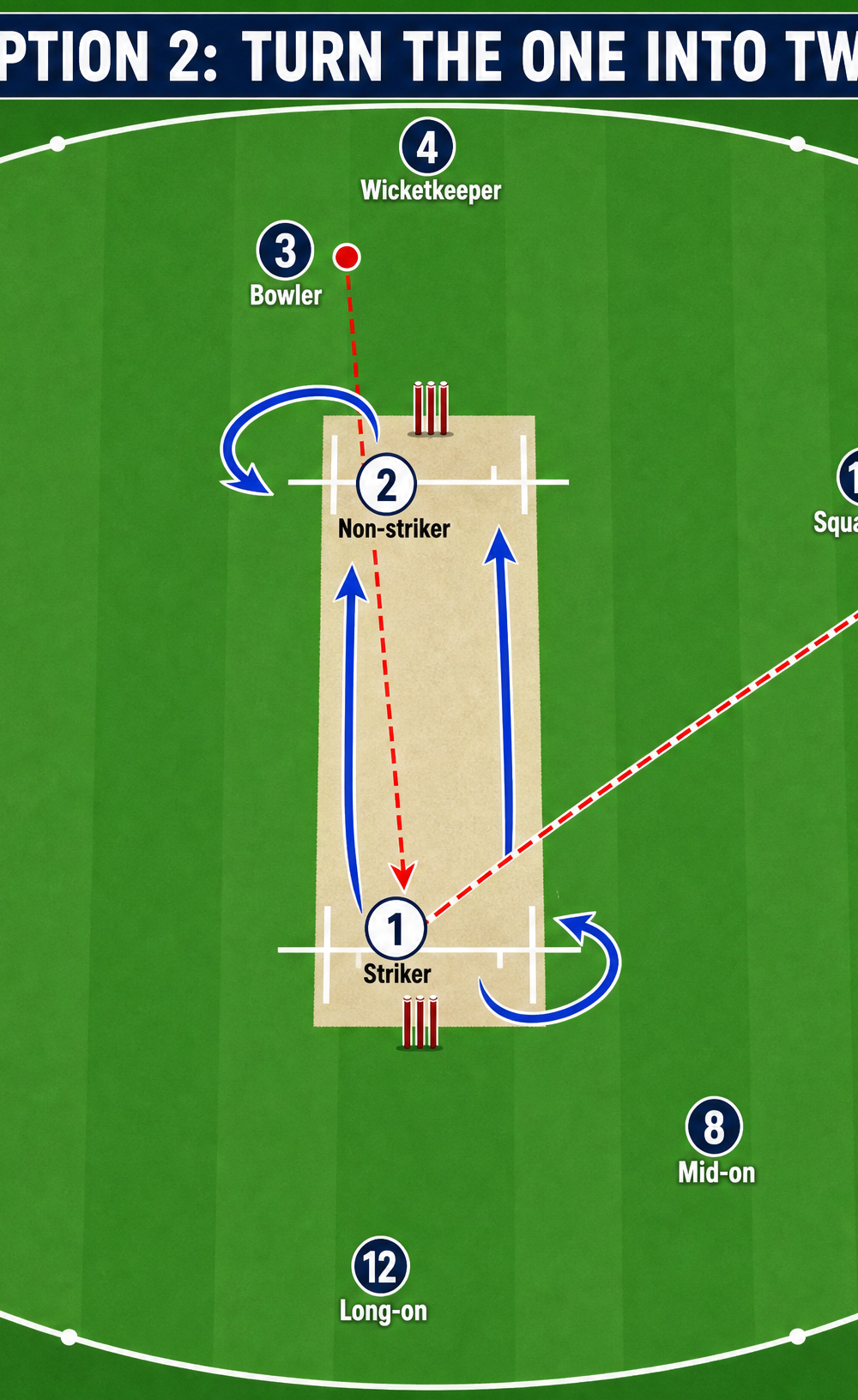
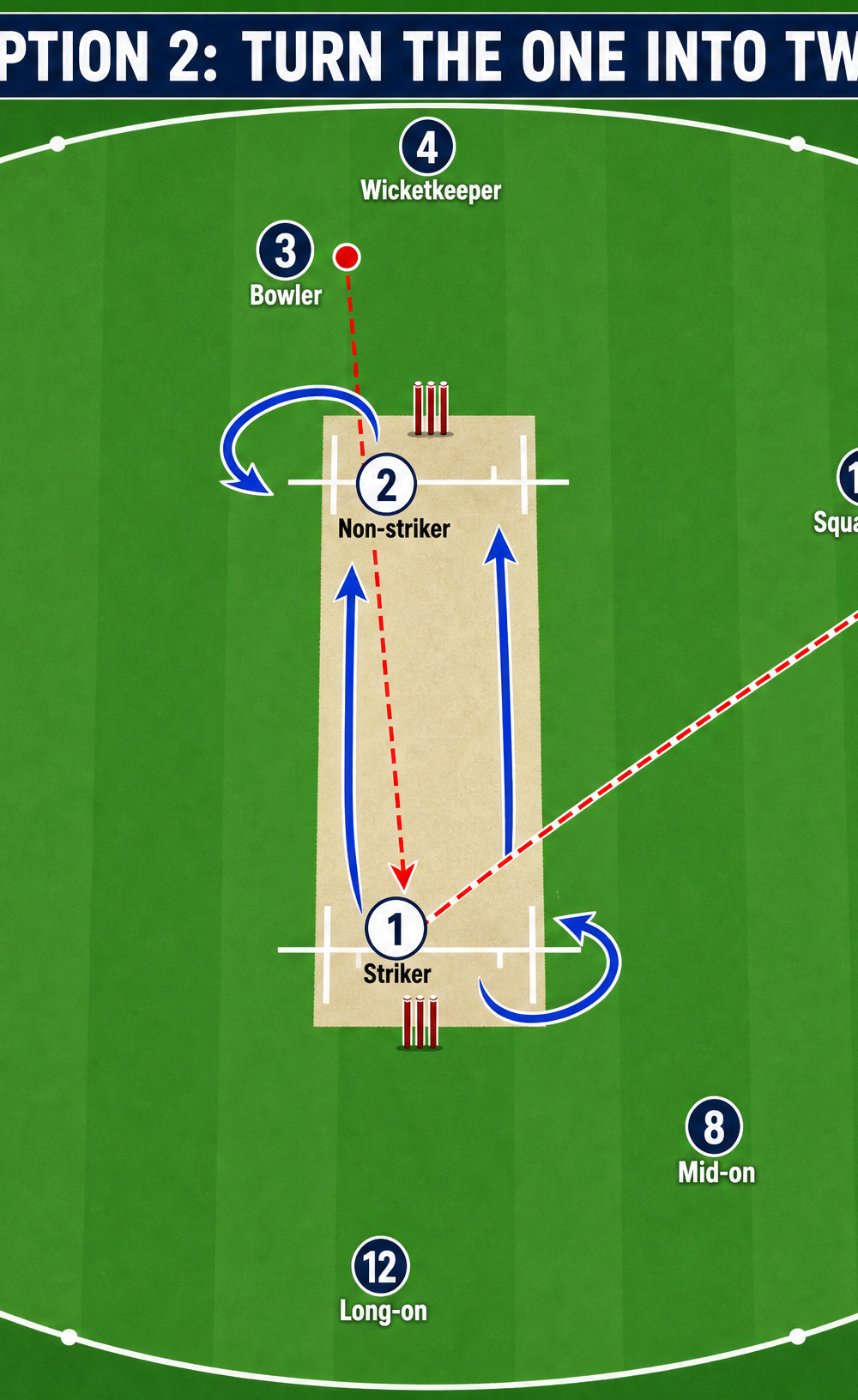
Add the two-run squeeze. Feed a ball to backward square-leg or deep midwicket. The first run is non-negotiable. As they approach the far crease, the arriving batter turns from the inside lane, watches the pickup and calls “Two” only if the fielder is still gathering or the throw travels more than one bounce. Both players must complete the turn with the bat in the hand closest to the crease.
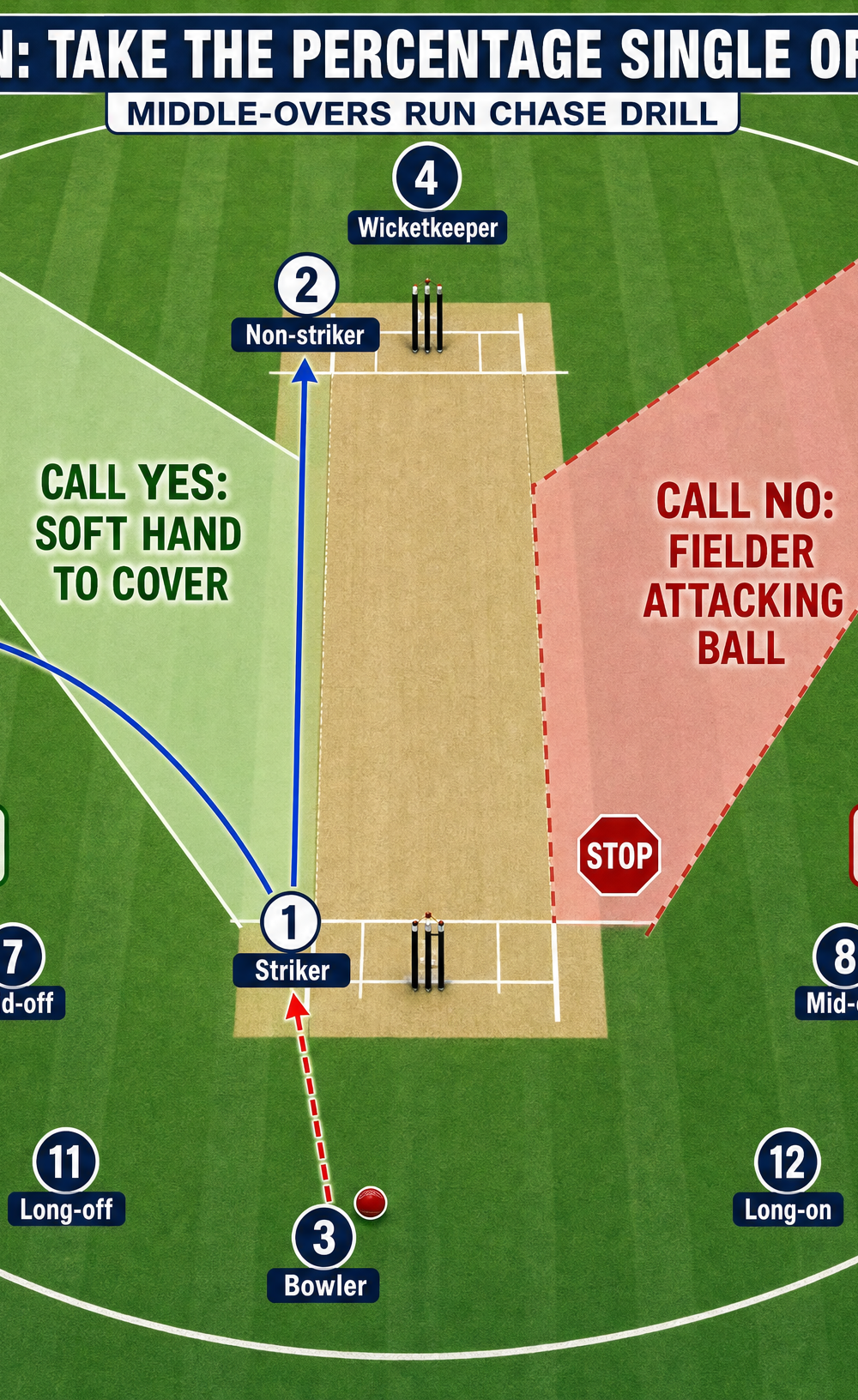
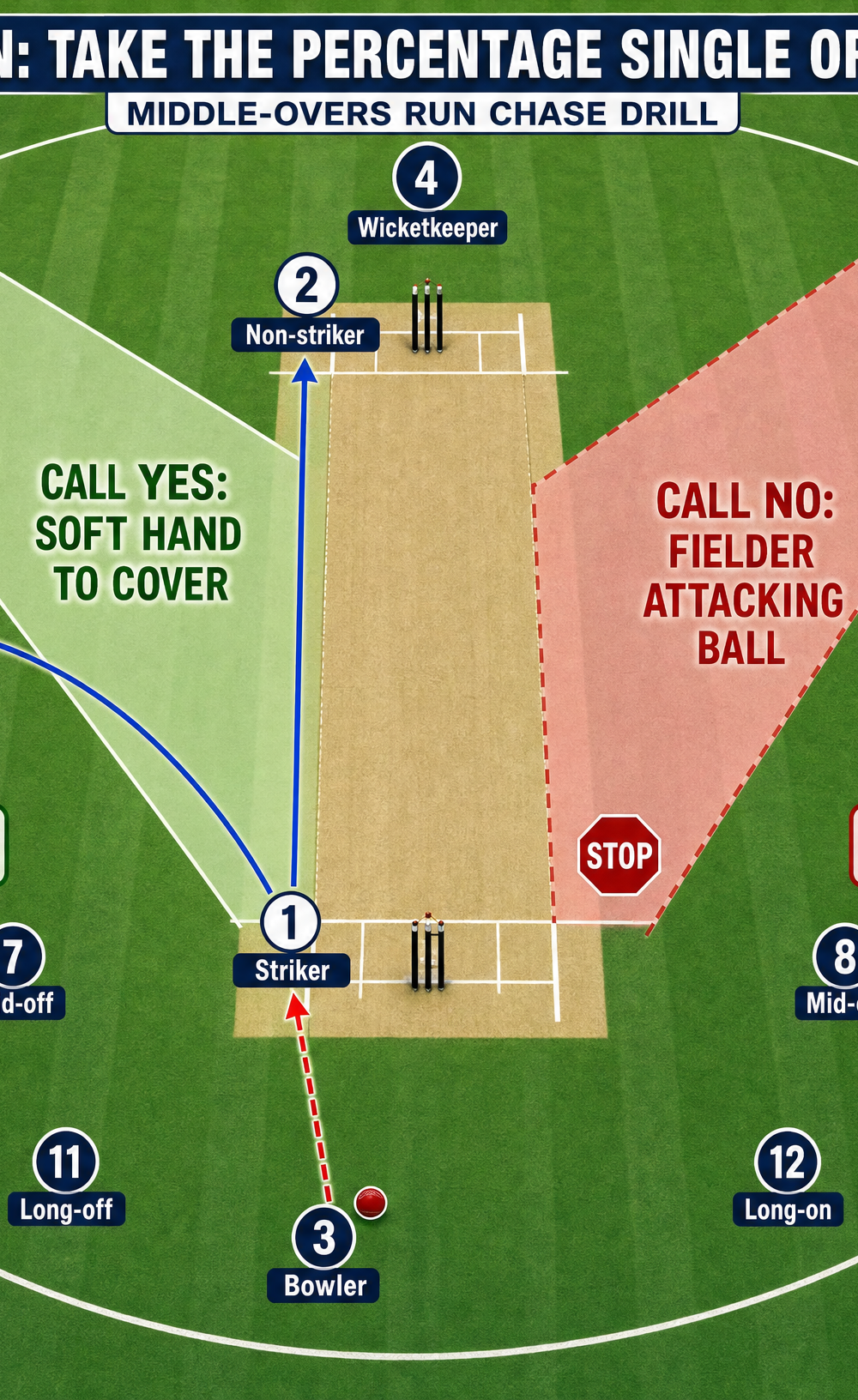
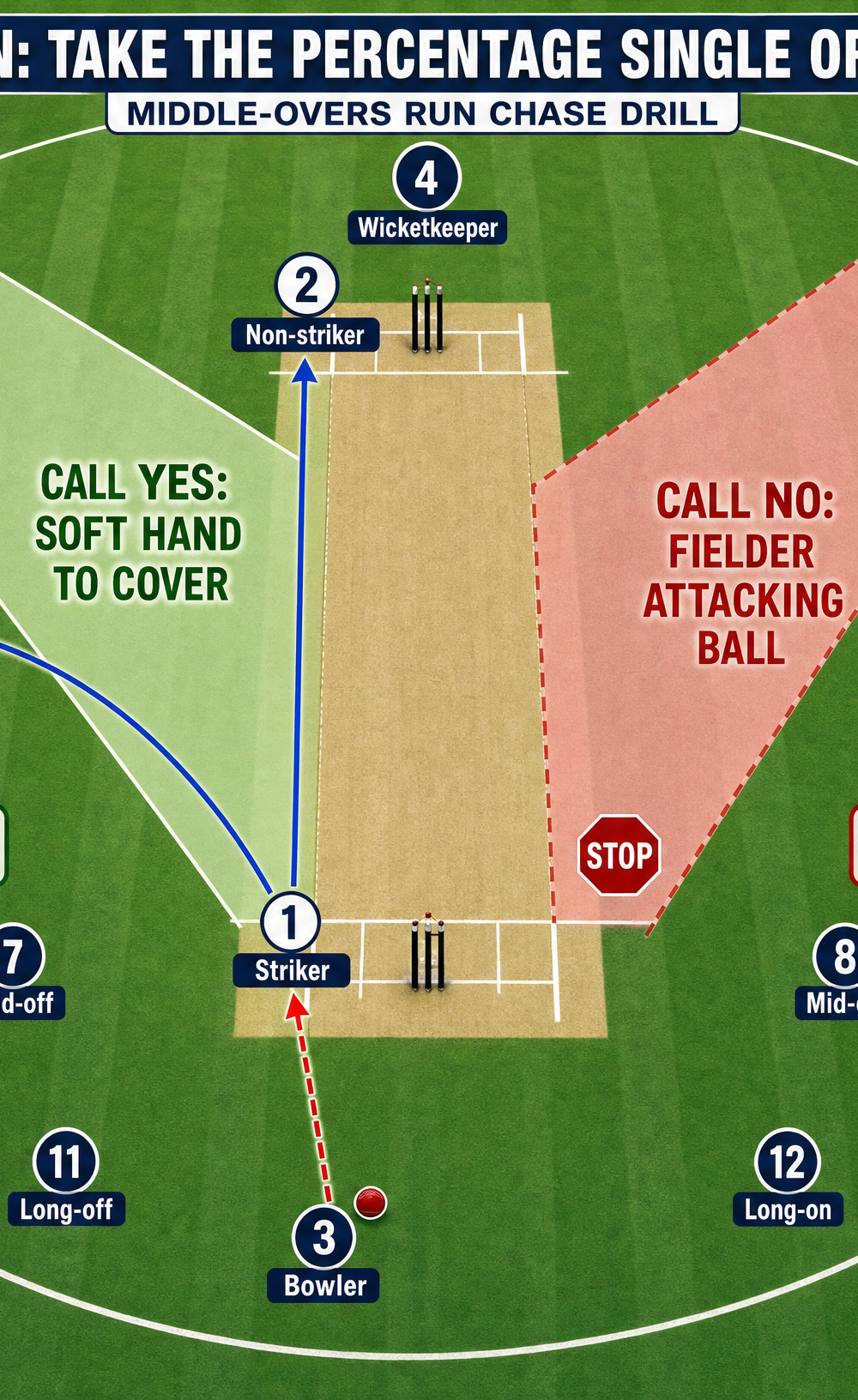
Introduce the reset decision. Place Cover 18 m from the striker and instruct that fielder to attack every soft ball. The striker must call “No” if Cover is balanced, moving forward and likely to release inside two seconds. Make the pair return safely, then score their next ball; this prevents the common error of chasing a run merely because the ball left the bat.
Play two live overs. The fielding side bowls and fields normally; the batting pair receives one point for a completed single, three points for a completed two, minus five for a run-out, and minus one for a communication error even if the run is completed. Between overs, give the pair 20 seconds to state which gap, fielder and call they will prioritise next over.
Key Coaching Points
| Coaching point | What to look for | Intervention |
|---|---|---|
| Early information | Non-striker watches the fielder before the ball is struck. | Ask, “Which fielder is the decision-maker on this ball?” |
| Clear ownership | One decisive call occurs before the batters cross. | Stop any double call; repeat the ball from the starting crease. |
| First run pace | Both players sprint the first 5 m, then maintain a direct line. | Time the first run; reward improvement, not just the total runs. |
| Turn quality | Batter lowers centre of mass, plants outside foot and turns from inside the crease. | Mark a 1 m turning box behind each popping crease. |
| Soft hands | The ball is placed into space rather than punched to a close fielder. | Use a target cone 8–12 m past Cover or Midwicket. |
| Match awareness | Pair know balls left, required rate and strike match-up. | Pause between overs for a 20-second tactical check. |
Common Mistakes
The first mistake is calling after the first two steps. This forces the partner to react rather than commit. Correct it by making any late “Yes” a dead ball in practice; players soon learn to make the decision at contact.
The second is watching the ball while running. The runner should look once to read the pickup, then locate the crease and finish the run. Use a cone gate 1 m beyond the popping crease and make them run through it.
The third is turning outside the crease. Players lose balance, shorten the return and risk a short run. Run-throughs must be completed with the bat grounded behind the line, then turn from the inside lane.
The fourth is forcing a second after a clean pickup. Teach the pair that a sharp first single is a win; a low-percentage second is not. Diagram 3 should be used as the language prompt: “Yes and commit” or “No and reset.”
Variations & Progressions
Start with a guided feed progression: the coach feeds only into pre-marked gaps and fielders use underarm returns. This lets players automate calls, lines and turns. Next, use a match-up progression: give the bowler a defensive off-side field for six balls, then a leg-side field for six, so the pair must identify where the release single has moved. Finally, use a consequence progression: one wicket ends the pair’s innings, one dot ball starts a 10-second clock for a pressured next ball, and the pair must complete 18 runs from two overs.
Age Adaptations
For Under-10, use the governing body’s shortened pitch and a 25–30 m boundary. Use a coach feed, four inner fielders and only “Yes” or “No.” Score the first run as the success measure; do not introduce live throw-downs until batters can ground the bat confidently.
For Under-12 and Under-14, keep six inner fielders, use a 30–40 m boundary and introduce the “Wait” call. Permit one bounce on returns in the first round, then move to live overarm throws. Ask the batting pair to nominate the safe side of the field before each over.
For Under-16 and open age, operate on the full 22-yard pitch and a 45–60 m boundary. Use varied pace, spin and planned field changes. Require the pair to manage a strike-specific plan—for example, protect a new batter from the stronger bowler while still scoring 8+ per over.
Coach review
Finish by asking each player for one piece of information they will read earlier next time: the fielder’s starting depth, the fielder’s first movement, the ball’s pace into the gap, or the partner’s call. The play is working when your pair stop asking, “Can we get one?” and start stating, “The single is on; the second depends on the pickup.”
References