

Cricket
Mastering Running Between the Wickets: The Decision Zone Drill
A comprehensive, high-intensity drill designed to improve communication, decision-making, and sprint speed between the wickets under match-like pressure.
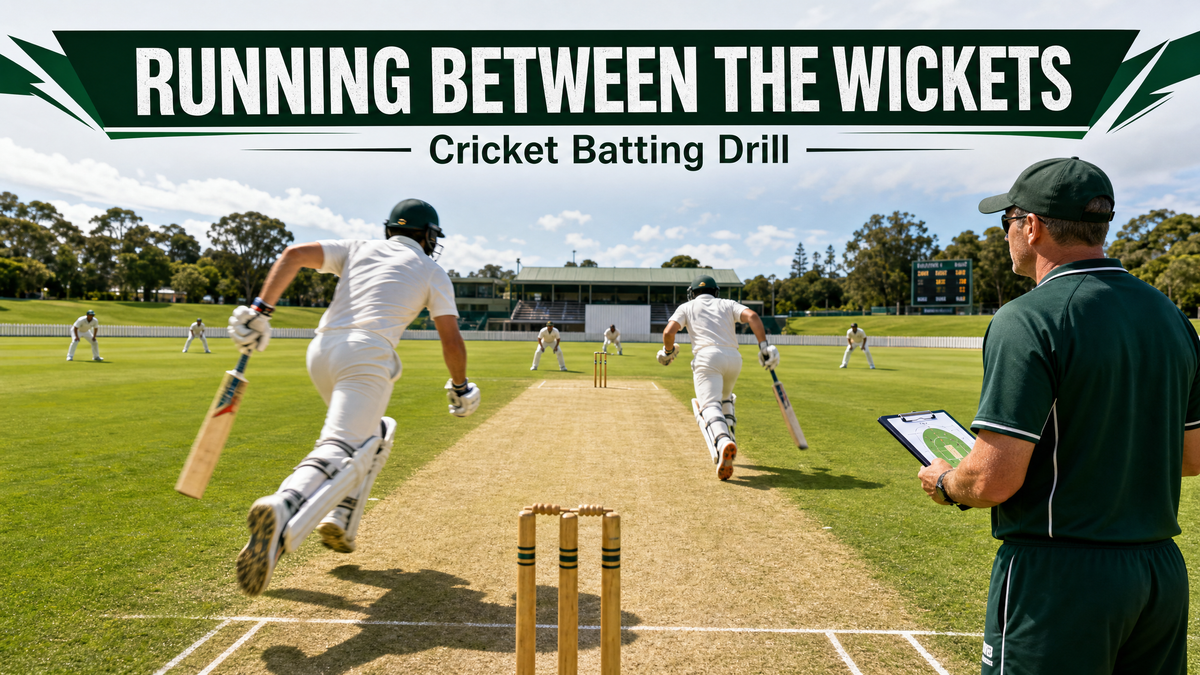
What you need
2 bats, 2 sets of stumps with bails, Batting pads and gloves, 15-20 training cricket balls, 10-15 marker cones (red, yellow, green), Clipboard and stopwatch
1. Overview
Running between the wickets is arguably the most fundamental yet under-practiced skill in cricket. Poor calling and hesitation cost teams valuable runs and often lead to catastrophic run-outs. The Decision Zone Drill is a high-intensity, match-simulation exercise designed to train batters in clear communication, decisive calling, and aggressive running mechanics.
This drill shifts the focus from simply sprinting 22 yards to the critical decision-making process that occurs in the first two seconds after the ball is struck. By implementing a structured 'Yes, Wait, No' framework, coaches can eliminate ambiguity and build a resilient batting partnership.
2. Setup
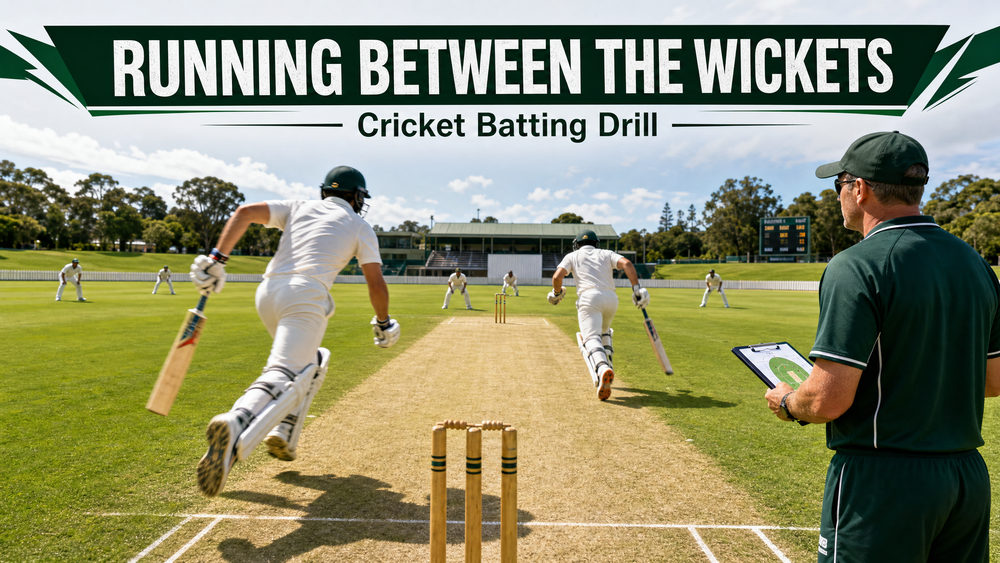
Equipment Needed:
- 2 bats
- 2 sets of stumps (with bails)
- Batting pads and gloves (helmets optional but recommended for realism)
- 15-20 training cricket balls (Incrediballs or standard leather balls depending on age)
- 10-15 marker cones (preferably in three distinct colours: red, yellow, green)
- 1 clipboard and stopwatch for the coach
Pitch and Field Dimensions:
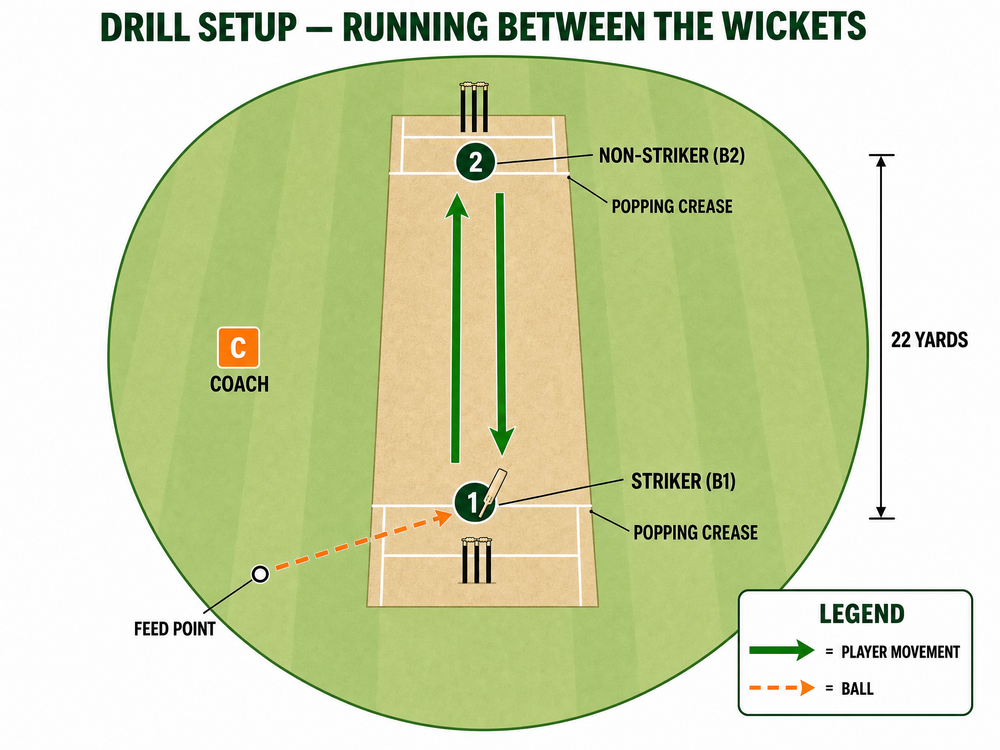
Set up on a standard 22-yard cricket pitch (or an appropriately scaled pitch for junior age groups). Mark the popping creases clearly at both ends.
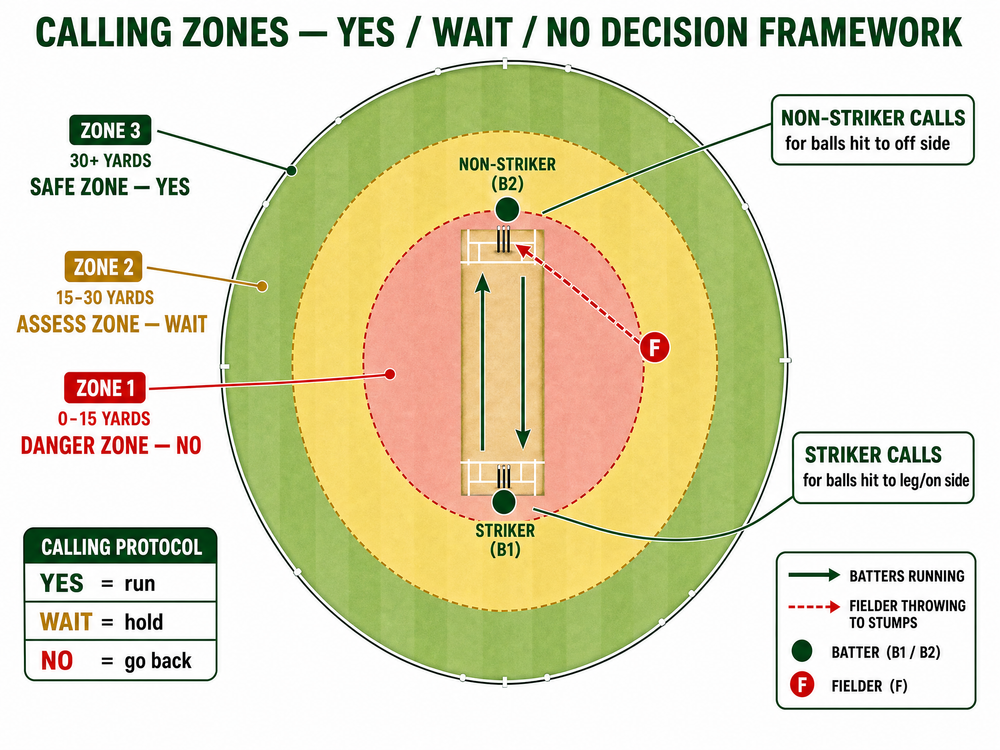
Using the coloured cones, mark out the three decision zones radiating from the pitch:
- Zone 1 (Danger Zone - Red): 0 to 15 yards from the striker.
- Zone 2 (Assess Zone - Yellow): 15 to 30 yards from the striker.
- Zone 3 (Safe Zone - Green): 30+ yards from the striker (outfield).
Player Positions:
- Striker (B1): Positioned at the batting crease, fully kitted.
- Non-Striker (B2): Positioned at the non-striker's end, backing up just outside the popping crease.
- Coach/Feeder: Positioned at square leg or fine leg with the bucket of balls.
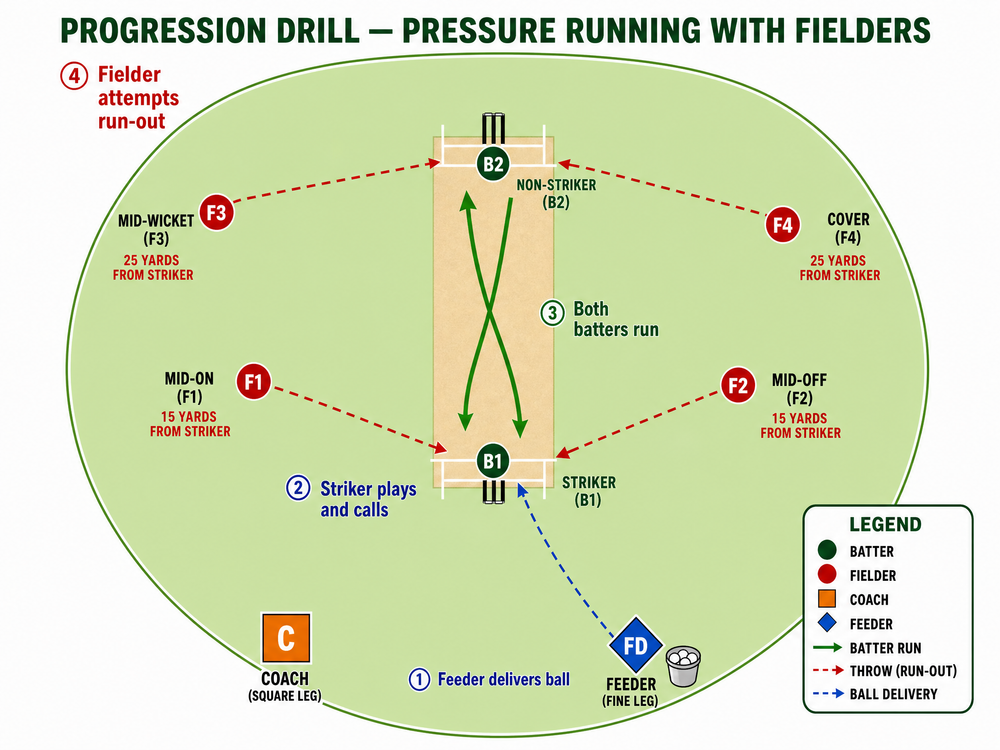
- Fielders (Optional for Progression): Stationed at mid-on, mid-off, cover, and mid-wicket.
3. Step-by-Step Instructions
- The Feed: The coach or a designated feeder rolls, throws, or uses a bowling machine to deliver the ball toward the striker. The feed should vary in pace and direction (off-side vs. leg-side).
- The Strike & Call: The striker plays a defensive or attacking shot. Immediately upon contact, the primary caller must make a loud, clear call: "YES", "WAIT", or "NO".
- Rule of Thumb: Striker calls for balls hit in front of square on the leg side; Non-striker calls for balls hit behind square or on the off side.
- The Response: The partner must immediately respond to the call. If the call is "YES", both batters sprint to the opposite end.
- The Turn: If running multiple runs, the batters must ground their bat past the popping crease, turn blind (facing the ball), and accelerate for the second run.
- The Reset: After the run (or the decision not to run), the batters reset. The coach provides immediate feedback on the clarity of the call and the speed of the turn.
4. Key Coaching Points
- Loud, Decisive Calling: The call must be immediate and booming. Hesitation is the enemy. Enforce the strict vocabulary of "Yes", "Wait", or "No".
- Non-Striker's Backing Up: The non-striker must walk in with the bowler and be outside the crease (but grounded) as the ball is released, anticipating a run.
- Running Your Bat In: Players must slide the bat across the crease line, extending their reach. Never run past the crease with the bat in the air.
- Turning Blind: When turning for a second run, batters must turn facing the side of the field where the ball was hit, keeping their eyes on the fielder and the ball.
- First Three Steps: The first three strides out of the crease must be explosive and low to generate maximum acceleration.
5. Common Mistakes
- The 'Yeah-Nah' Call: Mumbled or contradictory calls (e.g., "Yeah, wait, no") cause fatal hesitation. Coaches must stop the drill immediately and correct this.
- Ball Watching: The non-striker staring at the ball instead of listening to the striker's call or watching their partner's movement.
- Lazy Bat Grounding: Running over the crease without sliding the bat, costing crucial fractions of a second and risking a run-out.
- Turning Blind to the Ball: Turning your back to the fielder when running a two, resulting in a lack of awareness of a potential throw.
6. Variations & Progressions
Progression 1: Pressure Running with Fielders
Introduce 4-6 active fielders stationed in the 'Assess Zone' (Zone 2). The batters must now judge the speed of the ball against the speed of the fielder. Fielders actively attempt to run the batters out. This adds realistic match pressure.
Progression 2: The 'Two-Run' Challenge
The coach mandates that every "YES" call must be an attempt for two runs. This forces the batters to run the first run exceptionally hard and execute a perfect, aggressive turn.
Variation 1: The Silent Drill
Batters are not allowed to speak. They must rely entirely on eye contact, head nods, and body language to communicate the run. This heightens awareness and partnership synergy.
7. Age Adaptations
- Under 8s & Under 10s: Focus purely on the mechanics of sliding the bat and shouting "YES" or "NO" loudly. Use softer balls and shorter pitch lengths (e.g., 16-18 yards). Remove the complex zones.
- Under 12s & Under 14s: Introduce the "WAIT" call and the concept of backing up correctly. Begin emphasizing the technique of turning blind and running the first run hard.
- Under 16s & Open/Seniors: Run the full Decision Zone Drill with active fielders. Focus on the explosive first three steps, elite communication under fatigue, and exploiting the 'Assess Zone' for tight singles.
