

Cricket
Dynamic Ground Fielding & Pick-Up Masterclass
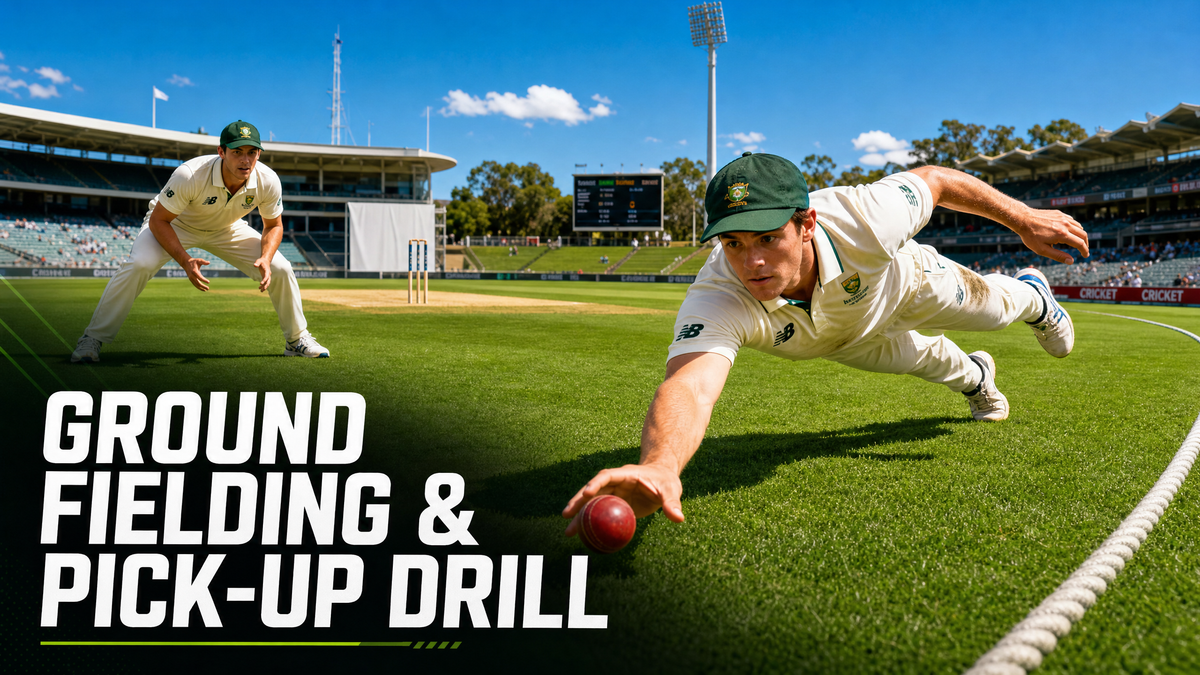
Master the essential mechanics of attacking the ball, executing clean pick-ups, and delivering rapid returns with this high-intensity ground fielding drill.
What you need
1 set of stumps, 6-8 cricket balls (or incrediballs), Marker cones
1. Overview
Ground fielding is the bedrock of a high-performing cricket team. The ability to attack the ball aggressively, secure it cleanly, and release it accurately under pressure can be the difference between a run-out and a stolen single. This drill is designed to isolate and perfect the mechanics of the ground fielding pick-up, focusing on footwork, body position, and the transition into the throwing phase.
It is an excellent foundational drill that can be scaled up in intensity, making it suitable for warming up elite squads or teaching fundamental mechanics to junior players. By running this drill regularly, coaches will see a marked improvement in their players' confidence when attacking the ball in the inner ring.
2. Setup
Proper setup is crucial for maximizing repetitions and ensuring player safety.
- Location: Any flat, grassy area of the oval, preferably near the pitch square to simulate match conditions.
- Equipment: 1 set of stumps (target), 6–8 cricket balls (or incrediballs for juniors), marker cones.
- Player Positions:
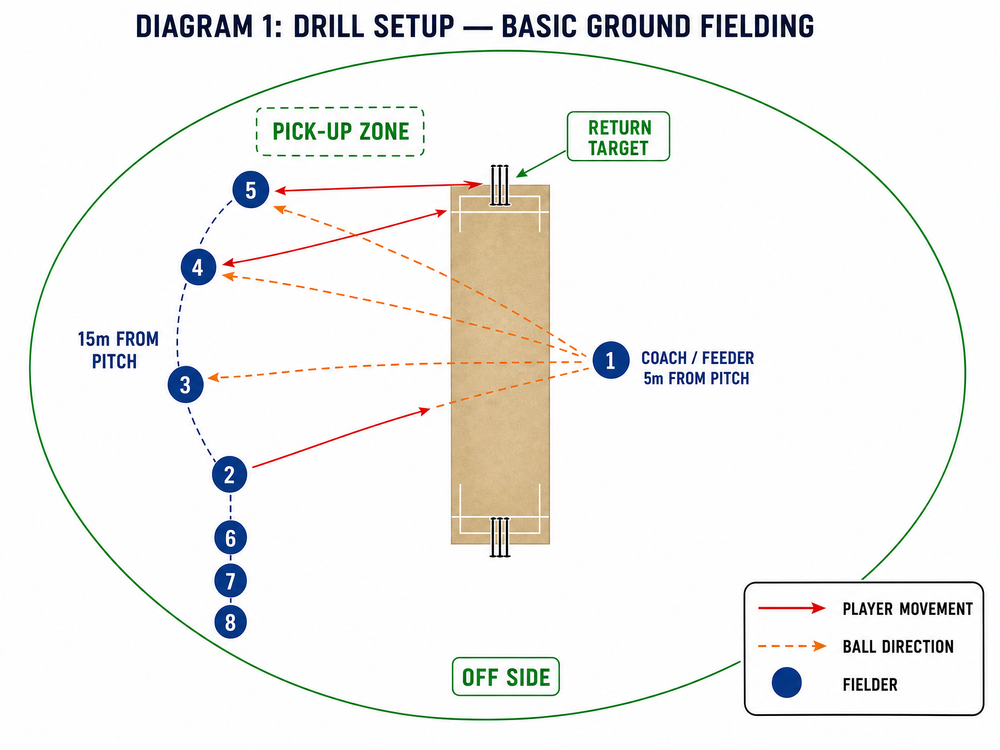
- Place a set of stumps to act as the return target.
- The Coach (or feeder) stands approximately 5–8 metres away from the stumps, slightly offset to avoid being hit by return throws.
- Set up a starting cone for the fielders 15–20 metres away from the stumps, forming a slight semicircle or a straight line depending on the desired angle of attack.
- Players line up behind the starting cone.
3. Step-by-Step Instructions
Execute the drill with a focus on quality of movement over pure speed initially.
- The Stance: The fielder at the front of the queue adopts an athletic ready position — knees slightly bent, weight on the balls of the feet, hands out in front, and eyes locked on the coach.
- The Feed: The coach rolls the ball along the ground toward the fielder. The pace of the roll can be varied to challenge the fielder.
- The Approach: As soon as the ball is released, the fielder sprints aggressively toward the ball, taking short, choppy steps as they get closer to maintain balance and control.
- The Setup: The fielder decelerates slightly, stepping their non-throwing foot next to the line of the ball (e.g., left foot for a right-handed thrower).
- The Pick-Up: The fielder bends at the knees and hips, getting their head over the ball. They field the ball on the inside of their front foot using two hands (the 'crocodile' method is recommended for beginners; advanced players may use a one-handed pick-up outside the line of the body).
- The Transfer and Throw: In one fluid motion, the fielder brings the ball up to the throwing shoulder, aligns their body sideways to the target, and executes a crisp, flat throw over the top of the stumps.
- The Follow-Through: The fielder follows their throw toward the target before jogging back to the end of the queue.
4. Key Coaching Points
- Attack the Ball: Do not wait for the ball to come to you. Sprint to meet it to reduce the batsman's time to complete a run.
- Get Low Early: Drop the hips and bend the knees. Avoid bending straight from the waist, which compromises balance and vision.
- Head Over the Ball: Keep the head steady and directly over the ball at the point of collection. If the head is up, the hands will follow, leading to fumbles.
- Soft Hands: Give slightly with the ball upon impact to secure it cleanly before transitioning to the throw.
- Momentum to Target: Ensure the momentum of the run-up is carried through the pick-up and directed straight at the stumps for maximum throwing power.
5. Common Mistakes
- "Braking" Too Early: Players often slow down too far away from the ball, losing the momentum needed for a powerful return throw.
- Fielding on the Heels: Approaching the ball flat-footed reduces agility and makes it difficult to adjust to bad bounces.
- Taking Eyes Off the Ball: Looking up at the target before the ball is securely in the hands is the most common cause of fumbles.
- Throwing Off-Balance: Rushing the throw without properly setting the feet leads to wild, inaccurate returns.
6. Variations & Progressions
- The Bad Bounce: The coach uses a 'bobble ball' or throws the ball firmly into the turf to create unpredictable bounces, testing the fielder's reactions and soft hands.
- One-Handed Pick-Up (Advanced): For balls hit to the fielder's dominant side, have them practice a one-handed pick-up outside their foot, transitioning immediately into a side-on throw.
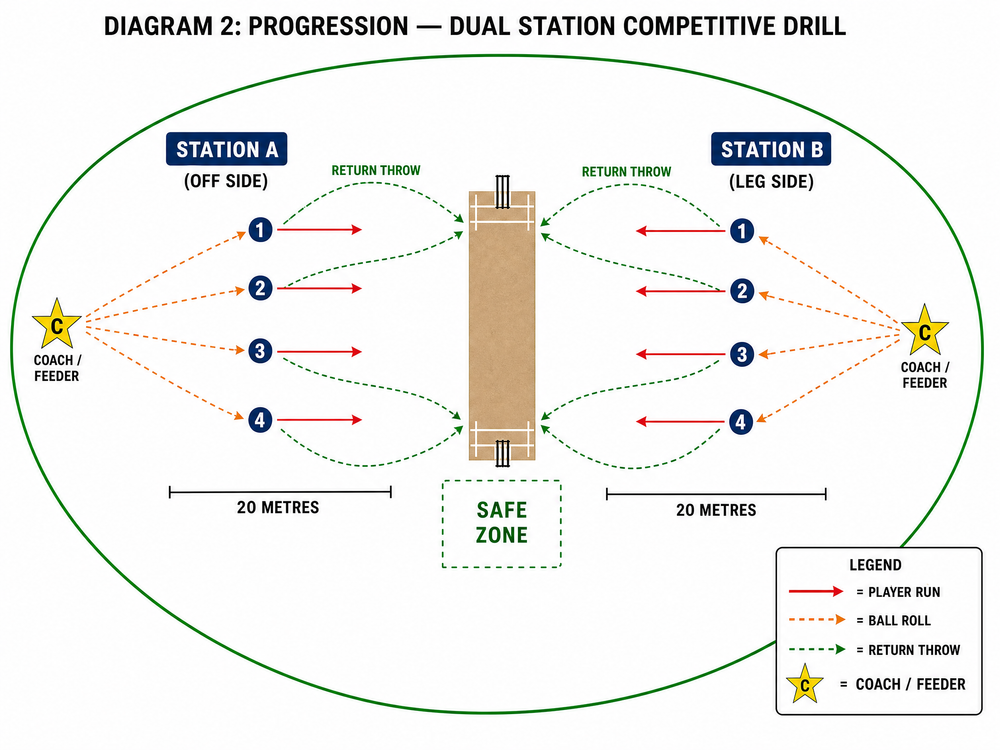
- Dual Station Competitive Drill: Set up two identical stations (off side and leg side). Two players go head-to-head to see who can pick up and hit the stumps first. This introduces pressure and game-like intensity.
7. Age Adaptations
- Under 8s / Under 10s: Use softer incrediballs or tennis balls. Focus entirely on the two-handed 'crocodile' pick-up and getting the body behind the line of the ball. Keep distances short (10 metres).
- Under 12s / Under 14s: Introduce harder cricket balls. Focus on attacking the ball at pace and the fluidity of the transfer from pick-up to throw.
- Under 16s / Open: High intensity is mandatory. Introduce competitive elements, varied feeds (spins, hard bounces), and demand flat, accurate throws directly over the stumps.
