Dynamic Split & Drive: Shooting Circle Movement Drill
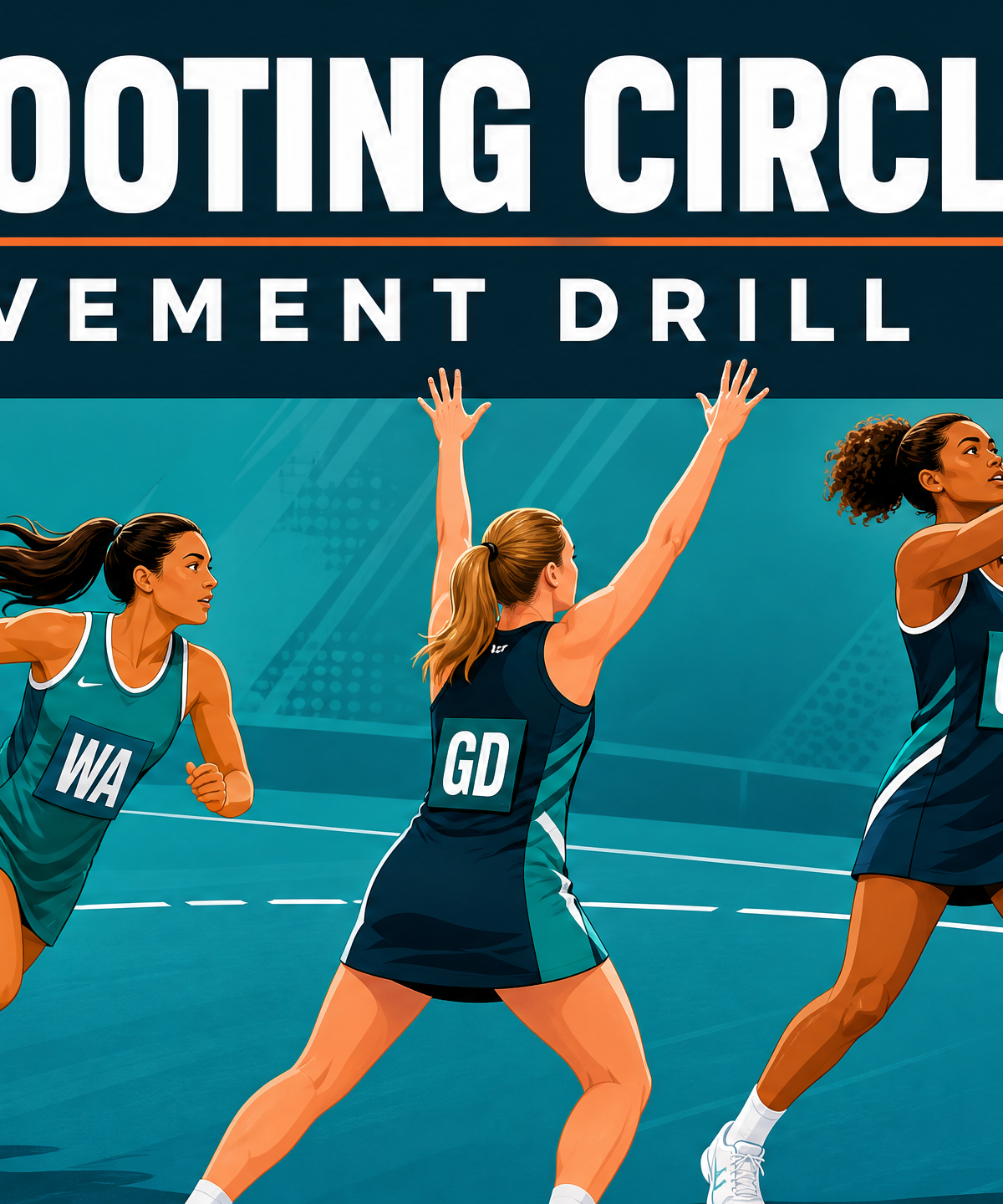
Master attacking circle movement with this dynamic split-and-drive drill designed to open up space and create high-percentage shooting opportunities.
Equipment Needed
1. Overview
The Dynamic Split & Drive drill is an essential attacking exercise designed to improve coordination, timing, and spatial awareness between the Goal Shooter (GS), Goal Attack (GA), and Wing Attack (WA). This drill focuses on the crucial 'split' movement—where two attackers move in opposite directions to confuse defenders and create isolated 1-on-1 situations. It is particularly effective against a tight, zone-based defensive structure, teaching players how to manipulate the defense, hold space, and deliver accurate feeds under pressure.
By practicing this drill, your attacking unit will learn how to read each other's movements, time their drives perfectly, and consistently open up the shooting circle for high-percentage scoring opportunities.
2. Setup
Equipment Needed:
- 1 Netball
- 4-6 marker cones (optional, to mark starting positions)
- Standard netball goal post
Court Setup:
- Utilize the attacking third of a standard netball court (30.5m x 15.25m).
- Ensure the shooting circle (4.9m radius) is clearly marked.
Player Positions:
- Attackers: Goal Shooter (GS), Goal Attack (GA), Wing Attack (WA).
- Defenders (Optional for progression): Goal Keeper (GK), Goal Defence (GD).
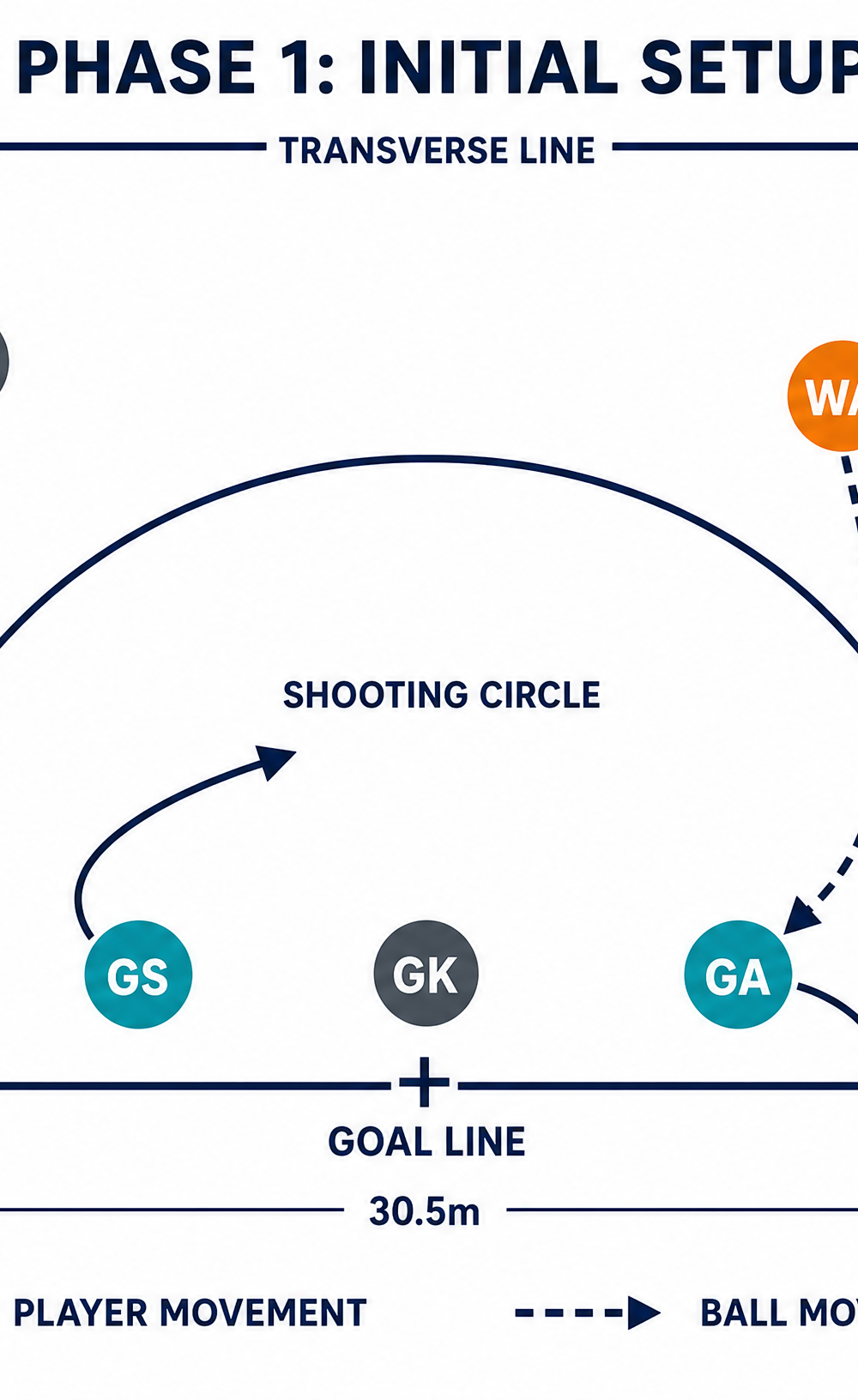
- Initial Setup:
- GS positions on the left side of the shooting circle, near the post.
- GA positions on the right side of the shooting circle, near the baseline.
- WA starts just outside the top-right edge of the shooting circle.
3. Step-by-Step Instructions
Phase 1: The Initial Feed and Split
- The drill begins with the Wing Attack (WA) holding the ball just outside the shooting circle.
- The Goal Attack (GA) initiates movement by driving hard toward the top of the circle to offer a clear passing option.
- Simultaneously, the Goal Shooter (GS) performs a 'split' by driving aggressively across the circle toward the opposite post, drawing the defender away from the centre.
Phase 2: The Drive and Feed
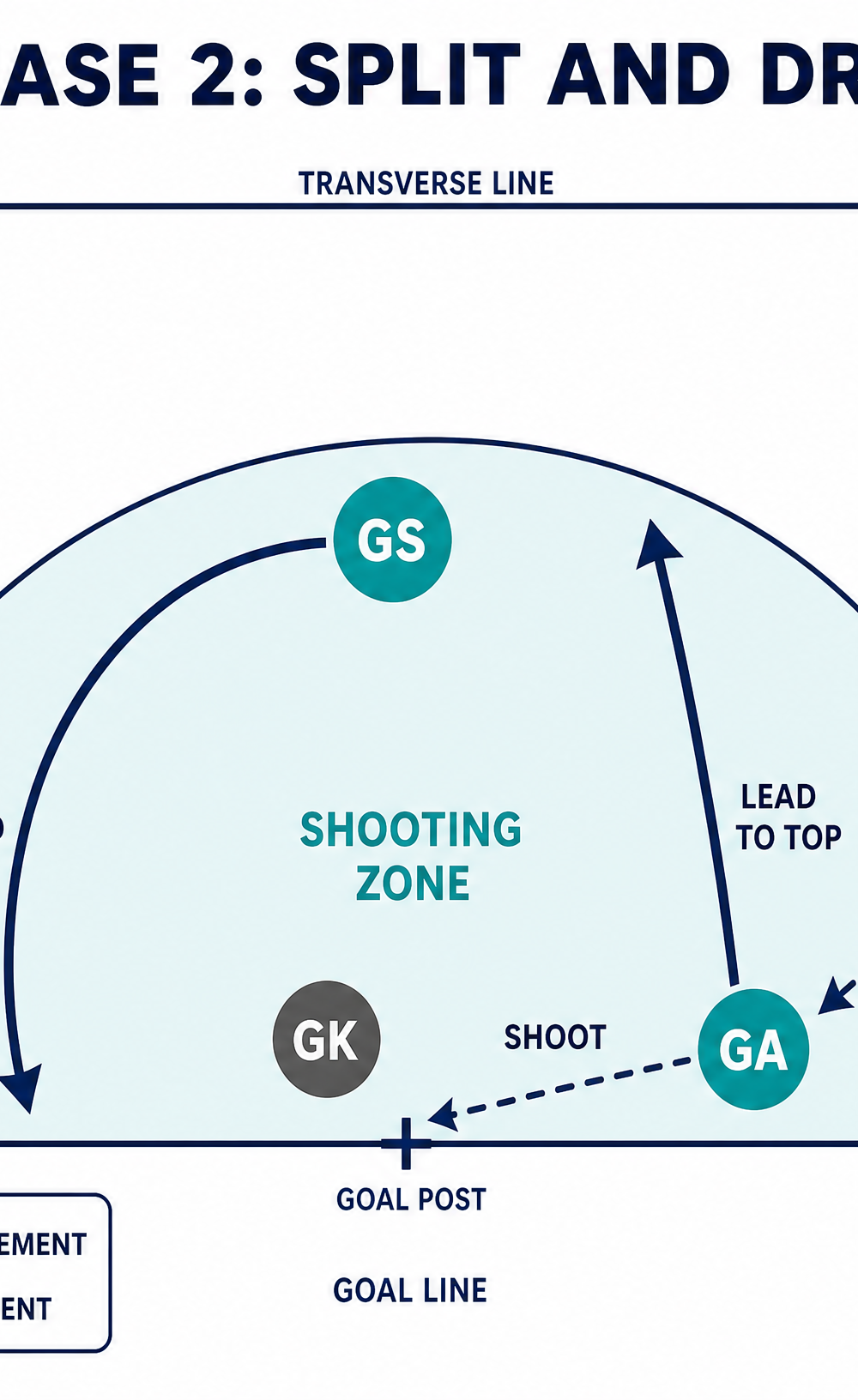
4. As the GA reaches the top of the circle, the WA delivers a crisp, accurate chest pass or bounce pass into the space the GA has created.
5. The GA receives the ball on the move, landing balanced and facing the goal post.
6. The GS, having completed their split drive, immediately re-offers by driving back toward the centre of the circle or holding strong space near the post.
Phase 3: Rotation, Shoot, and Rebound
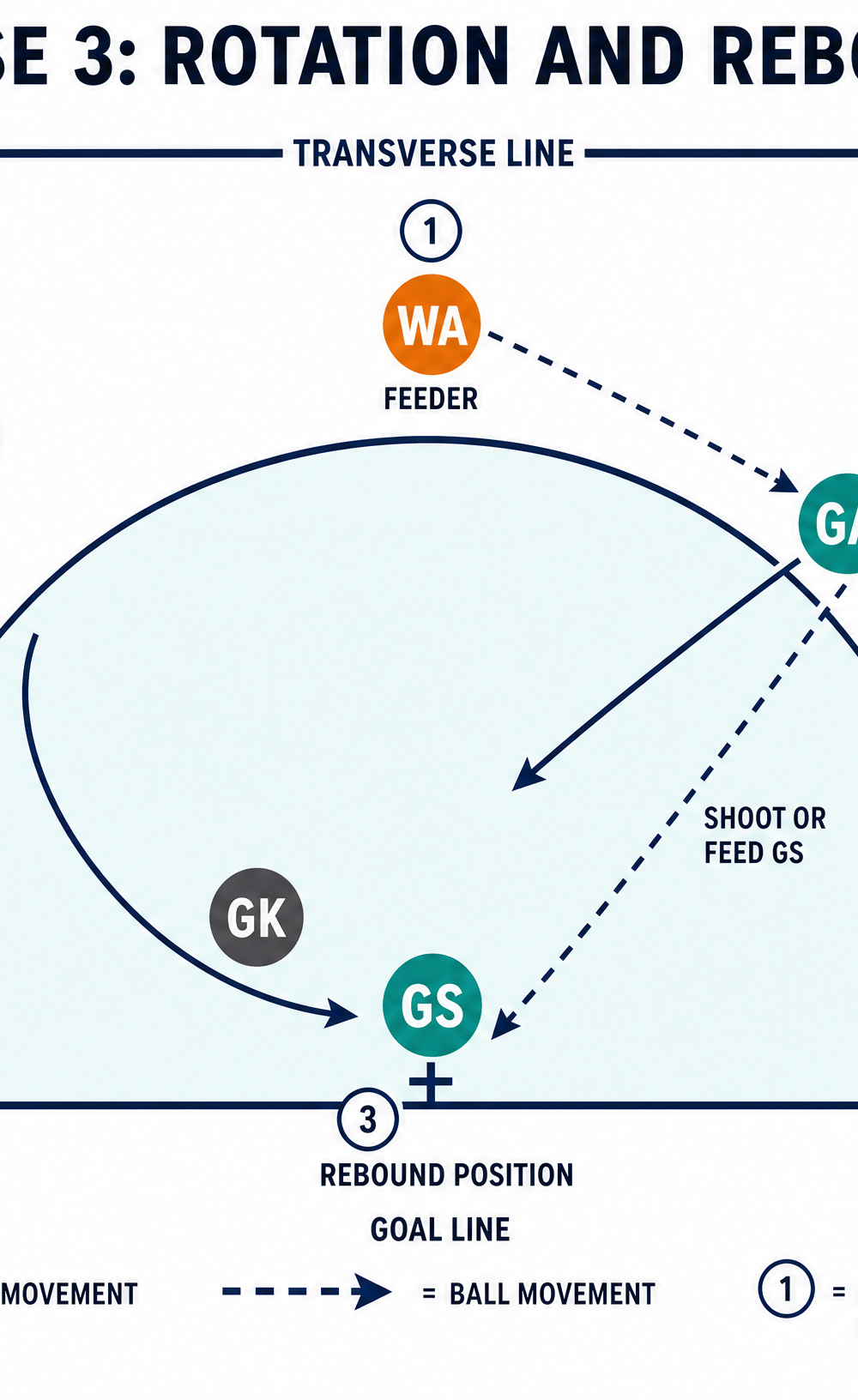
7. The GA now has two options: take the shot if open, or feed the ball to the GS who is holding prime position near the post.
8. If the GA shoots, the GS immediately rotates under the post to secure the rebounding position.
9. If the GA feeds the GS, the GS turns and shoots, while the GA drops in to cover the secondary rebound position.
10. Reset the drill and repeat, alternating starting sides and roles.
4. Key Coaching Points
- Timing is Everything: The GS and GA must move simultaneously. If one moves too early, the defense can easily adjust. Emphasize the concept of 'reading off' each other.
- Strong, Decisive Drives: Players must drive with purpose and speed. Half-hearted movements will not displace a strong defensive unit. Sprint to the space.
- Eye Contact and Communication: The WA must make eye contact with the intended receiver before releasing the pass. Verbal cues can also help synchronize movements.
- Balanced Landing: When receiving the ball, the GA must land in a strong, balanced position (preferably a two-foot landing or a clear 1-2 step) to maintain vision of the court and the goal post.
- Immediate Rebound Positioning: As soon as a shot goes up, the non-shooting attacker must aggressively position themselves for the rebound. Do not watch the ball in the air; find the defender and box out.
5. Common Mistakes
- Crowding the Space: Both attackers driving into the same area. Correction: Ensure players understand their specific zones and the importance of the 'split' to drag defenders away.
- Static Feeding: The WA standing still while passing. Correction: Encourage the WA to step into the pass and follow through, simulating game intensity.
- Ignoring the Rebound: Attackers turning away after the shot is released. Correction: Drill the habit of always anticipating a miss. The drill is not over until the ball goes through the net or a rebound is secured.
- Telegraphing the Pass: The WA staring down their target, allowing defenders to intercept. Correction: Teach the WA to use peripheral vision and fake passes to disguise their true intention.
6. Variations & Progressions
- Add Passive Defenders: Introduce a GK and GD who shadow the attackers without actively attempting to intercept. This adds visual pressure and forces attackers to consider defensive positioning.
- Add Active Defenders: Progress to full, contested defense. The attackers must now use dynamic changes of direction (dodges, rolls) to get free.
- Time Limit: Challenge the attacking unit to complete the sequence and score within 5 seconds of the WA receiving the ball. This simulates end-of-quarter pressure.
7. Age Adaptations
- Under 8 / Under 10: Focus purely on the basic movements without defenders. Use cones to mark exactly where players should run. Emphasize basic catching and passing technique over speed.
- Under 12 / Under 14: Introduce passive defenders. Focus on the timing of the split and the quality of the pass into the circle. Encourage players to start reading the defense.
- Under 16 / Open: Run the drill at match intensity with full active defense. Demand high-speed drives, precision feeding, and aggressive rebounding. Introduce complex variations like the WA driving onto the circle edge before feeding.