The 'Slingshot': Throw-In Play for Quick Midfield Advantage
A high-tempo throw-in routine designed to break pressure and instantly launch an attack by exploiting the half-spaces.

Equipment Needed
1. Overview
Throw-ins are often treated as mere restarts, but they are crucial set pieces that occur 40-50 times per match. The 'Slingshot' is a dynamic throw-in routine designed to bypass the immediate press and create a numerical advantage in the midfield. By drawing defenders toward a short option and quickly switching the point of attack into the half-space, teams can transition from a static restart into a dangerous attacking phase in just two passes. This play is highly effective in the middle third of the pitch where space can be manufactured between the opponent's midfield and defensive lines.
2. Setup
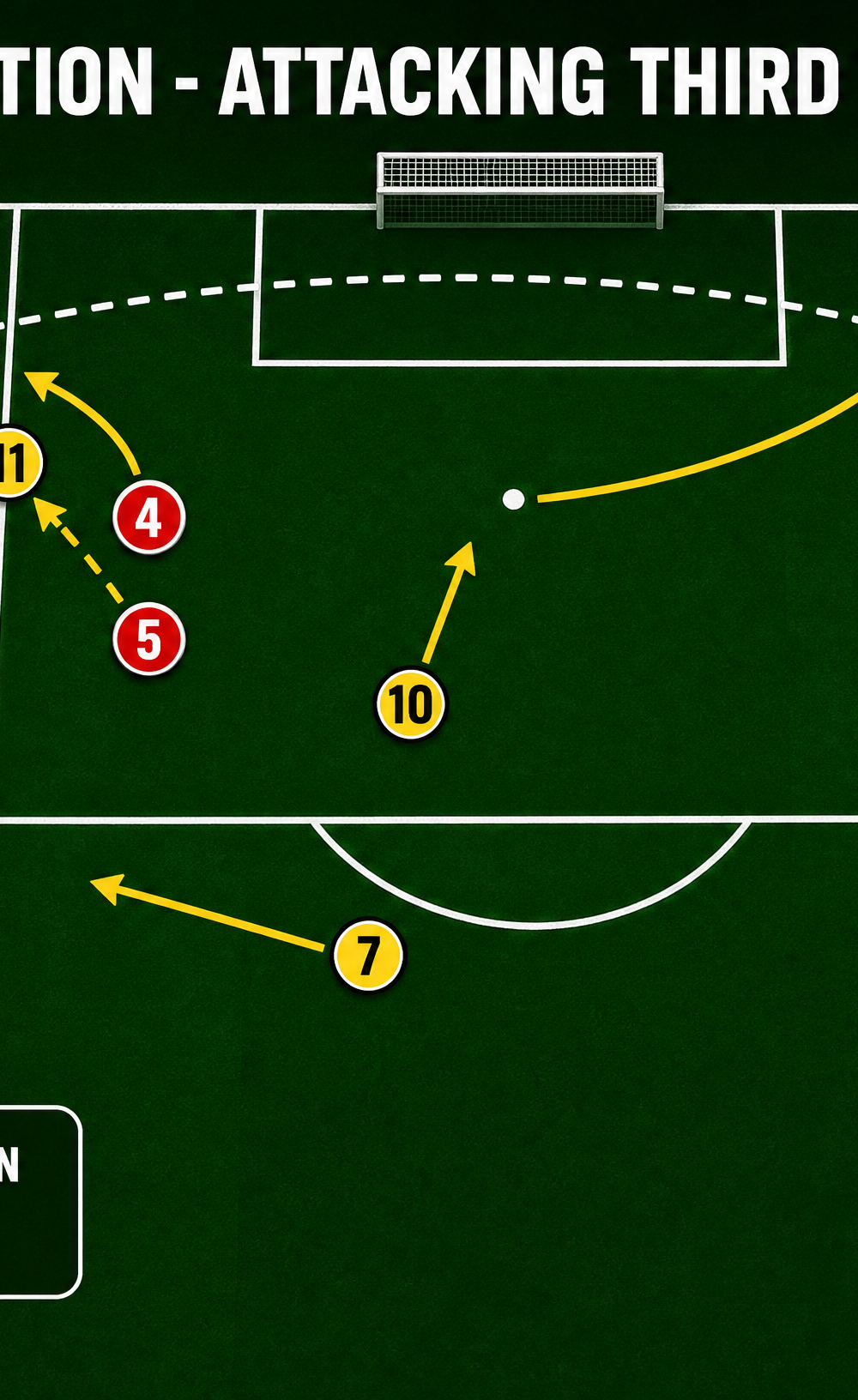
Equipment Needed: 1 Football, 8-10 cones for marking starting positions during practice, bibs for defenders.
Pitch Area: Middle third, near the touchline (standard pitch width 64-75m).
Key Personnel:
- No. 2 (Fullback): The throw-in taker. Must have a strong, accurate throw and quick reactions to step into play.
- No. 7 (Winger/Wide Midfielder): The primary target. Needs excellent close control and the ability to play one-touch passes under pressure.
- No. 8 (Central Midfielder): The accelerator. Requires timing, vision, and the ability to receive on the half-turn.
- No. 10 (Attacking Midfielder): The central pivot, providing a secondary passing option.
- No. 11 (Opposite Winger): The deep runner, ready to exploit the space created.
3. Step-by-Step Instructions
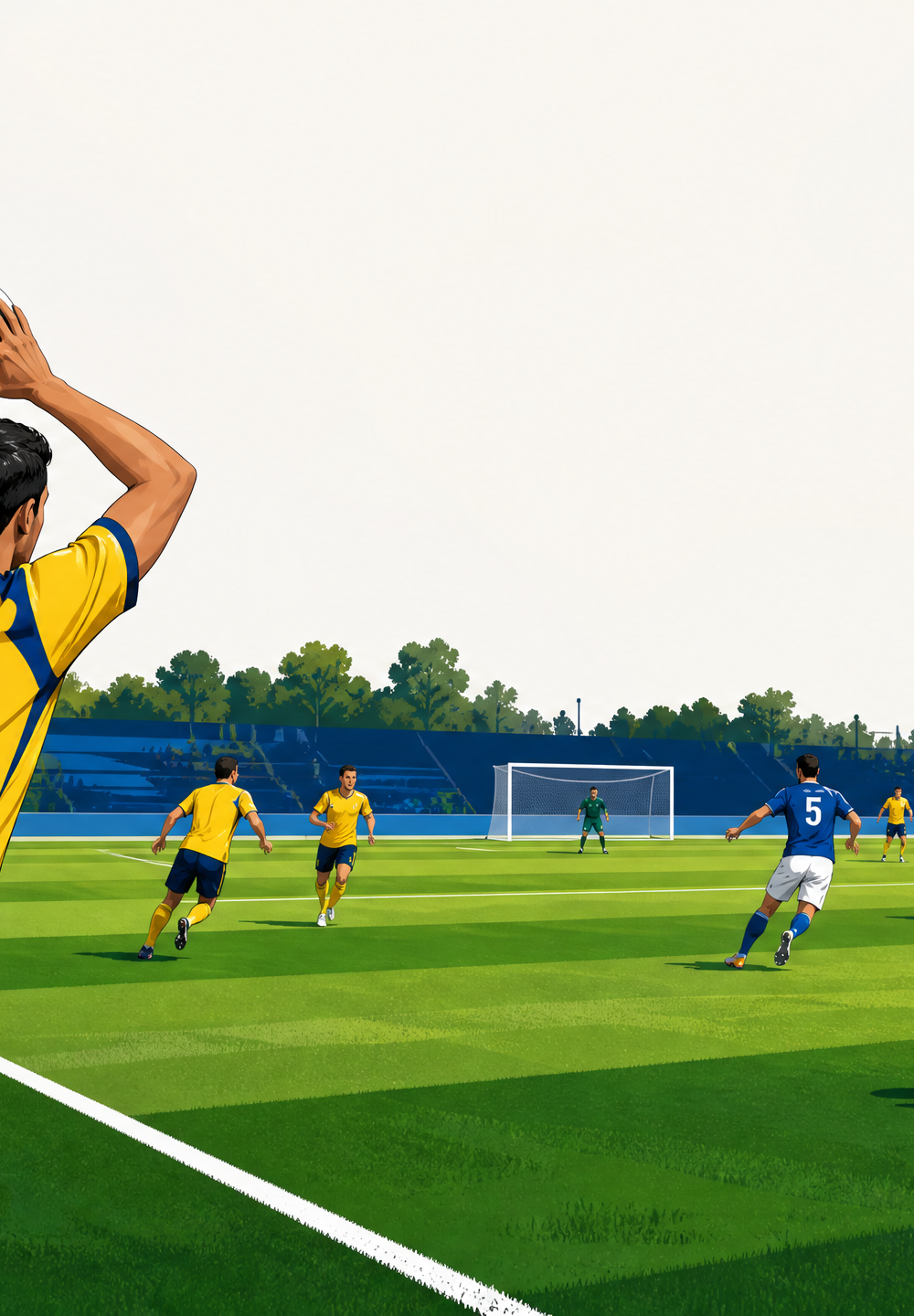
Phase 1: The Setup and Trigger
- Starting Position: No. 2 takes the ball on the touchline. No. 7 positions themselves approximately 3-5 metres away, slightly down the line. No. 8 starts centrally, level with the ball.
- The Trigger: No. 2 raises the ball above their head. This is the visual cue for the movement to begin.
- The Decoy/Draw: No. 7 makes a sharp, two-step sprint towards No. 2, dragging the opposing full-back (No. 5) with them.
- The Throw: No. 2 delivers a firm, flat throw directly to the feet of No. 7. The throw must be paced so No. 7 can play it first time.
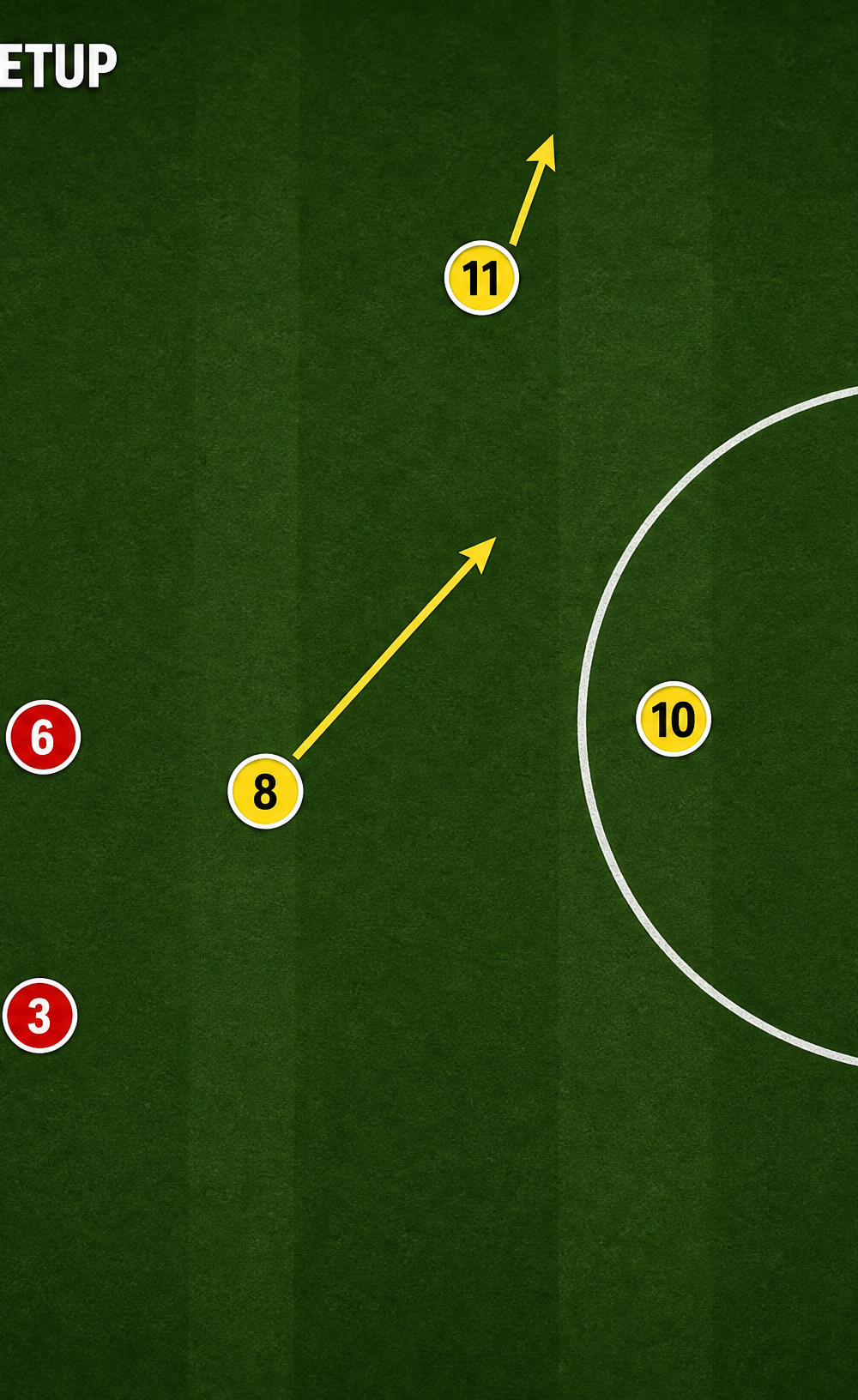
Phase 2: The Combination and Acceleration
- The Lay-off: As the ball arrives, No. 7 plays a first-time, cushioned lay-off pass inside towards the half-space.
- The Diagonal Run: Simultaneously with the throw, No. 8 makes an aggressive diagonal run from the centre into the half-space to meet No. 7's lay-off pass.
- The Overlap: Immediately after throwing the ball, No. 2 steps onto the pitch and makes a hard overlapping run down the touchline, exploiting the space vacated by No. 7 and the defending full-back.
- The Execution: No. 8 receives the ball on the half-turn, now facing forward with momentum. They have three immediate options: slide the ball down the line to the overlapping No. 2, play a penetrating pass to the deep-running No. 11, or combine centrally with No. 10.
4. Key Coaching Points
- Pace of the Throw: The throw must be a pass, not a lob. A firm, flat delivery to the feet ensures the receiver can play it first time.
- Timing of the Run: No. 8 must time their run perfectly. Arriving too early kills the space; arriving too late allows the defense to recover. The run should begin exactly as the ball leaves the thrower's hands.
- Quality of the Lay-off: No. 7's touch is the most critical technical element. The pass must be weighted perfectly into the path of No. 8, allowing them to step onto the ball without breaking stride.
- Immediate Support: The thrower (No. 2) cannot admire their throw. They must instantly transition from thrower to attacker, providing width and an outlet pass.
5. Common Mistakes
- Static Receiving: No. 7 waits for the ball to arrive rather than checking to it. This allows the defender to step in front and intercept.
- Looped Throws: A high, looping throw gives the defense time to adjust and makes the first-time lay-off significantly more difficult.
- Telegraphing the Play: Players staring at their intended targets before the play begins, giving away the routine to observant defenders.
- Poor Body Shape: No. 8 receiving the ball flat-footed or facing the touchline, rather than on the half-turn facing up the pitch.
6. Variations & Progressions
Variation 1: The Dummy
If the defense begins to anticipate the lay-off to No. 8, No. 7 can step over the throw, allowing it to run across their body directly to No. 8, while No. 7 spins in behind their marker.
Variation 2: The Attacking Third (Long Throw)
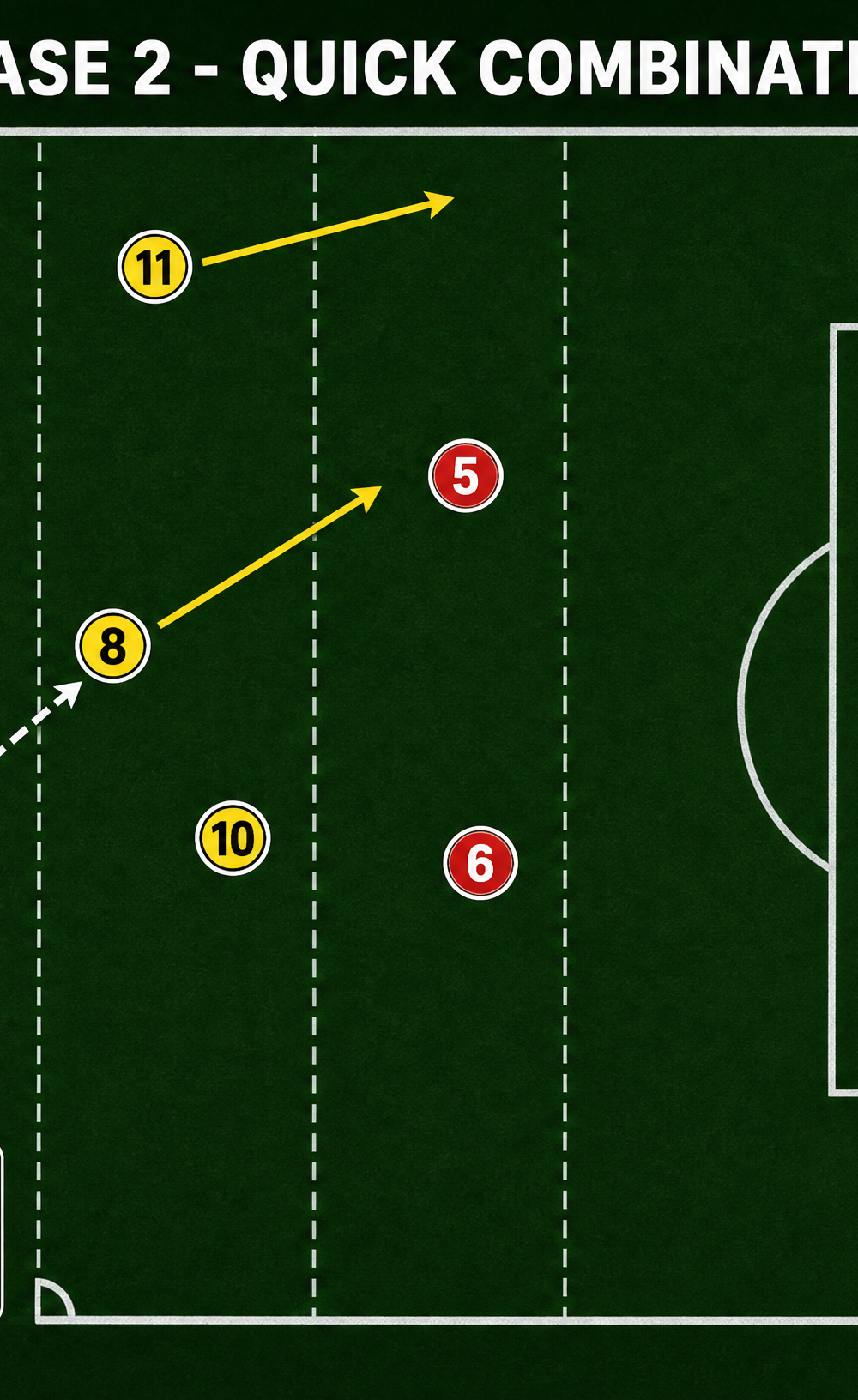
When deep in the attacking third, use a decoy runner (No. 11) to drag the near-post defenders away. The thrower (No. 2) bypasses the short options and delivers a long, flat throw towards the penalty spot for the striker (No. 9) peeling off the back shoulder of the centre-half.
7. Age Adaptations
- Under 8 - Under 10: Focus purely on the mechanics of a legal throw-in and the concept of throwing to a teammate's feet. Introduce a simple 'throw and go' where the thrower gets the ball straight back.
- Under 12 - Under 14: Introduce the third-man run (No. 8). Focus on the timing of the run and the weight of the lay-off pass. Do not worry about the overlapping fullback yet.
- Under 16 - Open: Implement the full routine, emphasizing speed of execution, disguised movement, and the decision-making of No. 8 upon receiving the ball.