

Netball
GK Body-Line Dominance & Intercept Drill
Master the art of defensive positioning by teaching your Goal Keeper to command the body-line, read the feeder, and explode onto the pass lane.
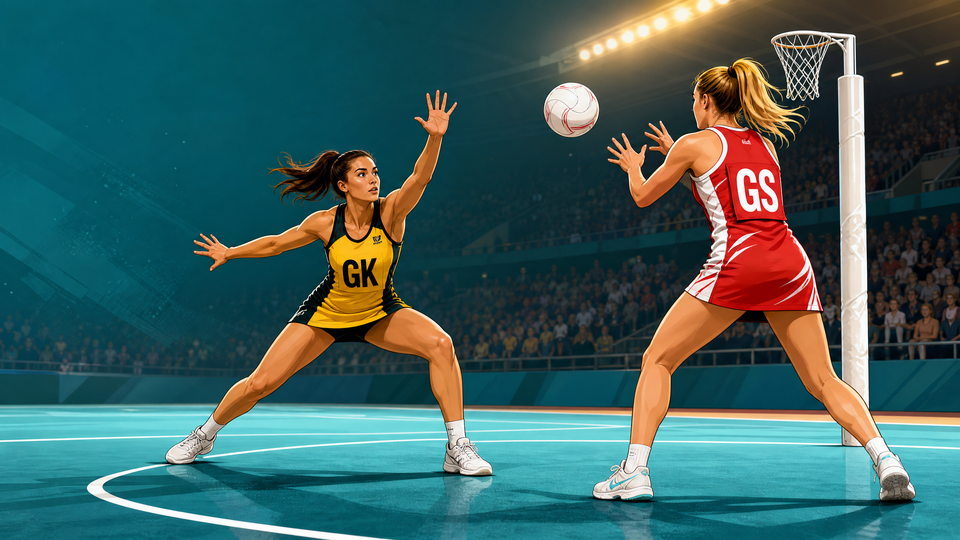
What you need
1 Netball, 3-4 Cones, Positional Bibs (GK, GS, GA, GD, WD)
1. Overview
Commanding the goal circle requires more than just reactive speed; it demands proactive positioning. The GK Body-Line Dominance & Intercept Drill is designed to teach your Goal Keeper (GK) how to dictate the space in front of the Goal Shooter (GS). Rather than chasing the attacker, the GK learns to set up slightly goal-side, hold the "body-line" to maintain dual vision of the feeder and receiver, and use the feeder's release cues to attack the pass lane.
Use this drill when your defensive circle is being beaten by front-cuts, or when your GK is caught playing too far off the body and reacting late to the feed.
2. Setup
To run this drill effectively, you need a focused working area and clear positional roles. Set up in the goal third of a regulation Netball court (30.5m x 15.25m).
Equipment Needed:
- 1 Netball
- 3-4 Cones (optional, to mark feeding channels)
- Positional Bibs (GK, GS, GA, GD, WD)
Player Positions:
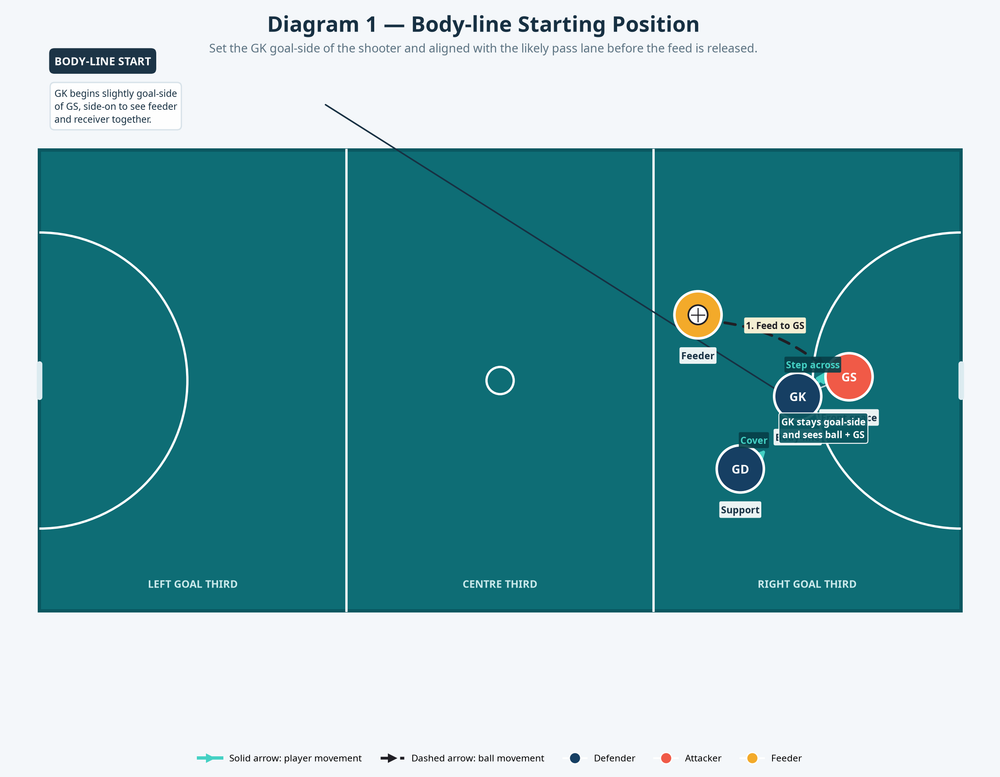
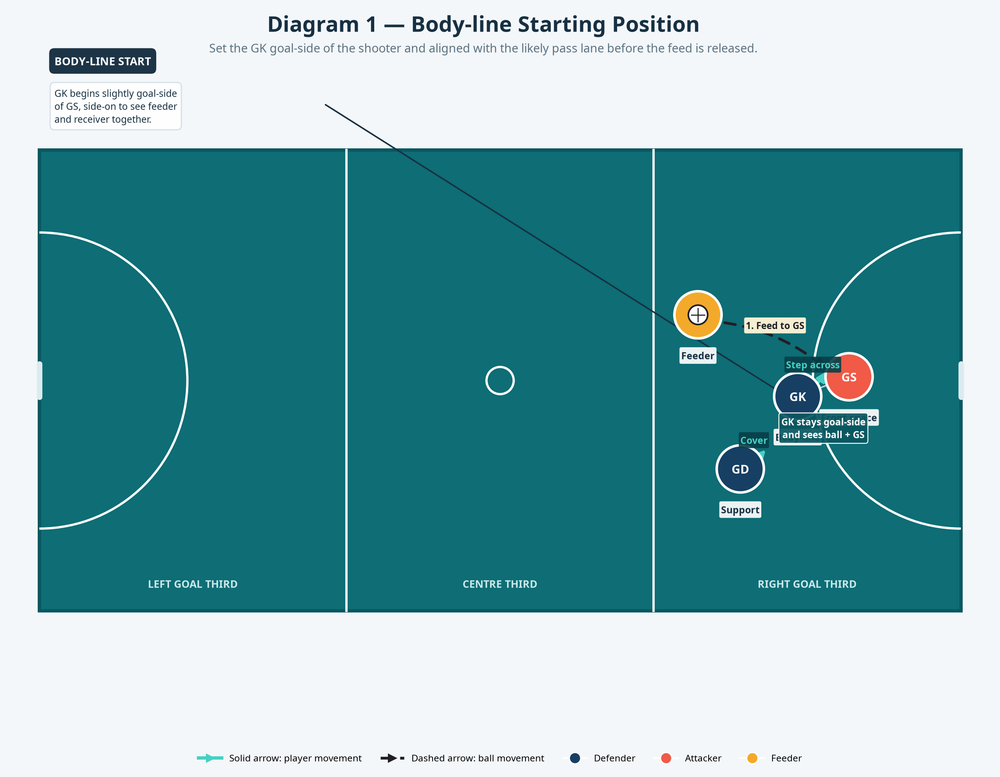
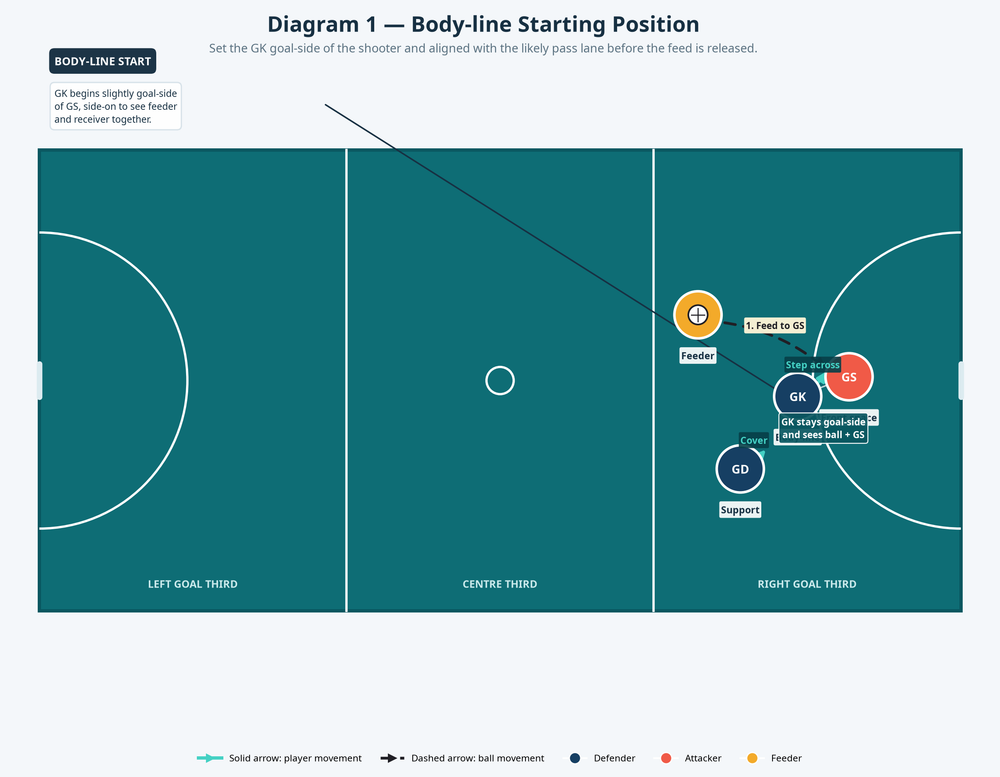
- GK (Defender): Starts inside the goal circle, positioned slightly goal-side of the GS.
- GS (Attacker): Starts deep in the circle, ready to lead out.
- GA (Feeder): Positioned near the transverse line or top of the goal circle arc, acting as the primary feeder.
- GD (Support Defender): Positioned near the circle edge to cover the secondary space.
- WD (Outlet): Positioned in the centre third to receive the transition pass after a successful intercept.
3. Step-by-Step Instructions
Follow these precise steps to execute the drill, ensuring players understand both the physical movements and the visual triggers.
Step 1: Establish the Body-Line
The GK sets up slightly goal-side of the GS, maintaining a side-on stance. This body position is critical—it allows the GK to keep both the GS and the feeder (GA) in their peripheral vision. The GK should be close enough to dictate the attacker's movement but balanced enough to move forward.
Step 2: The Attacker's Lead
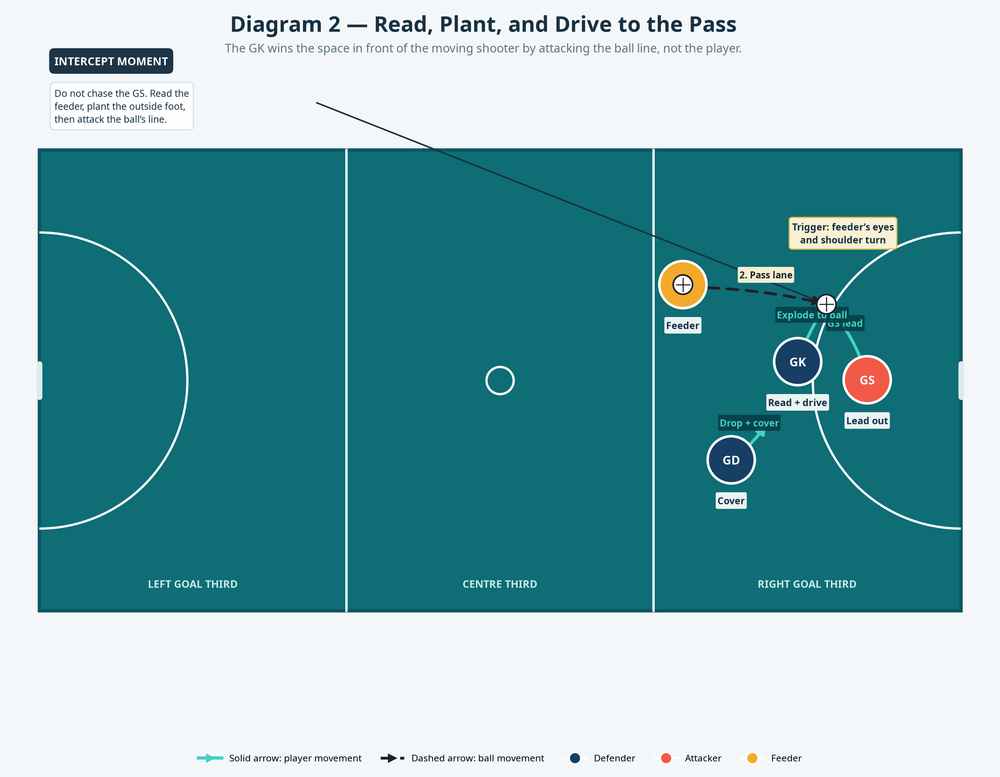
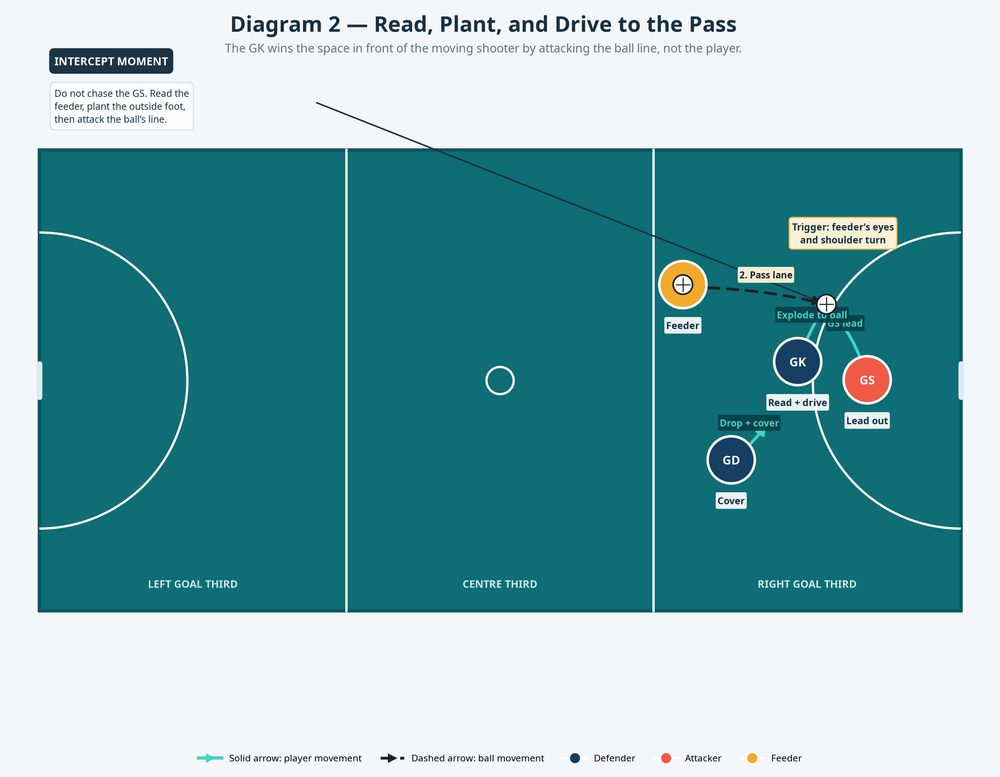
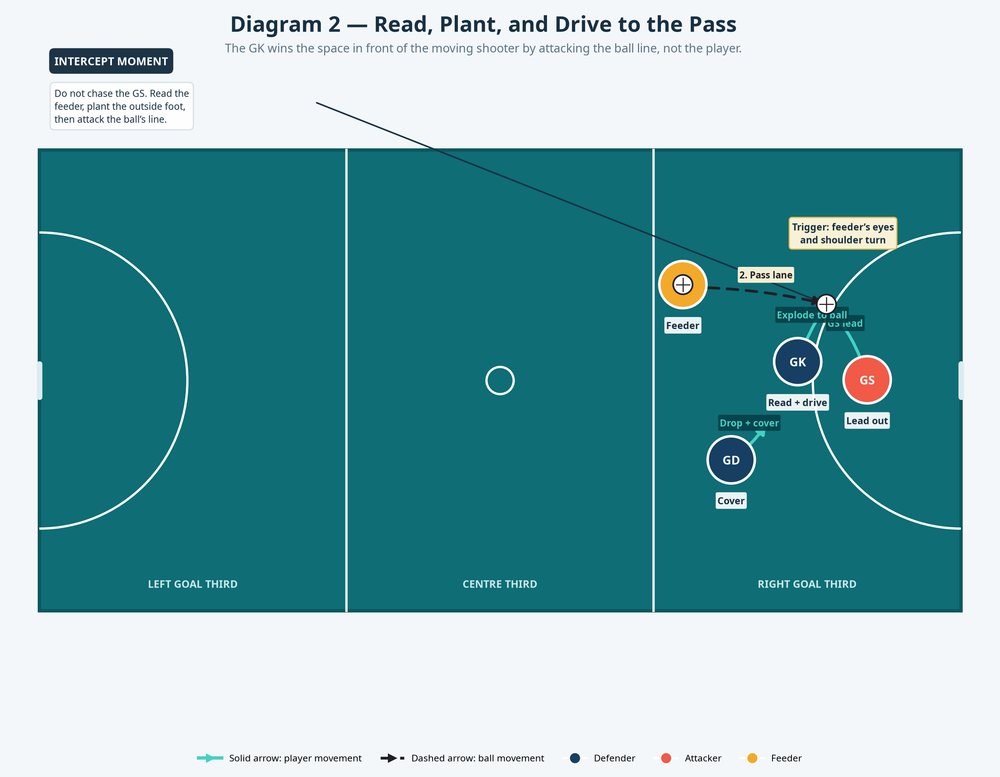
On the coach's whistle, the GS initiates a hard lead towards the top of the circle or the side space. The GK must resist the urge to immediately chase the GS's body. Instead, the GK holds their ground for a split second, maintaining vision on the feeder.
Step 3: Read and React
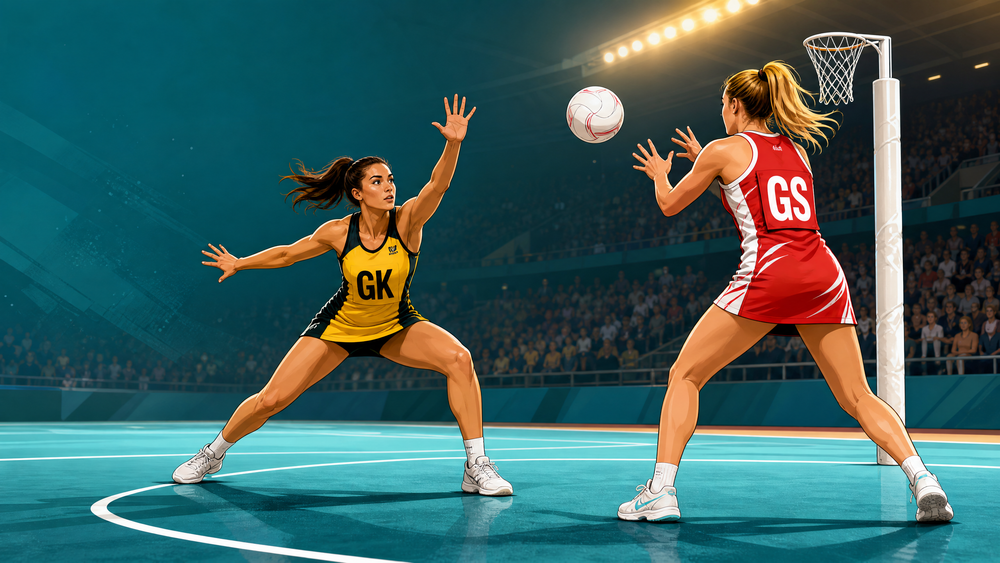
The GK watches the feeder's shoulders and eyes. As the GA commits to the pass, the GK plants their outside foot and explodes aggressively across the pass lane—not towards where the GS is standing, but where the ball is travelling.
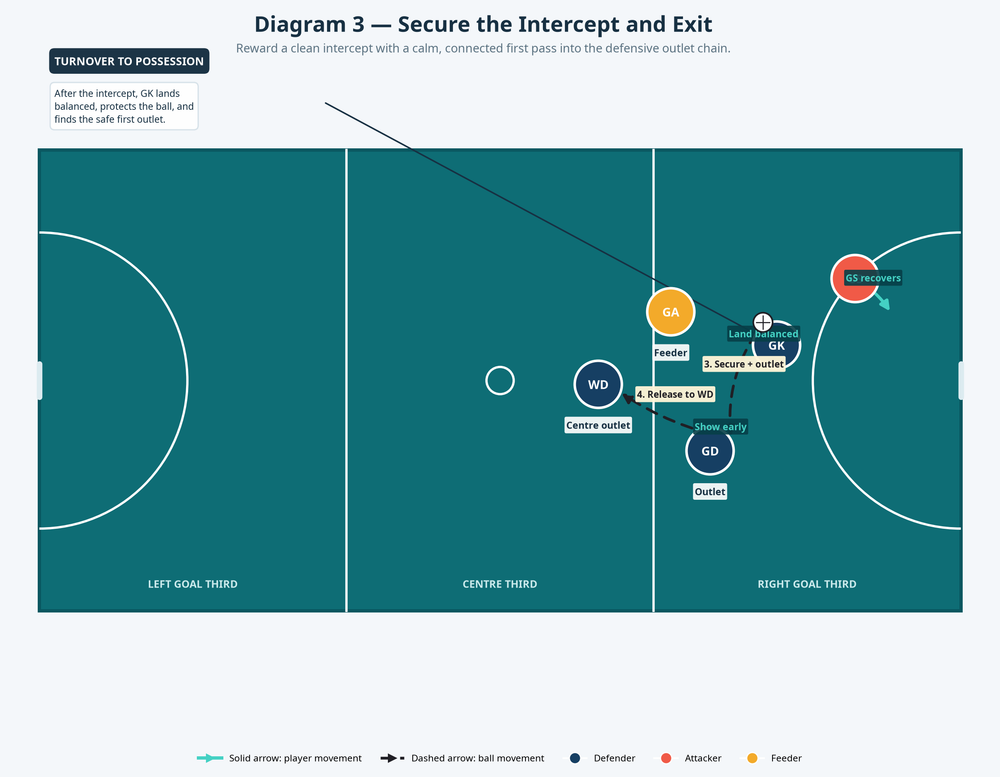
Step 4: Secure the Intercept
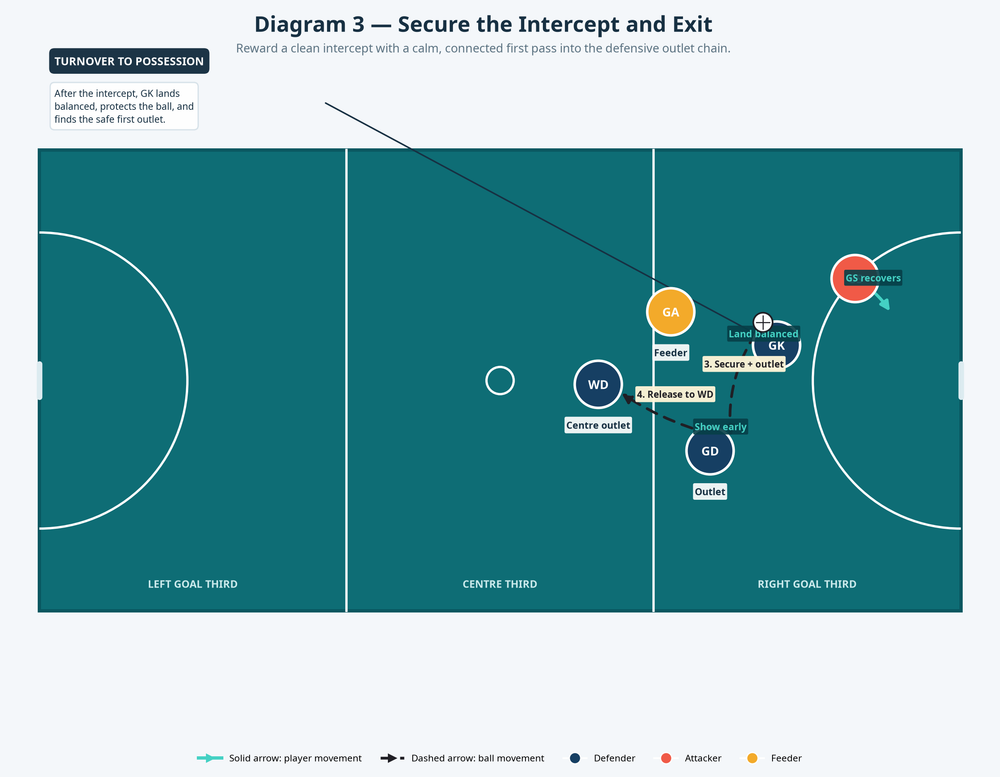
The GK attacks the ball with two hands if possible, taking it at its highest point. Upon securing the ball, the GK must land balanced, adhering to the footwork rule, and immediately protect the ball from the recovering GS.
Step 5: The Outlet Transition
A turnover is only valuable if possession is retained. Immediately after landing, the GK looks up court. The GD and WD should already be presenting as early outlet options. The GK delivers a crisp, flat pass to the WD to transition the ball safely out of the defensive third.
4. Key Coaching Points
To get the most out of this drill, focus your feedback on these critical technical elements:
- Dual Vision: The GK must maintain a side-on stance. If their shoulders are square to the GS, they cannot see the feed; if square to the feeder, they lose the GS.
- Hold the Line: Teach the GK to hold the space (the "body-line") rather than getting dragged out by dummy leads.
- Attack the Ball, Not the Player: The intercept angle should cut across the pass lane. Driving at the GS will result in contact penalties or being beaten by the pass.
- Plant and Explode: The explosive movement comes from a strong push off the outside foot. Ensure the GK stays low in their defensive stance before driving.
- Immediate Transition: Do not let the drill end on the catch. Demand a high-quality, immediate outlet pass to simulate match conditions.
5. Common Mistakes
Watch for these frequent errors and correct them early:
- Turning the Head: The GK turns their head completely away from the GS to watch the ball, losing track of the attacker's final movement.
- Chasing the Body: The GK follows the GS's initial lead too closely, opening up the backspace for a lob pass.
- Late Take-off: The GK waits for the ball to leave the feeder's hands before moving. They must learn to anticipate based on the feeder's body mechanics.
- Off-Balance Landing: After an aggressive intercept, the GK lands heavily or steps, resulting in a footwork penalty.
6. Variations & Progressions
Adapt the drill to challenge your players as they improve:
- Add a Second Feeder (Progression): Place a WA on the circle edge alongside the GA. The GK must now read which feeder has the ball and adjust their body-line accordingly.
- Constrained Vision (Variation): Have the GK start facing away from the feeder. On the whistle, they must turn, find the body-line, locate the ball, and make the intercept in one fluid sequence.
- The Lob Option (Progression): Allow the feeder to mix flat passes with high lobs. The GK must now decide whether to attack the front space or drop step to cover the lob.
7. Age Adaptations
Tailor the complexity based on the age and experience of your squad:
- Under 10s & Under 12s: Focus purely on the side-on stance and "seeing both." Use a stationary GS and a lobbed feed to give the GK more time to track the ball.
- Under 14s & Under 16s: Introduce the dynamic lead from the GS and emphasize the explosive push off the outside foot. Demand clean footwork on the landing.
- Open / Advanced: Run the drill at match intensity. Introduce multiple feeders, dummy passes, and require a secondary phase of play after the outlet pass.
