

Cricket
Mastering the Short Ball: Pull Shot & Evasion Drill
Equip your batters with the technical foundations and decision-making skills to confidently handle short-pitch bowling through controlled pull shots and effective evasion.
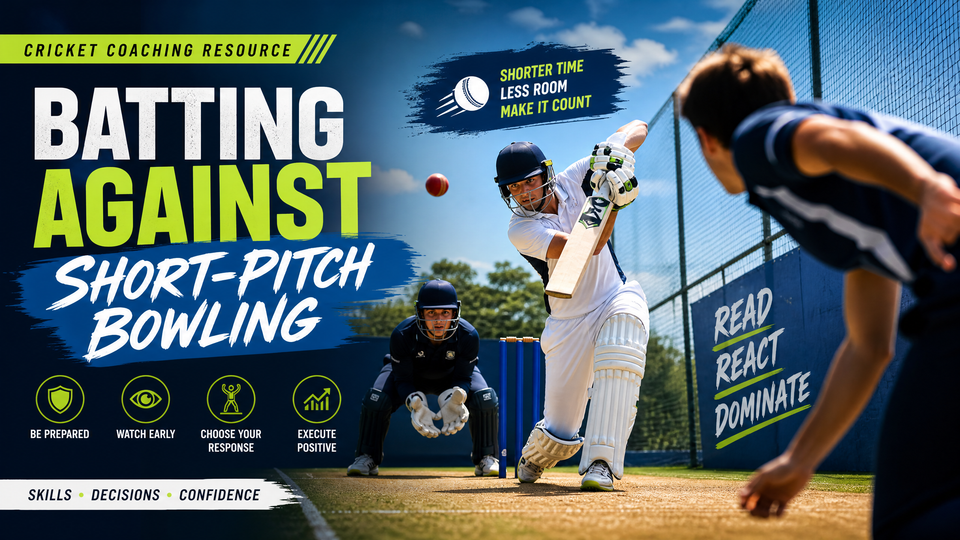
What you need
Cricket balls (mix of new and old), Sidearm thrower or bowling machine, Stumps, Full batting safety gear (helmet, pads, gloves, chest guard)
1. Overview
Handling short-pitch bowling is a critical skill that separates good batters from great ones. This drill is designed to help batters develop the necessary reflexes, weight transfer, and decision-making to either attack the short ball with a pull shot or evade it safely. Use this drill during net sessions to build confidence against aggressive pace bowling, ensuring your players are not intimidated when the ball is dug in short on match day.
2. Setup
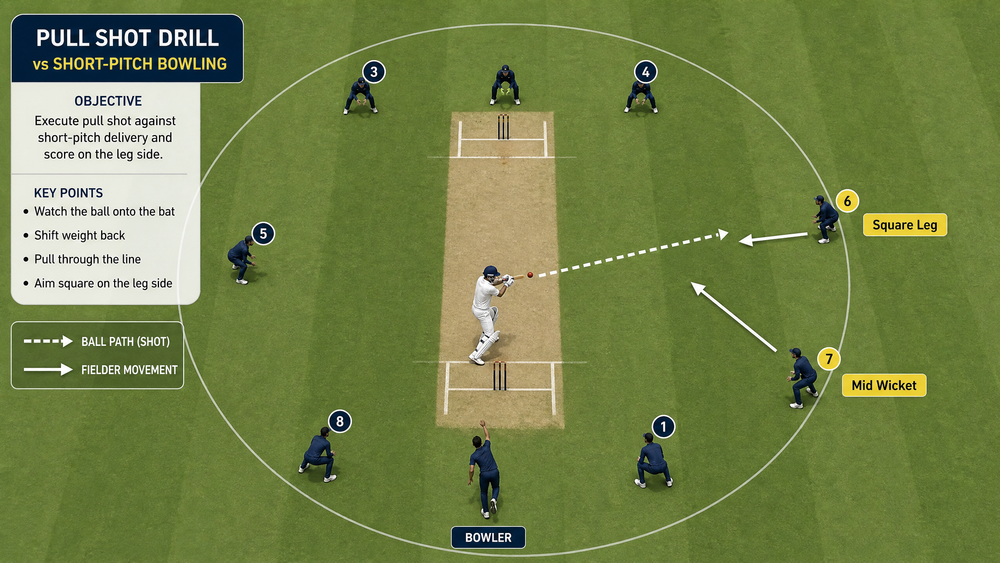
To run this drill effectively, you will need a controlled environment where the feed is consistent.
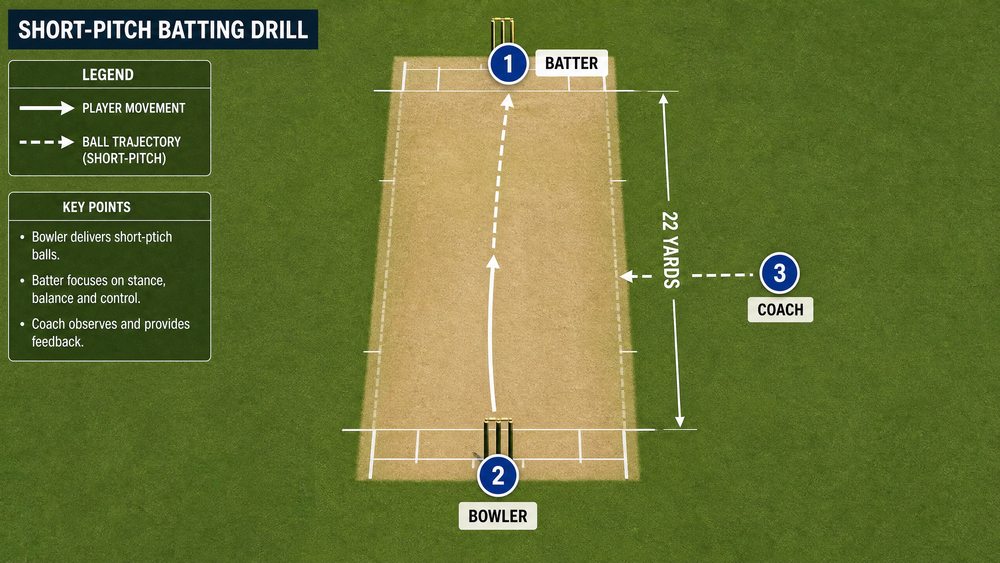
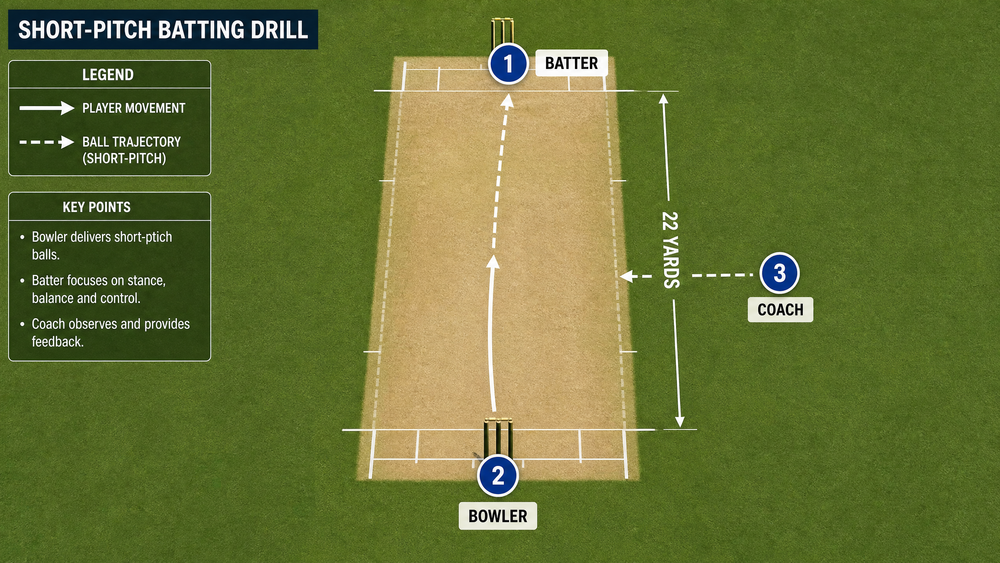
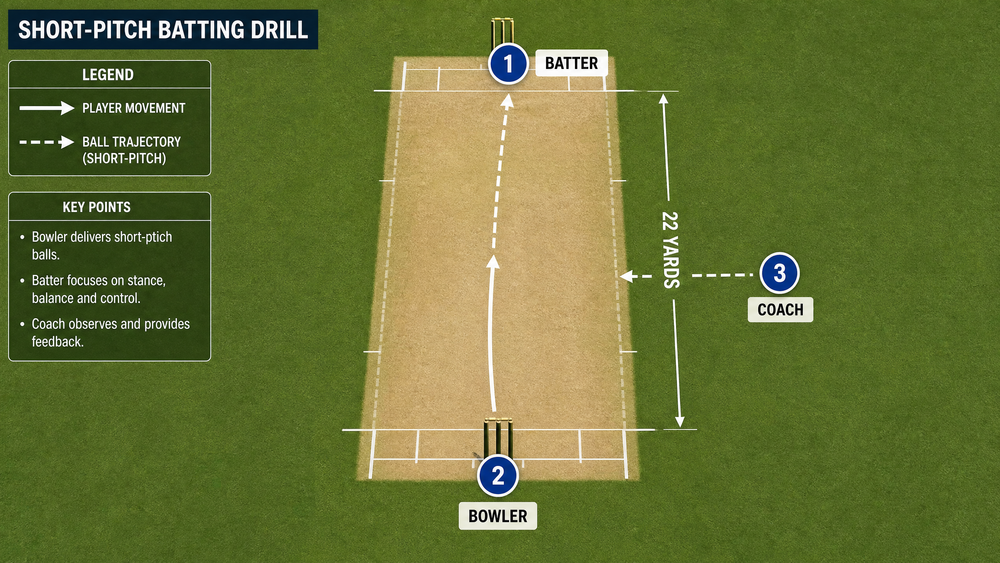
- Location: Standard 22-yard pitch (nets or center wicket).
- Equipment: Cricket balls (preferably a mix of new and slightly worn), a sidearm thrower or bowling machine (for consistent short-pitch delivery), stumps, batting gear (helmet, pads, gloves, box, thigh pads, and chest guard recommended for safety).
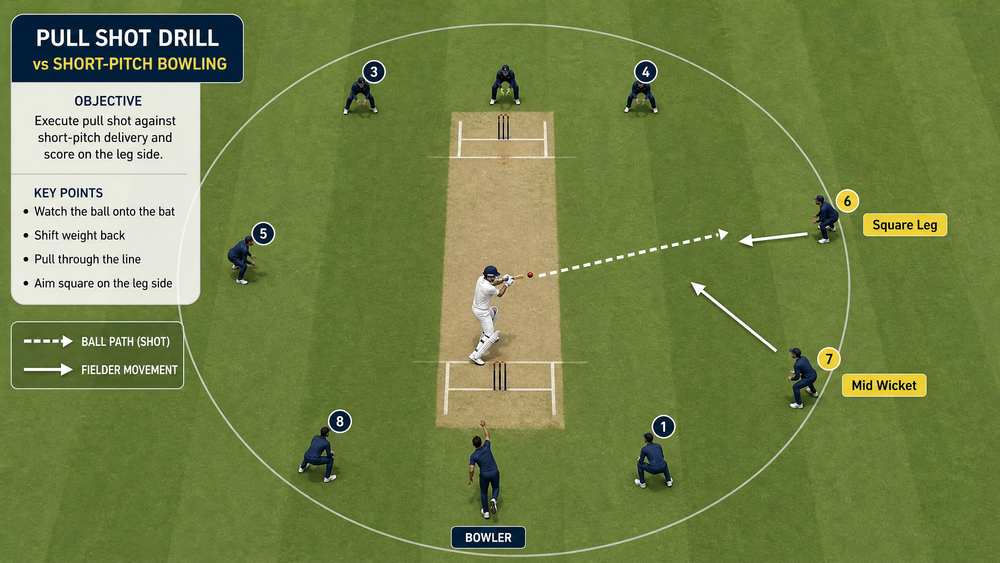
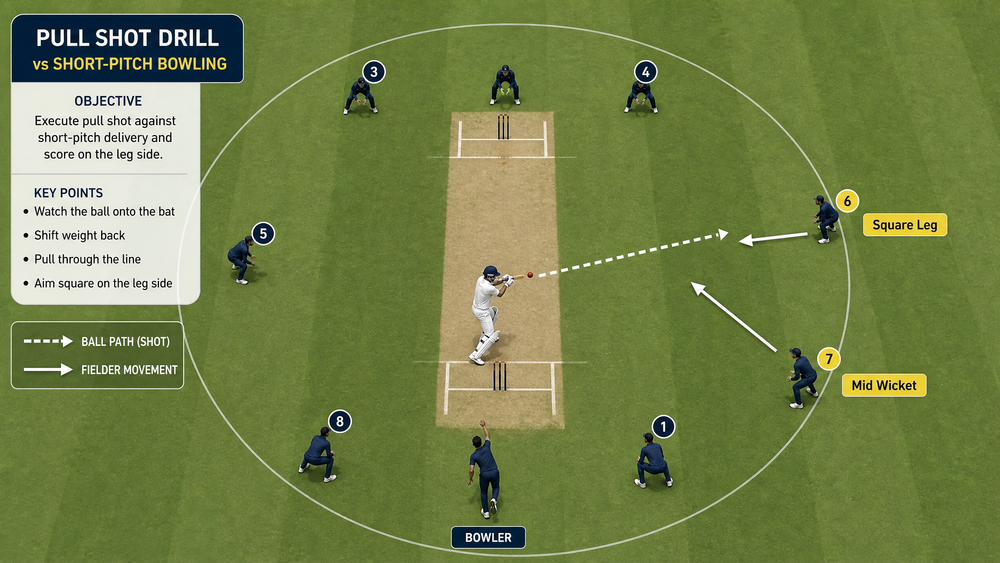
- Personnel: 1 Batter, 1 Feeder (Coach with sidearm or machine operator), and optionally 2-3 fielders positioned at square leg and mid-wicket if running on an open field.
3. Step-by-Step Instructions
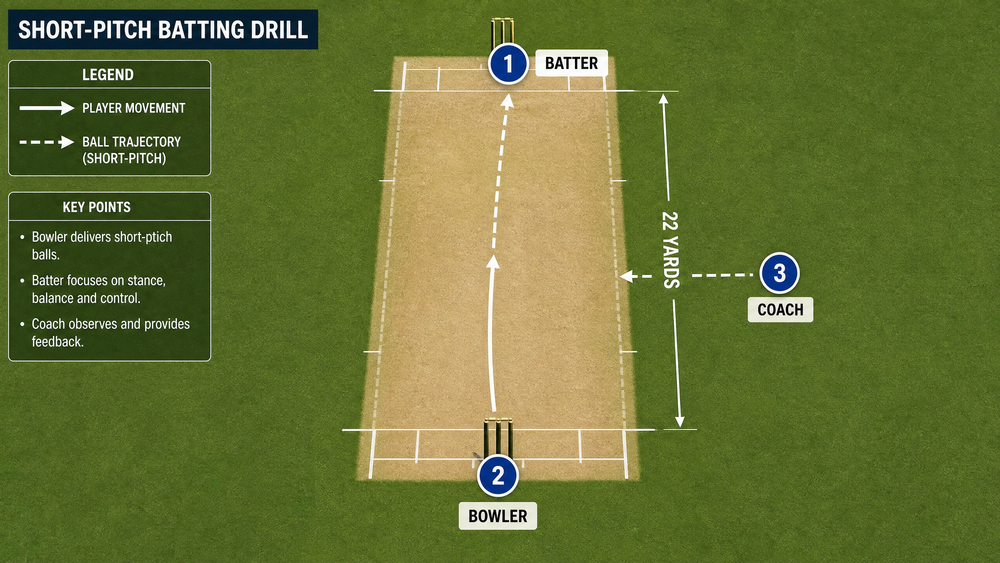
- Positioning: The batter takes their normal stance at the crease. The feeder positions themselves at the opposite end (or slightly closer, around 18 yards, if using a sidearm for extra zip, ensuring safety screens are used if necessary).
- The Feed: The feeder delivers the ball back-of-a-length, aiming to have the ball bounce and rise toward the batter's chest or head height.
- Initial Movement: The batter must quickly pick up the length. As soon as the short length is identified, the batter should press back and across, transferring their weight onto the back foot.
- Decision Making:
- If the ball is on the body/stumps and at a comfortable height (chest to shoulder): Execute the pull shot. Roll the wrists over the ball to keep it down, aiming towards square leg or mid-wicket.
- If the ball is too high, too wide, or the batter is cramped for room: Execute an evasion (duck or sway). Drop the hands, take the eyes off the line just enough to be safe, but try to keep the ball in peripheral vision.
- Execution and Follow-through: For the pull shot, ensure full rotation of the hips and shoulders. For evasion, ensure the bat is kept out of the way of the ball to avoid an accidental edge.
- Rotation: Have the batter face blocks of 6-12 deliveries before rotating to maintain high intensity and focus.
4. Key Coaching Points
- Early Length Recognition: The success of playing the short ball relies on picking up the length early. Encourage batters to watch the ball closely out of the bowler's hand.
- Weight Transfer: A decisive movement back and across the stumps is crucial. The weight must be on the back foot to create a stable base for the pull shot or to get out of the way quickly.
- High Hands: Keep the hands high in the setup. It is much easier to bring the bat down on a short ball than to push it up from a low position.
- Rolling the Wrists: When executing the pull shot, batters must roll their wrists upon contact to ensure the ball is hit downwards, minimizing the risk of being caught in the deep.
- Eyes Level: Whether attacking or evading, the batter should try to keep their head as still as possible and eyes level to track the ball accurately.
5. Common Mistakes
- Taking the Eye Off the Ball: The most common error is flinching and looking away too early. Batters must be encouraged to watch the ball right onto the bat or past their body.
- Weight on the Front Foot: Getting stuck on the front foot makes it impossible to play the short ball effectively and increases the risk of being hit.
- Fending with Hard Hands: When surprised, batters often push out with hard hands, leading to simple catches at short leg or in the slips. Emphasize dropping the hands if not in a position to play a controlled shot.
- Leaning Backwards: Instead of transferring weight to the back foot while staying balanced, some batters lean their upper body backward, losing control and power.
6. Variations & Progressions
- Tennis Ball/Incrediball Feed: For younger or less confident players, start with tennis balls to remove the fear of being hit while they groove the footwork and shot mechanics.
- Mixed Lengths: Once the batter is comfortable, mix up the feeds. Deliver 3 good length balls and 1 short ball to test their reaction time and decision-making in a more match-like scenario.
- Target Zones: Place cones or markers on the leg side (square leg to mid-wicket). Award points for pull shots hit cleanly along the ground through these zones.
7. Age Adaptations
- Under 10s / Under 12s: Focus purely on evasion and safety. Use softer balls. The primary goal is teaching them not to back away to the leg side, but to step back and across or duck safely.
- Under 14s: Introduce the pull shot using softer balls before progressing to hard balls. Focus heavily on rolling the wrists and keeping the ball on the ground.
- Under 16s / Open: Full intensity. Mix lengths, increase pace, and demand high-quality execution and decision-making under pressure.
