Mastering Centre Pass Variations: A Tactical Guide
Learn how to break through tough defensive structures with these three dynamic centre pass variations, designed to guarantee possession and quick forward momentum.
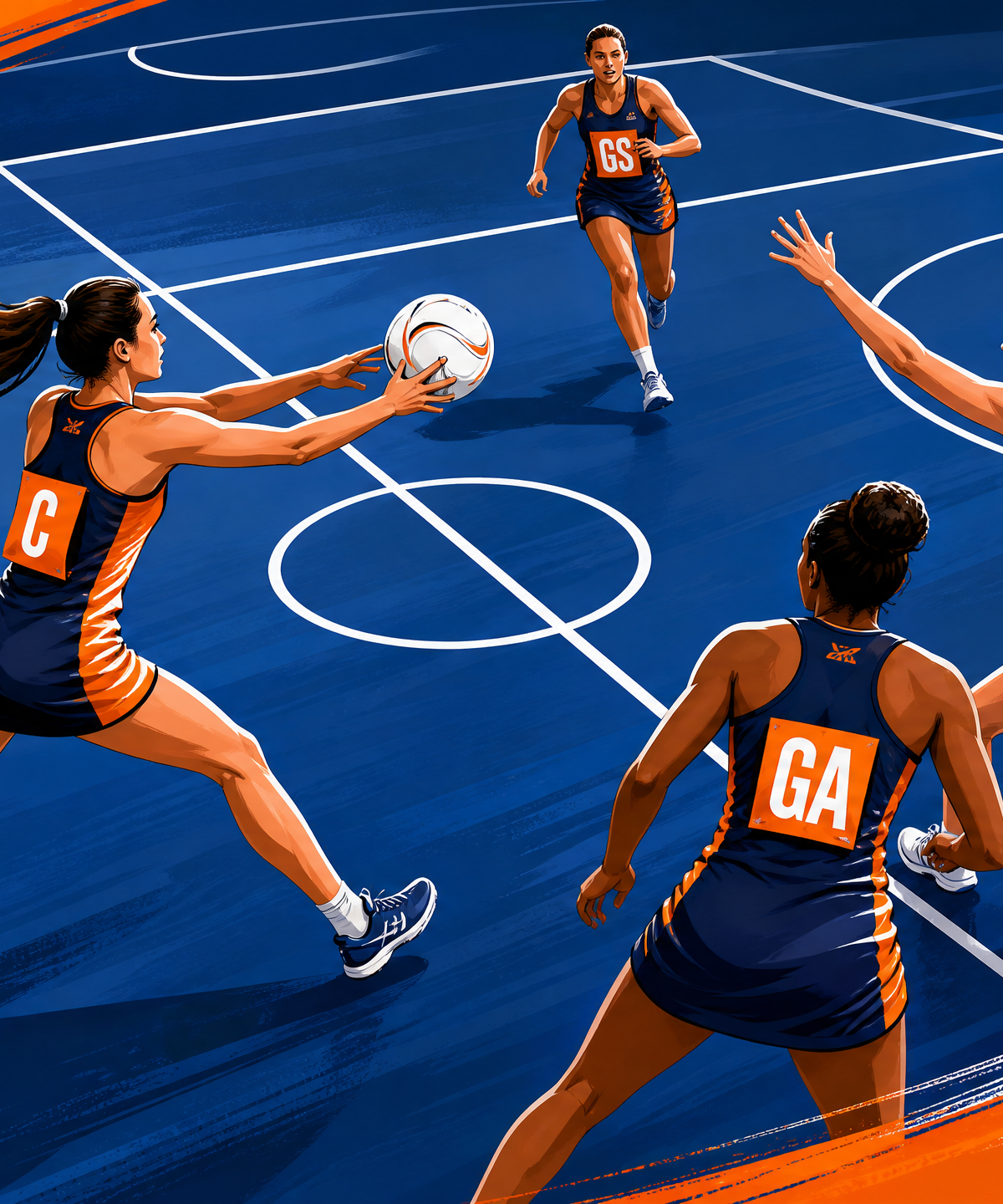
Equipment Needed
1. Overview
The centre pass is the only guaranteed possession your team has in netball, yet many teams surrender this advantage through predictable setups and static movement. This comprehensive drill focuses on executing dynamic, unpredictable centre pass variations to consistently break the first line of defence and transition smoothly into the attacking third.
By implementing these variations, your team will force the Wing Defence (WD) and Goal Defence (GD) to make split-second decisions, creating natural gaps and mismatches. Use this drill when your attacking structures have become stagnant, or when preparing to face a team known for a strong, physical zone defence.
2. Setup
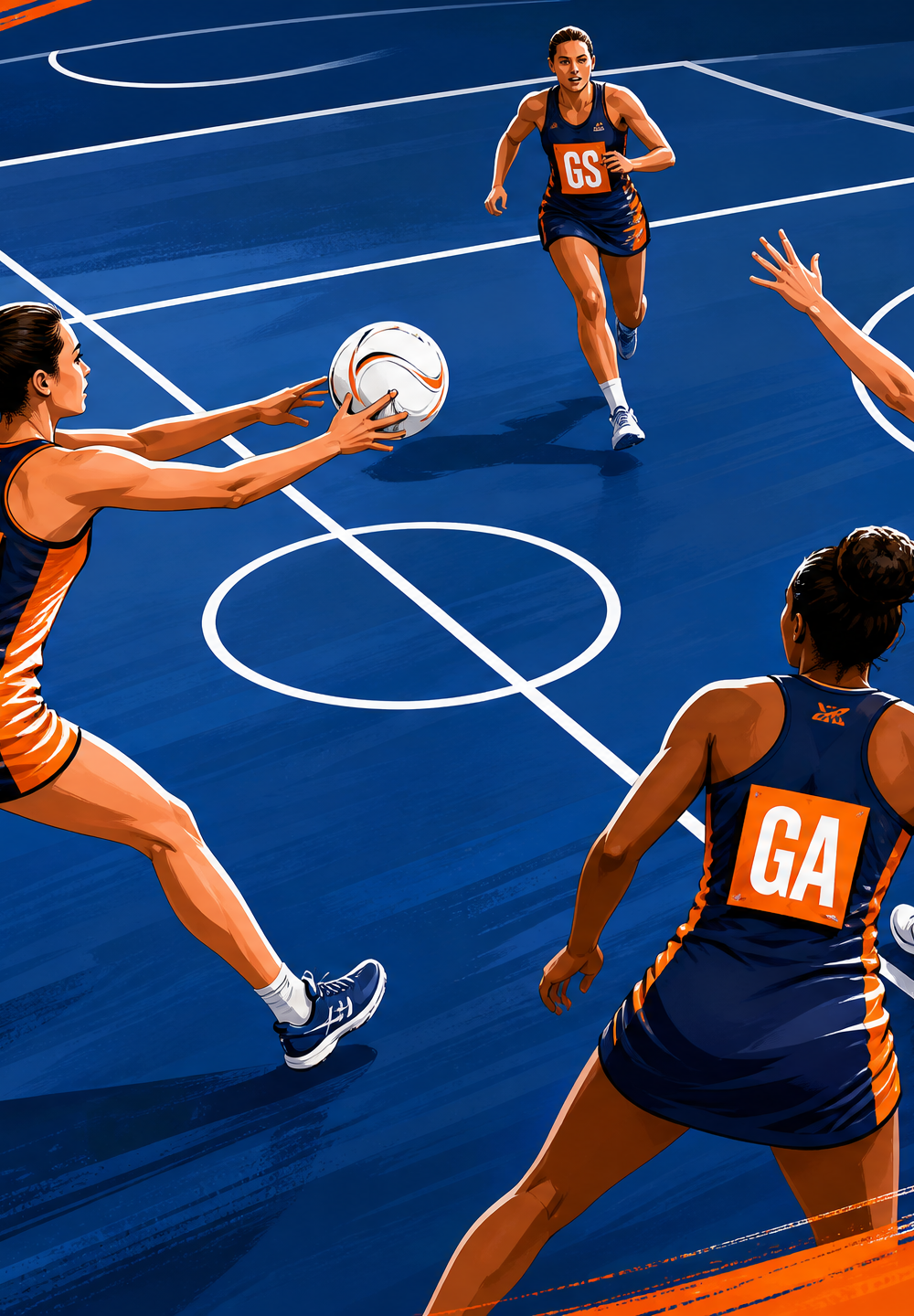
Court Area: Full court (30.5m x 15.25m), focusing primarily on the centre third and attacking third.
Players: Minimum of 7 players (C, WA, GA, GS vs WD, GD, GK). Ideal with 10+ players to rotate attackers and defenders.
Equipment: 1 netball, bibs for two teams, optional cones to mark starting positions for younger players.
Starting Positions
- Centre (C): Inside the centre circle (0.9m radius), ball in hand.
- Wing Attack (WA): Positioned on the transverse line, varying between the left channel, right channel, or central.
- Goal Attack (GA): Positioned in the attacking third, near the transverse line.
- Defenders (WD, GD): Marking tightly on the transverse line, dictating the initial space.
3. Step-by-Step Instructions
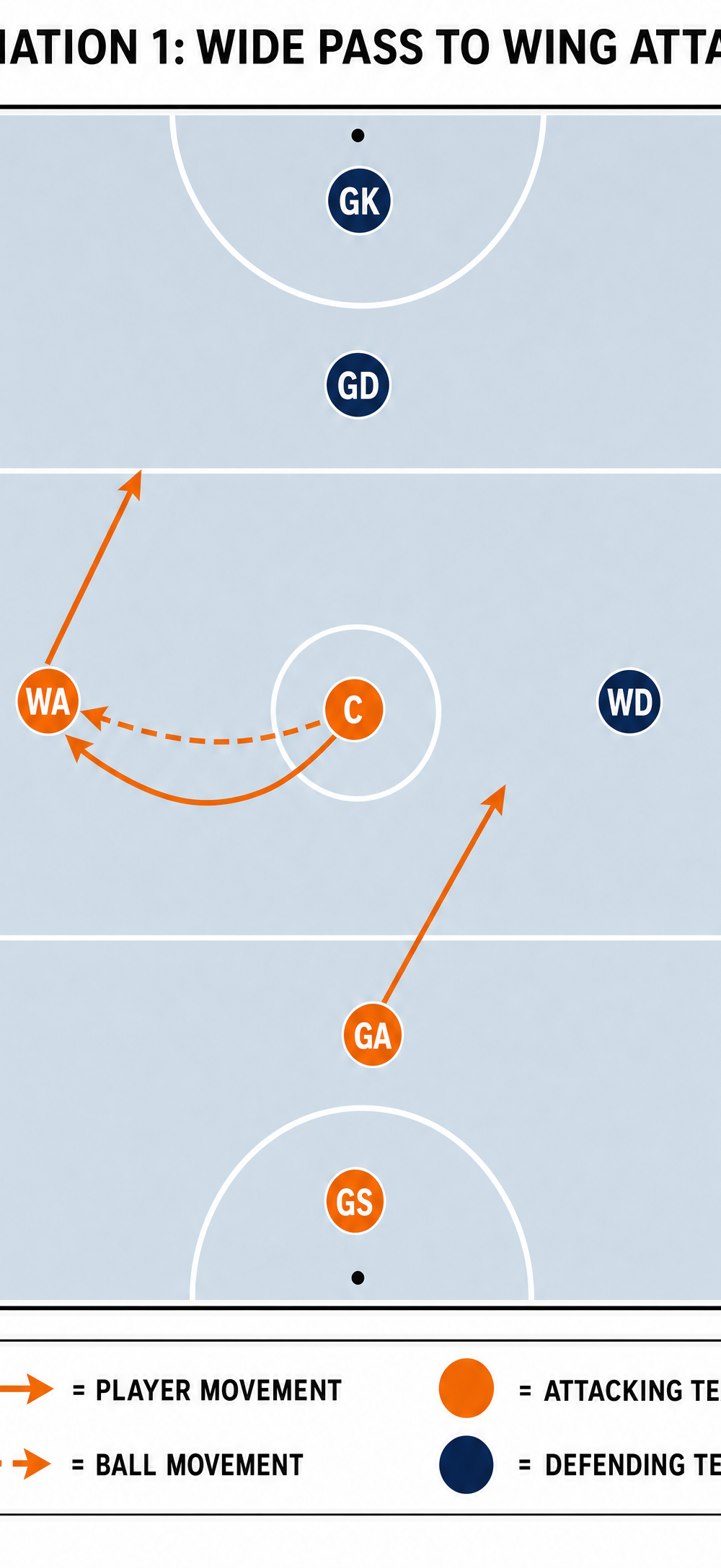
Variation 1: Wide Pass to Wing Attack
This is your foundational bread-and-butter setup, designed to stretch the defence laterally.
- Setup: The WA positions themselves centrally on the transverse line. The GA starts deep in the attacking third.
- The Drive: On the umpire's whistle, the WA makes a hard, angled drive toward the sideline (left or right channel).
- The Pass: The C reads the WA's movement and delivers a crisp, flat pass into the space ahead of the WA, ensuring the ball crosses the transverse line.
- The Second Phase: As the WA receives the ball, the GA immediately leads into the centre corridor to offer the next phase pass, transitioning the ball swiftly toward the goal circle.
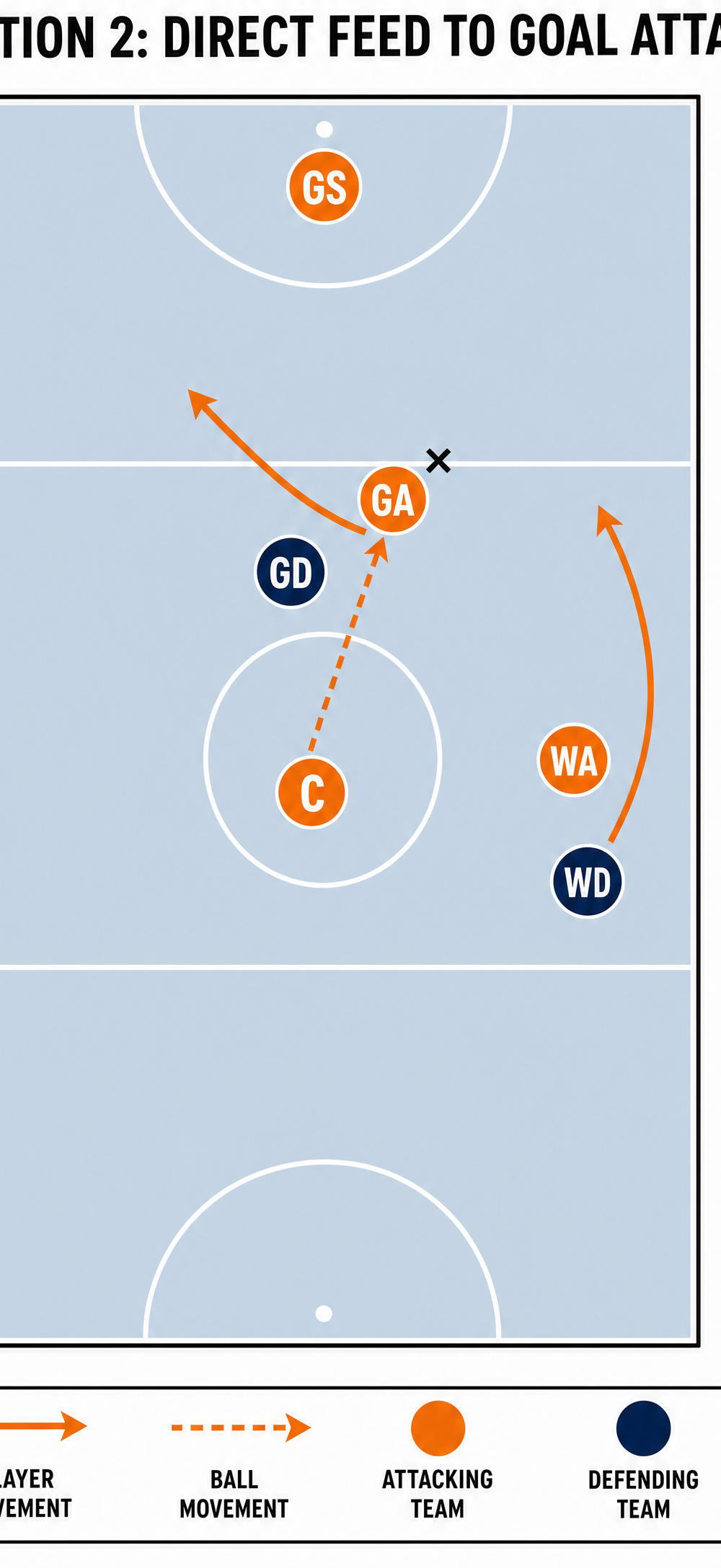
Variation 2: Direct Feed to Goal Attack
Use this variation when the opposition WD is heavily shutting down your WA.
- Setup: The WA positions themselves wide on the transverse line to draw the WD away from the central corridor.
- The Decoy: On the whistle, the WA makes a dummy drive down the sideline, pulling the WD with them.
- The Cut: Simultaneously, the GA makes a sharp, explosive diagonal cut from the attacking third across the transverse line into the newly created space in the centre third.
- The Pass: The C ignores the WA and fires a direct, hard pass to the GA hitting the top of the circle edge.
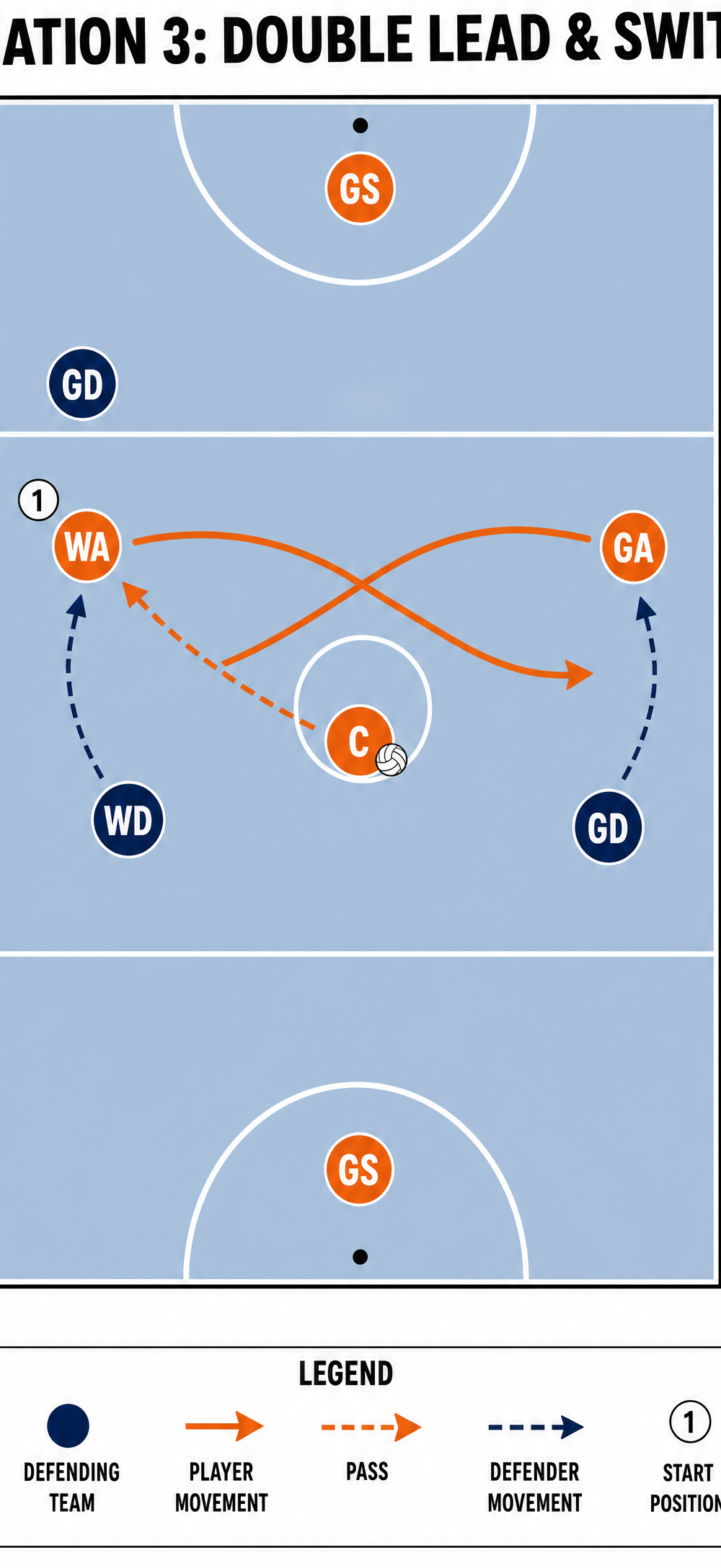
Variation 3: Double Lead & Switch
An advanced, highly disruptive tactic that causes confusion and defensive collisions.
- Setup: The WA and GA start relatively close together on the transverse line, or in a stacked formation.
- The Cross: On the whistle, the WA and GA explode in opposite directions, their paths crossing in an 'X' pattern (the switch). The WA drives right, while the GA cuts left.
- The Read: This crossing movement forces the WD and GD to either switch opponents (requiring excellent communication) or fight through traffic.
- The Pass: The C holds the ball for a split second, reads which attacker has gained separation, and delivers the pass to the free player.
4. Key Coaching Points
- Timing is Everything: Attackers must not move before the whistle. The C must release the ball within 3 seconds, meaning leads must be immediate and explosive.
- Strong First Step: Emphasize a powerful push-off from the transverse line to gain an immediate half-step advantage over the defender.
- Eye Contact: The C must make eye contact with the intended receiver to ensure they are ready for the pass.
- Clear the Space: If an attacker does not receive the ball on their first lead, they must immediately clear out to create space for a secondary drive.
- Pass Placement: Passes must be thrown into space ahead of the moving player, not at their body, allowing them to run onto the ball at full speed.
5. Common Mistakes
- Holding the Ball Too Long: The C hesitates, allowing the defence to recover and intercept the pass. Correction: Encourage the C to make a pre-determined read based on the call.
- Curved Leads: Attackers run in looping arcs rather than sharp, straight lines, making it easy for defenders to dictate their path. Correction: Practice sharp changes of direction (V-cuts).
- Crowding: Both the WA and GA lead into the same space, bringing their defenders together and clogging the passing lane. Correction: Enforce strict starting positions and designated driving zones.
6. Variations & Progressions
- Progression 1 (Add Pressure): Introduce a 'floating' defender in the centre third who can double-team either the WA or GA, forcing the C to make complex reads under pressure.
- Progression 2 (Continuous Play): Do not stop after the first pass. Require the attacking team to successfully transition the ball all the way to the GS in the goal circle and score before resetting.
- Variation (The Dummy Pass): The C fakes a pass to the WA, causing the GD to drop back, then hits the GA on a delayed lead.
7. Age Adaptations
- Under 10s: Focus purely on Variation 1. Use cones to mark exactly where the WA should run to receive the ball. Emphasize basic catching and passing technique over complex timing.
- Under 12s - Under 14s: Introduce Variation 2. Focus heavily on the timing of the GA's lead and ensuring the C looks at both options before passing.
- Under 16s - Open: Run all three variations at high intensity. The focus should be on the 'Double Lead & Switch' and the C's ability to read complex defensive rotations.