

Cricket
New Ball Opening Attack Plan
Master the art of the new ball with this aggressive opening attack plan, designed to create early pressure and secure vital wickets in the first 10 overs.

What you need
1 New red cricket ball, Standard cricket stumps and bails, Full protective gear for batsmen and close-in fielders, Measuring tape (optional, for marking lengths in practice)
1. Overview
The "New Ball Opening Attack Plan" is a fundamental tactical approach designed to maximise the movement and bounce of a fresh cricket ball. This set play aims to create immense early pressure on the opening batsmen, restrict scoring opportunities, and ultimately secure early wickets. It is best deployed during the first 10-15 overs of an innings when the ball is hard, the seam is pronounced, and the pitch may offer early assistance to the fast bowlers.
2. Setup
Equipment Needed:
- 1 New red cricket ball (or white ball for limited-overs)
- Standard cricket stumps and bails
- Full protective gear for batsmen and close-in fielders
Pitch & Field Setup:
- Standard 22-yard pitch on an oval ground.
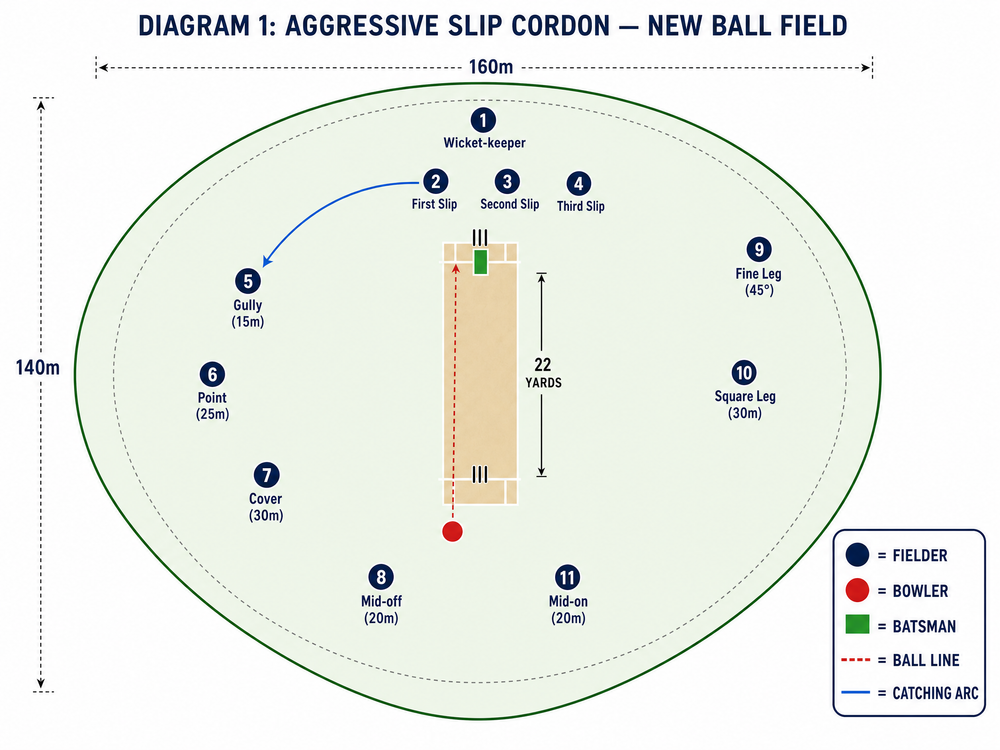
- The field is set aggressively with a focus on catching positions behind the wicket.
Player Positions:
- Wicket-keeper: Standing back for fast bowlers, positioned to take edges.
- Slip Cordon: 1st, 2nd, and 3rd slip positioned in an arc to cover the edge.
- Gully: Positioned to catch square edges.
- Point & Cover: Saving the single and stopping square drives.
- Mid-off & Mid-on: Inside the circle to cut off straight drives.
- Fine Leg & Square Leg: Positioned for the stray delivery on the pads.
3. Step-by-Step Instructions
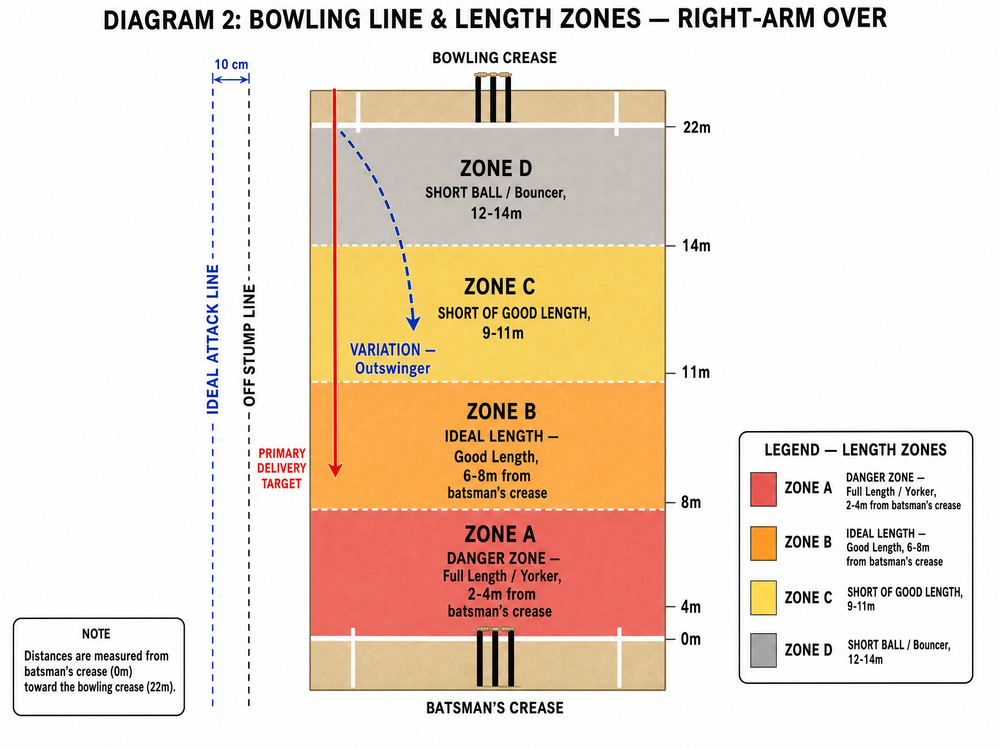
- Establish the Corridor of Uncertainty: The primary bowler must target the 'Corridor of Uncertainty'—the line just outside the off stump. This forces the batsman to play at the ball while creating the risk of an outside edge.
- Hit the Good Length: The bowler must consistently hit a 'good length' (approximately 6-8 metres from the batsman's crease). This length makes the batsman hesitate between playing forward or back.
- Set the Aggressive Field: Position the wicket-keeper and a strong slip cordon (1st, 2nd, 3rd slip, and gully). Ensure they are staggered correctly to cover the natural trajectory of edged catches.
- Build Pressure with Dot Balls: Focus on stringing together dot balls. Patience is key. The pressure of not scoring will often force the batsman into a rash shot.
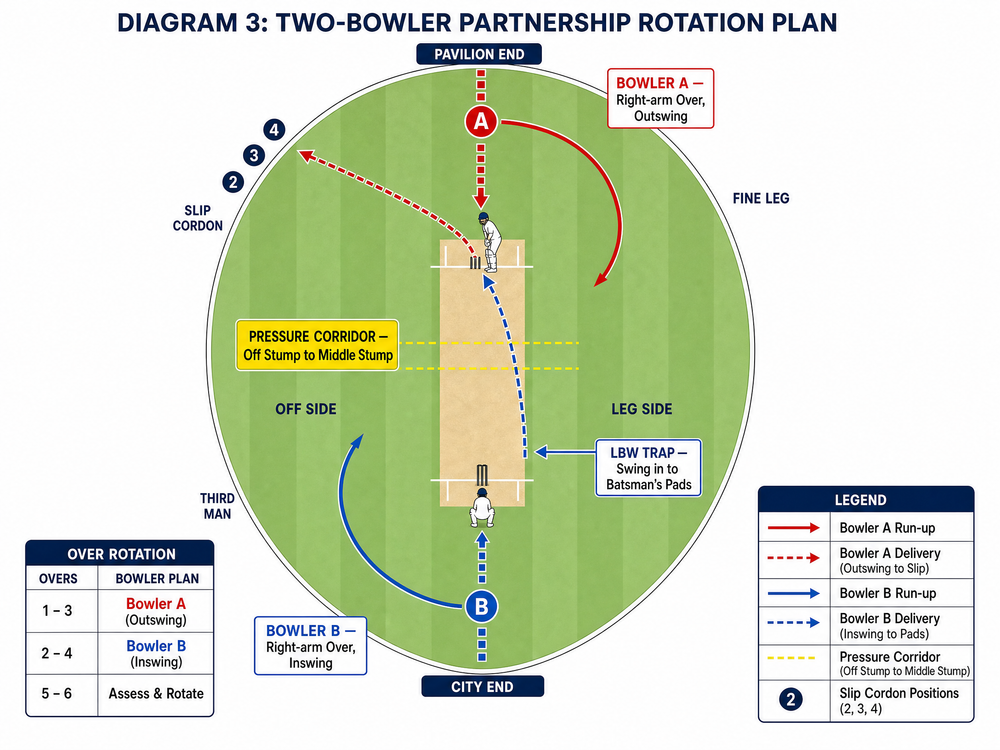
- Rotate the Strike Bowlers: Use a two-bowler partnership. Have one bowler focus on outswing (moving away from the batsman) and the other on inswing (moving towards the pads), creating varied challenges from each end.
- Assess and Adapt: After the first 4-6 overs, assess the pitch conditions and batsman's comfort. If the ball is not swinging, consider bringing on a seam bowler or altering the length to hit the pitch harder.
4. Key Coaching Points
- Discipline over Pace: Emphasise that hitting the right line and length consistently is far more effective than sheer pace with poor control.
- Wrist Position: Coach bowlers to maintain a strong, upright seam presentation to maximise movement off the pitch or in the air.
- Slip Catching Posture: Ensure slip fielders stay low, keep their weight forward, and watch the ball all the way into their hands.
- Partnership Bowling: Teach bowlers to hunt in pairs. If one bowler is restricting runs, the other can attack more aggressively.
5. Common Mistakes
- Bowling Too Short: Bowlers often get excited with the new ball and bowl too short, allowing the batsman to leave the ball easily or play horizontal bat shots.
- Searching for Magic: Trying to bowl the 'magic ball' every delivery instead of building pressure through consistent accuracy.
- Slips Standing Too Close: If the slips stand too close to each other or the batsman, they reduce their reaction time for fast edges.
- Neglecting the Leg Side: While focusing on the off stump, bowlers can sometimes stray onto the pads, offering easy runs to the fine leg boundary.
6. Variations & Progressions
- The Short Ball Surprise: Once the good length is established, use a well-directed bouncer to push the batsman back, then follow up with a full delivery.
- The Inswing Trap: Set an aggressive off-side field to encourage the drive, then bowl a sharp inswinger targeting the pads for an LBW.
- Removing a Slip for Cover: If the ball isn't swinging, remove the 3rd slip and place them at short cover to stop the quick single and build pressure.
7. Age Adaptations
- Under 10s: Focus purely on bowling straight and hitting the stumps. Use a softer ball and do not employ a slip cordon for safety.
- Under 12s - Under 14s: Introduce the concept of the 'good length' and perhaps one slip fielder. Focus on seam presentation.
- Under 16s - Open: Implement the full aggressive field. Focus on tactical awareness, setting up batsmen, and advanced swing/seam bowling techniques.
