Mastering the Art of Deception: Spin Bowling Variations Drill
Equip your spinners with the tactical awareness and technical control to execute variations under pressure and outsmart batsmen.
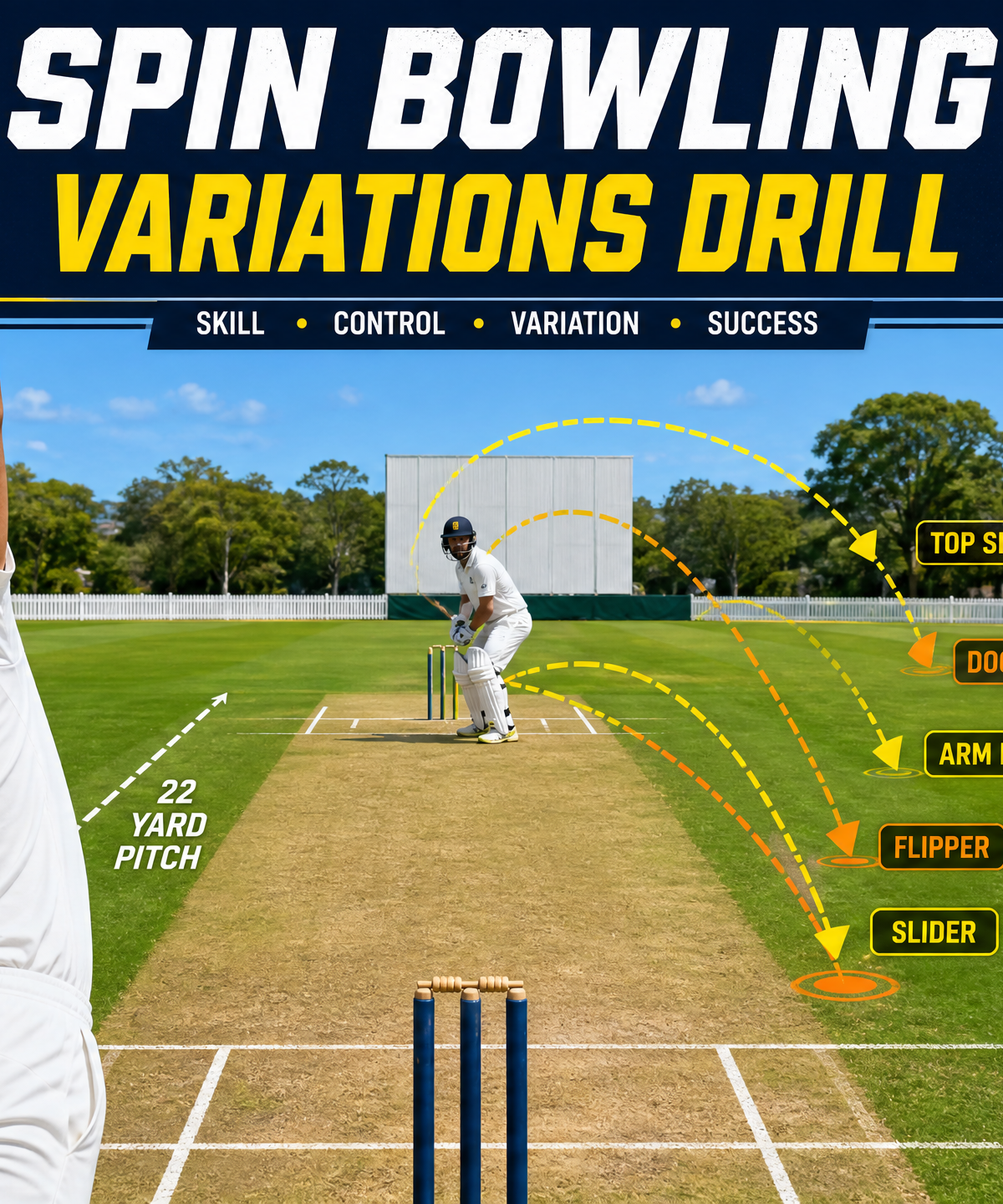
Equipment Needed
1. Overview
Spin bowling is as much a psychological battle as it is a physical skill. The Spin Bowling Variations Drill is designed to develop a bowler's ability to seamlessly transition between their stock delivery and variations (such as the arm ball, top-spinner, or googly) without telegraphing their intentions to the batsman. This drill focuses on maintaining a consistent action while altering the release point and wrist position to deceive the batsman in flight and off the pitch. It is an essential practice for intermediate to advanced spinners looking to build a robust arsenal for match situations.
2. Setup
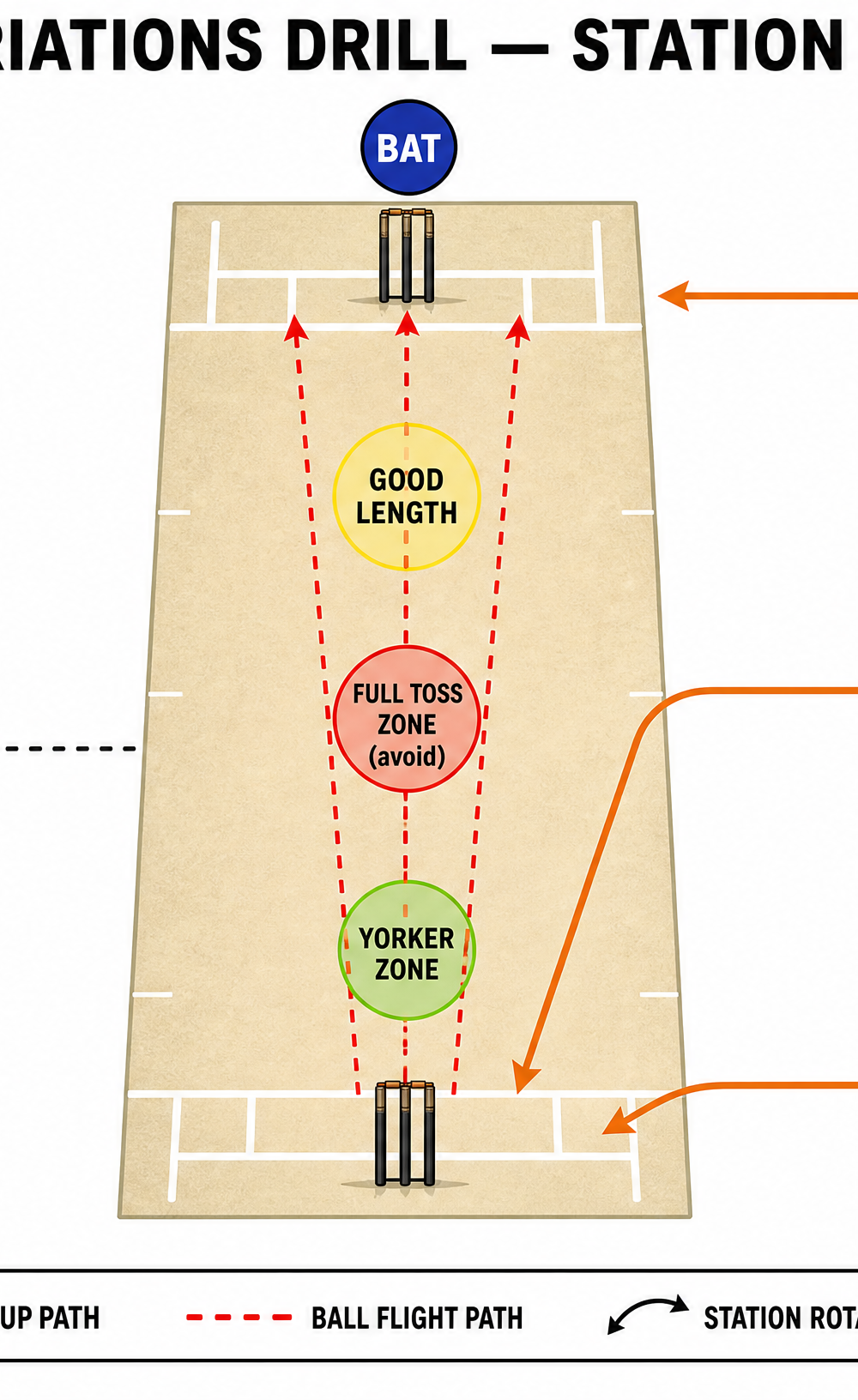
To run this drill effectively, you will need a standard 22-yard cricket pitch and a few specific training aids to mark target zones.
Equipment Needed
- 12-15 Cricket balls (preferably a mix of new and slightly worn to simulate different match conditions)
- Target markers (cones or flat rubber discs)
- Stumps (both ends)
- Optional: A batsman (fully padded up) or a target net
Pitch & Field Setup
- Place the stumps at both the bowling and batting ends of the 22-yard pitch.
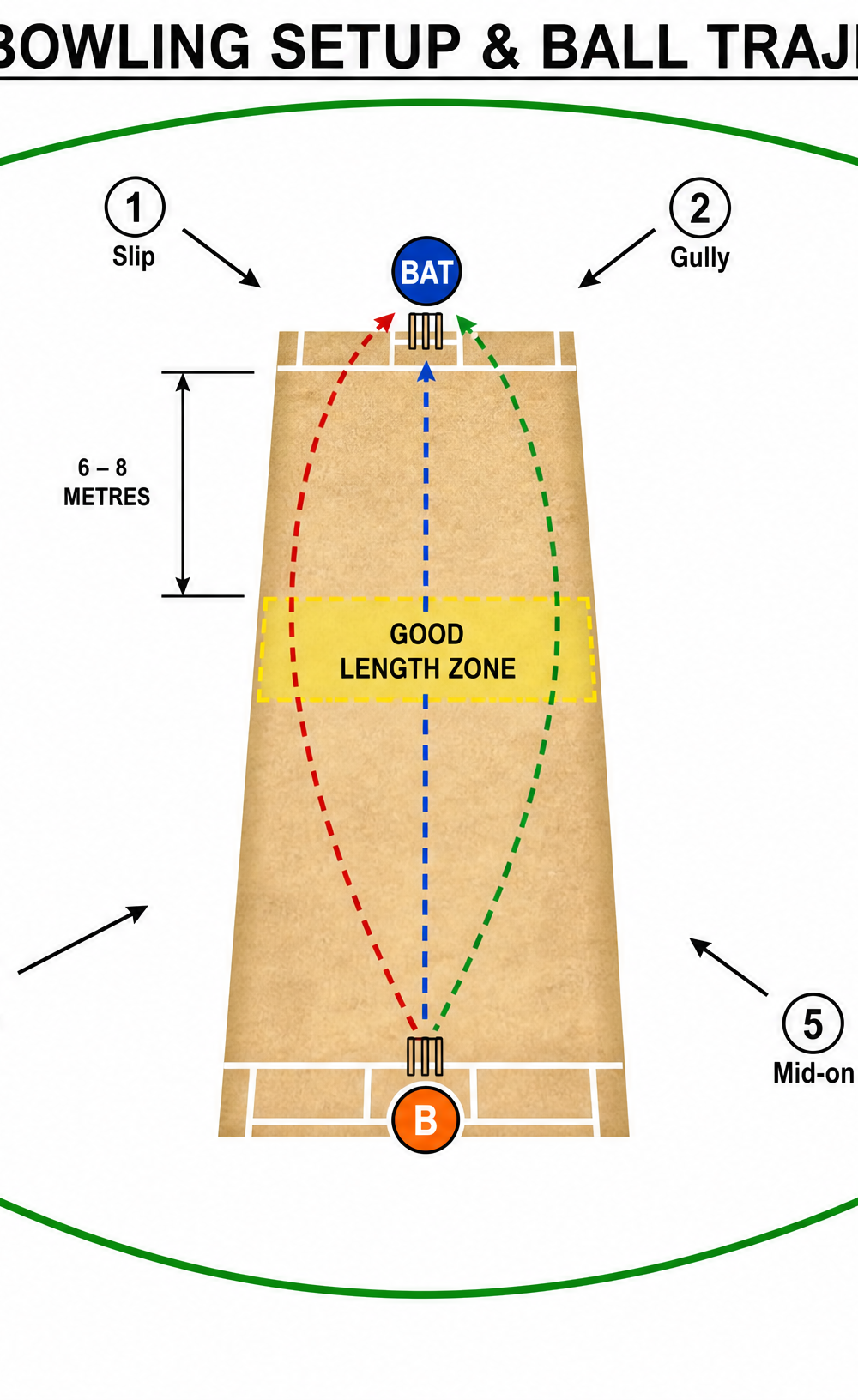
- Use the flat rubber discs to create a Good Length Zone (approximately 6-8 metres from the batsman's stumps). This is the primary target area.
- Set up three distinct bowling stations at the bowling crease:
- Station 1: Over the wicket
- Station 2: Around the wicket
- Station 3: Wide of the crease
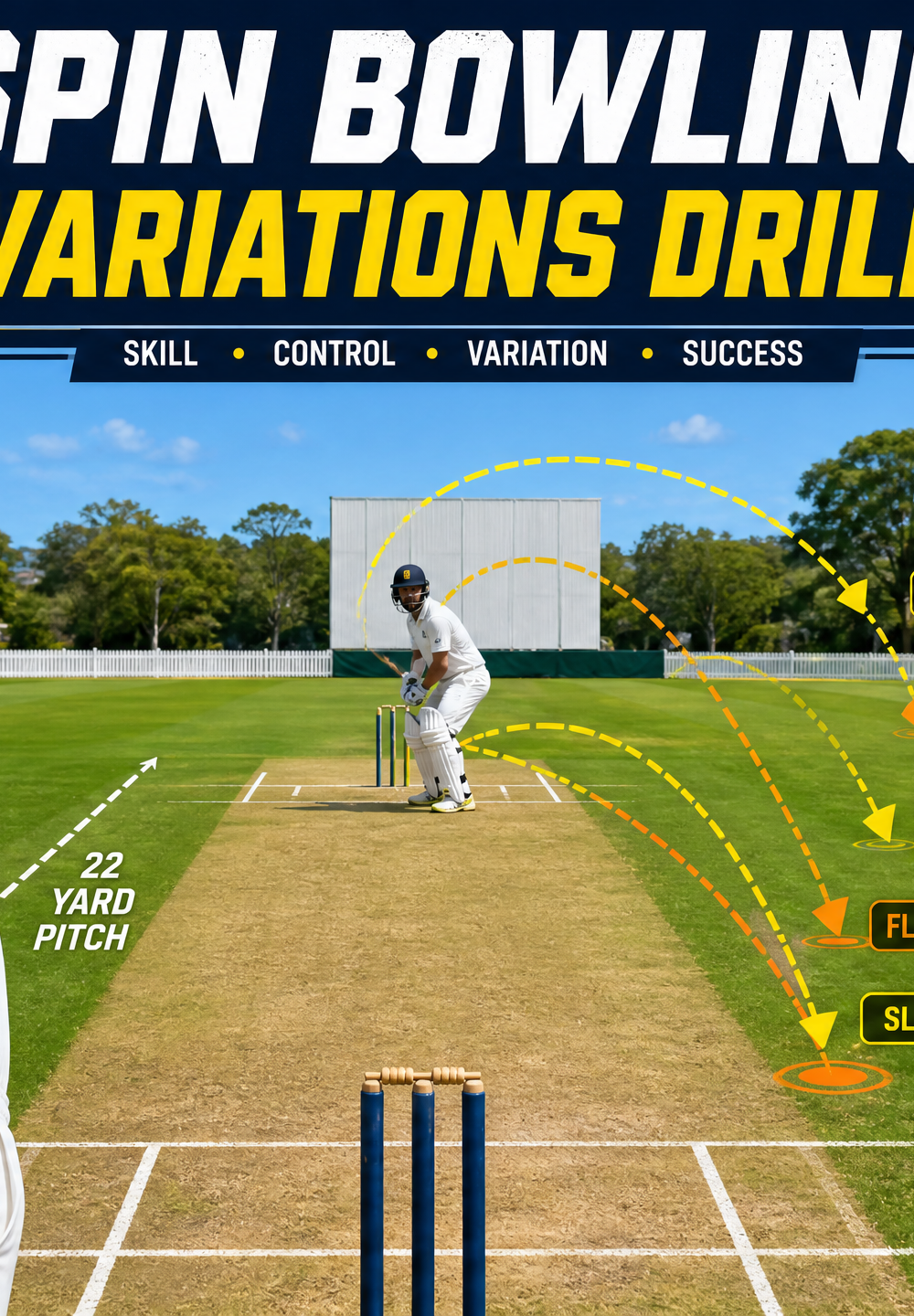
3. Step-by-Step Instructions
Follow these steps to execute the drill and maximize player engagement and skill development:
- Warm-up and Stock Ball Focus (5 minutes): Have the bowler start at Station 1 (Over the wicket). Instruct them to bowl 12 deliveries focusing solely on their stock ball (off-spin or leg-spin), aiming to hit the Good Length Zone consistently. Emphasize a strong, repeatable action.
- Introduce the Variation (10 minutes): Ask the bowler to bowl an over (6 balls) where deliveries 1, 2, 3, and 5 are the stock ball, while deliveries 4 and 6 are a specific variation (e.g., an arm ball or a top-spinner). The goal is to maintain the exact same run-up, gather, and arm speed for the variation as the stock ball.
- Station Rotation (15 minutes): Move the bowler through the different stations.
- Bowl one over from Station 1.
- Rotate to Station 2 (Around the wicket) and bowl one over, again mixing stock balls and variations.
- Rotate to Station 3 (Wide of the crease) and repeat.
- Coach's Note: Changing the angle of delivery alters the batsman's perception and requires the bowler to adjust their line slightly to still hit the target zones.
- The Pressure Test (10 minutes): Introduce a batsman (or use a points system with the target zones if no batsman is available). Call out a specific scenario before each delivery (e.g., "Last ball of the over, batsman is looking to hit over the top"). The bowler must decide whether to use their stock ball or a variation and execute it perfectly.
4. Key Coaching Points
- Disguise is Everything: The arm speed and body language must remain identical for both the stock delivery and the variation. Any change in pace should come from the wrist and fingers, not the arm.
- Consistent Release Point: Ensure the bowler isn't dropping their arm lower or releasing earlier/later when bowling the variation. A consistent release point makes it incredibly difficult for the batsman to pick the ball early.
- Patience and Setup: Teach the bowler that variations are most effective when set up by a series of consistent stock deliveries. The variation is the surprise element, not the norm.
- Follow-Through: A strong, complete follow-through is vital for generating maximum revolutions on the ball, regardless of whether it's a stock ball or a variation.
5. Common Mistakes
- Telegraphing the Delivery: The bowler slows down their run-up or arm action when attempting a variation, immediately alerting the batsman.
- Overusing Variations: Bowling too many variations in an over dilutes their effectiveness and often leads to a loss of control and line/length.
- Ignoring the Stock Ball: Focusing so much on learning a new variation that the bowler loses the ability to consistently land their primary, stock delivery.
6. Variations & Progressions
- Blindfold Drill: Have the bowler close their eyes just before the delivery stride. This forces them to rely purely on feel and muscle memory to execute the action and hit the target zone.
- Target Practice: Assign points to different zones on the pitch (e.g., 3 points for hitting the Good Length Zone, 5 points for hitting the top of off-stump). Create a competition among the bowlers.
7. Age Adaptations
- Under 10s / Under 12s: Focus primarily on mastering the stock delivery. Introduce only one simple variation (like bowling slightly faster or slower) and emphasize control over deception.
- Under 14s / Under 16s: Introduce more complex variations (like the top-spinner or arm ball). Emphasize the tactical use of these variations in match scenarios.
- Open / Senior: Full implementation of the drill with a strong focus on disguise, tactical setup, and executing under pressure against quality batsmen.