Mastering Spin Bowling Variations: The Target Zone Drill
Equip your spin bowlers with the precision and control needed to execute match-winning variations through this targeted landing zone drill.

Equipment Needed
Overview
Developing variations is essential for any spin bowler aiming to succeed at higher levels of cricket. Whether it's a leg-spinner mastering the googly or an off-spinner perfecting the doosra, variations keep the batsman guessing and create wicket-taking opportunities. This drill focuses on the fundamental requirement of any variation: control. By setting up specific landing zones on a standard 22-yard pitch, coaches can help bowlers develop the muscle memory and tactical awareness required to execute their variations accurately under match conditions.
Setup
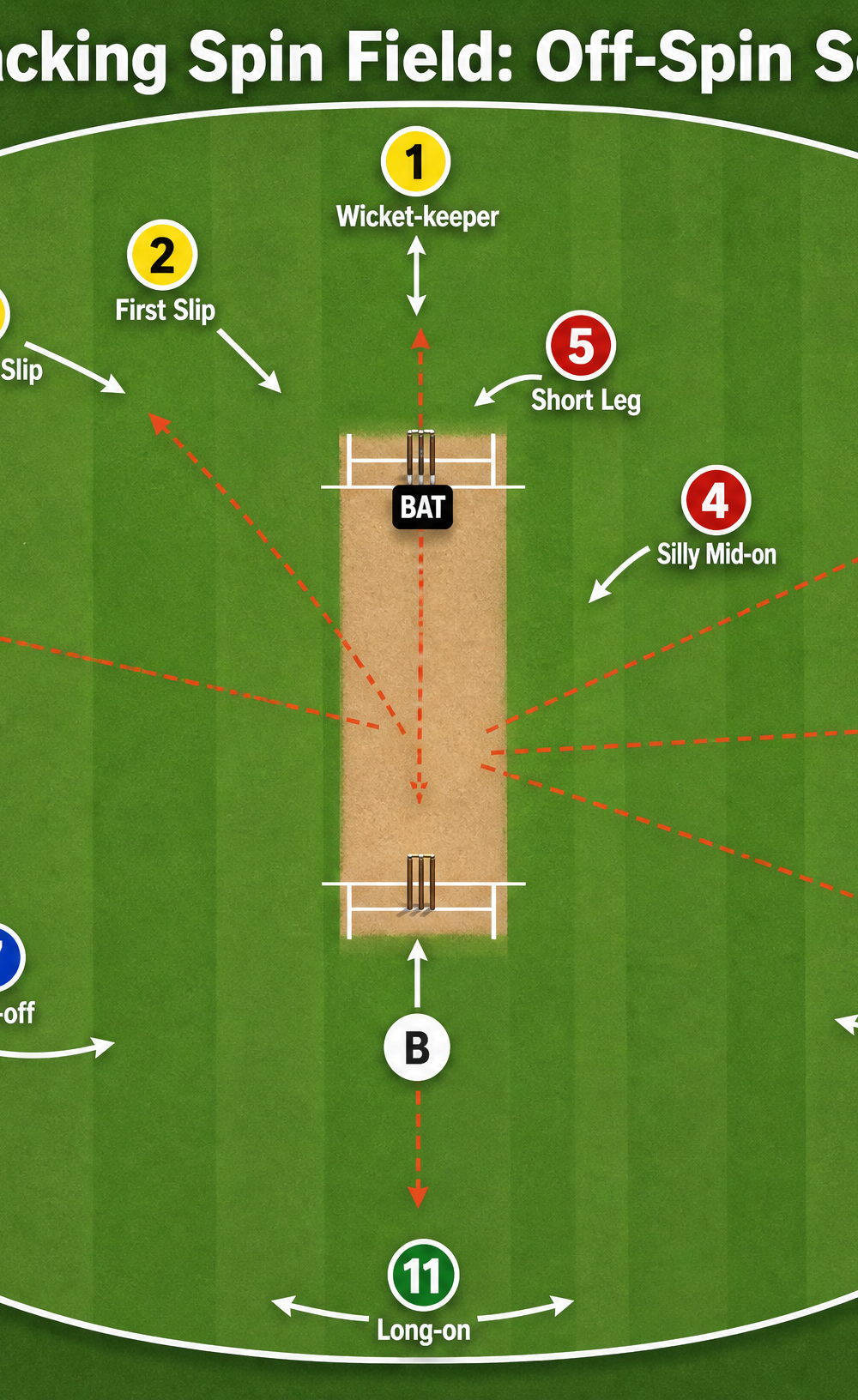
To run this drill effectively, you will need the following equipment and field setup:
- Equipment: 6-8 cricket balls (match quality preferred), 3 different coloured cones (e.g., Red, Green, Orange), measuring tape (optional but recommended for accuracy).
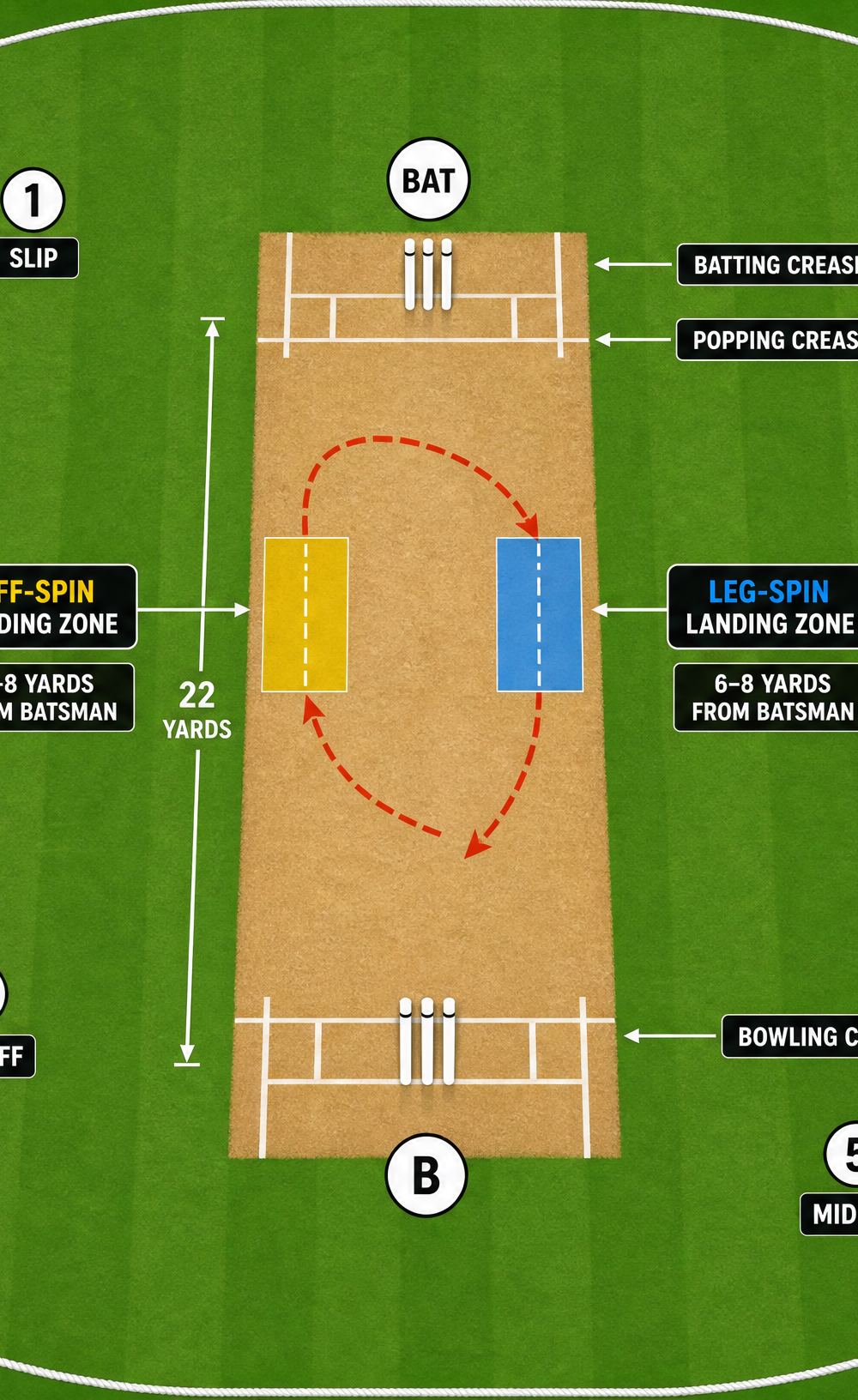
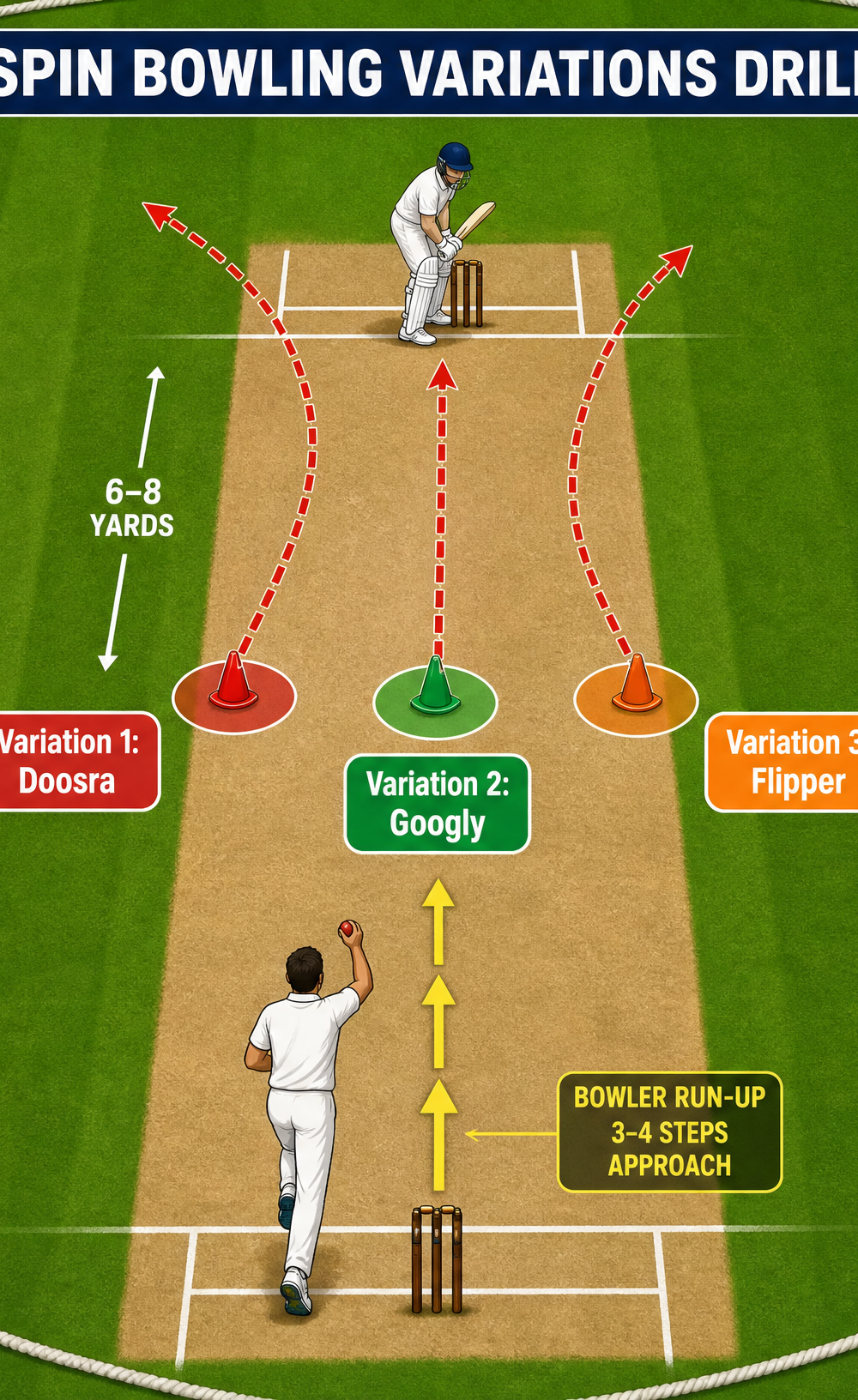
- Pitch Setup: Use a standard 22-yard cricket pitch. Mark out three distinct target zones using the cones, approximately 6-8 yards from the batting crease.
- Zone 1 (Red Cone): Placed on the off-stump line. Ideal for the Doosra or standard off-break.
- Zone 2 (Green Cone): Placed on the middle-stump line. Ideal for the Googly or top-spinner.
- Zone 3 (Orange Cone): Placed on the leg-stump line. Ideal for the Flipper or standard leg-break.
- Player Positions: One bowler at the bowling end. A wicket-keeper (or coach with a catching mitt) behind the stumps at the batting end. Optional: A batsman standing at the crease (without a bat) to provide a visual reference point.

Step-by-Step Instructions
Follow these steps to execute the drill:
- Warm-up: Ensure the bowler has completed a thorough warm-up, focusing on shoulder, wrist, and finger mobility.
- Establish the Base: The bowler begins by bowling 6-12 standard stock deliveries (e.g., standard off-breaks or leg-breaks) aiming for their primary target zone. This establishes rhythm and a baseline for accuracy.
- Introduce the Variation: The coach calls out a specific variation (e.g., "Googly" or "Doosra").
- Target Selection: The bowler must adjust their grip and aim for the corresponding coloured cone. For example, a leg-spinner bowling a googly should aim for the Green Cone (middle-stump line) to ensure the ball turns towards the off-stump.
- Execution: The bowler delivers the ball using a 3-4 step approach from behind the bowling crease.
- Feedback Loop: The coach and wicket-keeper provide immediate feedback on the landing position, flight, and degree of turn. Did the ball hit the target zone? Did it spin in the intended direction?
- Rotation: Repeat steps 3-6, rotating through different variations and target zones. A standard set might consist of 6 deliveries: 2 stock balls, 2 variation A, 2 variation B.
Key Coaching Points
- Maintain Arm Speed: The most critical aspect of bowling a variation is maintaining the same arm speed as the stock delivery. Batsmen look for a slower arm action as a cue for a variation.
- Conceal the Grip: Encourage the bowler to hide their grip in their non-bowling hand during the run-up and only reveal it at the point of delivery.
- Focus on the Seam: The seam position dictates the drift and turn. Ensure the bowler is imparting the correct revolutions on the ball for the specific variation.
- Body Alignment: The bowler's body alignment at the crease should remain consistent, regardless of the delivery being bowled. Any change in alignment is a 'tell' for the batsman.
- Follow-through: A strong, complete follow-through is essential for imparting maximum spin and maintaining balance.
Common Mistakes
- Slowing Down: The bowler significantly reduces their run-up or arm speed when attempting a variation, making it easily readable.
- Telegraphing the Grip: The bowler exposes their grip too early in the delivery stride.
- Over-pitching: In an attempt to impart more spin, the bowler drags the ball down or over-pitches, resulting in a full toss or a long hop.
- Loss of Accuracy: The bowler focuses entirely on the spin and neglects the landing zone, resulting in wide deliveries.
Variations & Progressions
- Progression 1: The Blind Call: The coach calls out the required variation only after the bowler has started their run-up. This tests the bowler's ability to adjust quickly and maintain control under pressure.
- Progression 2: Match Scenario: Introduce a batsman (fully padded up) and set a specific field. The bowler must execute the variation based on the field placement and the batsman's movements.
- Variation 1: The Points System: Assign points for hitting the correct target zone and achieving the desired turn. Create a competitive environment among multiple bowlers.
Age Adaptations
- Under 10s: Focus entirely on the stock delivery. Introduce the concept of variations only if the stock ball is consistently accurate. Use larger target zones.
- Under 12s - Under 14s: Introduce one basic variation (e.g., a top-spinner or a slower ball). Focus on grip and arm speed. Keep target zones relatively large.
- Under 16s - Open: Full implementation of the drill. Focus on advanced variations (Googly, Doosra, Flipper). Use small, precise target zones and incorporate match scenarios.