

Netball
Mastering the Circle Edge: WA Feeding Patterns Drill
Equip your Wing Attacks with the vision, timing, and execution skills needed to deliver precision feeds into the shooting circle under defensive pressure.

What you need
2-3 Netballs, Bibs for all players, 4 Cones (optional)
Overview
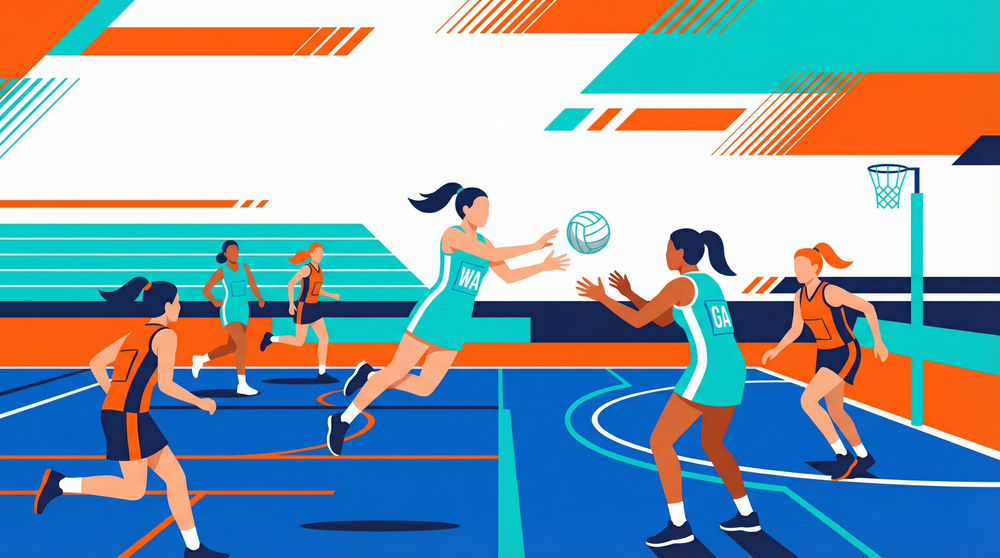
The Wing Attack (WA) is the primary playmaker in the attacking third, responsible for setting up the shooters with quality ball delivery. This drill focuses on developing the WA's ability to read the movement of the Goal Attack (GA) and Goal Shooter (GS), hit the circle edge with speed, and execute precision feeds into the shooting circle. It is designed to improve decision-making under pressure, timing of the drive, and the variety of passes used to bypass defenders. By practicing these specific feeding patterns, your attacking unit will become more cohesive and lethal in the final third.
Setup

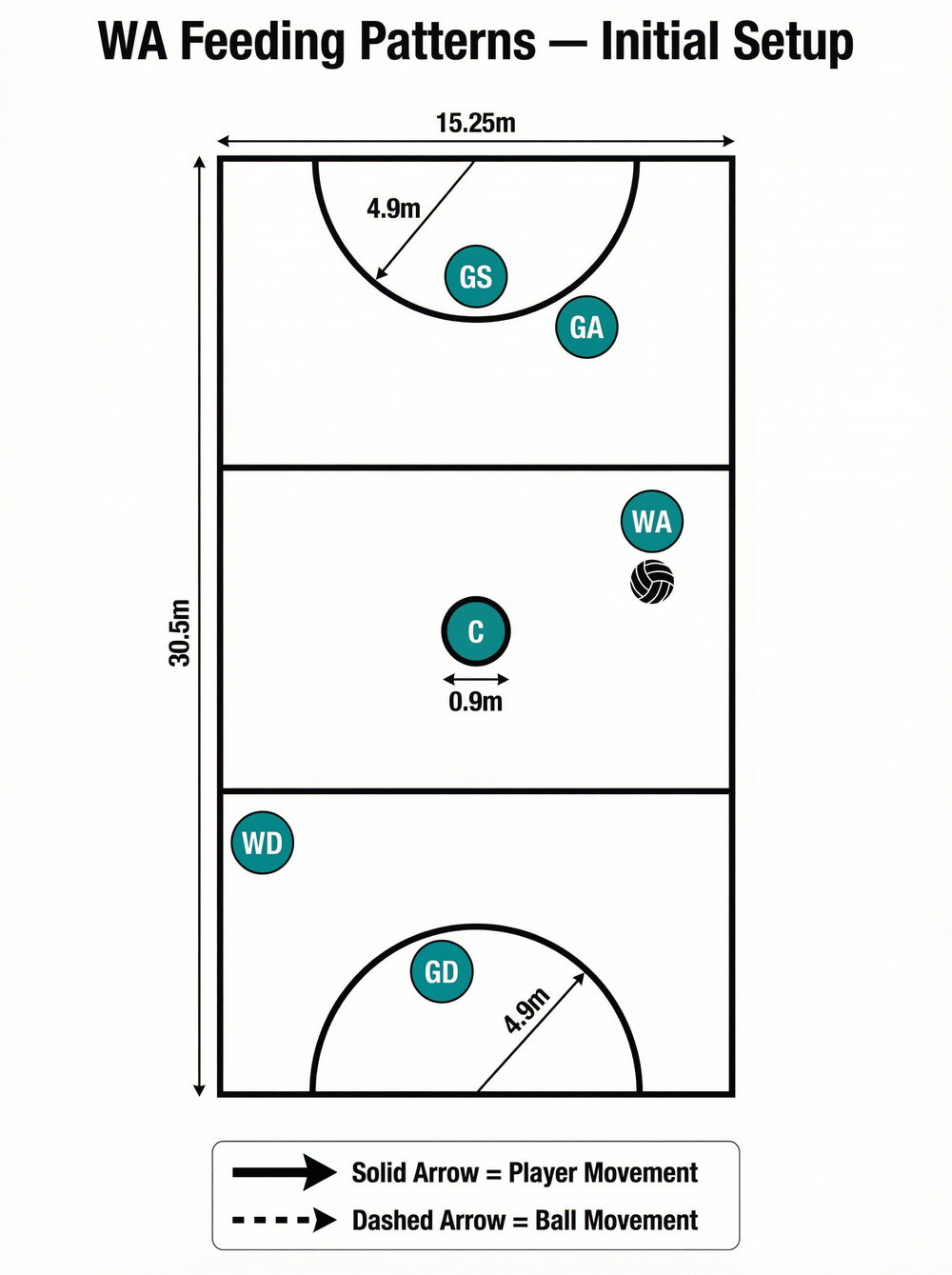
To effectively run this drill, you will need a standard netball court (30.5m x 15.25m) and the following equipment:
- Equipment: 2-3 netballs, bibs for all players, and 4 cones (optional, to mark starting positions).
- Player Positions: Minimum of 6 players required: Centre (C), Wing Attack (WA), Goal Attack (GA), Goal Shooter (GS), Wing Defence (WD), and Goal Defence (GD).
- Court Setup: Utilize the attacking half of the court. Place the C at the transverse line. Position the WA on the right or left wing in the centre third. The GA and GS should start inside or near the goal circle (4.9m radius). The WD and GD will act as active defenders.
Step-by-Step Instructions
Follow these structured steps to execute the drill effectively. Begin with unopposed movements before introducing defenders to increase the difficulty.
- Initial Movement: The drill begins with the Centre (C) holding the ball near the transverse line. The Wing Attack (WA) makes a preliminary movement — a dodge or sharp change of direction — to create separation from the Wing Defence (WD).
- The Drive: The WA sprints aggressively towards the circle edge, aiming to receive the ball on the move from the C. The timing of this drive is crucial; the WA must accelerate as the C is ready to release the pass.
- Receiving the Pass: The C delivers a strong, flat pass to the WA. The WA must catch the ball securely, landing with strong footwork — preferably on the outside foot to open up the body to the circle — precisely on the circle edge.
- Shooter Preparation: As the WA receives the ball, the Goal Attack (GA) and Goal Shooter (GS) initiate their movements. The GA might cut across the top of the circle, while the GS holds a strong position near the goal post or makes a baseline drive.
- The Feed: The WA must immediately assess the shooters' positioning and the defenders' placement. The WA selects the appropriate pass (a high lob over the defender, a fast chest pass into the pocket, or a bounce pass) and delivers the ball to the optimal shooter.
- Reset and Repeat: Once the shot is taken or the ball is secured by the shooter, the players reset to their starting positions. Rotate the players through the different roles to ensure comprehensive development.

Key Coaching Points

To maximise the effectiveness of this drill, focus on these critical coaching elements.
Timing of the Drive. The WA must time their drive to the circle edge perfectly, ensuring they are moving onto the ball rather than waiting for it. Late drives allow the defence to set up and deny the pass.
Strong Footwork. Emphasise landing strongly on the circle edge. Landing on the outside foot allows the WA to pivot efficiently and face the shooters immediately, expanding their field of vision and passing options.
Vision and Decision Making. The WA must look up before they even catch the ball. Encourage them to scan the circle to identify the best feeding option quickly. They should avoid pre-determining the pass before receiving the ball.
Pass Variety and Execution. Practice a variety of passes — lob, chest, bounce, shoulder. The pass must be executed with appropriate speed and trajectory to bypass the defenders and reach the shooter in a position to shoot.
Shooter Movement Coordination. Remind the GA and GS to use clear, decisive movements and to work together to create space. They should utilise holds, dodges, and clear calls for the ball to make the WA's decision easier.
Common Mistakes

Watch out for these frequent errors and correct them promptly during the session.
Driving Too Early. The WA arriving at the circle edge before the C is ready to pass results in a static catch, allowing the WD to recover and contest the ball. Coach the WA to read the C's body language and time the drive accordingly.
Poor Landing Footwork. Landing off-balance or on the inside foot forces the WA to turn their back on the play or severely limits their passing options. Drill the landing technique in isolation if necessary.
Forcing the Pass. The WA throwing the ball into a heavily defended area instead of resetting the play or looking for the secondary option. Teach players to recognise when to hold the ball and re-set rather than force a risky feed.
Lack of Shooter Communication. The GA and GS making identical movements or failing to communicate, crowding the space and making the feed impossible. Encourage the shooters to call for the ball and signal their intended movement.
Variations & Progressions

Adapt the drill to suit the skill level of your players and to keep sessions engaging and challenging.
Add Defensive Pressure (Progression). Introduce the WD to defend the WA's drive, and the GD to contest the shooters inside the circle. This forces the WA to make decisions under realistic match conditions and teaches the shooters to work harder to create space.
Time Constraints (Progression). Implement a 3-second rule for the WA to release the ball upon catching it on the circle edge. This increases the speed of decision-making and simulates the pressure of a real match situation.
Specific Pass Constraints (Variation). Restrict the WA to using only a specific type of pass — for example, only lob passes or only bounce passes — for a set number of repetitions. This isolates and develops a particular skill and forces the shooters to adjust their movement accordingly.
Age Adaptations

Tailor the drill for different age groups to ensure it remains developmentally appropriate and achieves the intended outcomes.
| Age Group | Focus | Modifications |
|---|---|---|
| Under 10s / Under 12s | Basic footwork, secure catching, direct passes | Unopposed only; reduce pass distances; slow the drill down |
| Under 14s / Under 16s | Pass selection, WA-shooter timing, moderate pressure | Introduce passive defenders; encourage 2 pass types |
| Open / Advanced | Split-second decisions, advanced feeds, complex rotations | Full defensive pressure; 3-second rule; no-look and disguised passes |
