

Cricket
Wicket-Keeping 4-Cone Agility & Reaction Drill
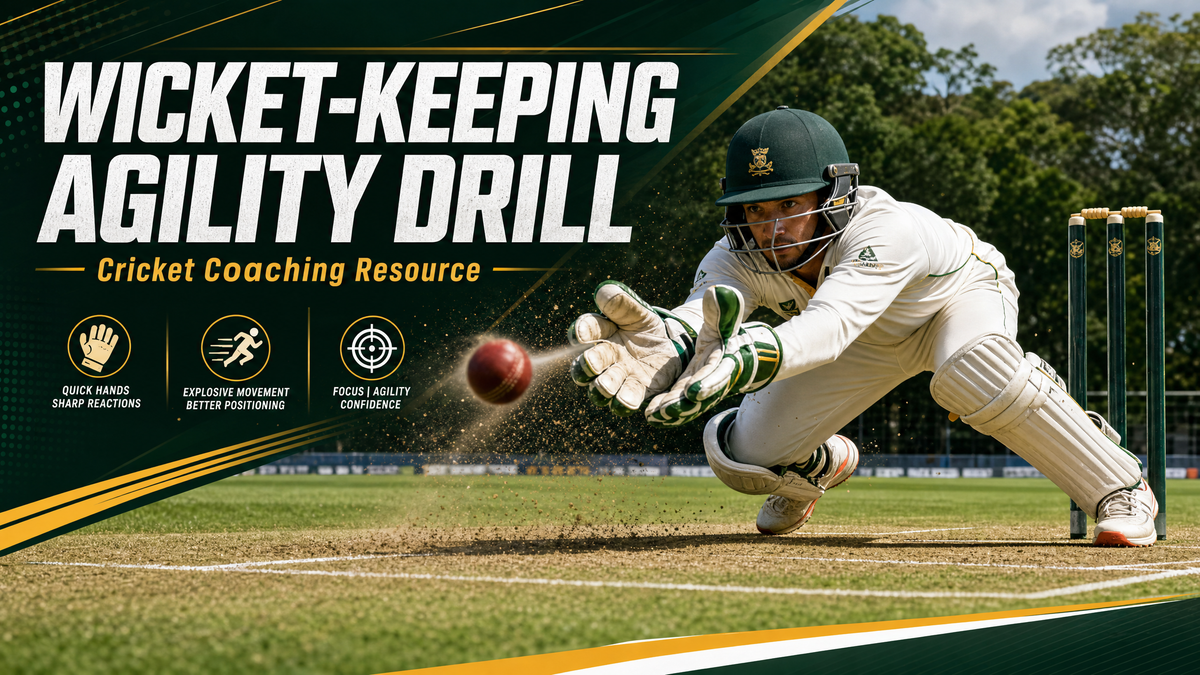
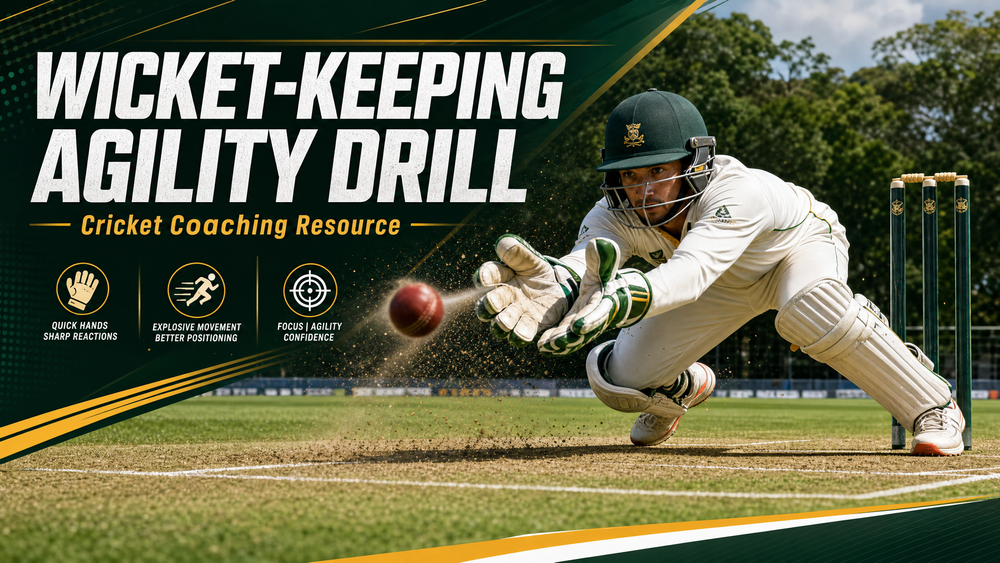
Develop explosive lateral movement, sharp reflexes, and proper diving technique with this high-intensity wicket-keeping drill.
What you need
1 set of stumps, 4 colored cones, 6-12 cricket balls, Wicket-keeping gloves, Wicket-keeping pads, Helmet
1. Overview
This high-intensity wicket-keeping drill is designed to develop explosive lateral movement, sharp reflexes, and correct diving technique. By incorporating visual cues and directional changes, it simulates the unpredictable nature of fast bowling and edges. Coaches should use this drill to improve a keeper's footwork, balance, and ability to cover ground quickly to both the off and leg sides. It is an excellent conditioning and skill-building exercise that bridges the gap between static catching and match-scenario keeping.
2. Setup
Proper setup is crucial for the safety and effectiveness of this drill. Ensure the ground is even and free of debris to allow for safe diving.
- Location: Cricket pitch (22 yards) or a flat, grassy area of similar dimensions.
- Equipment: 1 set of stumps, 4 colored cones (or markers), 6-12 cricket balls (or training balls for younger players), wicket-keeping gloves, pads, and a helmet.
- Player Positions:
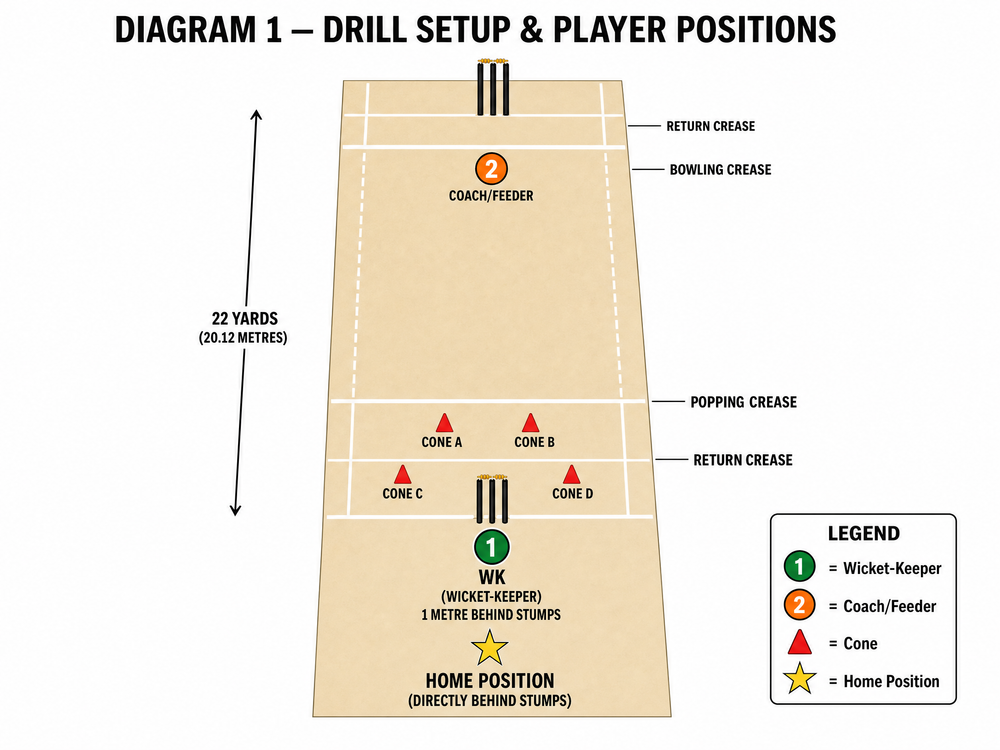
- Wicket-Keeper (WK): Positioned at the 'Home Position', approximately 1 metre behind the stumps at the batting end, in a standard crouching stance.
- Coach/Feeder: Positioned at the bowling crease (or closer, depending on the required feed speed), ready to throw or hit the balls.
- Cone Placement: Place the 4 cones in a diamond or semi-circle arc 1-2 metres in front of the keeper. Label them mentally or physically as Cone A (forward-left), Cone B (forward-right), Cone C (wide-left), and Cone D (wide-right).
3. Step-by-Step Instructions
Follow these steps to execute the drill effectively. The coach controls the pace and direction of the drill.
- Starting Stance: The wicket-keeper starts at the Home Position (directly behind the stumps) in a balanced, low crouch with weight on the balls of the feet.
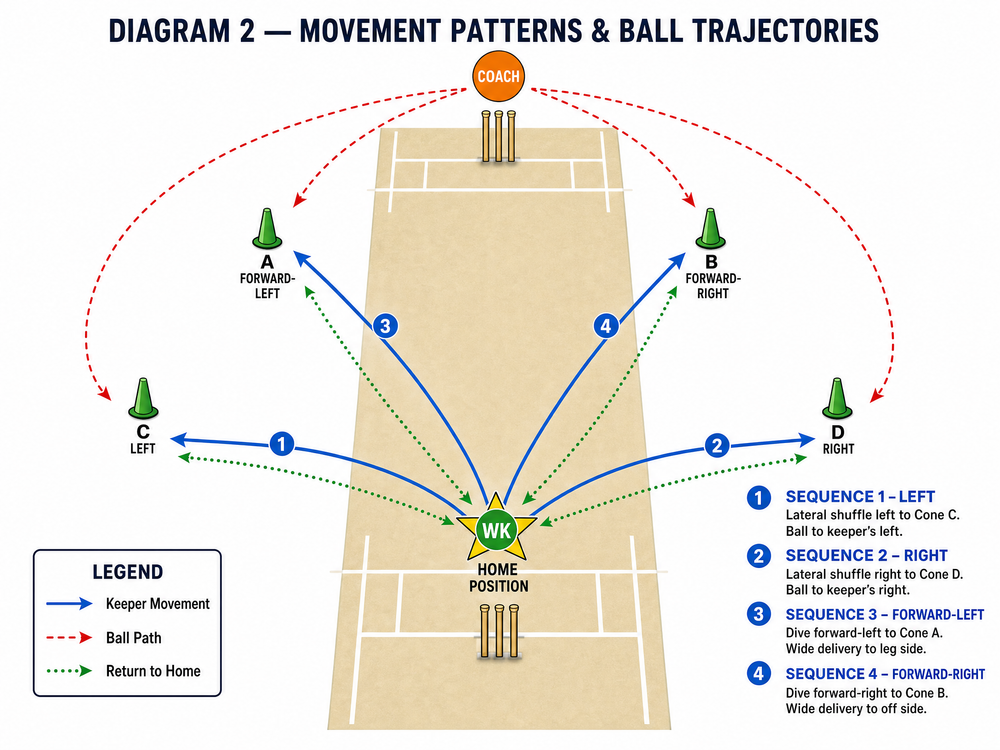
- The Call: The coach calls out a cone letter (A, B, C, or D) or points in a direction.
- Explosive Movement: The keeper immediately explodes towards the designated cone using the correct footwork (lateral shuffle for C and D, diagonal step for A and B).
- The Feed: As the keeper moves, the coach feeds a ball towards that side. The feed should challenge the keeper to reach the ball just as they arrive at the cone.
- The Catch: The keeper takes the catch, focusing on soft hands and watching the ball into the gloves. If diving is required (especially for cones C and D), the keeper must execute a safe and proper dive.
- Recovery: After securing the ball, the keeper quickly returns to the Home Position, resets their stance, and prepares for the next call.
- Repetition: Repeat for a set of 6-8 balls, then allow the keeper to rest. Vary the calls to keep the keeper guessing.
4. Key Coaching Points
Focus on these critical areas to maximize the drill's benefit:
- Stay Low: The keeper must maintain a low center of gravity throughout the movement. Popping up too early reduces agility and balance.
- First Step: The initial step must be explosive and in the correct direction. Avoid false steps or crossing the feet during lateral shuffles.
- Head Position: Keep the head still and eyes level. The head should lead the movement towards the ball.
- Soft Hands: Emphasize giving with the ball upon impact. 'Hard hands' lead to dropped catches and injuries.
- Proper Diving Technique: When diving, the keeper should extend fully, aiming to catch the ball with two hands if possible, and land safely on the side of the body, not the point of the shoulder or elbow.
5. Common Mistakes
Watch for and correct these frequent errors:
- Standing Up Early: Keepers often rise out of their crouch before moving, losing power and reaction time.
- Crossing Feet: During lateral movement, crossing the feet can cause the keeper to trip or lose balance. Insist on a shuffle step.
- Snatching at the Ball: Reaching out rigidly instead of letting the ball come into the gloves with soft hands.
- Taking Eyes Off the Ball: Looking away at the last fraction of a second, often due to fear of the impact or focusing on the landing.
6. Variations & Progressions
Adjust the drill to suit the keeper's skill level and to keep the sessions engaging:
- Blind Start: The keeper starts facing away from the coach and turns only when the coach calls 'Go'. This tests pure reaction time.
- Deflection Board: Place a deflection board or a ramp in front of the keeper to create unpredictable bounces and edges.
- Rapid Fire: The coach feeds balls in quick succession, forcing the keeper to recover and reset almost instantly.
- Tennis Ball/Reaction Ball: Use a tennis ball or a specialized reaction ball for unpredictable bounce and to encourage softer hands.
7. Age Adaptations
Tailor the drill for different age groups to ensure safety and appropriate skill development:
- Under 10s: Focus on basic movement and catching mechanics. Use soft incrediballs or tennis balls. Shorten the distance to the cones and keep feeds gentle. Eliminate diving until basic movement is mastered.
- Under 12s-14s: Introduce a harder ball (if appropriate protective gear is worn) and slightly increase the pace. Begin teaching basic diving technique on soft ground or mats.
- Under 16s & Open: Use a standard cricket ball. Increase the intensity, feed speed, and distance of the cones to simulate match-level fast bowling and sharp edges. Incorporate advanced variations like the deflection board.
