Youth Development
Master Attendance Tracking Online for Youth Sports
Discover how attendance tracking online transforms youth sports. Explore key features, integrations, and benefits for clubs, coaches, and guardians.

A player arrives late, a parent is searching for a misplaced message, and the coach is trying to remember who has already checked in. Meanwhile, the session clock is running and the rest of the team is ready to begin. These moments are familiar across youth sports, but they don't have to define the way your club operates.
Attendance tracking online turns a register into something much more useful. It gives coaches a clearer view of participation, helps families stay connected, and gives club leaders the information they need to support players before a small issue becomes a reason to leave. Used thoughtfully, attendance data isn't about watching children more closely. It's about noticing when they need encouragement, practical help, or a simple conversation.
Moving Beyond the Paper Register
A coach stands on a muddy field with a clipboard while young players warm up nearby. One name is called twice, another player runs straight onto the pitch, and a third arrives after the register is closed. Valuable coaching time disappears before the session has properly started.

A spreadsheet removes the paper, yet it may leave the underlying problem unchanged. An online system connects attendance with teams, sessions, parent communication, safeguarding information, and participation history. Coaches can view the active roster and record whether each player is present, absent, or late while keeping attention on the group, not on a pile of forms.
From record keeping to readiness
Attendance becomes more useful when clubs treat it as an early signal. In England, the Department for Education began collecting pupil attendance through regular automated submissions from participating schools in September 2022. The national system receives information from school management systems twice daily, in the morning and afternoon, and its attendance tool refreshes weekly. Schools can compare overall attendance, persistent absence at 10% or more of sessions, and severe absence at 50% or more with local and national benchmarks through the Department for Education attendance monitoring guidance.
Youth sports clubs are not schools, so copying that process would miss the purpose of community sport. The useful lesson is simpler: record attendance close to the moment it happens, then make the information available to the people who can offer support. A late arrival might point to transport difficulties. Several missed sessions could suggest an injury, competing responsibilities, or a player who no longer feels confident in the group.
The record opens the door to a caring conversation. It should never make a child feel watched or judged.
Practical rule: Record attendance to support a human conversation, not to replace one.
A clear digital register also shows that the club is prepared, attentive, and ready to welcome every player. Consistent routines help coaches start sessions calmly, while a reliable history gives leaders a responsible basis for safeguarding and follow-up. Clubs reviewing their wider registration process can compare these digital versus paper registration practices for sports clubs. For volunteer or staff development, course certificate best practices provide another example of how clear digital records can support accountability and recognise progress.
Benefits for Every Member of the Club
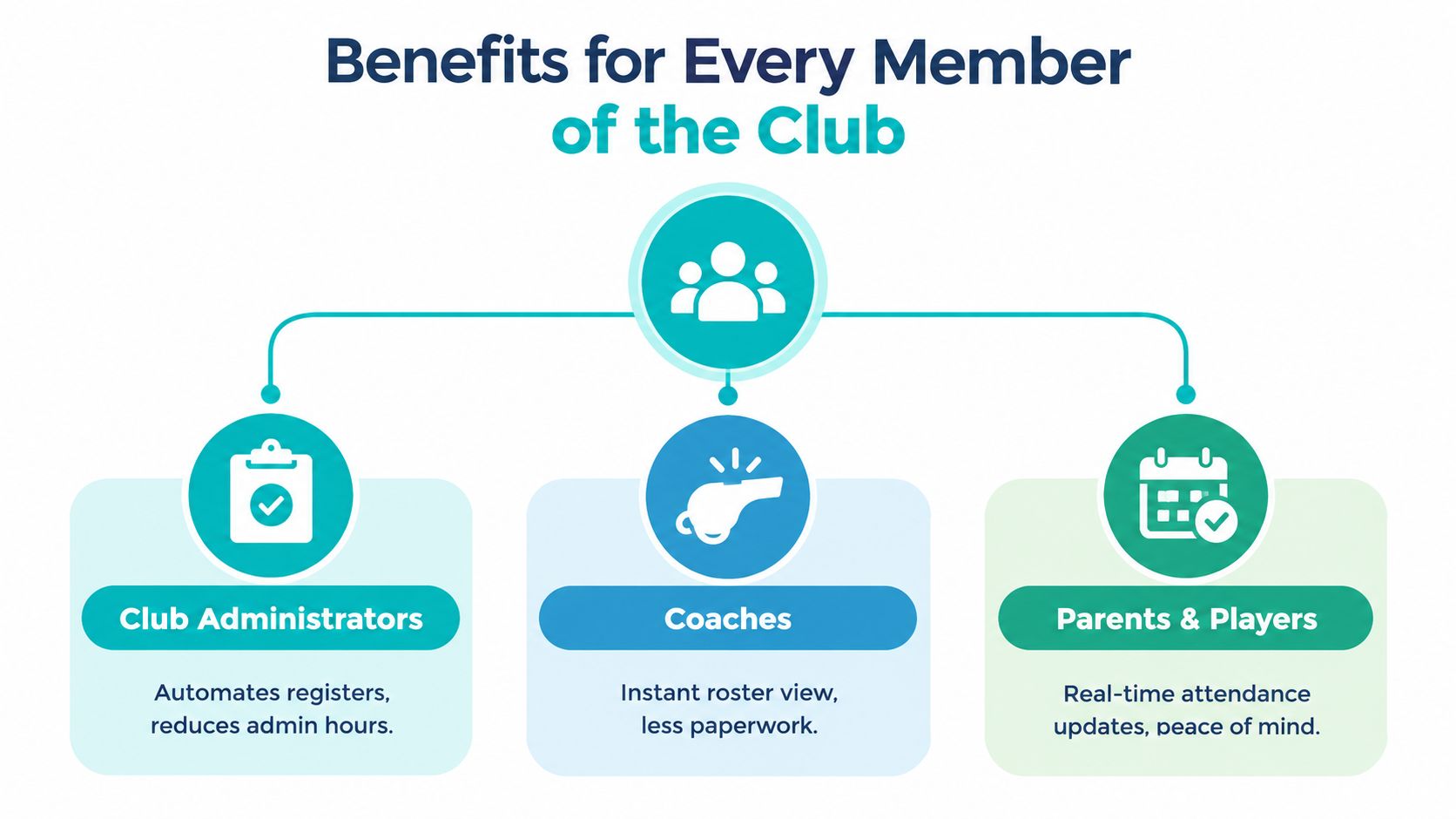
Attendance affects more than the person taking the register. A club is a small ecosystem, and each member needs a different view of the same information.
The administrator needs an accurate operational picture. Which squads have enough players for training? Which sessions need a reminder? Can the club prepare a report without asking every coach to search through separate spreadsheets? An online register brings those answers into one place and can make reporting more consistent across teams.
The coach needs simplicity at the point of activity. A clear roster reduces interruptions, while attendance history can give context before a difficult conversation. If a player has missed sessions, the coach can ask an open question rather than making an assumption. The right system should support that judgement, not turn a child into a data point.
One record, several useful perspectives
Parents and guardians want reassurance that their child has arrived, taken part, and is being supported. A connected app can show whether a child was present, late, or absent day by day, based on the organisation's own records. The iSchool Guardian attendance view illustrates this parent-level approach, with controlled access that depends on the school using the platform and approving the guardian account.
Players benefit when attendance becomes part of encouragement rather than punishment. A coach might celebrate a return after an injury, recognise a consistent training habit, or check in privately when participation changes. The register becomes a starting point for belonging.
| Club member | Useful outcome |
|---|---|
| Administrators | A consistent view of rosters, sessions, and reports |
| Coaches | Faster registers and better context for player conversations |
| Parents and guardians | Clearer participation updates and fewer unanswered questions |
| Players | Recognition, encouragement, and support when routines change |
Communication matters as much as the record itself. A missed session notification should invite a response, not sound like an accusation. Clubs refining reminders and follow-up can draw on proven event attendance strategies, adapting the principle of timely, helpful communication for families and teams. A mobile app for sports club management can bring these updates closer to the people who need them, provided the messages remain relevant and respectful.
Key Features to Look for in a Platform
A coach finishes taking the register as players gather at the pitch, court, or track. Within moments, the club should know who attended, who needs a follow-up, and whether the record is ready for the next person. Choose a platform for the action its information supports, not merely for its ability to store ticks.
Start with fast, reliable check-in
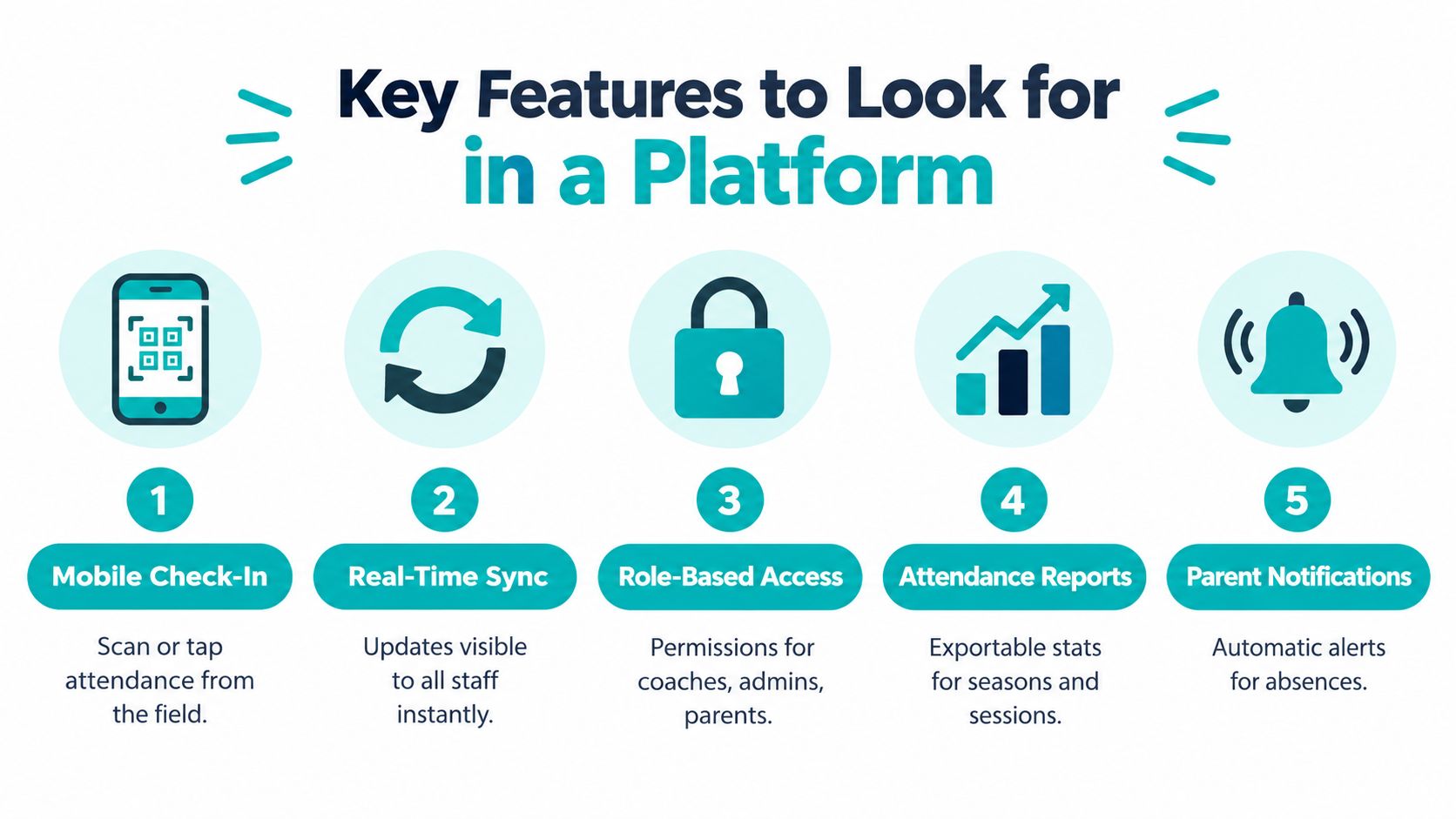
Attendance marking should work from a phone and suit the pace of arrivals. QR check-in, a tap on a digital membership card, or a simple roster view can all be effective. The process must stay quick when players arrive together. If your venue has poor signal, ask how the system handles interruptions and how staff confirm that a record has saved.
Real-time synchronisation keeps one update from becoming several manual tasks. After a coach changes the register, authorised administrators and guardians should receive the appropriate information without duplicate entry. A closer look at attendance tracking app guidance can help clubs assess mobile attendance workflows.
Make alerts useful, not noisy
Configurable thresholds help a club decide when a pattern deserves attention. One missed session might call for a friendly reminder. Repeated absence may suggest a coach or welfare lead should contact the family. Set the threshold around how your sport operates, since absence can result from injury, travel, school commitments, or fixture clashes.
Cohort segmentation lets leaders compare attendance by squad, age group, programme, or session type. The approach used in public attendance monitoring shows how grouped records and exportable reports can support targeted follow-up. Sports clubs can apply that idea proportionately, using configurable groups and exportable data to support players rather than merely logging presence.
Protect every record through role-based access. Coaches may need their team roster and relevant alerts. Parents need their own child's participation record. Administrators may manage reports, while no user should automatically see information unrelated to their role. Clubs reviewing wider enquiry workflows may also find an AI lead capture tool useful, but attendance and safeguarding data should remain governed by clear permissions and a defined purpose.
Powering the Ecosystem with Smart Integrations
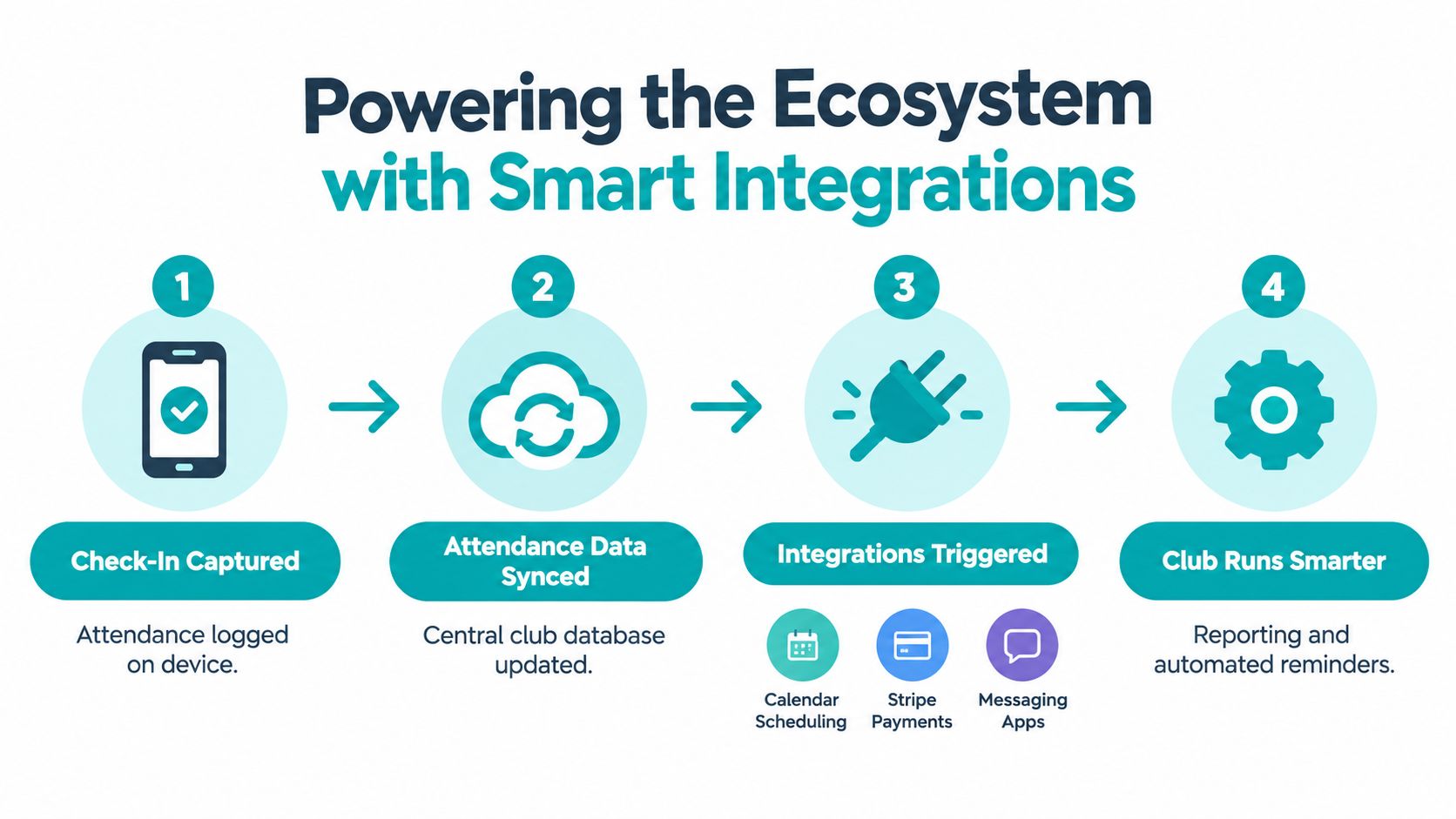
Attendance becomes more valuable when it connects to the work your club already does. A player checks in for training, the session record updates, the right people receive the right notification, and the administrator doesn't have to type the same information into several systems.
Start with scheduling. The attendance record should connect to the correct training session, match, or event so the club can distinguish a missed fixture from a missed practice. That distinction matters when a family is balancing travel, school, work, and other commitments. A reliable schedule also gives coaches a more accurate view of who they can expect before a session begins.
Link participation with practical operations
Payment integration can support clear fee workflows. A club using a pay-as-you-play model might connect attendance with billing rules, while a membership-based club may use attendance data to understand participation without changing the agreed fee. The system should make the relationship visible and auditable, rather than creating unexplained charges. Clubs considering that workflow can review integrated payment processing for sports organisations.
Messaging is another natural connection. If a player is marked absent, the system could prompt a suitable parent notification. If a session changes location, the schedule and message should agree. Automation is helpful when it removes repetition, but every message still needs a clear owner and an appropriate tone.
Wearables can make the experience even more natural for coaching staff. A coach using Apple Watch support could record attendance with a tap without leaving a drill or stopping to handle a clipboard. That convenience should serve the session, not distract from it.
Players can also see participation as part of their development journey. Practice streaks, badges, experience points, and leaderboards can make consistency visible and motivating, provided the club celebrates effort without shaming players who miss sessions. The strongest ecosystem links a practical record to a positive experience: administrators reduce double entry, coaches gain time, families receive clarity, and players feel recognised for showing up and growing.
Best Practices for a Smooth Implementation
A new platform won't improve attendance by itself. People need to understand why the club is changing, how the process works, and what they should do when something goes wrong.
Begin with the purpose. Tell parents that the system will help coaches know who has arrived, support timely follow-up, and keep participation records organised. Tell coaches that the register should take less time, not add another burden to the session. Tell players that attendance helps the club recognise commitment and notice when someone may need support.
Build the routine before adding complexity
Use a simple rollout sequence:
- Define the minimum record. Start with the player's name, team or squad, session, attendance status, and relevant arrival information. Only collect information the club needs.
- Assign clear responsibilities. Decide who opens the register, who corrects mistakes, who follows up absence, and who can export reports.
- Test the arrival routine. Practise check-in at a normal training session, including late arrivals, a player attending the wrong squad, and a family who cannot access the app.
- Give families short instructions. Explain how guardians will view attendance, respond to messages, and report an injury or unavoidable absence.
- Review the process with coaches. Ask what interrupted the session and remove unnecessary steps before expanding the system.
Privacy requires deliberate choices, particularly in youth sport. Government guidance on sharing daily school attendance data describes a broad range of personal fields and stresses the protections of UK GDPR and the Data Protection Act 2018. A sports club may not need school-style information such as ethnicity, first language, unique pupil number, or special educational needs status for an attendance workflow, so it should assess necessity rather than copy an education database.
Give people confidence in the rules
Set a retention period, document who can access records, and explain how families can raise a correction request. Don't expose child-identifying information publicly through leaderboards or reports. The government guidance on sharing daily attendance data offers useful context for thinking about security and proportionality, even though a sports club has a different operating model.
A good implementation feels boring in the best possible way. Everyone knows what to do, and the register quietly supports the session.
Measuring ROI and Building a Stronger Community
The return on an attendance system isn't limited to administrative time. Youth sports clubs should ask whether the information helps more players stay connected, whether families trust the organisation, and whether coaches can respond before a player disappears from the squad.
Begin with questions rather than vanity metrics. Are coaches completing registers consistently? Can administrators identify which sessions regularly face low participation? Do parents know whether their child attended? When a player misses several sessions, does someone follow up with curiosity and care?
Turn patterns into better decisions
Attendance history can support practical planning. A club may adjust a session time when families repeatedly struggle to attend, review transport options, or plan squad numbers with better information. Fixture scheduling can become more realistic when leaders understand participation patterns across teams and events.
FFT's regional attendance tracker shows how online comparison can support this kind of visibility in England. Its service presents weekly and academic-year attendance and absence figures, shows change from the previous week in percentage points, and states that its benchmark set includes 9,000 other FFT schools each week. The FFT regional attendance tracker is designed for schools, but its use of weekly trends, cumulative records, and comparison groups offers a helpful model for clubs considering their own reporting approach.
The club should interpret patterns with care. A lower attendance record may reflect injury, caring responsibilities, travel, cost, confidence, or a clash with another activity. Data can tell you where to look. It can't tell you why a child is absent without a respectful conversation.
The most valuable attendance report is the one that helps a coach make a player feel remembered.
A stronger community grows from those small responses. A coach welcomes a returning player by name. A welfare lead helps a family solve a transport problem. An administrator gives a sponsor a clear account of participation without revealing private child information. Players see that turning up matters, but they also learn that the club will stand beside them when life interrupts sport.
The right technology supports those moments without intrusion. It gives adults a shared understanding, protects families through sensible access controls, and helps clubs invest their energy in development rather than paperwork. Attendance tracking online is therefore not a surveillance exercise. It is a practical foundation for belonging, communication, and long-term player growth.
Vanta Sports brings clubs, coaches, guardians, and players together through connected scheduling, digital attendance, messaging, payments, progress updates, and player development tools. Visit Vanta Sports to explore a more organised way to turn attendance records into stronger support for every young athlete.
Tags