

Youth Development
Training Attendance Certificate: 10 Tools for Youth Clubs
Compare 10 tools for creating a training attendance certificate, plus tips to customise, issue and track certificates for youth sports teams.

Every young player deserves a certificate that means something. At the last training session of the season, children line up to hear their names, coaches hand over certificates, and parents take photos. A well-made training attendance certificate turns that moment into a lasting memory, while also giving the club a useful record of who took part.
The best option depends on what your club needs most. Some tools specialise in beautifully designed digital credentials, others automate bulk issuing, and a few connect certificates to the attendance records coaches already use. For broader guidance on creating meaningful credentials, see create meaningful credentials with Coachful.
This list ranks the strongest options for youth clubs that need quick end-of-season issuance, careful handling of children's records, and reliable proof of attendance rather than an unsupported claim of competence.
1. Vanta Sports
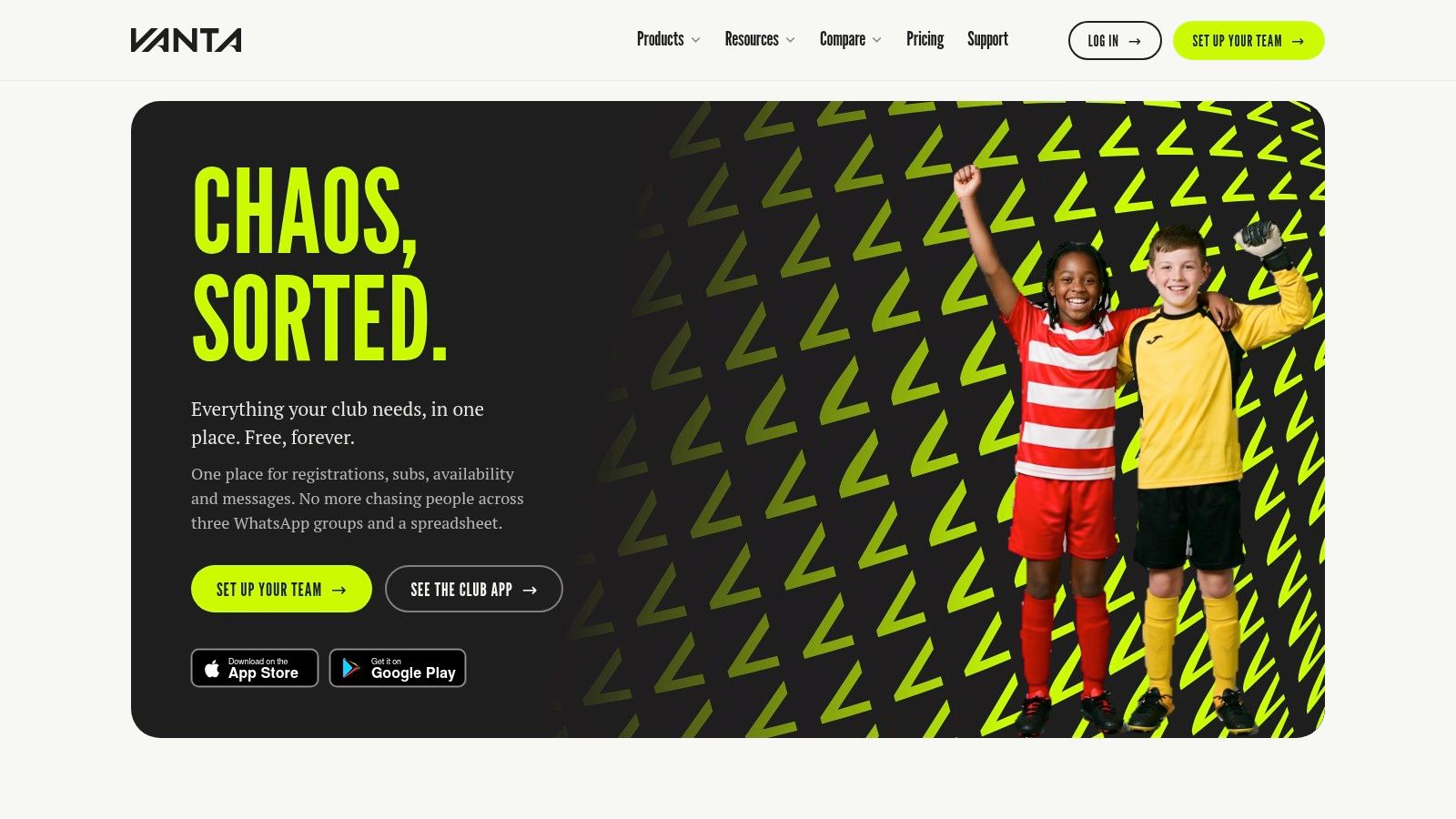
A familiar end-of-season problem is easy to spot. The register lives in one file, the certificate template sits somewhere else, and a coach or admin is left checking names by hand before presentation day. Vanta Sports is the best overall fit for youth clubs that need fast bulk issuance, careful handling of child records, and proof that a player attended specific sessions.
It brings admins, coaches, guardians and players into one connected system. Admins can create teams, assign coaches, schedule training, fixtures and events, and review reports from the web dashboard. Coaches can take registers in the mobile app, message squads and track session activity. Guardians can RSVP, manage fees and receive updates, while players use a practice app with XP, badges, leaderboards and practice streaks to keep development motivating between sessions.
Why it works for youth clubs
The key strength is traceability. A certificate can be tied to the player, team, session date and register, so it is never created from an unverified list. That matters more for youth clubs than fancy credential features, because families and staff usually want a clear record of attendance first.
Vanta also stores safeguarding information, DBS details, coaching certificates, consents, medical notes and photo permissions against child records. Its privacy setup includes encryption in transit and at rest, no advertising, and a clear split between the club as data controller and Vanta as processor. For clubs handling children's data, that is a practical advantage, not just a legal one.
The platform is free forever, with no subscriptions or per-player fees. Stripe payment processing still carries standard transaction fees, so clubs should include that in wider admin costs. Fixture imports support Spawtz, while clubs using other league systems may need some manual setup.
Practical rule: Check the register before issuing any certificate, then label it “attended” unless the session included a separate assessment.
The admin-visible, non-deletable message trail also helps clubs keep safer communication records. For a closer look, read about training attendance reports in Vanta Sports.
2. Accredible
Accredible suits clubs, academies and governing organisations that need polished digital credentials at scale. It combines certificates and badges in one platform, with issuer verification, analytics, sharing options, API connections and LMS integrations.
The recipient experience is a major strength. A coach or player can receive a digital credential that's easy to share, while the issuing organisation retains a clearer record of what was issued and when. Recipient-based pricing can also work well where the same learner receives several credentials, because the cost model isn't necessarily tied to every individual certificate.

Where it fits
Accredible is a strong choice for a county-wide programme, a coaching academy or a club issuing several types of credential. You could separate attendance at a player clinic from completion of a coach workshop, then use different wording and badge designs for each.
The trade-off is cost and scope. Most pricing is quote-based and can feel premium for a small club issuing certificates once a year. It also concentrates on digital credentials, so printable copies will generally need to be handled by the issuer. That matters because digital access isn't universal, and some families will still want a paper certificate for a memory box or end-of-season presentation.
Use Accredible when verification, automation and recipient sharing matter more than having registers, fixtures and safeguarding records in the same club system. For broader development records, see achievement tracking for sports clubs.
3. Certifier
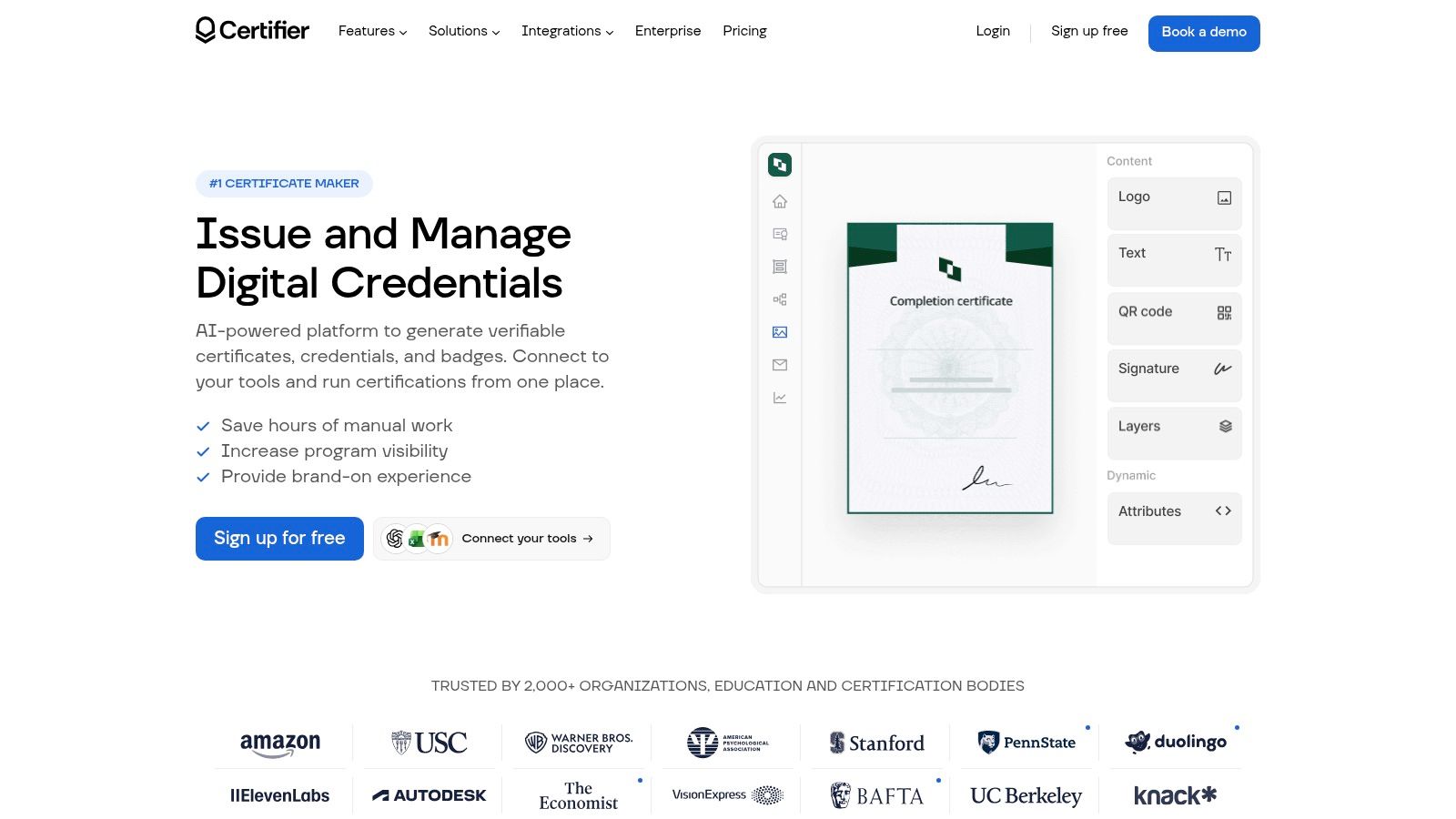
Certifier is a practical self-serve option for clubs that want to design and issue certificates without committing to a full training-management platform. Its drag-and-drop editor makes it straightforward to create a branded attendance certificate, badge or completion document, then personalise it in bulk.
The platform uses annual credential allowances with adjustable tiers, and it offers a public pricing structure rather than requiring every organisation to begin with a sales conversation. Non-profit discounts are available, which can make it more approachable for volunteer-led clubs.
Best workflow
Start with a simple template containing the club name, participant name, session title, date, duration where relevant, issuer and certificate ID. Import the attendance list, map the fields carefully, and send a test certificate to a club administrator before issuing the full batch.
Certifier's unlimited design templates on lower tiers are useful when different squads need distinct colours or when the club wants one design for players and another for coaches. Integrations and API access support more automated issuing, although advanced automation may require a higher tier.
The limitation is important. Certifier can produce the document, but it doesn't replace the club's register, safeguarding workflow, scheduling system or parent communication. Keep the attendance record somewhere authoritative, then use Certifier as the issuing layer. That separation is sensible because an attractive certificate shouldn't become the only evidence that someone attended.
4. Sertifier
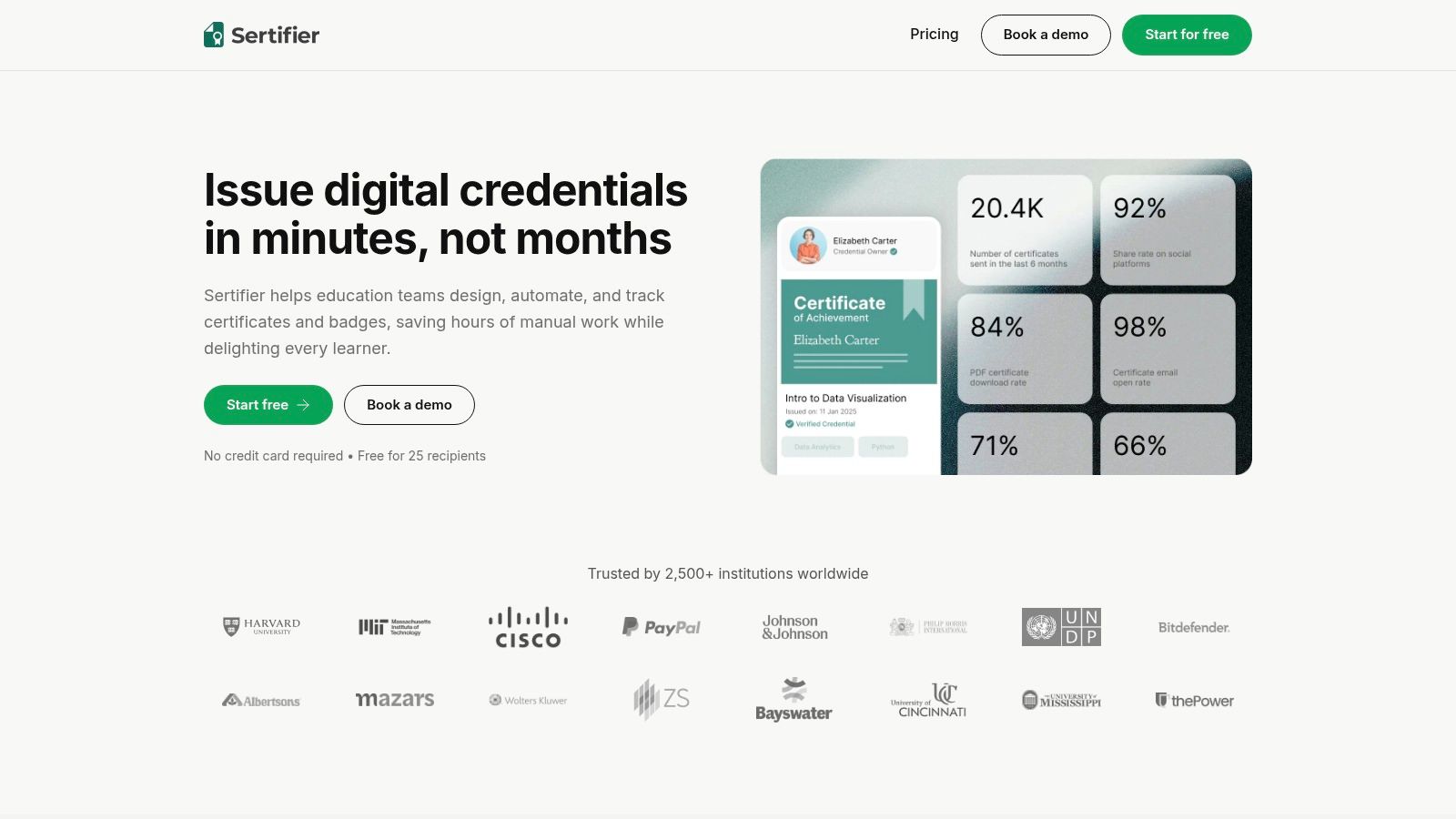
Sertifier offers a budget-friendly route into digital certificates and badges. A free tier supports small pilots, while recipient-based pricing can make it easier to plan costs when the same person receives several credentials over time.
Its analytics and engagement tracking give administrators more visibility after issuing. You can see how recipients interact with credentials and use integrations or API tools where a larger programme needs automation. That makes Sertifier more capable than a one-off PDF generator without forcing a small club immediately into an enterprise platform.
The sensible use case
Sertifier works well for a youth academy running several clinics, camps or development programmes. A club could issue an attendance certificate after a player workshop, then use a different credential for a coach's safeguarding session. Clear naming prevents families from mistaking participation for a qualification.
The platform's lighter feature depth is also its main compromise. Some advanced capabilities require add-ons, and it won't manage fixtures, team registers or child records as a sports platform would. You'll need a separate source of truth for attendance and permissions.
For a small pilot, test the full journey with one team. Confirm that the certificate displays correctly on a phone, that the participant's name is accurate, and that a parent can access it without exposing unnecessary information.
5. Credly by Pearson
Credly by Pearson is best known for verifiable digital badges, but it also supports downloadable, printable certificates from badge pages. Its established recipient experience and employer-facing recognition make it suitable for professional bodies, large training programmes and clubs working with recognised coaching pathways.
Bulk issuance, APIs and LMS or HR integrations support structured workflows. Verification tools and labour-market insights add value when the credential needs to travel beyond the club, particularly for adult coaches, referees or volunteers building a professional record.

A careful distinction
Credly's badge-first approach can feel more professional than a traditional end-of-season certificate, but it may be more infrastructure than a local club needs. Pricing is typically quote-based, and the language can feel oriented towards skills, achievements and employer recognition rather than a child attending weekly training.
If you use it for youth sport, make the credential wording precise. “Attended the club training programme” is safer than “qualified player” unless an assessment and recognised award support that statement. Add the session or programme dates, issuing organisation and verification details, while keeping child data to the minimum needed for identification.
Credly is a good fit when portability and recognition matter. It isn't the most natural first choice for a club that mainly wants to celebrate attendance at a final presentation.
6. SimpleCert
SimpleCert focuses on certificate creation and distribution, making it a good match for occasional issuers that don't need a full training management system. Its credits-based model is easy to understand: each personalised certificate uses credits, which can keep costs predictable when the club issues certificates seasonally rather than continuously.
The template builder supports bulk personalisation, and higher tiers add features such as QR authenticity and two-sided certificates. Recipient portals and LinkedIn fields make the tool more useful for adult coaching programmes, while multi-user access can help a committee share responsibility.
When simplicity wins
SimpleCert is appealing if the club already has a dependable register and only needs a clean issuing step. Prepare a spreadsheet with the exact names, check spelling against the club records, upload the data, generate a small test batch and approve the layout before sending everything.
The free credits make it possible to test the process without immediately committing to a wider plan. QR codes can add useful authenticity, but they shouldn't point to a page that reveals more child information than necessary.
The trade-off is scope. SimpleCert doesn't manage training schedules, attendance rules or player safeguarding records. Branding and advanced controls may also require higher plans. It's a practical certificate tool, not a replacement for the club's operating system.
7. accessplanit
accessplanit is a UK-based training management system designed to connect bookings, delegates, communications and certificates. Its strongest feature for this comparison is the link between course administration and automated certificate generation, which reduces the need to export attendance lists and manipulate them by hand.
Built-in CRM, finance and reporting tools make it more appropriate for a training provider, governing body or academy than for a small volunteer team. UK hosting and support, together with referenced vendor accreditations such as ISO 27001, may also matter to organisations with formal procurement or information-governance requirements.
Who should choose it
Choose accessplanit when the club or academy runs recurring courses, manages external delegates and needs a central administration hub. It can automate certificate dispatch after the relevant attendance or completion condition has been met, which is more reliable than asking a busy coach to issue every document manually.
The downside is investment. Pricing is quote-based, implementation requires more effort than a lightweight certificate app, and the platform may be excessive for a single team holding one end-of-season presentation.
Before adoption, define the evidence rule. If attendance alone triggers a certificate, configure that explicitly. If a safeguarding course needs an assessment or renewal date, store those fields separately rather than allowing a generic completion label to imply a qualification. Clubs comparing this workflow with sports-specific records can also review sports attendance records.
8. Arlo Training Management Software
Arlo connects training operations with certificate workflows, making it useful for providers delivering live, online and blended learning. It can automate certificate issuing when learners complete the configured course or e-learning requirements, while also supporting scheduling, registrations, CRM, communications, analytics and renewal workflows.
Strong automation, broader commitment
Arlo's advantage is the pipeline. A provider can organise an event, register participants, track the relevant learning status and issue a branded certificate without stitching several unrelated tools together. Certification tracking and renewal workflows are particularly useful for coach education, first aid or safeguarding programmes where the date of the next review matters.
That breadth brings a clear trade-off. Pricing is quote-based and usually higher than a simple certificate tool, while the full value comes from adopting Arlo's wider training-management features. A youth club that only needs player attendance recognition may find the system heavier than necessary.
Use Arlo when the certificate is part of a structured training business or multi-session academy programme. For young players, keep the wording celebratory but accurate. Attendance can be recognised warmly without suggesting that the recipient has demonstrated a technical standard they haven't been assessed against.
9. Administrate
Administrate is built for complex training environments with multiple sites, detailed course catalogues and compliance requirements. The Edinburgh-born platform supports courses, events, attendance, learning paths, compliance tracking, integrations and audit-ready reporting.
Certificate management and customisation are available, although custom certificate templates are generally handled through Administrate's support processes rather than a purely self-service editor. That approach can suit organisations with formal brand governance, but it gives a committee less instant control over a last-minute design change.
Built for evidence
Administrate is a sensible choice when a governing organisation or large academy needs to demonstrate who attended which course, what learning path they followed and whether compliance requirements remain current. Its reporting depth can support reviews across teams, locations and programme types.
For a local youth club, the setup and commercial model may be disproportionate. The platform is oriented towards mid-market and enterprise customers, and clubs may need support involvement for certificate changes that a lightweight tool would allow a volunteer to make immediately.
It also reinforces a useful discipline: distinguish attendance, completion, assessment pass, qualification and renewal. Those labels should never be interchangeable. A certificate that says “attended” can be valuable evidence, but it shouldn't imply competence or a recognised qualification without the relevant assessment and award.
10. Moodle with the Custom certificate plugin
Moodle with the Custom certificate plugin is the most flexible low-cost option for organisations already running Moodle. The free plugin can generate branded dynamic PDF certificates using Moodle course-completion and activity-restriction rules, and it can work alongside Attendance and other course activity plugins.
Best for an existing Moodle setup
Moodle administrators can customise layouts and data fields in the browser, then connect certificate release to the records already held in the learning environment. That makes it powerful for a sports academy delivering online modules, coach education or blended programmes.
The drawback is administration. Someone must manage Moodle, install and maintain plugins, configure completion rules and troubleshoot the certificate workflow. MoodleCloud may limit third-party plugins, so self-hosting or partner hosting may be needed.
For attendance certificates, configure the rule with care. A participant should receive the document only when the Attendance activity or equivalent register confirms presence. If a course includes an assessment, keep the assessment result separate from the attendance status so parents, players and coaches can understand exactly what the certificate proves.
Top 10 Training Attendance Certificate Platforms Comparison
| Product | Core features | UX / Quality ★ | Value / Price 💰 | Target audience 👥 | Unique selling points ✨ |
|---|---|---|---|---|---|
| 🏆 Vanta Sports | Club admin, scheduling, attendance, Stripe payments, coach/parent/player apps, safeguarding | ★★★★★ | 💰 Free‑forever (standard Stripe fees) | 👥 Youth & community clubs, coaches, guardians, players | ✨ Free full feature set, DBS/consent tracking, gamified player app, Apple Watch stat capture, Spawtz imports |
| Accredible | Bulk digital certificates & badges, API & LMS integrations, verification & analytics | ★★★★ | 💰 Quote/recipient pricing (enterprise) | 👥 Education providers, enterprises, large programs | ✨ Enterprise-grade issuance, strong verification & sharing |
| Certifier | Drag‑and‑drop certificate editor, annual credential allowances, API | ★★★★ | 💰 Transparent annual tiers | 👥 SMEs, training providers, nonprofits | ✨ Easy designer, nonprofit discount, quick self-serve setup |
| Sertifier | Issuance, recipient pricing with free tier, analytics, integrations | ★★★ | 💰 Free tier → paid tiers, budget-friendly | 👥 Small training providers, pilots | ✨ Free entry, built‑in engagement analytics, clear pricing calculator |
| Credly by Pearson | Bulk badges, LMS/HR integrations, verification, printable certificates | ★★★★ | 💰 Quote-based (enterprise) | 👥 Professional bodies, employers, large programmes | ✨ High market recognition, LinkedIn/labour‑market insights |
| SimpleCert | Template builder, bulk personalization (credits), recipient portal, QR options | ★★★ | 💰 Credits model, low-cost entry | 👥 Occasional issuers, small orgs | ✨ Predictable credits pricing, QR authenticity, two‑sided templates |
| accessplanit (UK) | End-to-end course & delegate management, automated certificates, CRM & finance | ★★★★ | 💰 Quote-based, higher investment | 👥 UK training providers, corporate training teams | ✨ Full TMS automation, UK hosting/support, compliance accreditations |
| Arlo (UK-supported) | Course/event scheduling, automated certificate issuance, renewals, CRM | ★★★★ | 💰 Quote-based, mid→enterprise | 👥 Live/online/blended course providers | ✨ Completion→certificate automation, broad TMS toolset |
| Administrate (UK/Scotland) | Training ops, certificate management, compliance tracking, audit reporting | ★★★★ | 💰 Enterprise pricing & setup | 👥 Complex, compliance-heavy organisations | ✨ Audit-ready records, enterprise reporting & customization |
| Moodle + Custom certificate plugin | In-browser customizable PDF certificates, ties to completion/activity rules | ★★★ | 💰 💰 Free plugin (requires Moodle hosting/admin) | 👥 Organisations already on Moodle, educators | ✨ Highly flexible templates, leverages existing Moodle data |
Turn Every Certificate Into a Season to Remember
The best certificate tool is the one your club can use accurately when the season is busy. A beautiful template won't rescue an incomplete register, and an advanced credential platform won't help if coaches can't take attendance quickly at the side of a pitch. Start by choosing one option that fits your club's size and budget, then test the complete journey with a small group before issuing the full batch.
Customise the template with your club name, coach name and session dates. Add the participant's full name, the exact activity, the attendance status, the issuing organisation and a certificate ID where the platform supports one. If you include duration, assessment status, renewal information or a verification link, make sure each field comes from a real record rather than an assumption.
Issue certificates at the final session while the season is still fresh. Let coaches read names aloud, give young players a moment to celebrate, and provide a printable version for families who prefer paper. Digital credentials are useful for quick sharing, but paper still matters to many learners and parents, so a dual-format approach is more inclusive. A 2025 UK Digital Badging Commission report describes a WEA context in which around 90% of lower-level learners requested a paper certificate alongside a digital badge. Read the Digital Badging Commission recommendations before deciding that digital delivery alone is enough.
Keep the attendance record in the same system as your registers so every certificate matches a real session. For Vanta Sports users, the attendance behind each certificate sits alongside rosters, coaches and teams, keeping the process connected instead of creating another isolated spreadsheet. Review the wording and design each season, remove unnecessary child data, check accessibility on a phone and screen reader, and retain a clear revision history.
A certificate should also state what it doesn't prove. UK guidance gives a useful warning: Northern Ireland fitness, exercise and leisure apprenticeship guidance says attendance evidence isn't accepted as evidence of completion. Review the Northern Ireland apprenticeship framework when designing certificates for coaches or volunteers. Use “attended” for participation, “completed assessed training” only when an assessment supports it, and “qualification awarded” only when a recognised qualification has been granted.
Safeguarding records deserve the same care. UK guidance defines regulated activity with children partly by frequency, including activity taking place on more than three days in any 30-day period, or an overnight session between 2am and 6am with the opportunity for face-to-face contact. It also states that an employed children's sports coach or instructor whose duties mainly involve teaching, training, instructing or advising children may be eligible for an Enhanced DBS check with a Children's Barred List check. Check the DBS guidance for sport and work with children before treating a certificate as a substitute for safeguarding checks.
Finally, use attendance data to strengthen the season, not merely decorate its ending. The 2024–25 Active Lives Children and Young People Survey gathered responses from 130,448 pupils in Years 1 to 11, aged 5 to 16, and reported that 92% took part in at least one activity during the previous seven days, with sporting activities reported by 80.4% of participants. Read the Activity Alliance response to the survey. Your club's register can show recent participation, recognise consistent effort and help coaches understand which players may need encouragement to return.
Choose the platform, prepare the wording, verify the data and celebrate every name. A thoughtful training attendance certificate gives a young player something tangible to keep, while giving the club a clearer, safer record of the season it built together.
Vanta Sports connects team scheduling, coach registers, guardian communication and player development in one system, so each training attendance certificate can reflect a real session rather than a manually assembled list. Visit Vanta Sports to streamline attendance tracking, protect club records and make the end-of-season celebration more meaningful.
Tags