Attacking Backs: Wide Shift off First Phase
Learn how to exploit the outside channel off a stable scrum by drawing defenders in and creating a numerical advantage out wide.
Equipment Needed
1. Overview
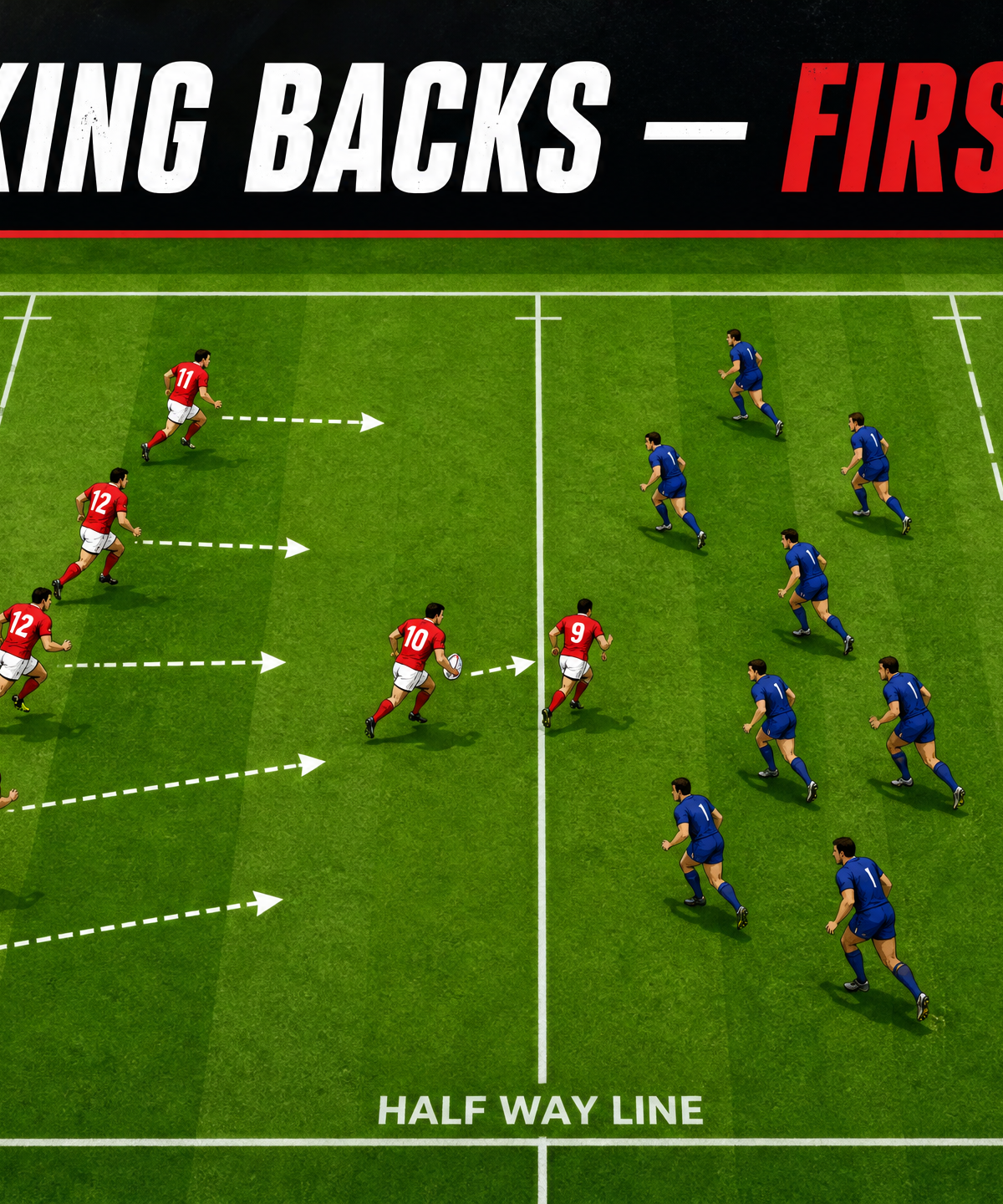
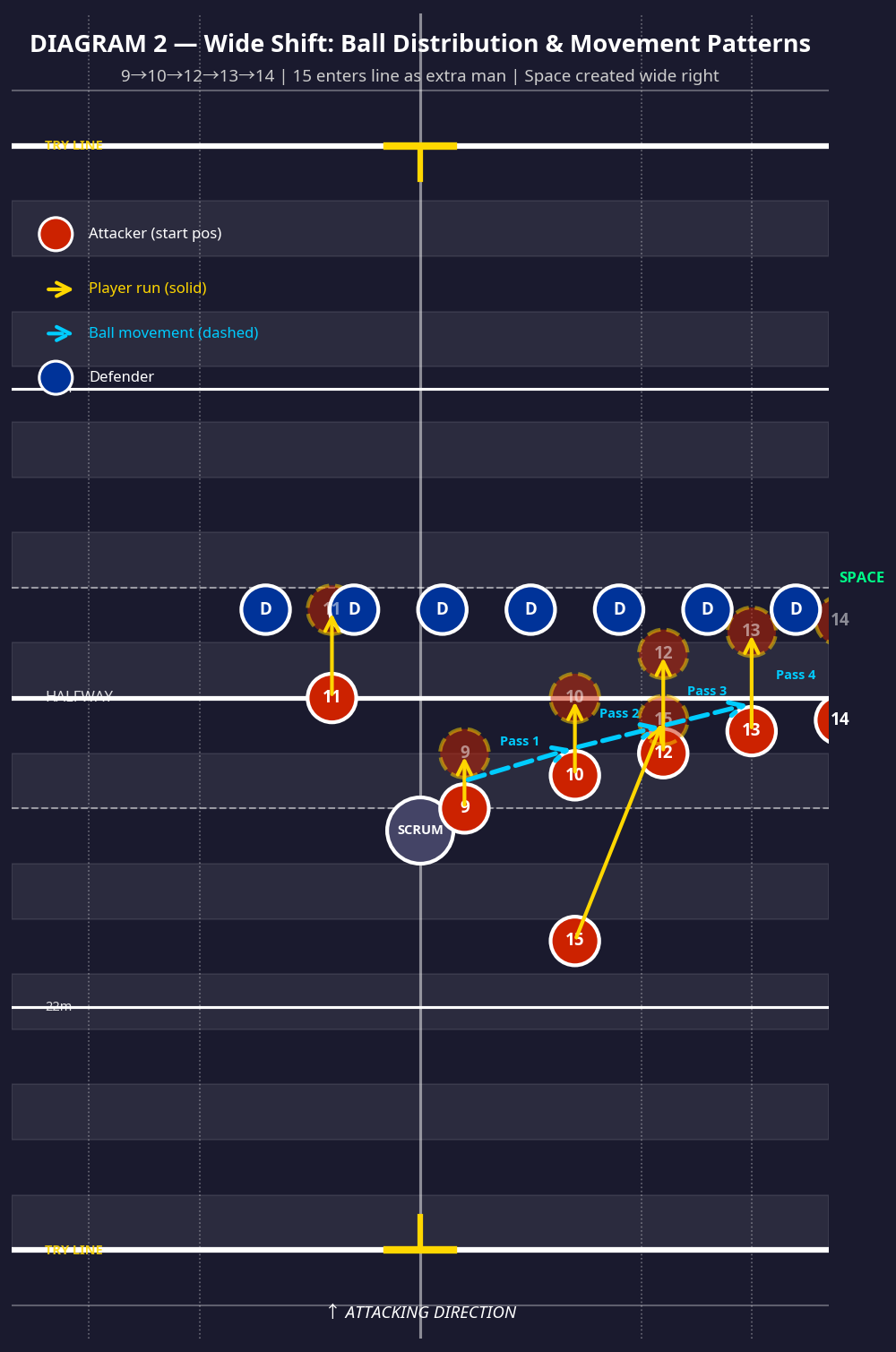
This set play is designed to exploit the wide channels immediately off first-phase possession (typically a scrum or clean lineout). By running a coordinated 'Wide Shift', the attacking backs aim to commit the inside defenders and create a numerical mismatch on the outside edge. The play relies on crisp, rapid passing through the hands of the 10, 12, and 13, culminating in the 15 entering the line as an extra man to release the 14 into space.
It is highly effective when the opposition defensive line is playing narrow or when your team has identified a mismatch in pace on the wing.
2. Setup
Equipment Needed:
- 1 Rugby Ball
- 8 Cones (to mark the scrum mark, defensive line, and attacking starting positions)
- Bibs (optional, to differentiate attackers and defenders)
Pitch Setup:
- Mark a 100m x 70m area, or use a standard rugby pitch.
- Place a cone on the halfway line, 15m in from the touchline to represent the scrum mark.
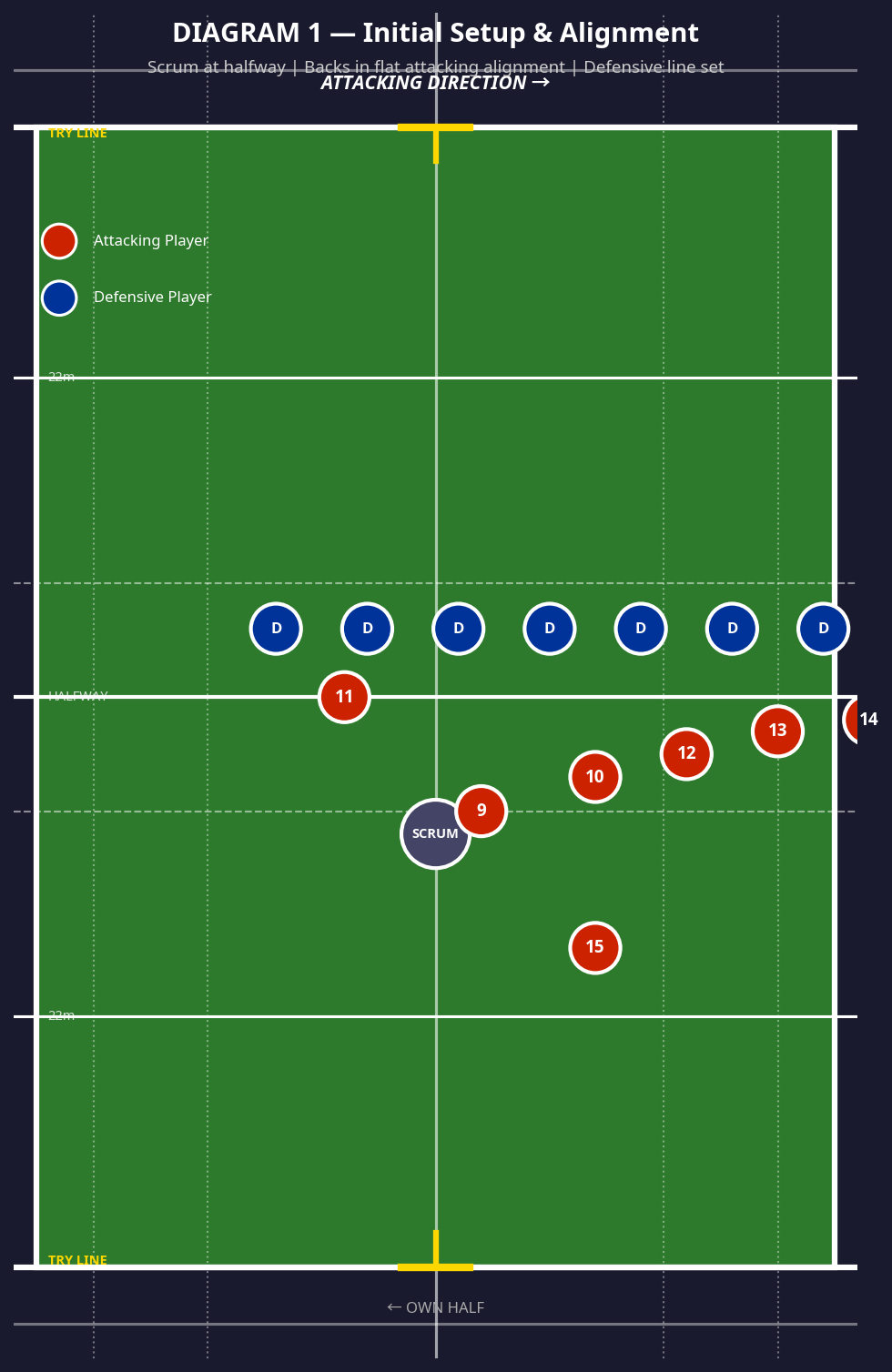
- Set up the defensive line 5-7m back from the scrum mark.
Player Positions:
- 9 (Scrum Half): At the base of the scrum.
- 10 (Fly Half): Standing 10m deep and flat, ready to receive the first pass.
- 12 (Inside Centre): Positioned outside the 10, slightly deeper to hit a hard running line.
- 13 (Outside Centre): Positioned outside the 12, ready to run an outside arc.
- 11 (Left Wing): Holding width on the blindside or running a decoy line.
- 14 (Right Wing): Holding maximum width on the openside touchline.
- 15 (Fullback): Positioned deep, ready to inject pace into the backline.
3. Step-by-Step Instructions
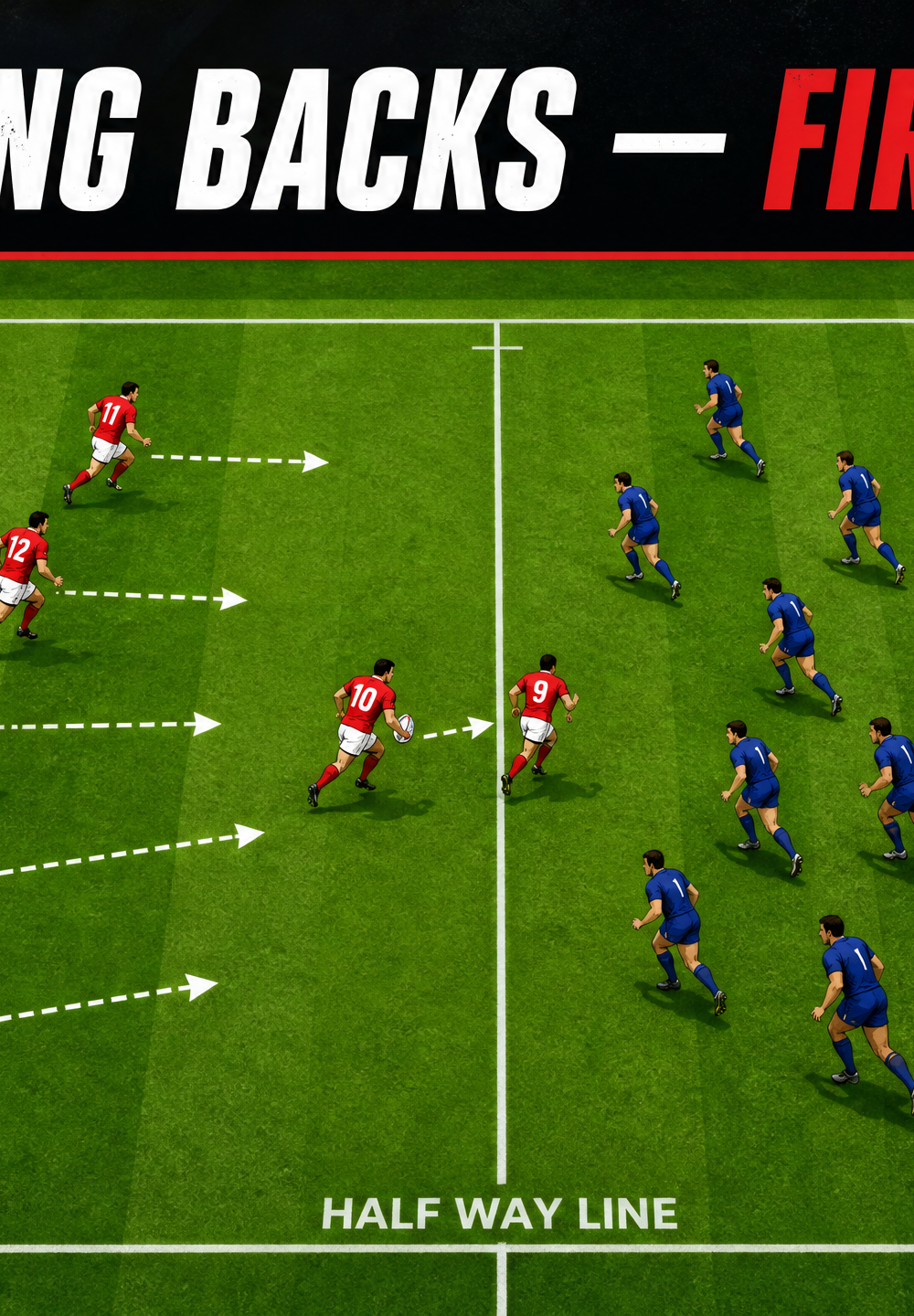
- The Delivery: The 9 clears the ball rapidly from the base of the scrum with a sweeping pass to the 10.
- The Engagement: The 10 catches the ball on the move, taking two hard steps toward the defensive line to fix the opposing 10, before passing to the 12.
- The Fix: The 12 runs a hard, direct line at the inside shoulder of the opposing 12, drawing the defender in. Just before contact, the 12 shifts the ball to the 13.
- The Arc: The 13 receives the ball on an outward arc, attempting to draw the opposing 13 and the winger.
- The Injection: The 15 times their run perfectly, entering the line at pace between the 13 and 14.
- The Finish: The 13 passes to the 15, who then immediately draws the final defender and releases the 14 down the touchline for a clean break.
4. Key Coaching Points
- Depth and Alignment: Attackers must maintain sufficient depth. If the backline is too flat, the defense will easily smother the play.
- Fixing Defenders: Every ball carrier (10, 12, 13) must square their shoulders to the try line and actively run at a defender before passing. Do not drift sideways.
- Pass Quality: Passes must be hard, flat, and in front of the receiver to maintain forward momentum.
- Timing of the 15: The fullback must accelerate into the line late. If they arrive too early, the defense can adjust and mark them.
- Communication: The 13 and 15 must constantly communicate to ensure the timing of the extra man entering the line is perfect.
5. Common Mistakes
- Drifting: The 10 or 12 running sideways across the pitch instead of straight at the defense, which eats up the space for the players outside them.
- Passing Behind the Man: Slow or inaccurate passes force receivers to check their run, killing the momentum of the attack.
- Winger Creeping In: The 14 stepping infield looking for the ball, rather than holding their width on the touchline to stretch the defense.
- Telegraphing the Play: Attackers looking exactly where they are going to pass before they catch the ball, allowing the defense to slide early.
6. Variations & Progressions
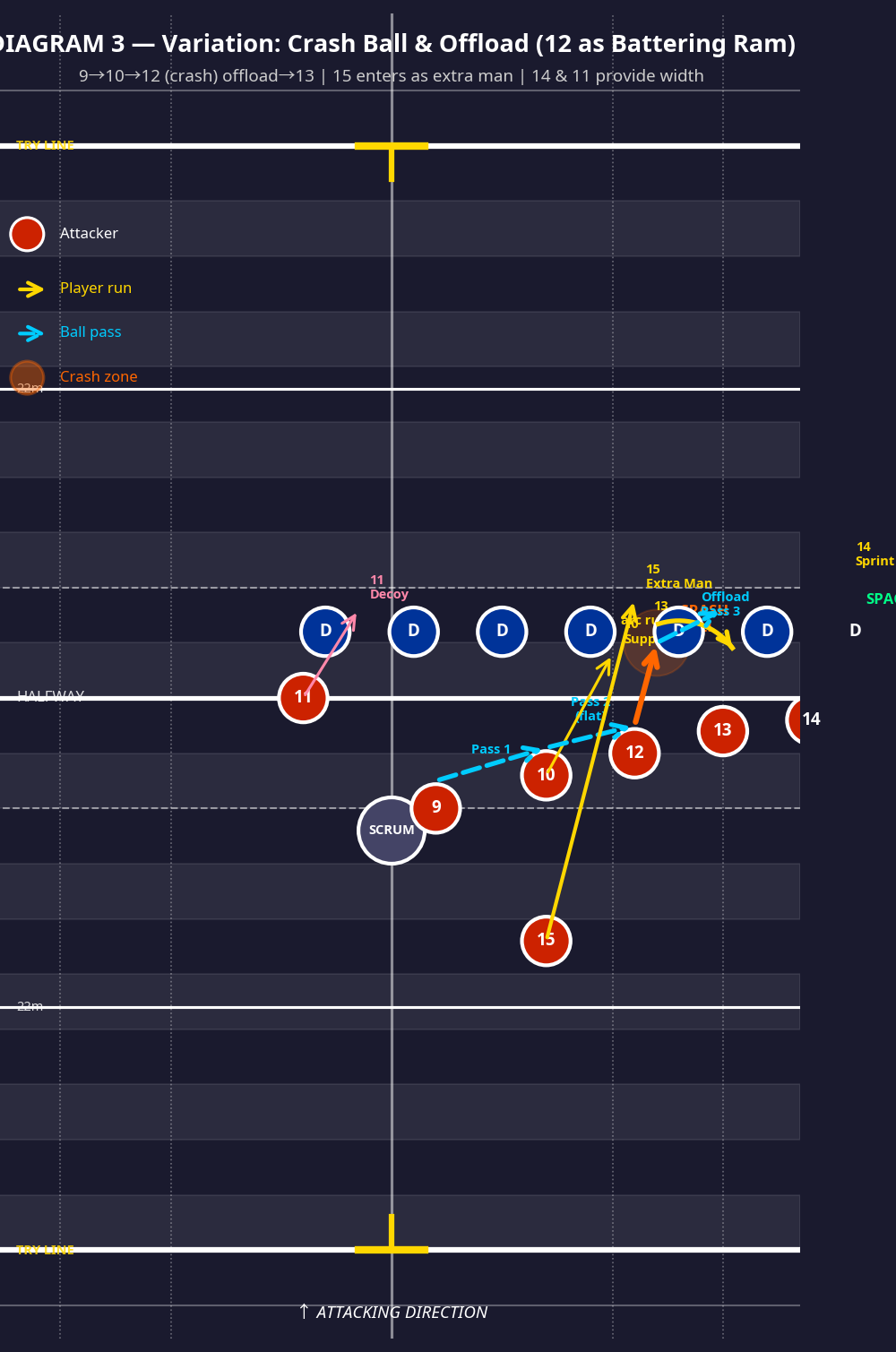
Variation 1: The Crash Ball & Offload (12 as Battering Ram)
Instead of shifting the ball wide immediately, the 10 hits the 12 with a short, flat pass. The 12 crashes hard into the defensive line, drawing multiple tacklers. The 13 runs a tight support line behind the 12, receiving a quick offload in the tackle to break the line.
Variation 2: The Inside Ball (Blindside Wing)
As the backline shifts wide, the 11 (Left Wing) comes off their wing and runs a hard, hidden line back against the grain on the inside shoulder of the 10 or 12.
Progression:
Introduce live, full-contact defenders. Start with passive defense (touch only), then move to full tackle to test the attackers' ability to execute under pressure.
7. Age Adaptations
- Under 8 - Under 10: Focus purely on catching and passing while moving forward. Remove the complex lines and just practice a simple draw-and-pass down the line.
- Under 12 - Under 14: Introduce the concept of fixing the defender. Ensure players understand the importance of running straight.
- Under 16 - Open: Implement the full play with the 15 entering the line. Focus on the speed of the pass and the timing of the fullback's run under pressure.