Basketball
Drill
intermediate
under 14
The Ultimate 3v3 Box-Out and Rebounding Drill
Master the fundamentals of establishing position, making physical contact, and securing the rebound with this competitive 3v3 drill.
Jul 8, 20264 min read15 min drill6 players
Equipment Needed
1 Basketball
Standard hoop
Half-court space
Overview
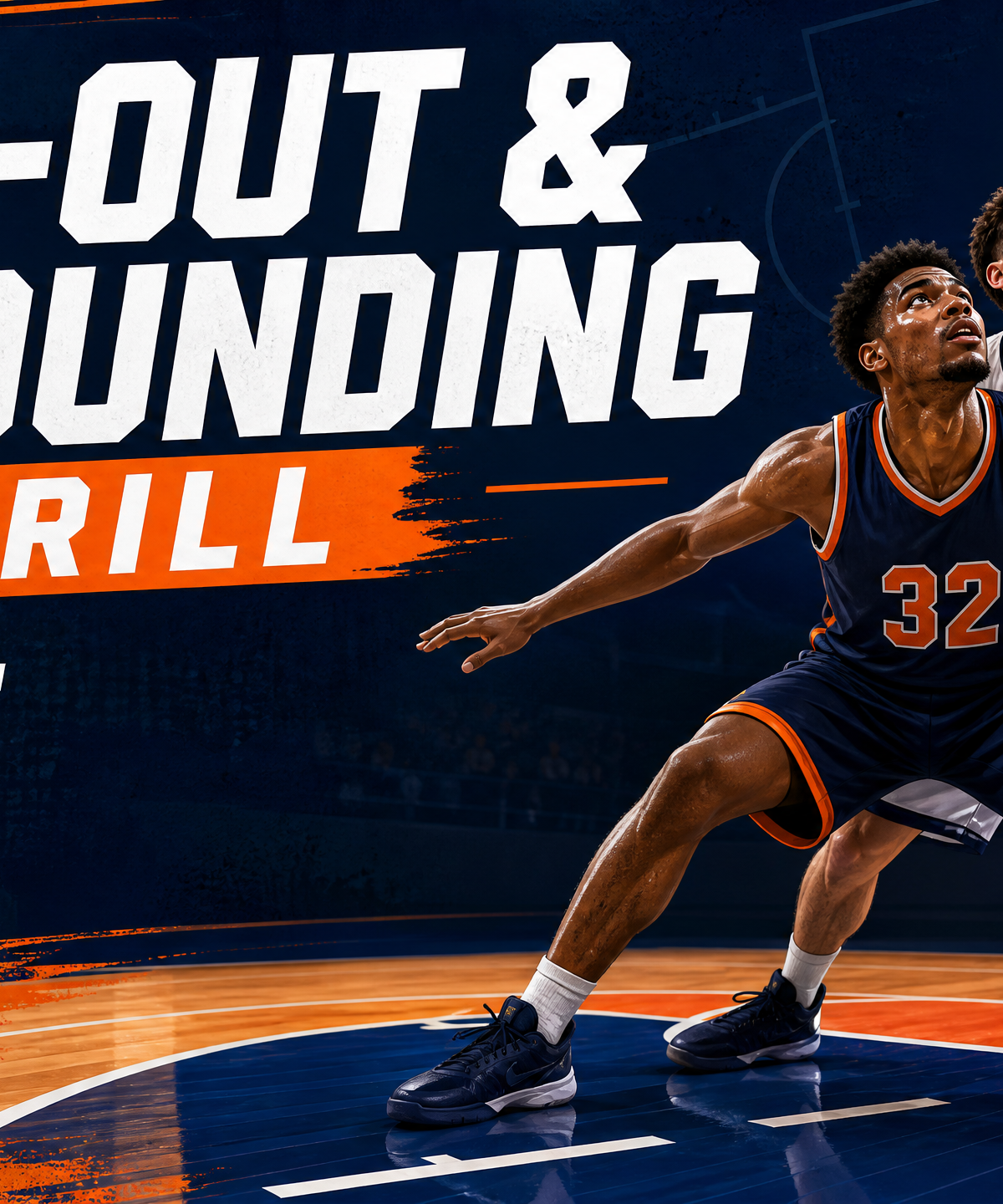
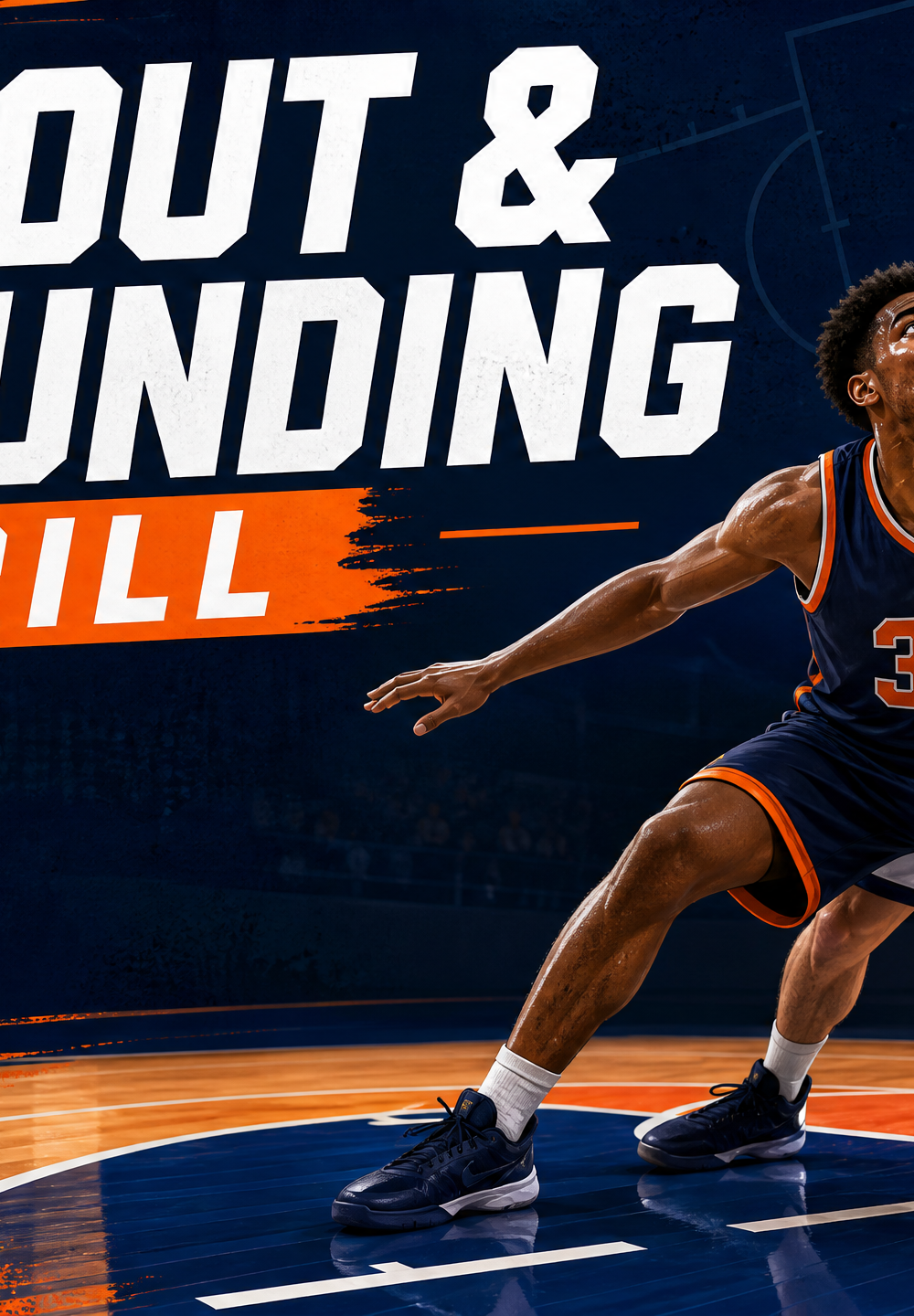
Rebounding is about desire, positioning, and technique. This 3v3 Box-Out and Rebounding Drill is designed to teach players how to locate their assignment, establish physical contact, seal the opponent, and aggressively pursue the basketball. It is a foundational defensive drill that translates directly to game situations, emphasizing the importance of ending a defensive possession with a secured rebound.
Setup
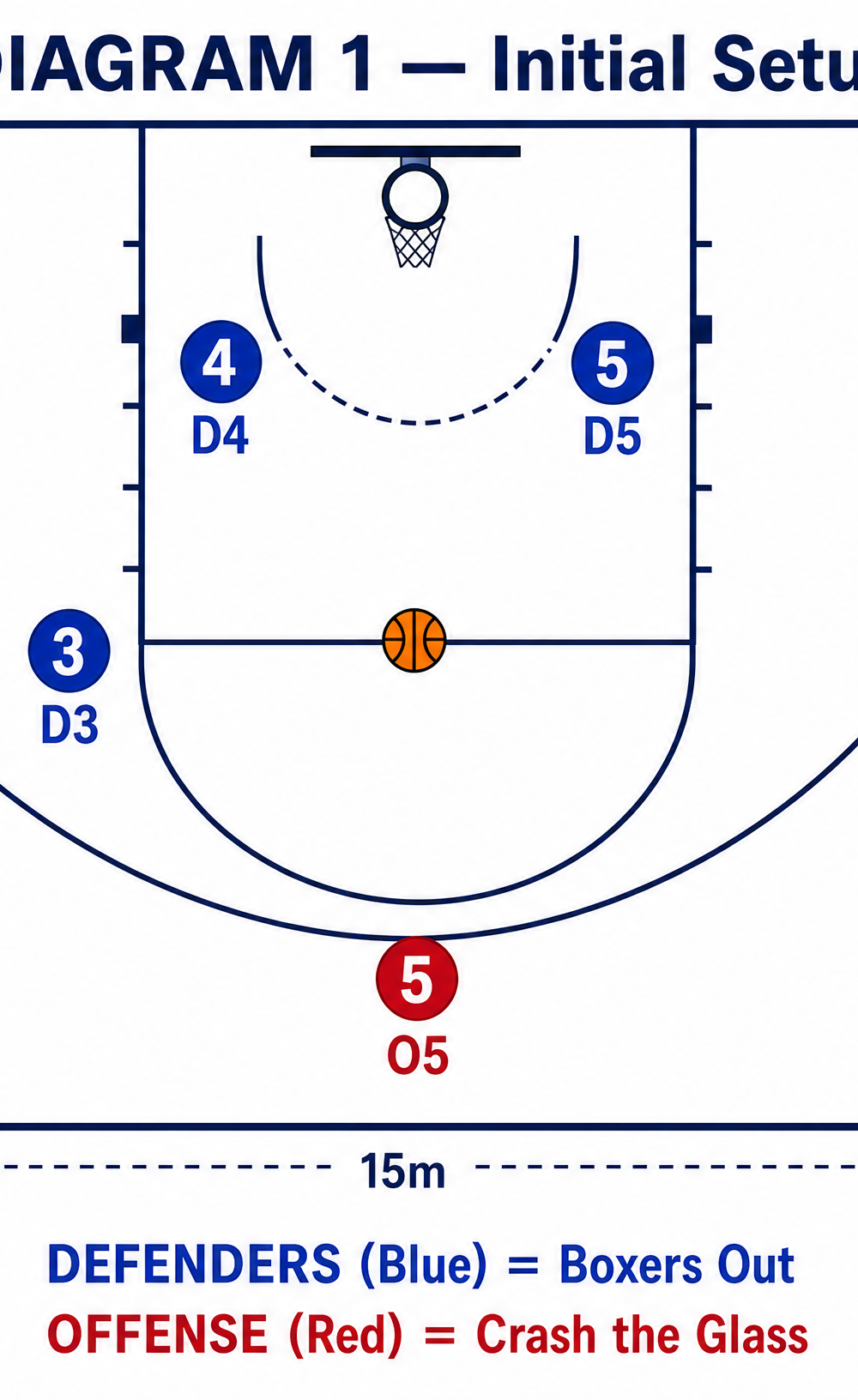
- Court: Standard FIBA half-court (14m x 15m active area).
- Equipment: 1 Basketball, standard hoop.
- Players: 6 players (3 Offense, 3 Defense) plus 1 Coach.
- Positions:
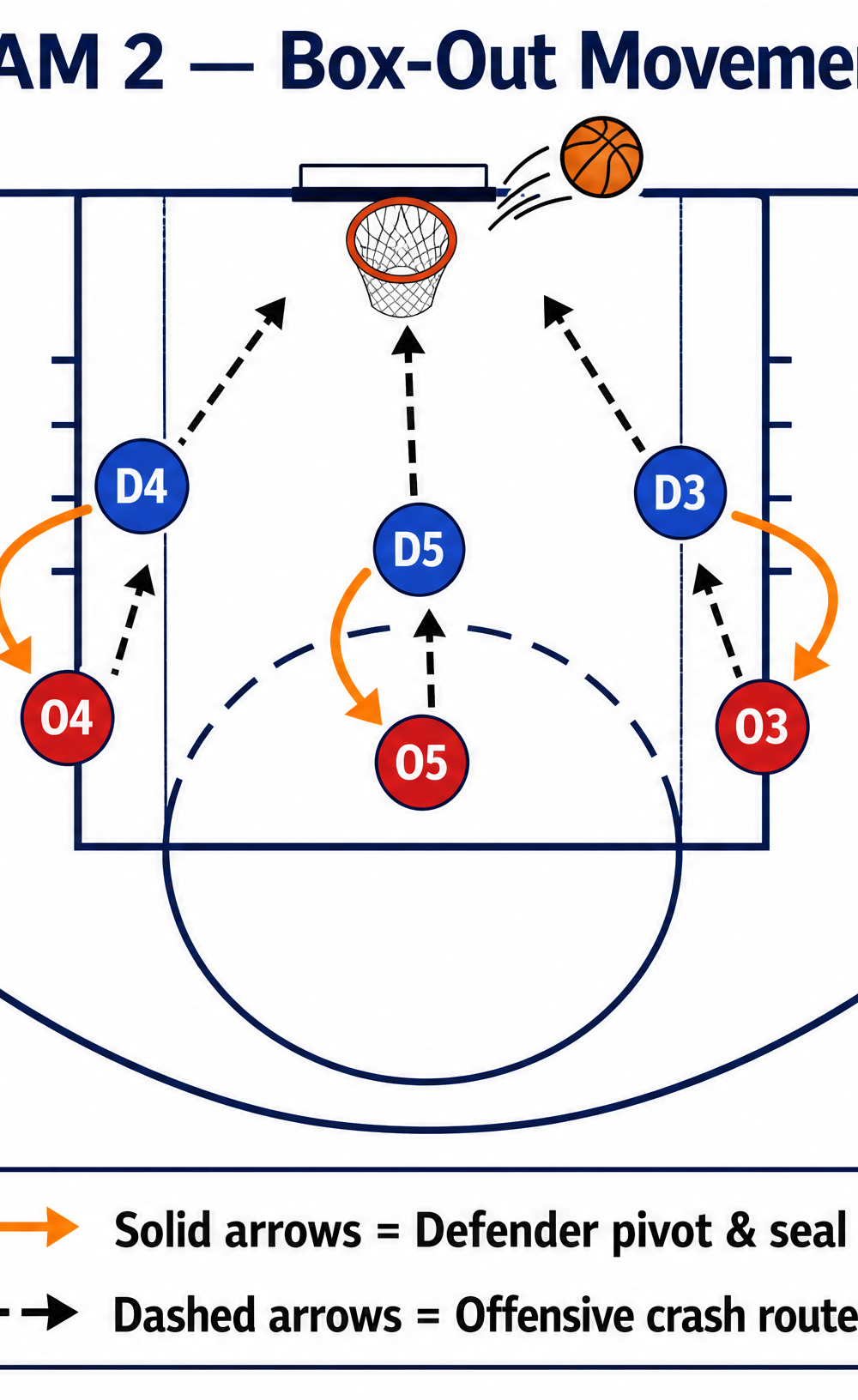
- Defense (Blue): D4 (Power Forward) on the left block, D5 (Center) on the right block, D3 (Small Forward) near the left elbow.
- Offense (Red): O4 on the left wing, O5 at the top of the key, O3 on the right wing.
Step-by-Step Instructions
- Initial Alignment: The Coach stands at the top of the key with the basketball. The three defensive players start inside the paint, while the three offensive players are positioned on the perimeter.
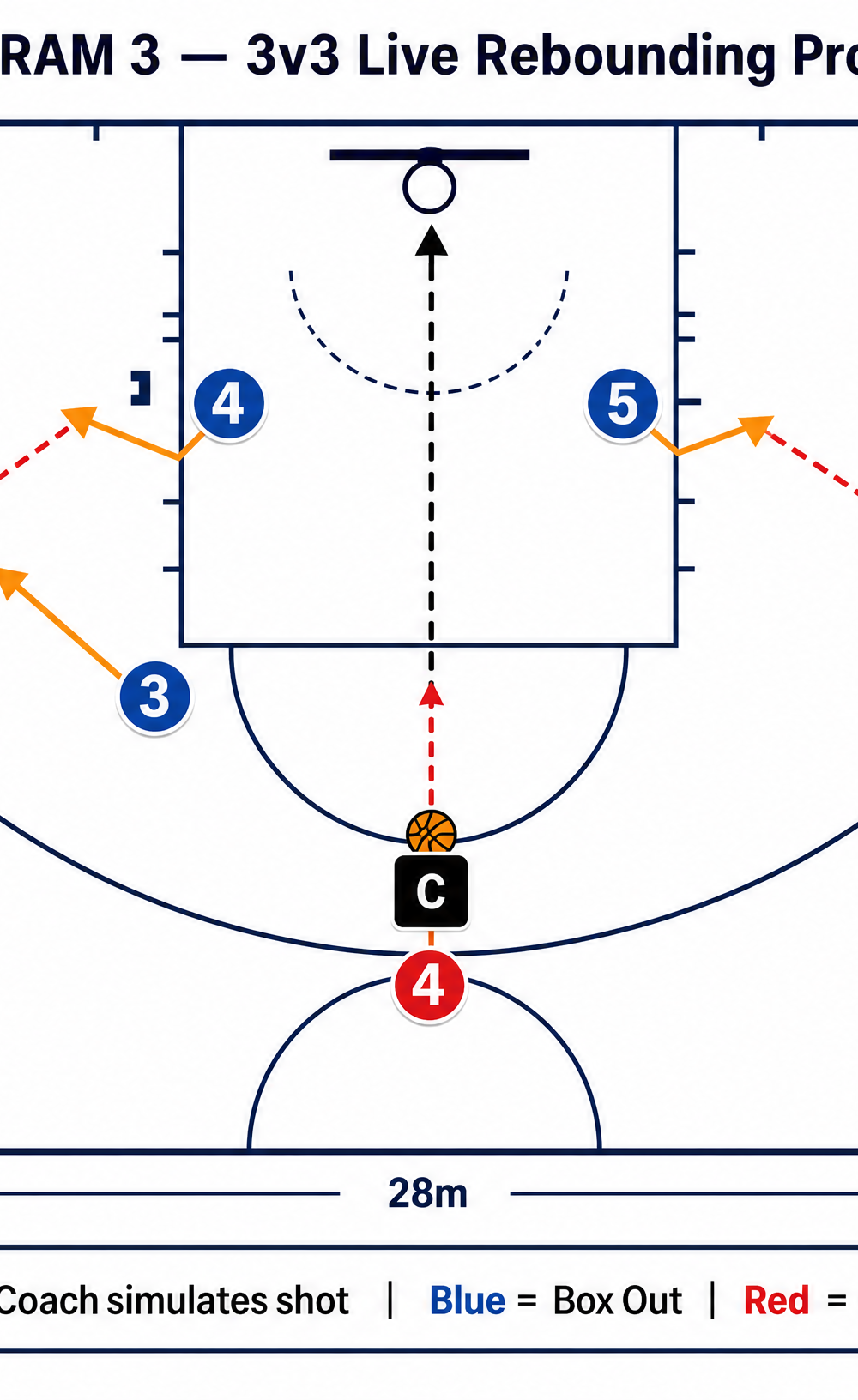
- The Trigger: The Coach simulates a shot by tossing the ball off the backboard or rim. This is the visual cue for all players to react.
- Locate and Contact: As soon as the ball leaves the Coach's hands, the defensive players must immediately locate their assigned offensive player. They step toward the opponent, pivot, and make physical contact (forearm or hip) to stop the forward momentum of the offensive crasher.
- Seal and Hold: The defenders establish a wide base, keep their arms up and wide, and drive the offensive player backward, maintaining the seal until the ball comes off the rim.
- Pursue the Ball: Once the ball is in the air off the rebound, the defenders release their seal and aggressively jump toward the ball, securing it with two hands at the highest possible point.
- Outlet Pass: Upon securing the rebound, the defender pivots to the outside and simulates an outlet pass to complete the sequence.
Key Coaching Points
- Hit First: Do not wait for the offensive player to come to you. The defender must initiate contact to establish the box-out position.
- Wide Base and Low Center of Gravity: Players should keep their feet wider than shoulder-width apart and sink their hips to avoid being pushed under the basket.
- Find the Man, Then the Ball: A common mistake is ball-watching. Defenders must locate their man and make contact before tracking the flight of the rebound.
- Two-Handed Rebounds: Always secure the ball with two hands. Rip it down aggressively and protect it under the chin with elbows out.
Common Mistakes
- Ball Watching: Players stare at the shot and forget to locate their assigned offensive player, allowing a free run to the rim.
- Weak Contact: Failing to make solid physical contact allows the offensive player to easily slip around the box-out.
- Rebounding Under the Rim: Allowing the offensive player to push the defender too deep under the basket, resulting in the rebound going over the defender's head.
Variations & Progressions
- Advantage/Disadvantage: Start the drill with the offensive players closer to the rim, forcing the defense to react faster and work harder to establish position.
- Live Play: After the rebound is secured, allow the offensive team to transition to defense and play out a live 3v3 possession going the other way.
- Mismatch Rebounding: Switch assignments so smaller guards have to box out larger post players, emphasizing technique over size.
Age Adaptations
- Under 10: Focus primarily on the pivot and the concept of finding the man. Use a lighter ball and do not emphasize heavy physical contact.
- Under 14: Introduce the competitive 3v3 aspect. Emphasize holding the seal for a full 2 seconds before releasing for the ball.
- Under 16 & Open: Run the drill at full game speed with high physicality. Implement the live play progression to simulate game conditions.