

Rugby
Box Kick Chase and Press: The Ultimate Defensive Transition Play
Master the art of the box kick chase to transition from attack to defense on your terms, turning a clearance kick into a lethal turnover opportunity.
What you need
1 Rugby ball, Cones for marking zones (optional)
1. Overview
The Box Kick Chase and Press is a foundational transition play designed to relieve pressure in your own half or to contest possession in the opposition's territory. When executed correctly, it turns a simple clearance kick into a highly aggressive defensive weapon. The goal is not merely to kick the ball away, but to land the ball in a specific zone (typically just outside the opposition 22m line) with a coordinated, unified chase line arriving exactly as the ball lands. This forces the opposition catcher into a high-pressure situation, often resulting in a knock-on, a poor return kick, or an immediate turnover via a jackal.
2. Setup
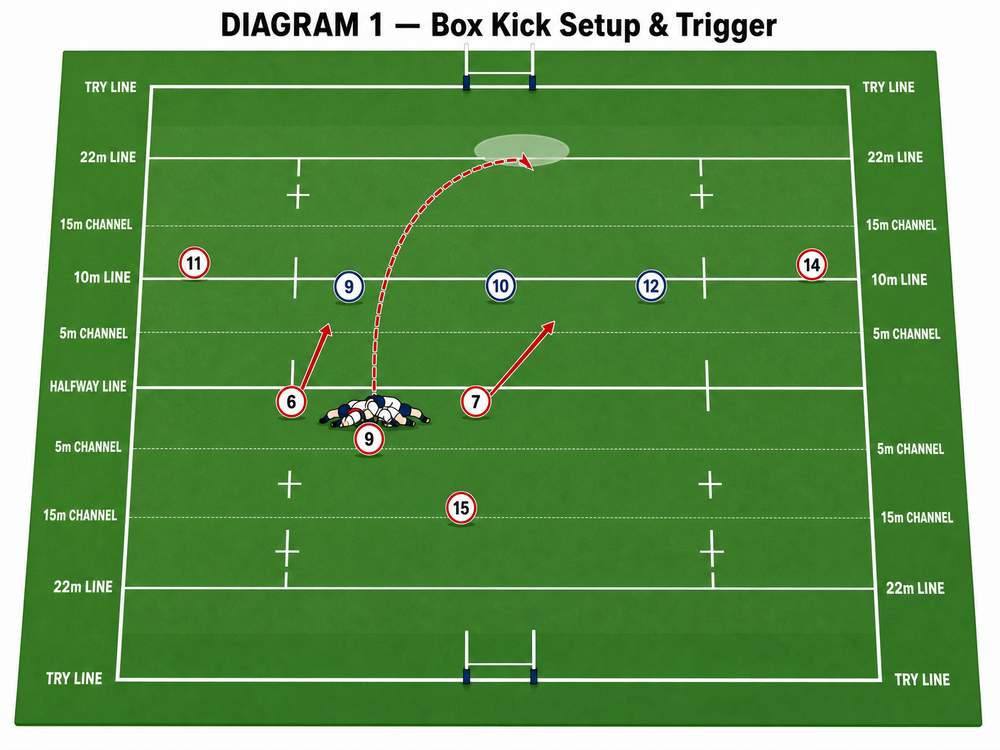
Pitch Area: Typically executed from a ruck between your own 22m and 10m lines, aiming to land the ball between the opposition 10m and 22m lines.
Equipment: 1 Rugby ball, standard pitch markings (100m x 70m).
Key Players:
- Number 9 (Scrum-half): The kicker. Must deliver height (hang time) and accuracy.
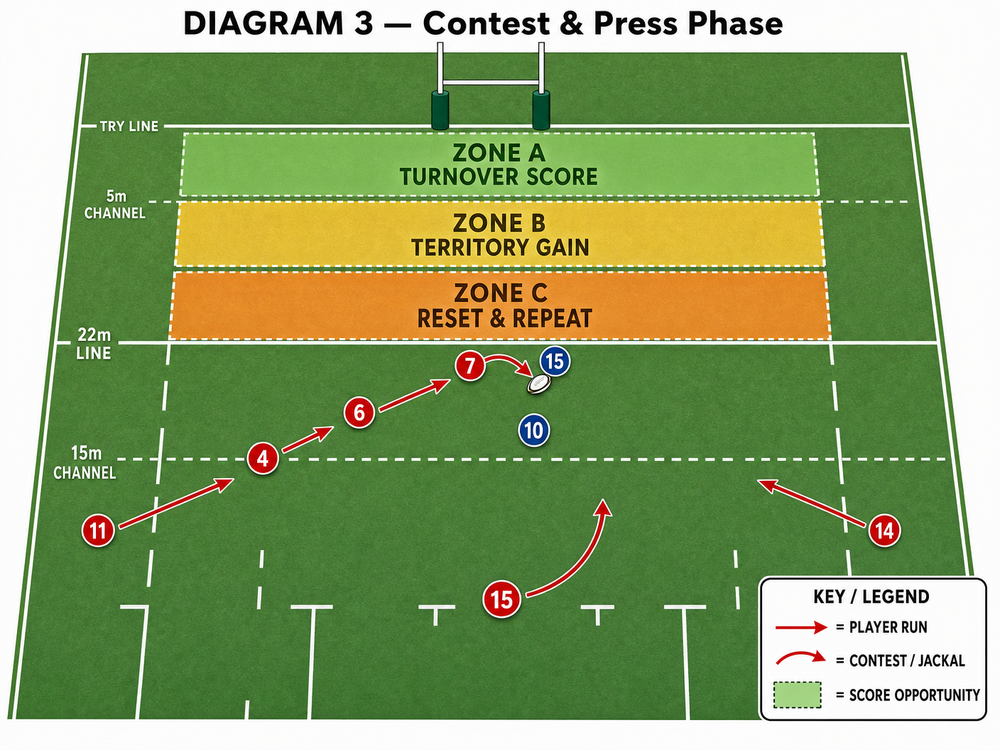
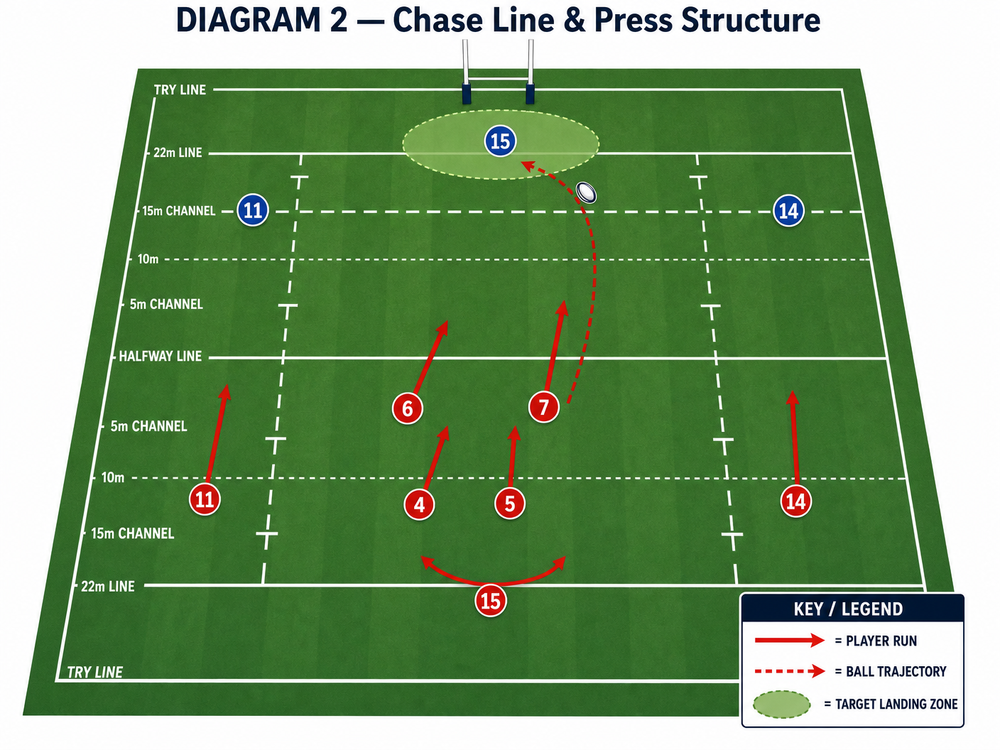
- Number 7 (Openside Flanker) & Number 6 (Blindside Flanker): The primary chasers (the 'missiles').
- Number 11 & 14 (Wings): The wide chasers to seal the edges.
- Number 4 & 5 (Locks): Secondary support chasers.
- Number 15 (Fullback): Deep sweeper to cover any return kicks.
3. Step-by-Step Instructions
Step 1: The Setup and Trigger
The play begins at a stable ruck. The Number 9 identifies the space behind the opposition's frontline defense and signals the play. The forwards in the ruck provide a strong, stable base, ensuring no charge-down is possible from the opposition.
Step 2: The Kick and the Launch
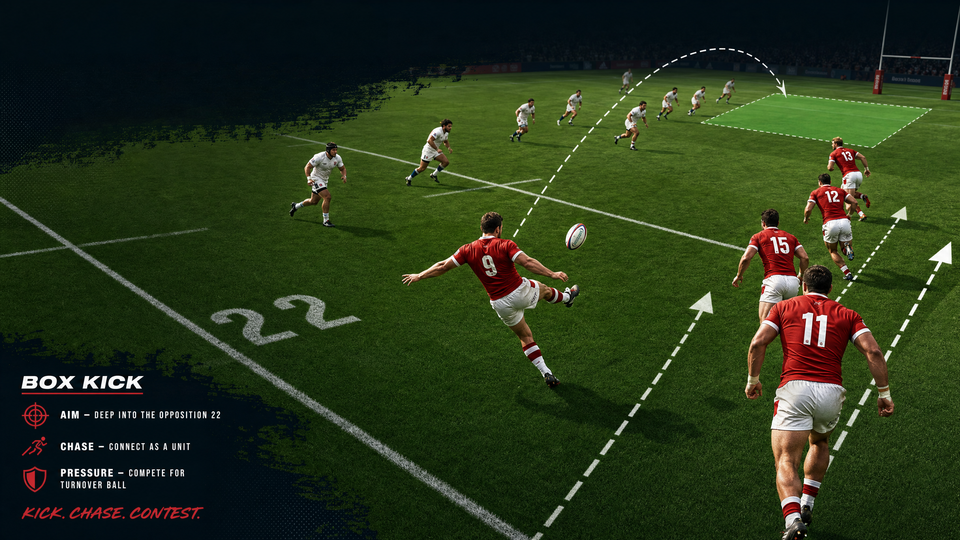
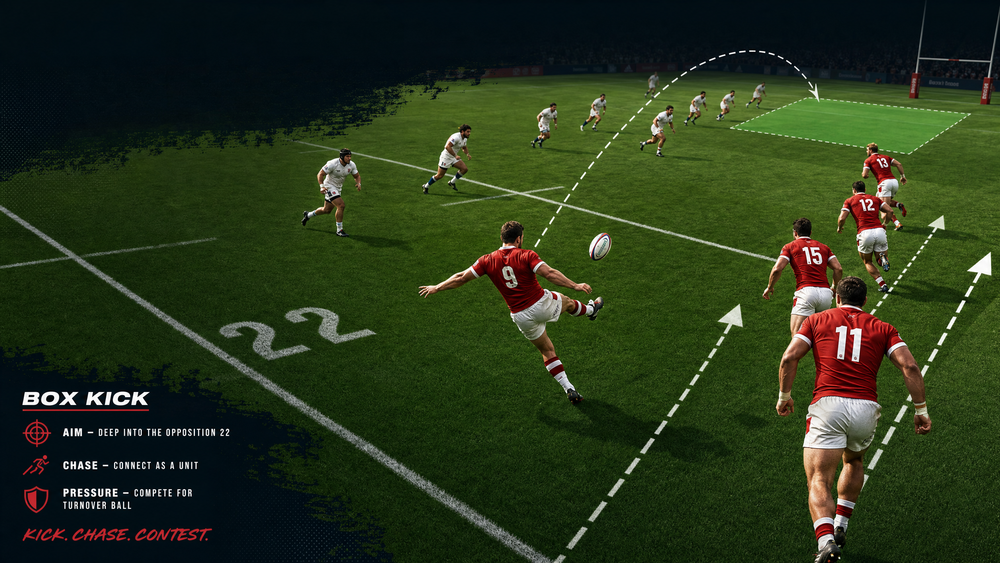
The Number 9 executes the box kick. The critical element here is hang time—aiming for 3.5 to 4 seconds of air time. The moment the ball leaves the boot, the chase line (Numbers 6, 7, 11, and 14) launches. They must stay onside, timing their run perfectly with the kick.
Step 3: The Coordinated Chase Line
The chase must be a connected line, not a staggered run. The Number 7 is often the lead chaser, targeting the exact landing spot of the ball. The Number 6 supports slightly inside, while the wings (11 and 14) sprint up the 15m channels to cut off wide escape routes.
Step 4: The Contest and Press Phase
As the ball descends, the lead chaser (7) must arrive simultaneously. If the opposition catches the ball, the chaser executes a dominant, low tackle. The immediate supporting players (6, 4) arrive a split second later to contest the breakdown (jackal) or counter-ruck. If the ball hits the ground, the chasers swarm the area to secure possession.
4. Key Coaching Points
- Hang Time is King: A long, low kick is useless. The Number 9 must prioritize height over distance to give the chasers time to arrive.
- Stay Connected: The chase line must move as a unit. If one player sprints too far ahead, they create doglegs in the defensive line that the opposition can exploit.
- The 'Two-Metre Rule': Chasers must not slow down until they are within two metres of the catcher. Decelerating too early relieves the pressure.
- First Arrival Mentality: The first player to the breakdown must make a definitive decision: tackle low and hard, or if the ball is loose, secure it immediately.
5. Common Mistakes
- Offside Chasers: Players eager to chase leave before the ball is kicked, resulting in a penalty.
- Poor Kick Execution: Slicing the kick out on the full or kicking it too far without enough height, completely neutralizing the chase.
- Disconnected Chase: Chasers running at different speeds, allowing the opposition to step through the gaps.
6. Variations & Progressions
- The 'Short Box': Aiming the kick much shorter (just over the defensive line) to create an immediate, chaotic contest in the air.
- The 'Cross-Field Box': The Number 9 kicks diagonally across the field to target a specific mismatch (e.g., kicking toward a slower tight-five forward).
7. Age Adaptations
- Under 10s/12s: Focus heavily on the technique of the box kick itself and the basic concept of running forward together. Do not emphasize aggressive contesting at the breakdown yet.
- Under 14s/16s: Introduce the coordinated chase line and the concept of hang time. Begin teaching the decision-making process for the first arriving player (tackle vs. contest).
- Open/Senior: Full implementation of the press structure, aggressive jackaling, and exploiting specific opposition weaknesses.
