

Cricket
Mastering the Short Ball: Comprehensive Batting Drill
Equip your batsmen with the technical skills and confidence to safely evade or aggressively pull and hook short-pitched deliveries.
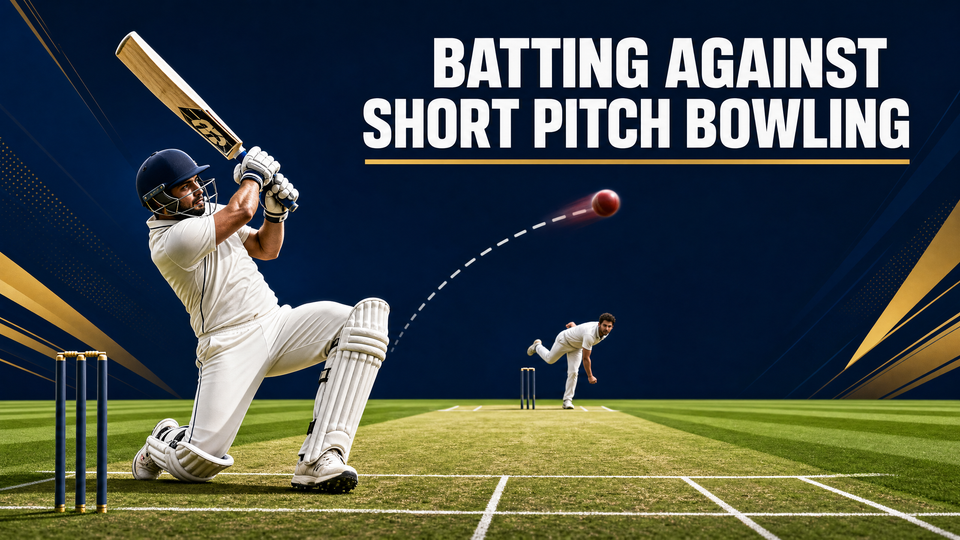
What you need
Cricket Bat, Full protective gear (helmet, pads, gloves, thigh pad, chest guard, arm guard, box), 15-20x Practice cricket balls (soft or hard depending on level), Bowling machine or sidearm tool (optional), Cones/Markers
Batting Against Short Pitch Bowling: The Comprehensive Drill Guide
1. Overview
Short-pitch bowling (the bouncer) is one of the most intimidating tactics a batsman will face. It challenges technique, reaction time, and courage. As a coach, preparing your players to handle the short ball safely and effectively is paramount. This drill focuses on training the batsman to quickly identify the length, transfer their weight appropriately, and execute the correct shot—whether that is a pull, hook, or a decisive leave. By simulating match-like short-pitch scenarios in a controlled environment, players build the muscle memory and confidence required to turn a defensive survival situation into a scoring opportunity.
2. Setup
Proper setup is critical for running a safe and effective short-pitch bowling drill. Ensure all protective equipment is worn and the field is marked clearly to guide both the batsman and the feeder.
| Setup Category | Requirements & Details |
|---|---|
| Equipment Needed | 1x Cricket Bat (appropriate size for the player). Full protective gear for the batsman (helmet with grille, pads, gloves, thigh pad, chest guard, arm guard, box). 15-20x Practice cricket balls (use softer training balls or tennis balls for beginners/juniors, hard leather balls for advanced players). 1x Bowling machine (optional, but highly recommended for consistency) or a throwdown specialist using a sidearm tool. Cones/Markers to define the target zones on the pitch. |
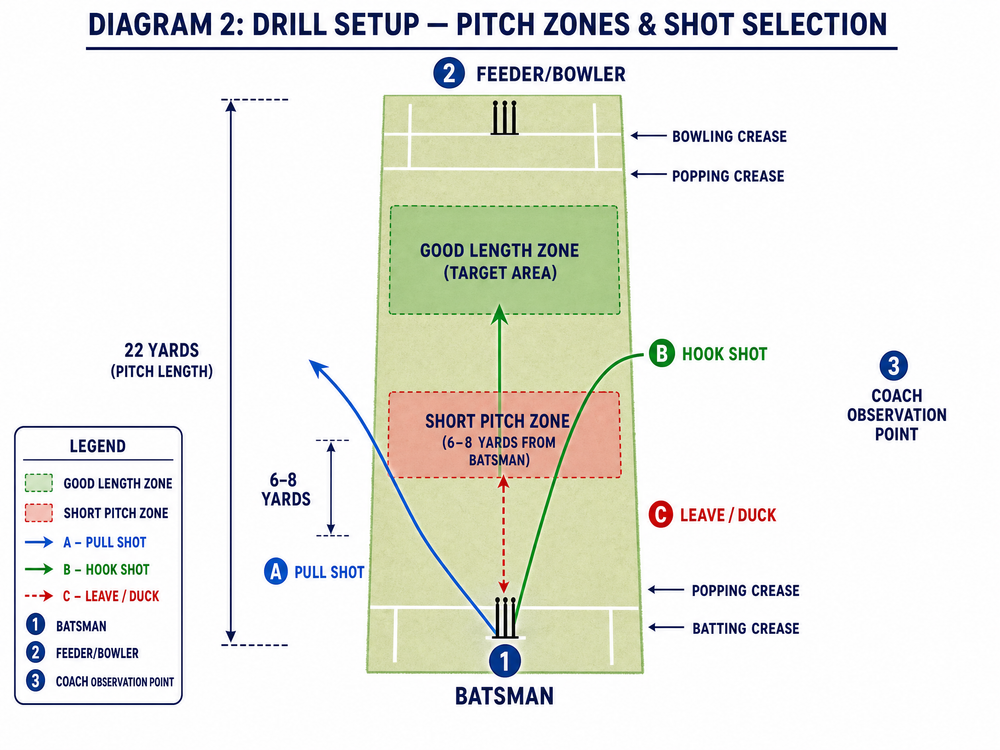
| Pitch & Field Setup | Use a standard 22-yard cricket pitch. Place markers on the pitch approximately 6-8 yards from the batsman's popping crease to indicate the "Short Pitch Zone". Set up scoring zones on the field by placing cones at Square Leg and Fine Leg to indicate target areas for the pull and hook shots. |
| Player Positions | Batsman: At the batting crease, fully geared up. Feeder/Bowler: At the bowling crease (or slightly closer if using a sidearm for extra pace). Coach: Positioned squarely on the leg side (around square leg or point) to observe footwork, weight transfer, and bat path. |
3. Step-by-Step Instructions
Step 1: The Stance and Trigger Movement
The batsman assumes their normal stance at the crease. As the feeder begins their delivery stride, the batsman should execute their standard trigger movement. It is essential that they remain balanced with their head still and eyes level during this initial phase.
Step 2: Identifying the Length
The feeder delivers the ball into the designated 6-8 yard "Short Pitch Zone". The batsman must immediately recognize the short length out of the hand. The coach should cue the player to watch the release point closely and read the length as early as possible.
Step 3: Weight Transfer and Footwork
Upon recognizing the short ball, the batsman must quickly transfer their weight onto the back foot. The back foot should move back and across toward the off-stump, creating a solid base. The front foot can either be lifted or slide back to open the hips, allowing free rotation of the torso.
Step 4: Execution of the Shot
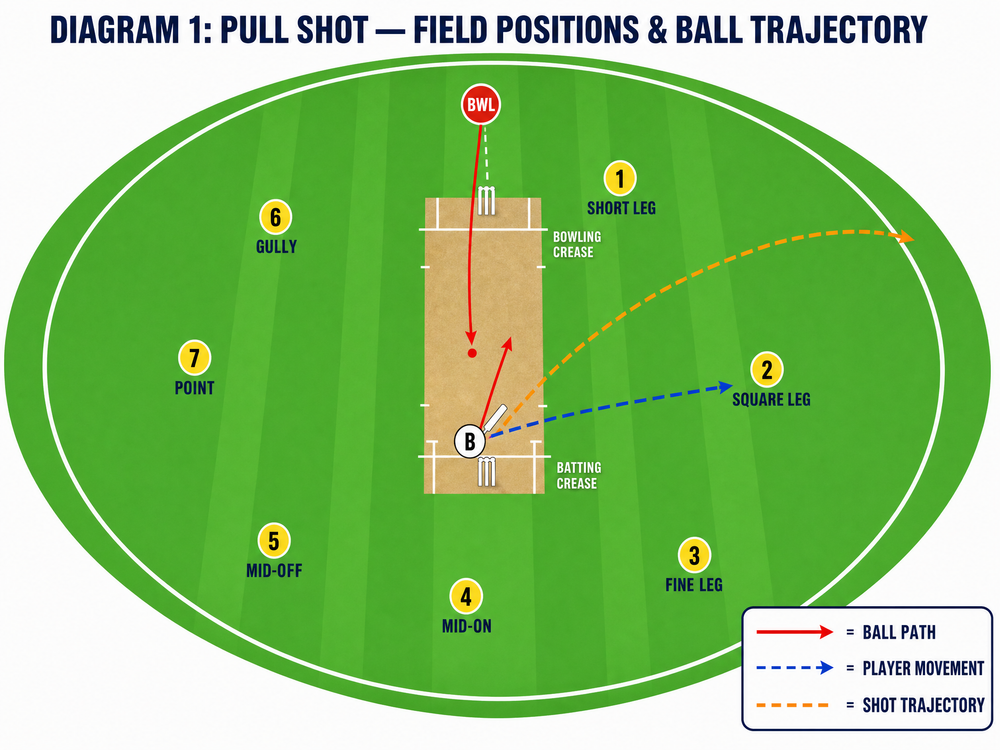
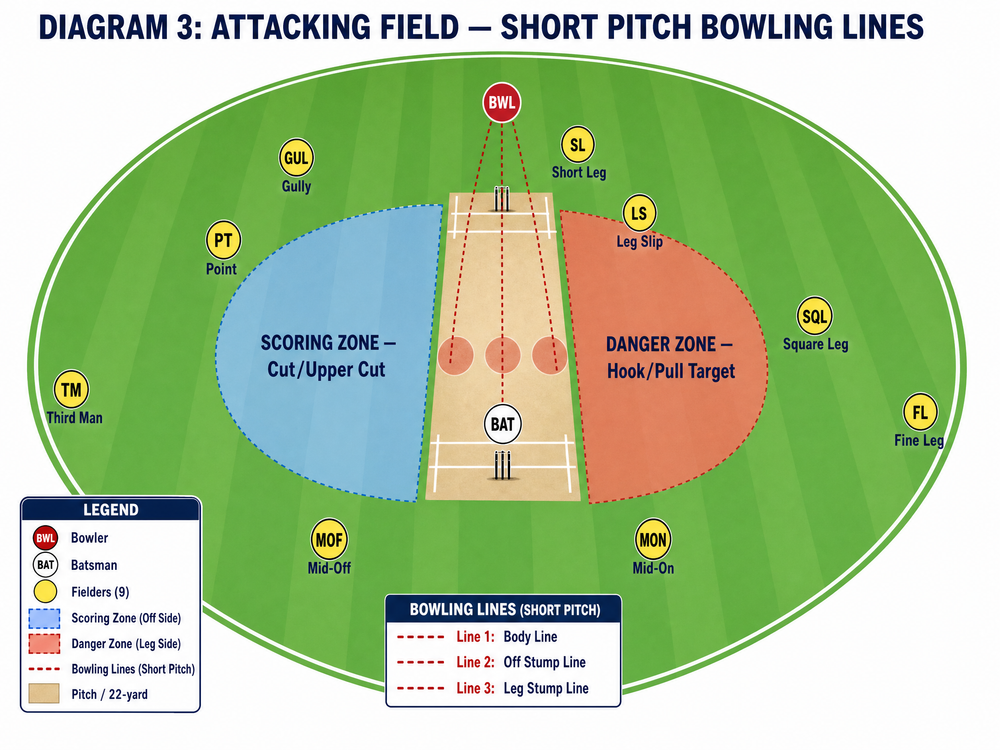
The execution depends entirely on the line and height of the delivery. If the ball is on the body or leg stump line at chest or shoulder height, the batsman executes a pull shot. The arms extend, the bat comes from high to low, and the ball is struck downward toward the square leg boundary. If the ball is directed at the head (helmet height), the batsman can either execute a hook shot by taking the ball on the rise and hitting it in the air toward fine leg, or choose to duck and leave by dropping the hands and bending the knees to let the ball pass safely overhead. If the ball is wide outside off stump, the batsman should let it go or execute a cut or upper cut if it is within comfortable reach.
Step 5: Follow-Through and Reset
After the shot, the batsman should hold their finish briefly to check their balance. The head should still be positioned over the base of support. The player then resets their stance and prepares for the next delivery.
4. Key Coaching Points
Coaches must focus on several critical technical elements to ensure the batsman is safe and effective against the short ball. The earlier the batsman picks up the length, the more time they have to react; therefore, they must focus intensely on the bowler's hand at the release point.
The initial movement must be decisive. The back foot moves back and slightly across to get inside the line of the ball, providing a stable base. For the pull shot, ensure the bat path comes from above the bouncing ball, rolling the wrists upon impact to keep the ball on the ground. Keep the eyes level and the head still, avoiding the tendency to lean back away from the ball, which causes a loss of control and power. Finally, whether choosing to play an attacking shot or duck, the decision must be made early and committed to fully, as half-hearted shots often lead to dismissals or injuries.
5. Common Mistakes and Corrections
| Common Mistake | Description | Coaching Correction |
|---|---|---|
| Leaning Backwards (The "Flinch") | Batsmen often lean their upper body away from the short ball, transferring weight to the heels. | Emphasize pressing the weight into the ball of the back foot and keeping the head forward. |
| Playing Too Early | Swinging before the ball has reached the optimal hitting zone, resulting in a top edge. | Instruct the batsman to wait for the ball and let it come into the body before executing the shot. |
| Taking the Eye Off the Ball | Turning the head or closing the eyes at the last moment out of fear. | Use softer balls to build confidence; reinforce watching the ball all the way onto the bat. |
| Incorrect Bat Path | Swinging upward like an uppercut when attempting a pull shot, lofting the ball dangerously. | Practice the high-to-low bat swing path in isolation before reintroducing the moving ball. |
6. Variations & Progressions
To challenge advanced players or build foundational skills for beginners, coaches can modify the drill.
Mixed Lengths Progression: Instead of exclusively bowling short, the feeder mixes up the lengths (full, good, short). This forces the batsman to read the length dynamically rather than pre-meditating the back-foot movement.
Increased Pace and Bounce Progression: Move the bowling machine closer or increase the speed to reduce reaction time. Introduce a concrete slab or a different pitch surface to increase bounce unpredictability.
The "Leave Only" Variation: The batsman is instructed not to play any attacking shots. They must practice ducking, swaying, and dropping their hands to safely evade short-pitched deliveries, building spatial awareness and defensive discipline.
7. Age Adaptations
| Age Group | Adaptation Strategy |
|---|---|
| Under 8 / Under 10 | Use exclusively soft tennis balls or incrediballs. Focus purely on the mechanics of moving back and across and safely evading the ball. Do not encourage the hook shot at this age. |
| Under 12 / Under 14 | Introduce hard leather balls only if the player is technically sound and confident. Focus on the pull shot, specifically rolling the wrists to keep it down. Emphasize the importance of the helmet grille and all protective gear. |
| Under 16 / Open | Conduct full match simulations. Incorporate high pace, bouncers aimed at the badge of the helmet, and active fielders. Teach the tactical aspects of when to take on the short ball versus when to survive. |
