Mastering the Death Overs: A Tactical Bowling Plan
Equip your bowlers with the strategic clarity, field placements, and execution skills required to dominate the final five overs and restrict the opposition's scoring.
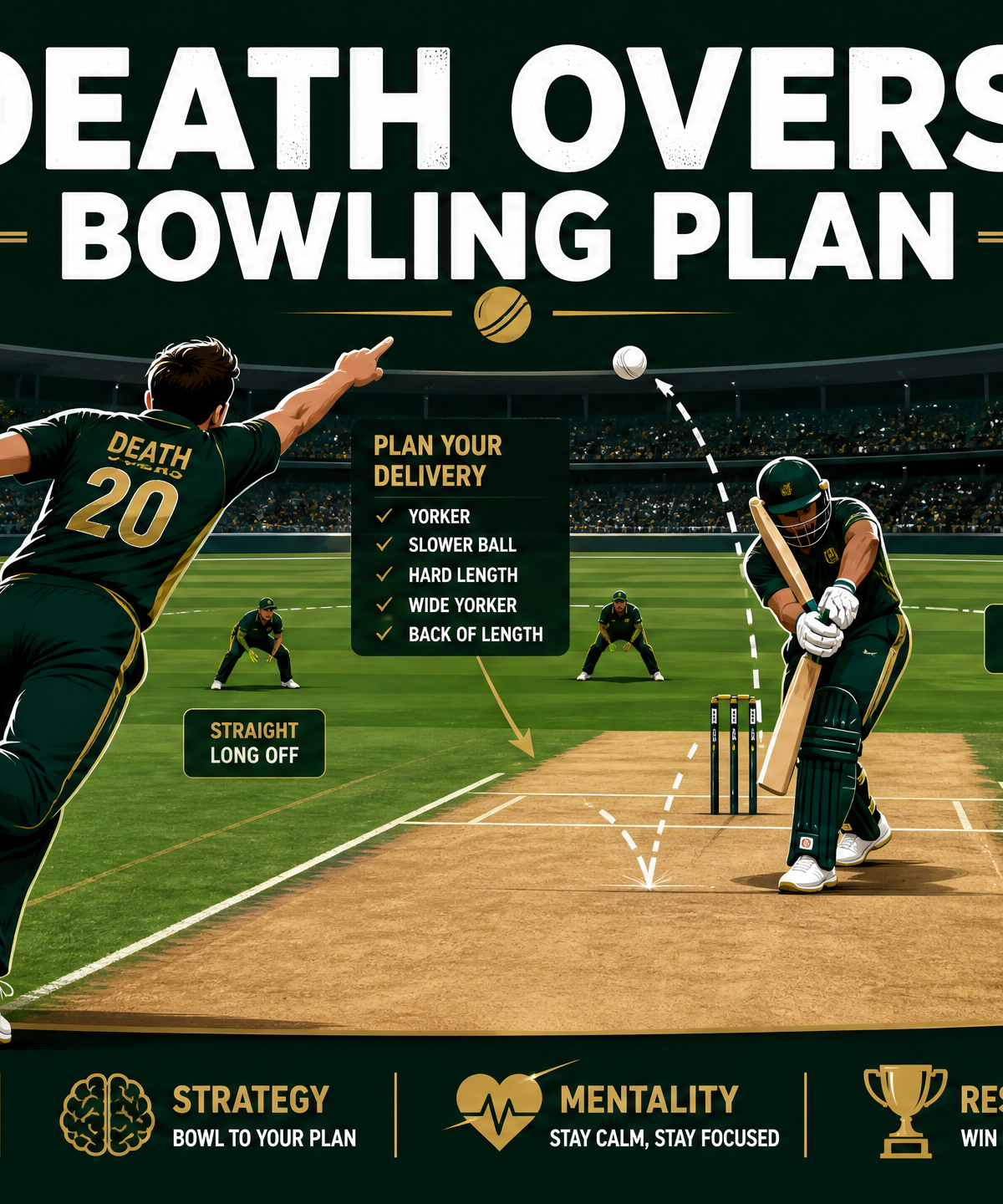
Equipment Needed
1. Overview
The "Death Overs" (typically overs 16–20 in a T20, or 41–50 in an ODI) are the crucible of limited-overs cricket. In this phase, batsmen are looking to maximize their scoring rate, often throwing caution to the wind. As a coach, your goal is to transition your bowlers from a mindset of mere survival to one of calculated execution. This set play resource provides a structured blueprint for death bowling, focusing on two primary deliveries: the yorker and the slower ball. By mastering these variations and understanding the corresponding field settings, bowlers can dictate terms, induce errors, and ultimately win matches for their team.
2. Setup
Equipment Needed:
- 6-12 high-quality cricket balls (a mix of new and semi-used to simulate match conditions)
- Target cones or markers (flat discs preferred to avoid deflecting the ball dangerously)
- A fully marked 22-yard pitch
- Measuring tape (to accurately place length markers)
Pitch & Field Setup:
- Place two flat markers on the popping crease, one on the middle stump line and one just outside off stump, to serve as yorker targets.
- Place a secondary set of markers 6 to 8 meters from the popping crease to define the "good length" zone for slower balls.
- Set a match-scenario field. Ensure the 30-yard circle is clearly defined to practice boundary riding and inner-ring fielding.
3. Step-by-Step Instructions
The Yorker Plan
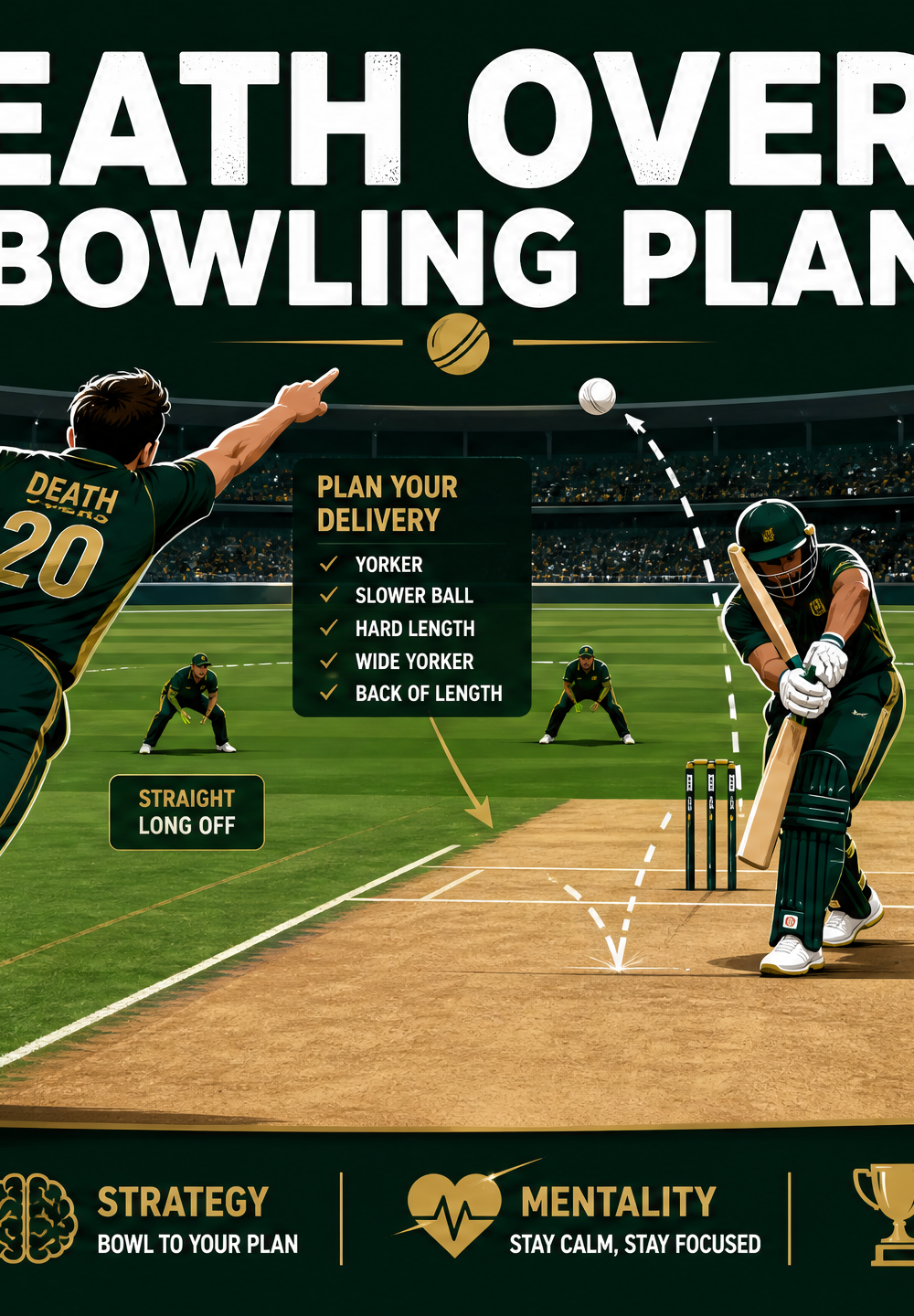
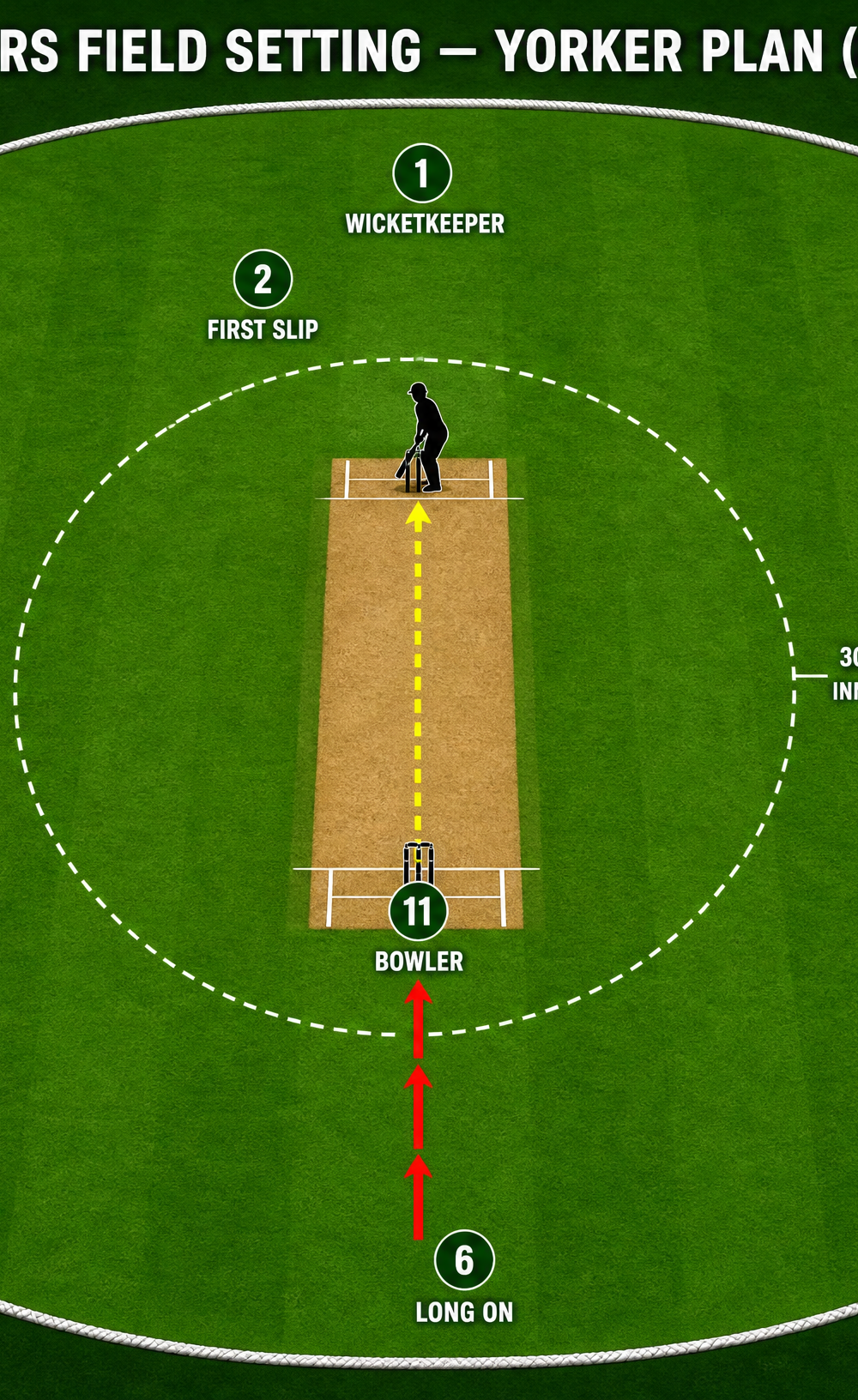
- Field Setting: Establish a defensive field prioritizing boundary protection on the straight boundaries (Long On, Long Off) and square on the leg side (Deep Square Leg, Deep Mid Wicket). Keep Third Man and Fine Leg inside the circle to encourage the batsman to play straight.
- Target Acquisition: The bowler must focus intensely on the base of the stumps or the batsman's toes. The visual target should be small and specific.
- Run-Up and Delivery: Maintain a rhythmic, high-intensity run-up. The delivery stride must be explosive, ensuring maximum pace is imparted. The release point should be slightly later than a standard length delivery to ensure the ball pitches at the crease.
- Follow-Through: A strong follow-through is essential to maintain balance and prepare for any straight drives hit back towards the bowler.
The Slower Ball Plan
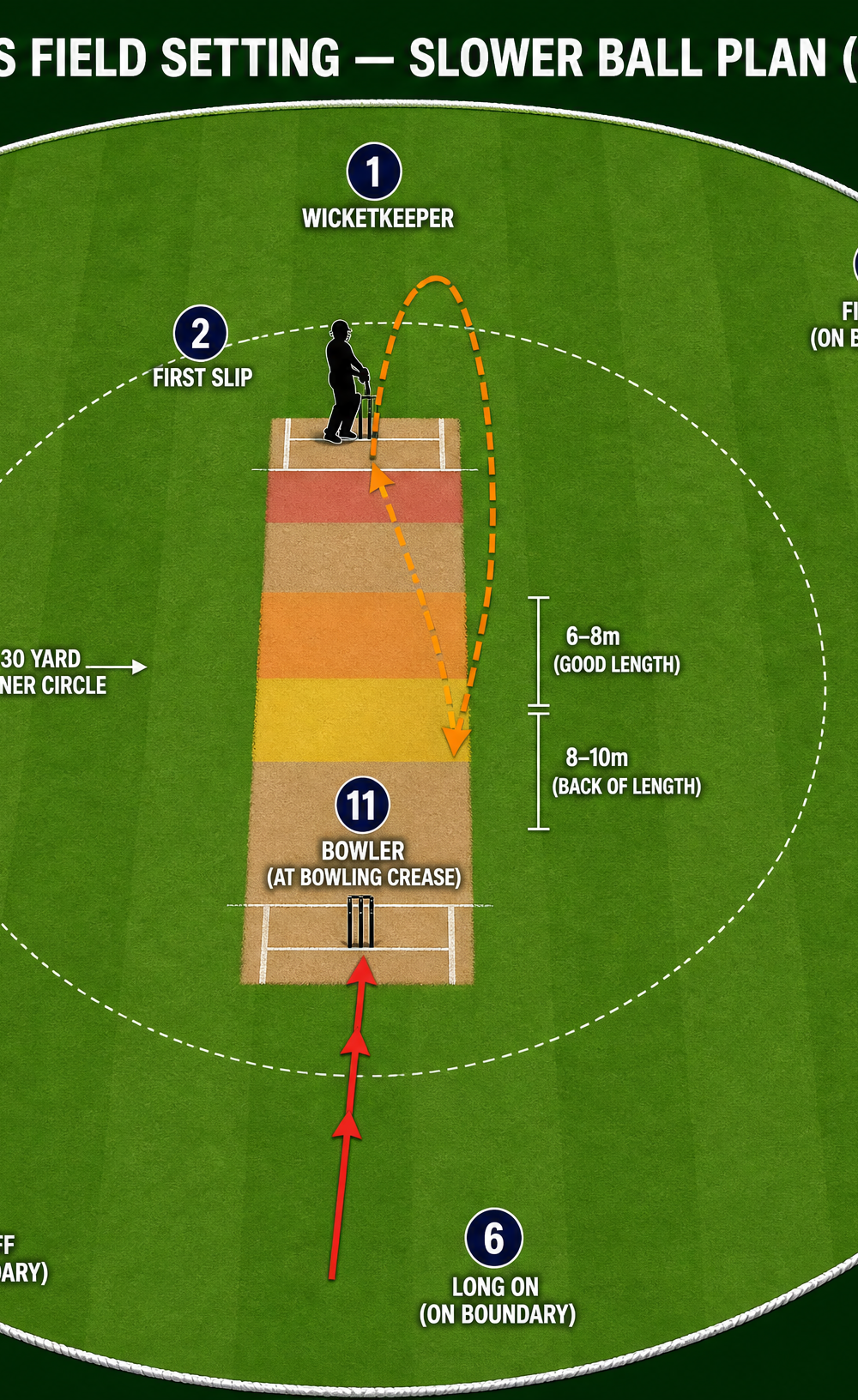
- Field Setting: Push Third Man and Fine Leg to the boundary. Bring Mid Off or Mid On inside the circle to invite the batsman to hit over the top. Ensure boundary riders are positioned for the slog sweep or heave over mid-wicket.
- Grip and Deception: The bowler must choose a slower ball variation (e.g., off-cutter, back-of-the-hand, split finger) and grip the ball accordingly, hiding the grip from the batsman until the last possible moment.
- Arm Speed: This is critical. The arm speed must remain identical to a fast delivery. The deception lies in the release, not a slowing down of the bowling action.
- Length and Line: Aim for a good length (6-8 meters from the crease) or slightly back of a length. The ball must grip the surface and sit up, making it difficult for the batsman to generate power.
4. Key Coaching Points
- Execution over Variation: It is better to bowl a perfect yorker six times than to try six different variations and execute none of them well. Consistency is key.
- Clarity of Thought: The bowler must commit 100% to the chosen delivery before starting their run-up. Hesitation leads to poor execution.
- Arm Speed on Slower Balls: The most common tell for a slower ball is a reduction in arm speed. Drill the bowlers to maintain their fast-bowling intensity through the crease.
- Fielding Synergy: The bowler and the field must work together. If bowling wide yorkers, the field must be packed on the off-side. If bowling straight, protect the straight boundaries.
- Breathing and Composure: Teach bowlers to take a deep breath at the top of their mark to lower their heart rate and focus their mind in high-pressure situations.
5. Common Mistakes
- Missing the Length (Yorker): Bowling a low full toss or a half-volley instead of a true yorker. This usually results from releasing the ball too early or too late.
- Telegraphing the Slower Ball: Changing the run-up speed or arm action, alerting the batsman to the variation.
- Bowling to the Wrong Field: Executing a perfect wide yorker when the field is set for a straight delivery, resulting in an easy boundary.
- Over-complicating the Plan: Trying to out-think the batsman too much instead of trusting the primary skills.
6. Variations & Progressions
- Target Practice: Use shoes or specific colored cones as targets at the crease to gamify yorker practice.
- Scenario Bowling: Set a specific target (e.g., "Defend 10 runs off the final over") and have the bowler execute their plan against live batsmen.
- The Wide Yorker: Progress from the straight yorker to the wide yorker (just inside the return crease), adjusting the field accordingly (e.g., Deep Point, Deep Extra Cover).
7. Age Adaptations
- Under 12s: Focus purely on the mechanics of bowling straight and full. Introduce the concept of a slower ball using a simple off-cutter grip, but prioritize accuracy over deception.
- Under 14s/16s: Begin integrating field settings with specific deliveries. Introduce target practice for yorkers and emphasize the importance of maintaining arm speed for slower balls.
- Open/Senior: Full implementation of the tactical plan, including scenario-based pressure training, advanced slower ball variations (e.g., back-of-the-hand), and complex field manipulations.