The Decoy Cut: A High-Percentage Baseline Throw-In Play
Master this simple but highly effective baseline throw-in set play designed to isolate your Goal Shooter for a high-percentage shot under the post.
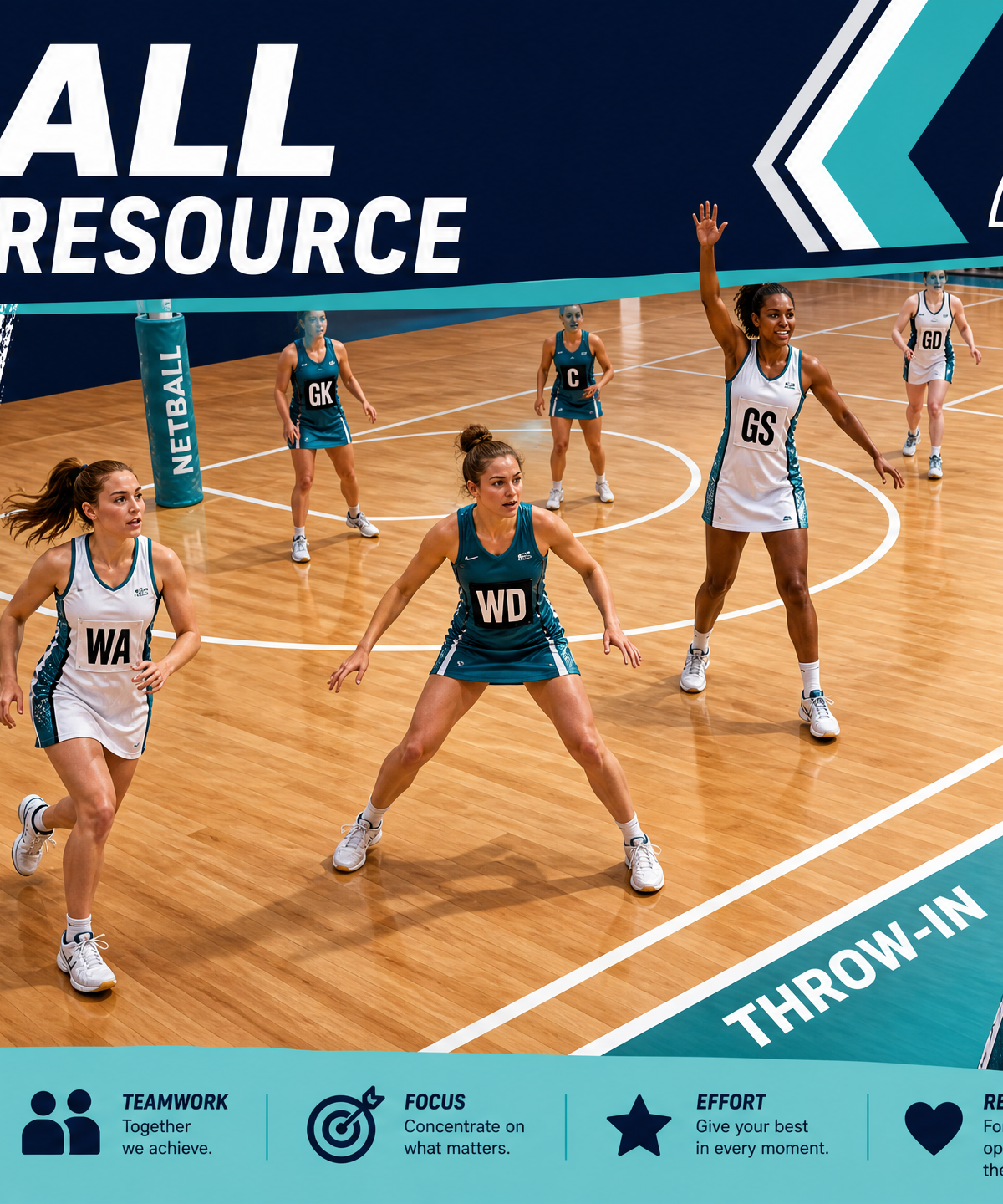
Equipment Needed
1. Overview
The 'Decoy Cut' is a highly effective set play designed for attacking throw-ins taken from the baseline within the goal third. The primary objective is to create a one-on-one isolation for your Goal Shooter (GS) under the post. By using the Wing Attack (WA) as a dynamic decoy, this play manipulates the defensive structure, forcing the Goal Keeper (GK) and Goal Defence (GD) to make split-second decisions that often result in an open passing lane directly to the post.
This play is particularly effective against a zone defence or when defenders are aggressively fronting your shooters. It requires precise timing, sharp changes of direction, and confident passing from the throw-in taker.
2. Setup
Court Area: Attacking goal third, baseline.
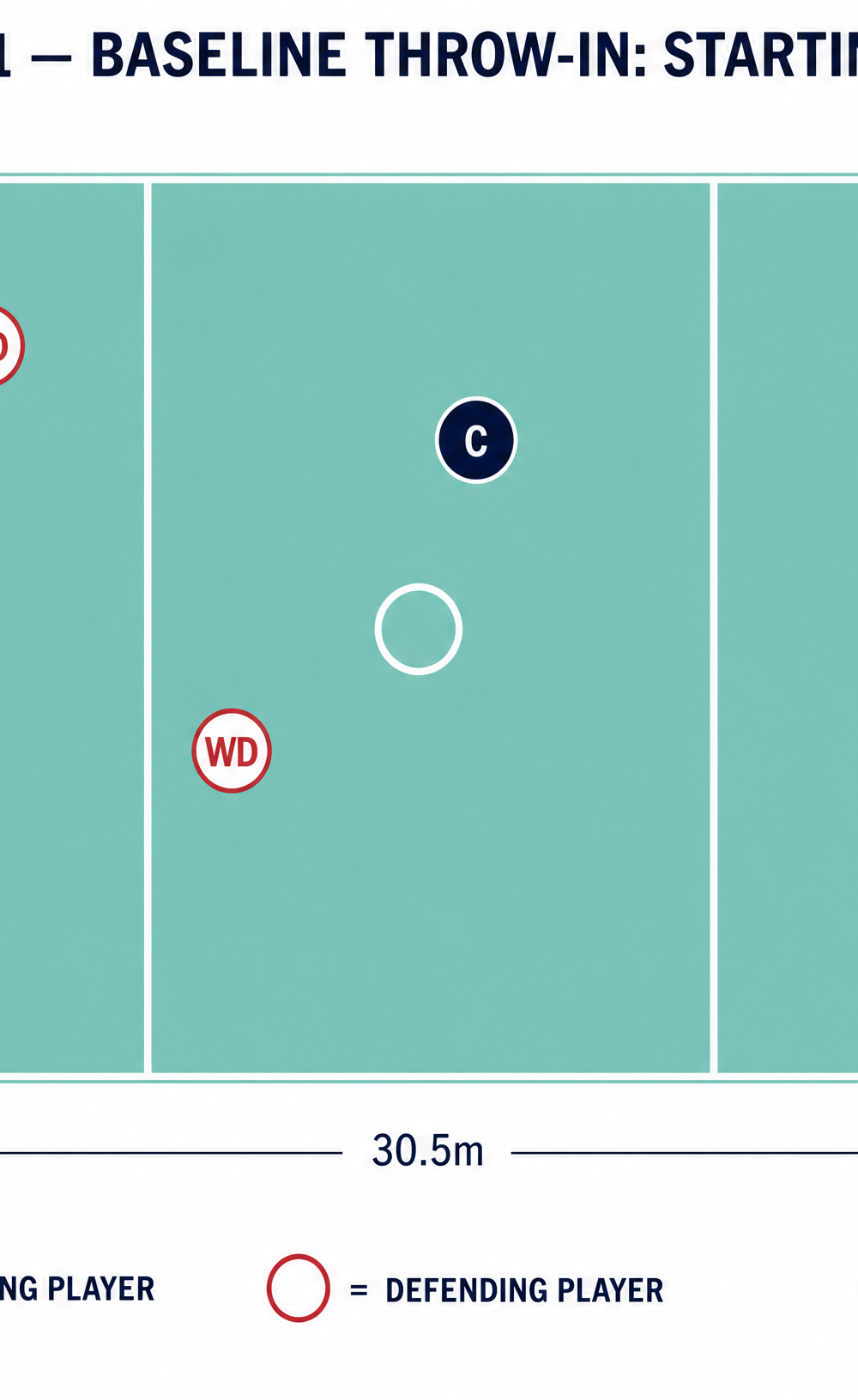
Players Involved: GA (Throw-in taker), GS, WA, C, WD.
Starting Positions:
- Goal Attack (GA): Positioned off the court on the baseline, holding the ball, ready to take the throw-in. They should be positioned roughly halfway between the goal post and the sideline.
- Goal Shooter (GS): Positioned inside the goal circle, holding near the post closest to the GA.
- Wing Attack (WA): Positioned on the edge of the goal circle, approximately at the top or slightly towards the side where the GA is taking the throw-in.
- Centre (C) & Wing Defence (WD): Positioned higher up in the goal third or middle third, ready to offer reset options if the primary play breaks down.
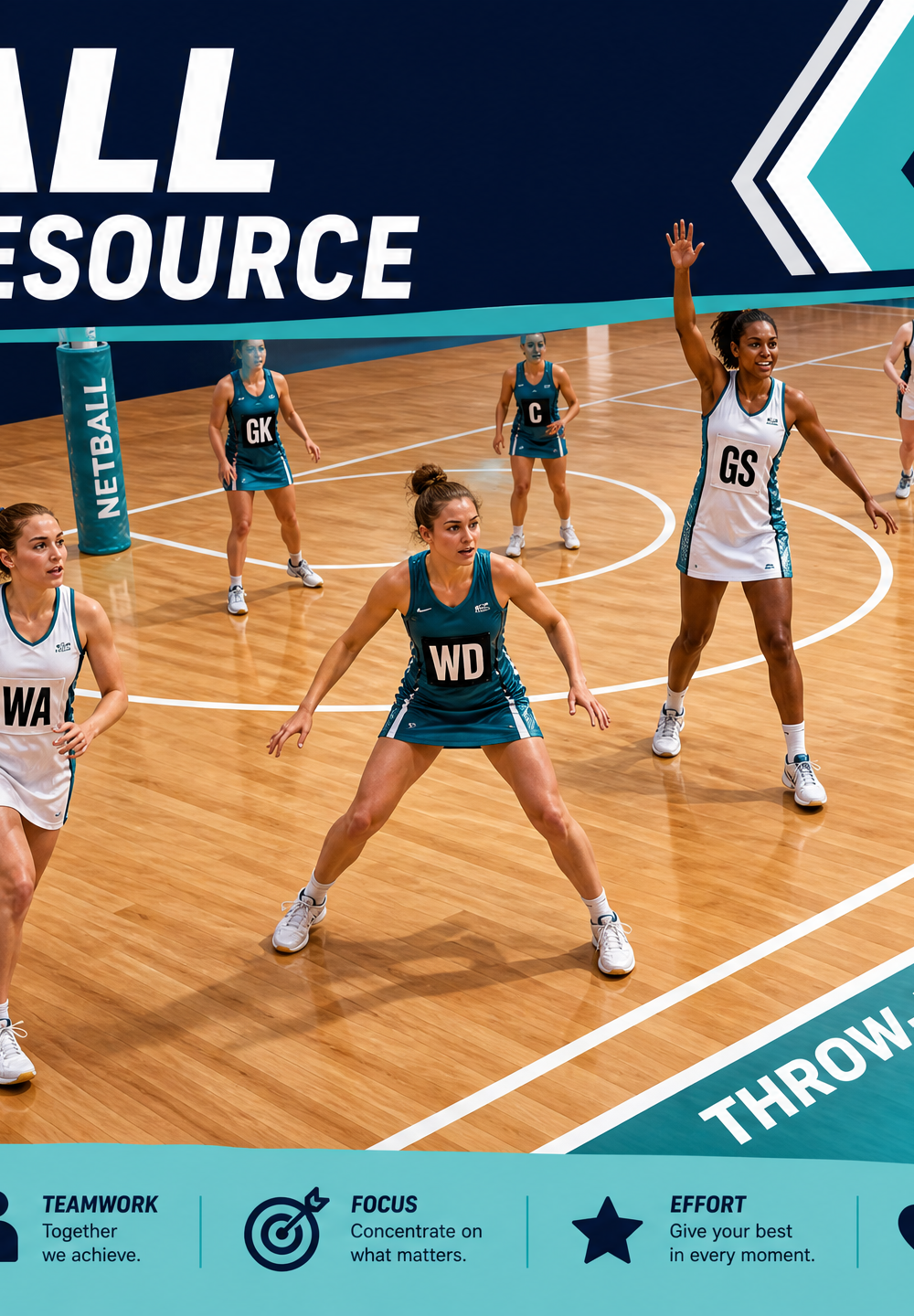
3. Step-by-Step Instructions
Phase 1: The Decoy and the Cut
- The Trigger: The play begins on the umpire's whistle. The GA steps up to the line, signaling the start of the movement.
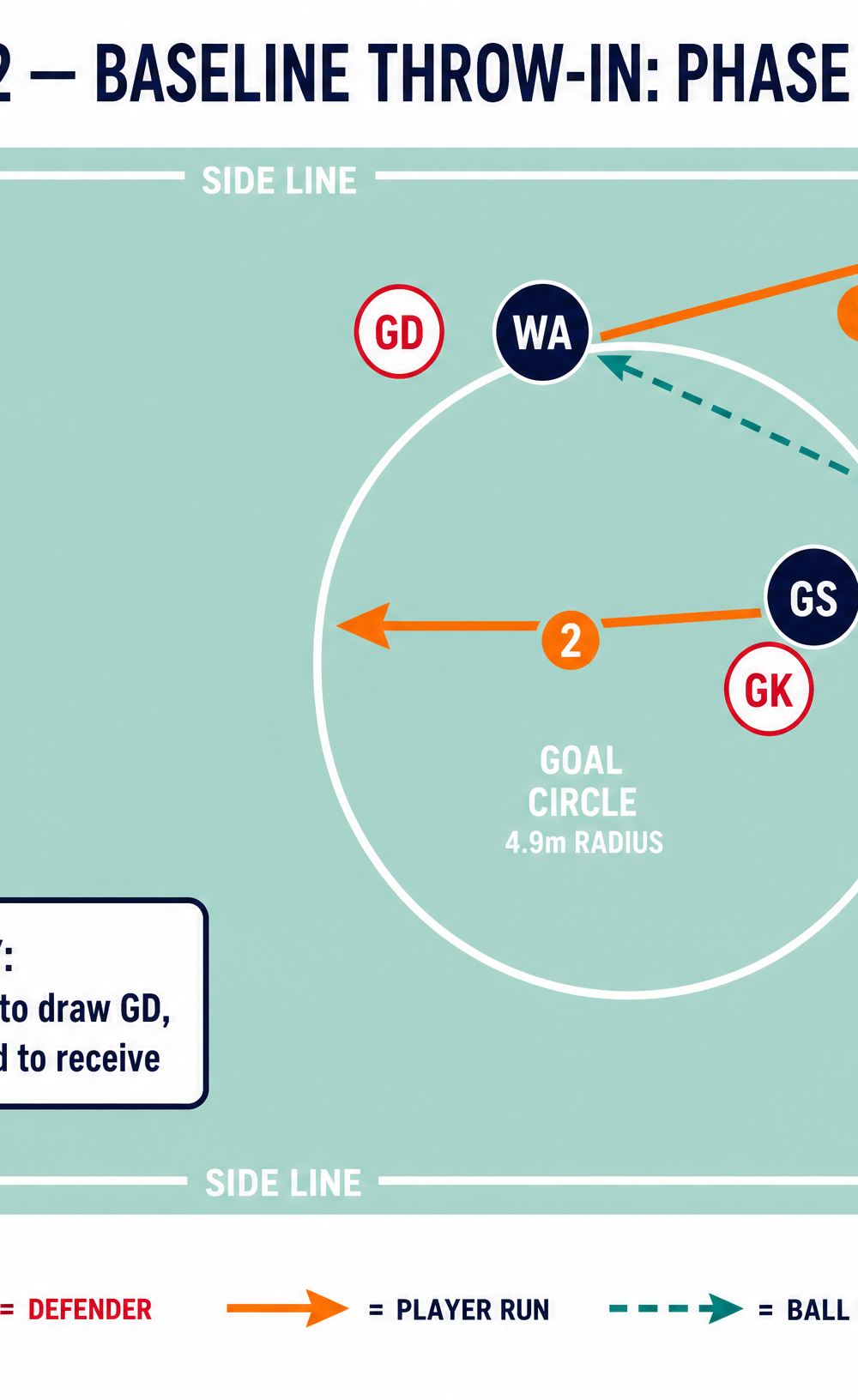
- The Decoy Lead (WA): The WA makes a sharp, explosive lead from the top of the circle directly towards the baseline corner, driving into the space in front of the GA. The goal here is to aggressively draw the GD out of the central channel.
- The Primary Cut (GS): As soon as the WA initiates their drive, the GS pushes off their defender (GK) and makes a hard, baseline cut across the circle towards the far post. The timing is crucial—the GS must cut after the WA has drawn the GD away.
- The Pass: The GA reads the defence. If the WA's decoy is successful, the central lane will open up. The GA delivers a flat, hard chest pass or a well-placed bounce pass to the GS cutting across the circle.
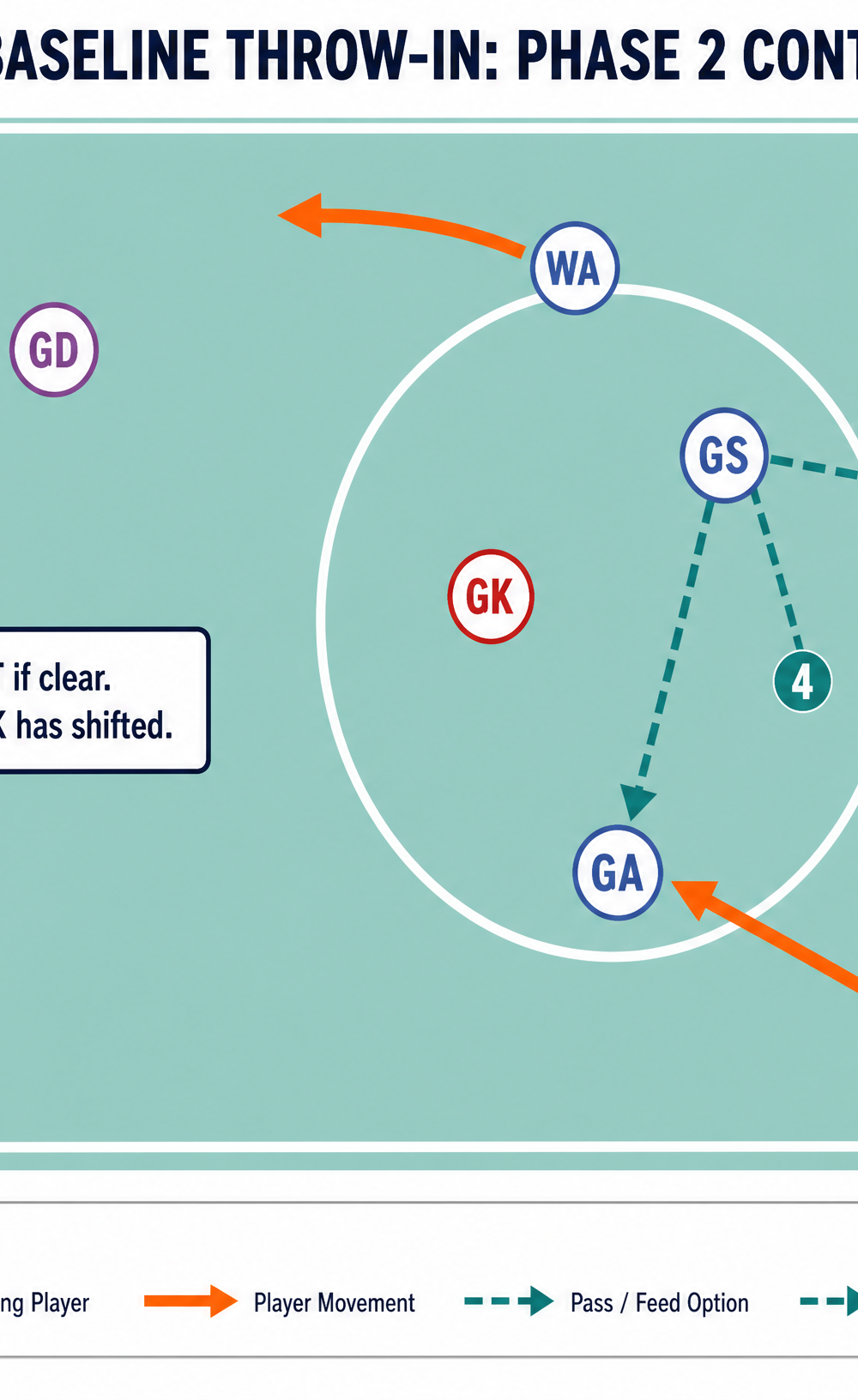
Phase 2: Continuation and Scoring
5. The Shot: Upon receiving the ball, the GS immediately squares up to the post. If they have clear space, they take the shot.
6. The Support Run (GA): Immediately after releasing the pass, the GA must step onto the court and drive into the circle or along the circle edge to offer support.
7. The Feed Option: If the GK recovers quickly and contests the GS's shot, the GS can look to offload the ball to the driving GA for a better shooting angle.
4. Key Coaching Points
- Timing is Everything: The GS must not start their cut too early. They need to wait for the WA to commit the GD before exploiting the space.
- Aggressive Decoy: The WA's run must look like a genuine attempt to receive the ball. If they jog or look disinterested, the GD will not follow, and the passing lane to the GS will remain clogged.
- Strong Holds: The GS must establish a strong starting position and use their body to seal off the GK before initiating the cut.
- Eye Contact: The GA must maintain vision on both the WA and GS, reading the defensive shifts before committing to the pass.
5. Common Mistakes
- Crowding the Space: The WA and GS running into the same area, bringing their defenders together and closing down passing options.
- Telegraphing the Pass: The GA staring directly at the GS the entire time, allowing the defence to anticipate the play.
- Weak Passes: A loopy or slow pass across the circle gives the GK or GD time to recover and intercept.
- Lack of Reset Options: The C and WD pushing too high and not being available for a safe backward pass if the primary options are covered.
6. Variations & Progressions
- The WA Option: If the GD decides to stay central and cover the GS cut, the GA should immediately hit the WA on their drive to the baseline. The WA can then feed the GS or GA.
- The Screen Play: Introduce a screen where the WA sets a subtle block on the GK to free up the GS for an easier cut.
- Double Cut: Have both the GS and WA start at the top of the circle and cross paths, creating confusion for the defenders.
7. Age Adaptations
- Under 10s/12s: Focus heavily on the basic timing of the two movements (WA first, then GS). Simplify the passing options and ensure players understand the concept of a 'decoy'.
- Under 14s/16s: Introduce the variations and emphasize the importance of reading the defence. The GA should be able to make quick decisions based on how the GD reacts.
- Open/Advanced: Incorporate screens, split-second timing, and advanced passing techniques (e.g., no-look passes, disguised feeds) to execute the play against sophisticated defensive structures.