

Rugby
Defensive Drift Pattern Drill: Mastering the Wide Channel Defense
Teach your defensive line to shift laterally as a cohesive unit, forcing the attack toward the touchline and shutting down wide overlaps.
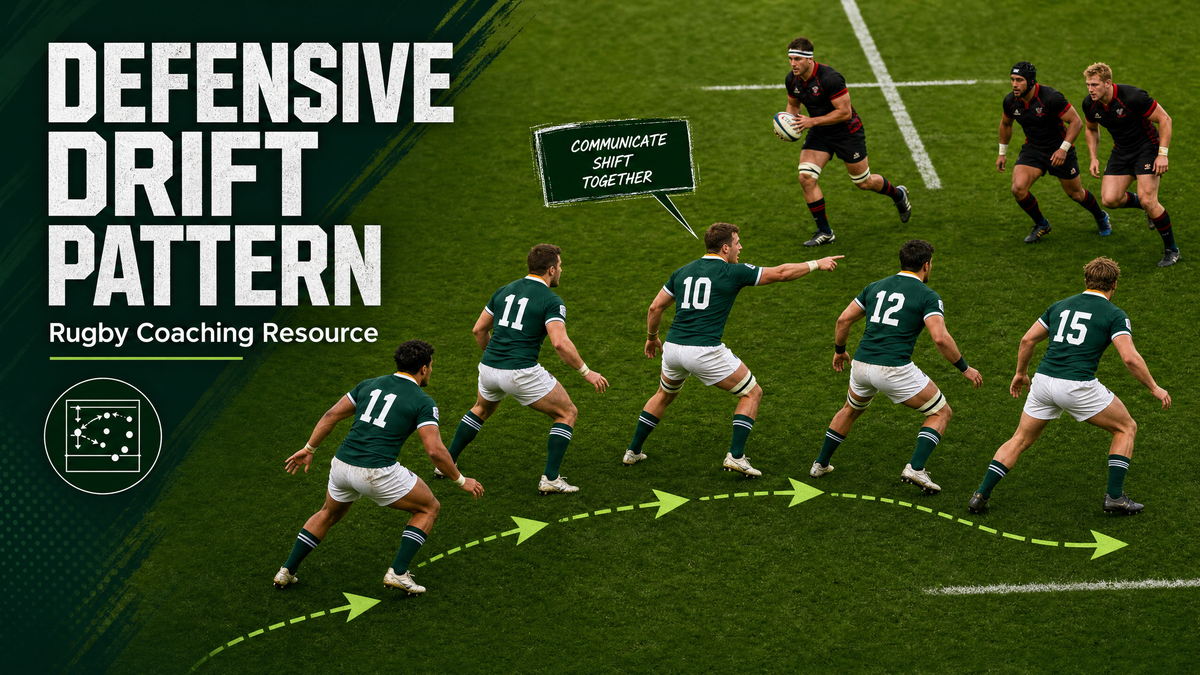
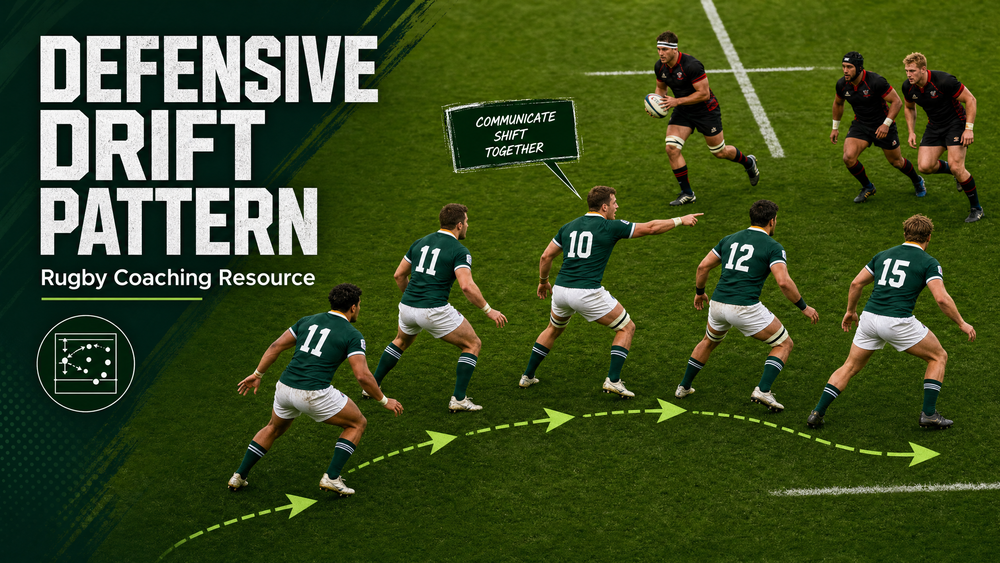
What you need
10-12 Cones, 2-3 Rugby balls, Bibs (2 colors)
1. Overview
The Defensive Drift Pattern is a foundational defensive system in modern Rugby. This drill is designed to teach players how to maintain a cohesive defensive line while shifting laterally across the pitch. The primary goal of the drift defense is to use the touchline as an extra defender, forcing the attacking team wide and shutting down potential overlaps by shifting the defensive numbers across.
This drill is essential when facing an attacking team that uses width effectively or when the defense finds itself temporarily outnumbered in the wide channels.
2. Setup
Equipment Needed
- 10-12 Cones (preferably two different colors)
- 2-3 Rugby balls
- Bibs for attackers and defenders
Pitch Setup
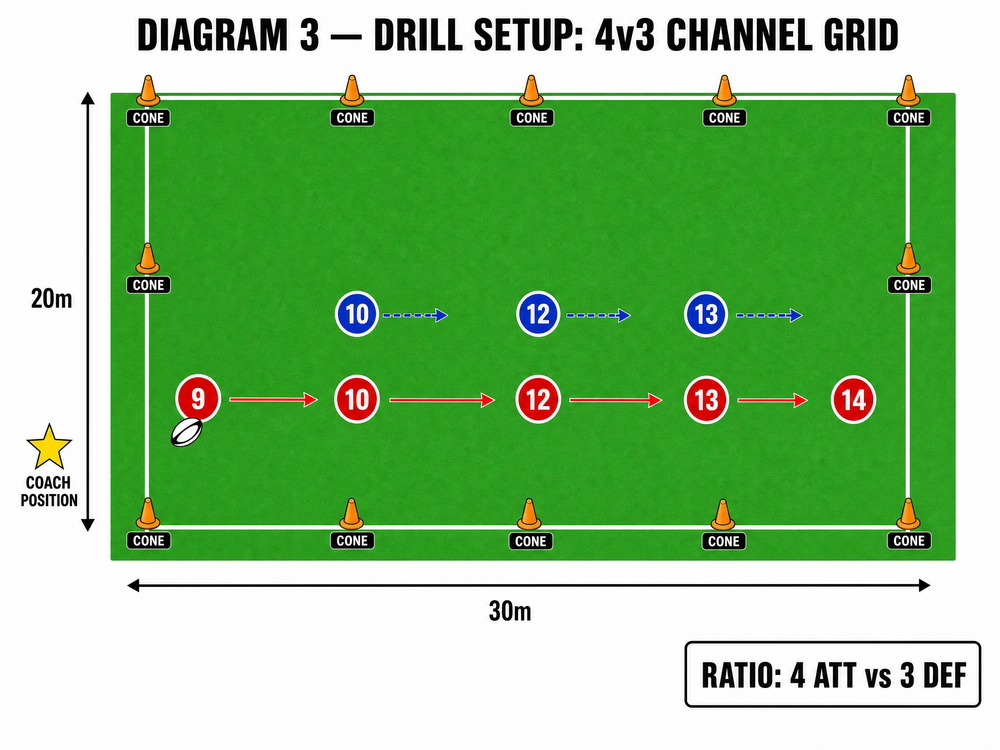
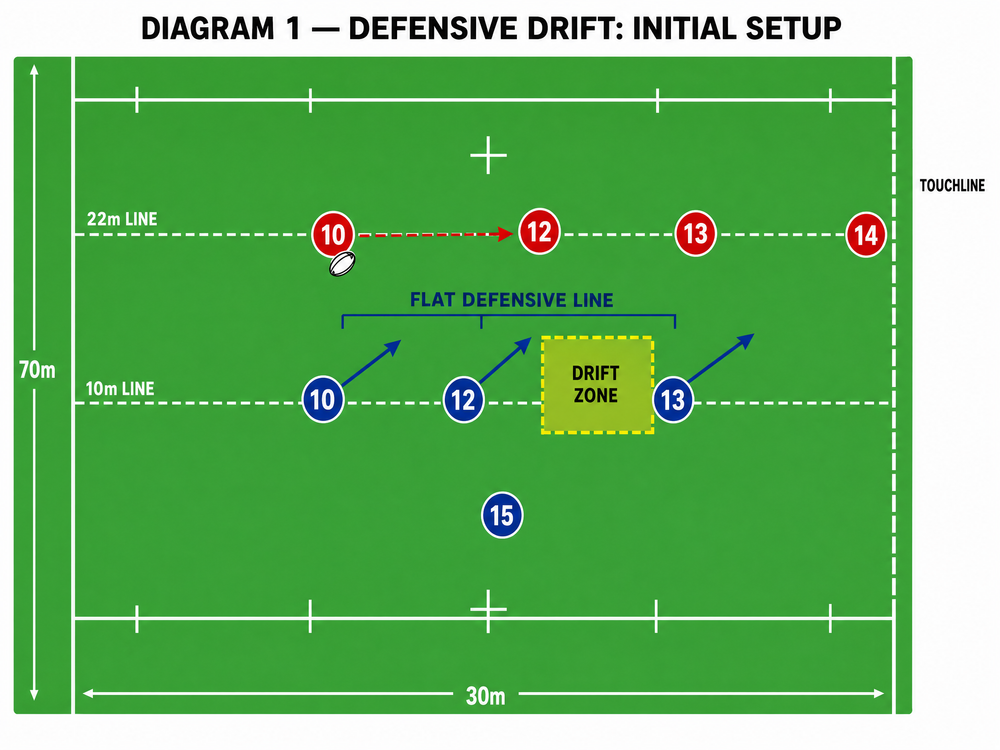
Set up a rectangular grid measuring 30m wide by 20m deep. Use cones to mark the corners and the halfway point along the touchlines. This represents a wide channel on a full 100m x 70m pitch.
Player Positions
- Attackers (Red): 4 players positioned on one side of the grid. Standard alignment: Scrum-half (9), Fly-half (10), Inside Centre (12), Outside Centre (13).
- Defenders (Blue): 3 players positioned 5 metres opposite the attackers. They start slightly inside their opposite numbers to invite the pass wide.
3. Step-by-Step Instructions
- Starting Position: The attacking team lines up with the ball at the 9 position. The defensive line starts 5 metres back, flat and connected.
- Initiation: The coach blows the whistle. The 9 passes to the 10, initiating the attack.
- Initial Line Speed: The defense must immediately press up together. The key is to move forward first to cut down the attacker's time and space.
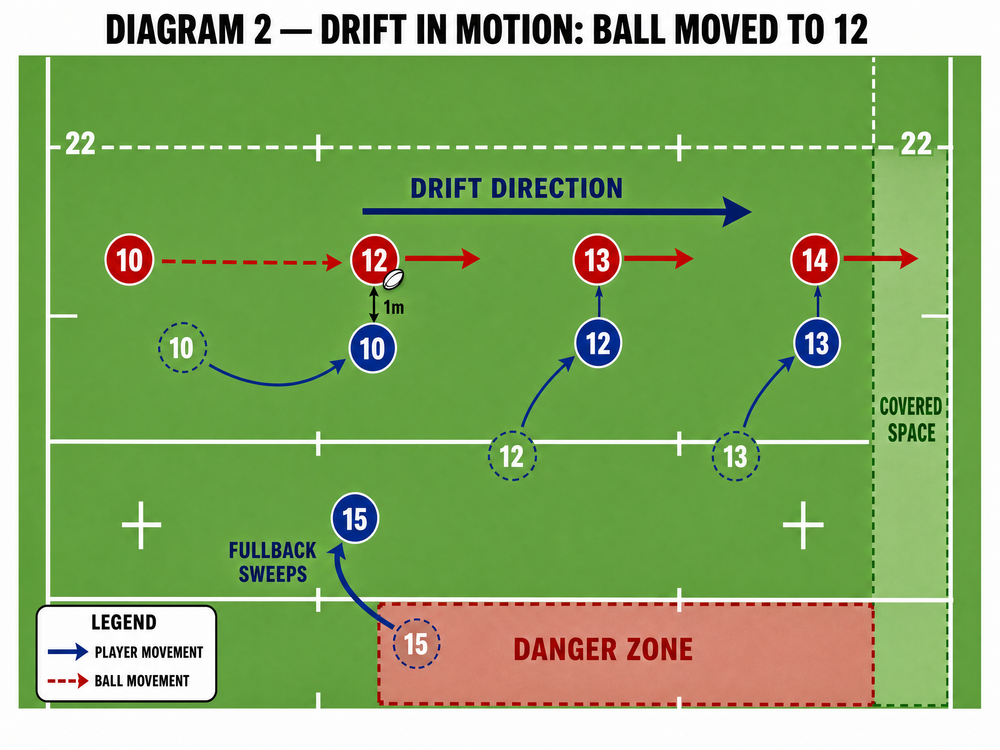
- The Drift: As the ball moves from the 10 to the 12, the defense stops pressing vertically and begins to drift laterally (towards the touchline).
- Passing on the Attacker: The defensive 10 pushes the attacking 10 to the defensive 12. The defensive 10 then drifts to cover the attacking 12, and so on down the line.
- Closing the Space: The defenders must maintain their spacing (about 2-3 metres apart) and keep their shoulders square to the opposition as long as possible before turning their hips to drift.
- The Tackle/Touch: The drill ends when a defender makes a two-handed touch (or tackle, if full contact) on the ball carrier, or if the attackers score by crossing the far line.
4. Key Coaching Points
- Up Then Out: Defenders must press forward first before drifting. Drifting immediately surrenders the gain line.
- Shoulders Square: Keep shoulders pointing up the pitch as long as possible. Turning shoulders to the touchline too early creates gaps for step-backs.
- Communication: The outside defender dictates the drift. They must call "Push!" or "Drift!" loudly to guide the inside players.
- Trust the Inside: Defenders must trust that the player inside them will cover the space they are vacating. Do not bite back in.
- Use the Touchline: The ultimate goal is to herd the ball carrier toward the touchline, reducing their options.
5. Common Mistakes
- Dog-Legging: When one player presses up too fast or drifts too slowly, creating a disjointed line that attackers can step through.
- Biting In: A defender gets fixated on the ball carrier and steps inward, abandoning the drift and leaving the outside wide open.
- Drifting Too Early: Giving up the gain line immediately, allowing the attack to build momentum and dictate the play.
- Poor Spacing: Defenders bunching up, which defeats the purpose of the drift and leaves the wide channel exposed.
6. Variations & Progressions
- Add a Fullback: Introduce a fullback (15) behind the defensive line. The fullback sweeps behind to cover any kicks or line breaks, allowing the front line to drift more aggressively.
- Overload Attack: Increase the ratio to 5 attackers vs 3 defenders to force the defense to work harder on their drift speed and communication.
- Live Contact: Progress from two-handed touch to full contact tackles once the movement pattern is understood.
7. Age Adaptations
- Under 10s: Focus purely on the concept of moving together. Use a smaller grid (20m x 15m) and emphasize "staying in a chain."
- Under 14s: Introduce the concept of "Up Then Out." Demand louder communication and better shoulder positioning.
- Open/Seniors: Run at full speed with complex attacking lines (e.g., dummy runners, wrap-arounds) to test the defense's decision-making under pressure.
