

Football
Defensive Shape Transition: Beating the High Press
Master the art of absorbing high pressure and rapidly transitioning from a mid-block to a compact low-block before launching a devastating counter-attack.
What you need
1 full-size goal, 2 mini-goals, Bibs (2 colours), Footballs, Cones (for pitch markings if scaling down)
1. Overview
Modern football demands tactical flexibility, particularly when facing aggressive high-pressing opponents. This set play focuses on the critical moments when your team is pressed in their own half. The objective is not just to survive the pressure, but to draw the opponent in, absorb their press by transitioning into a compact defensive shape, and exploit the space they leave behind upon winning the ball.
This drill teaches players how to recognize pressing triggers, drop into a unified 4-5-1 low block to deny central penetration, and immediately execute a counter-press trigger to transition into a rapid attack.
2. Setup
- Pitch Dimensions: Full pitch (100-110m x 64-75m) or a scaled-down 3/4 pitch depending on age group.
- Equipment: 1 full-size goal, 2 mini-goals (placed on the halfway line), bibs (Blue for defending team, Red for pressing team), plenty of footballs.
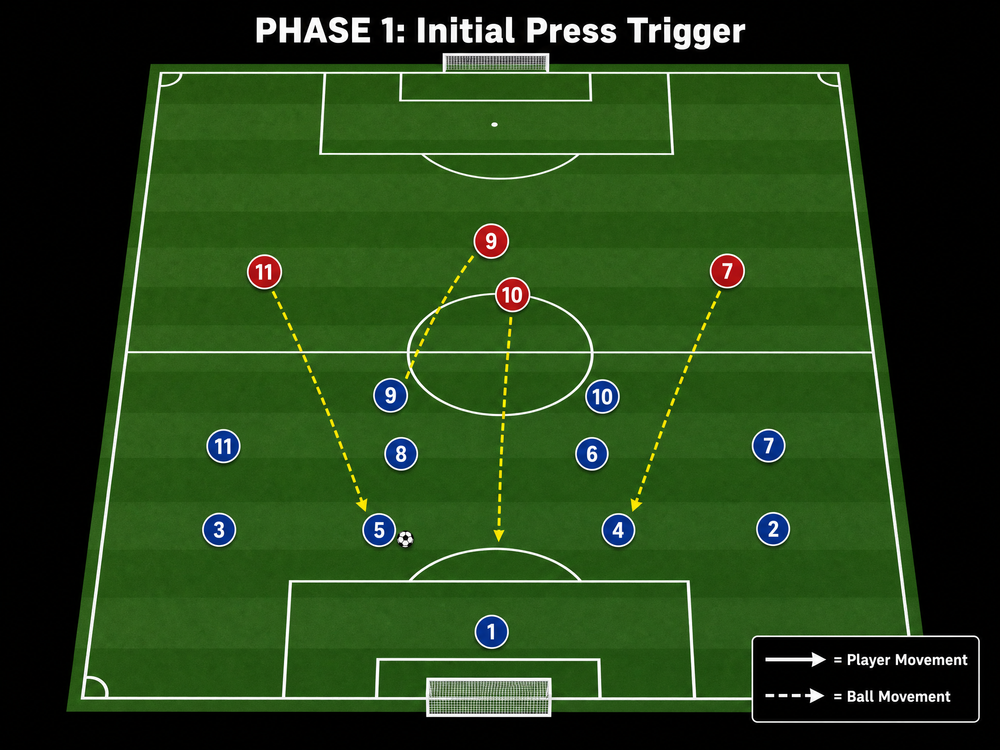
- Player Positions: Defending team (Blue) sets up in a 4-4-2 formation. Pressing team (Red) sets up with a front four (ST, AM, LM, RM) and supporting midfielders.
3. Step-by-Step Instructions
Phase 1: Initial Press Trigger
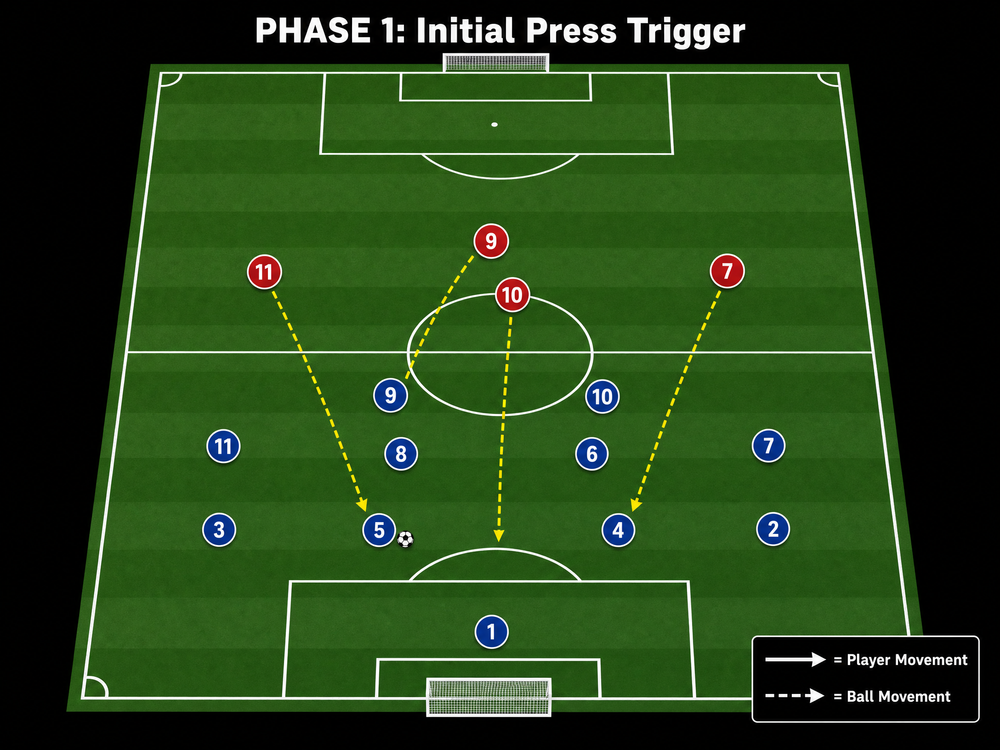
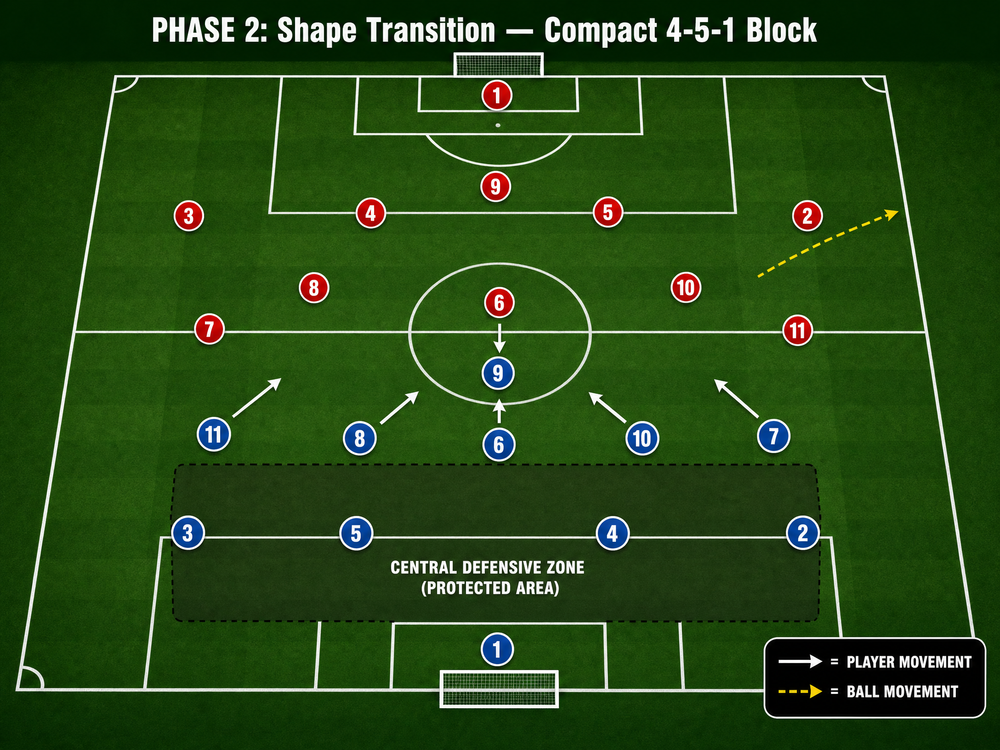
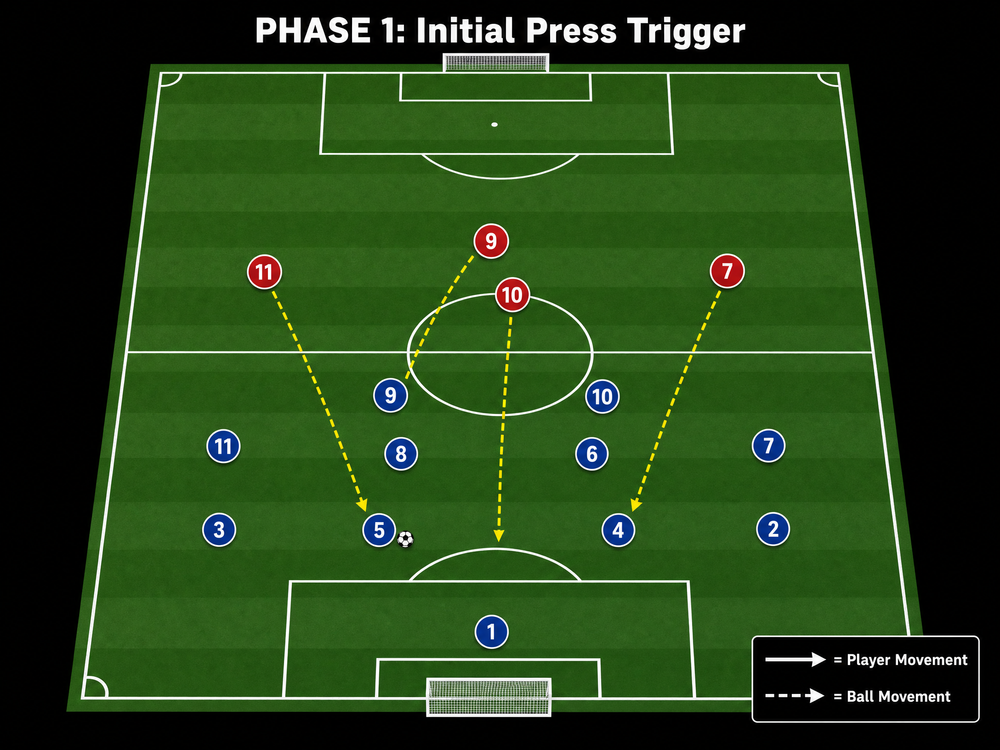
- Starting Position: The Blue team starts in a 4-4-2 mid-block. The ball is fed to one of the Blue centre-backs (4 or 5) by the coach to initiate play.
- The Press: The Red team's front line (9, 10, 7, 11) immediately initiates a high press, aggressively closing down the Blue centre-backs and full-backs.
- Recognition: The Blue team must recognize the intensity of the press. If forward passing options are blocked, the trigger is activated to transition shape rather than force a risky pass.
Phase 2: Shape Transition — Compact 4-5-1 Block
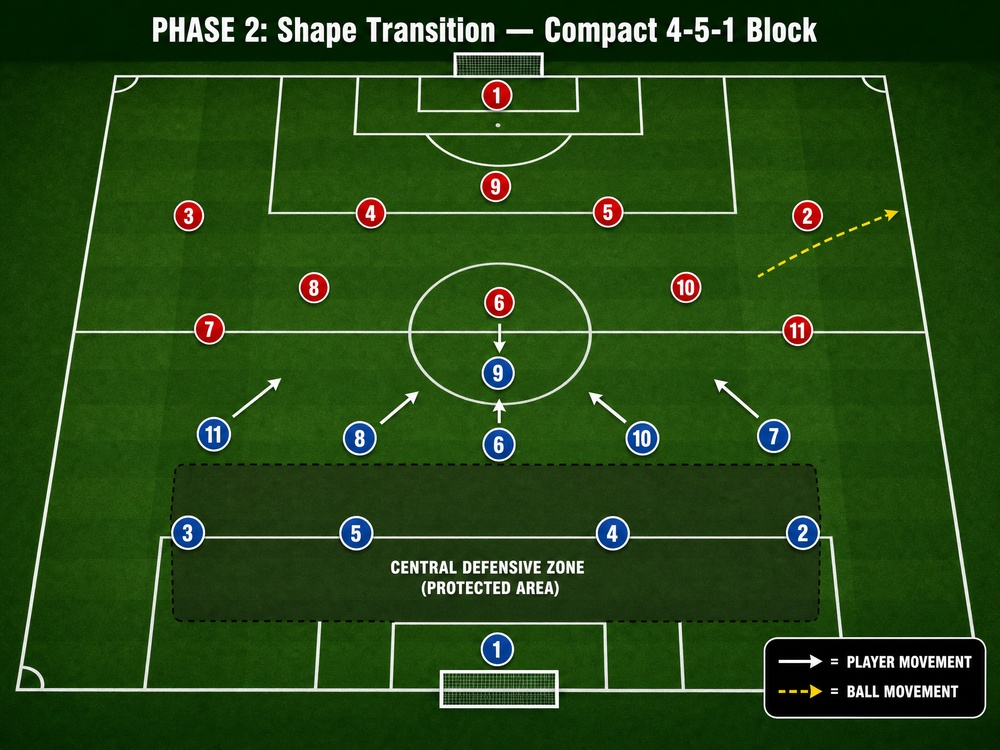
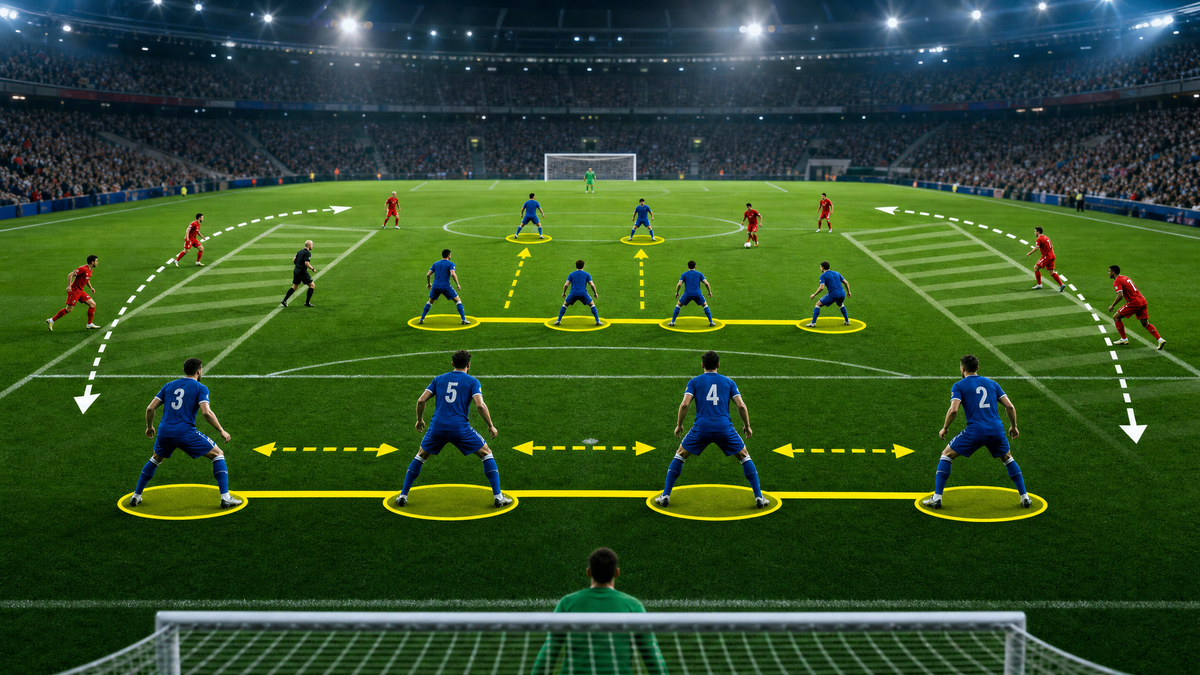
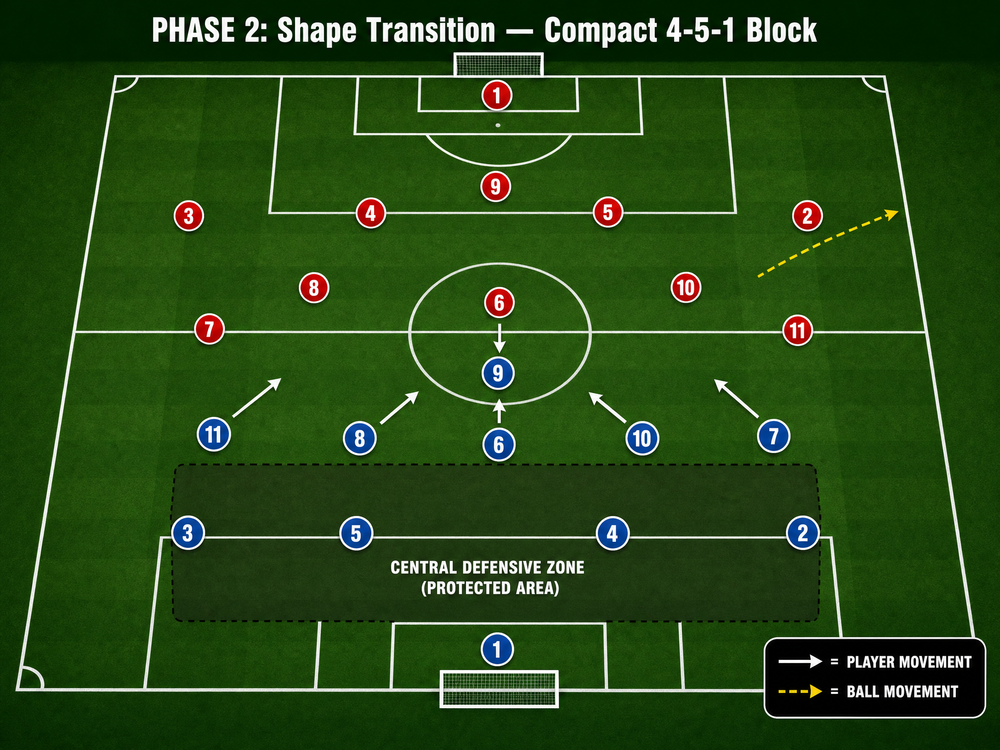
- Dropping Deep: The Blue back four (2, 4, 5, 3) drops 10-15 metres deeper, narrowing the gaps between them to protect the central defensive zone.
- Midfield Compaction: One of the Blue strikers (9) drops into the midfield line, while the wingers (7, 11) tuck inside. The team morphs into a compact 4-5-1 low block.
- Forcing Wide: The objective of this compact shape is to deny central penetration and force the Red team to play the ball out wide into less dangerous areas.
Phase 3: Counter-Press Trigger & Transition to Attack
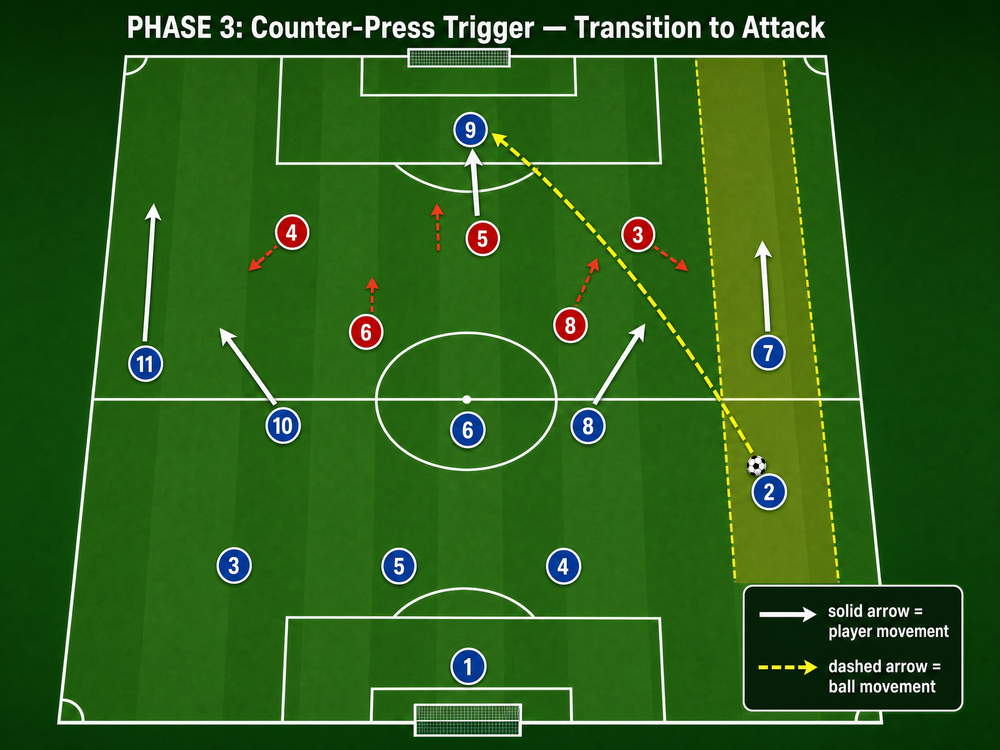
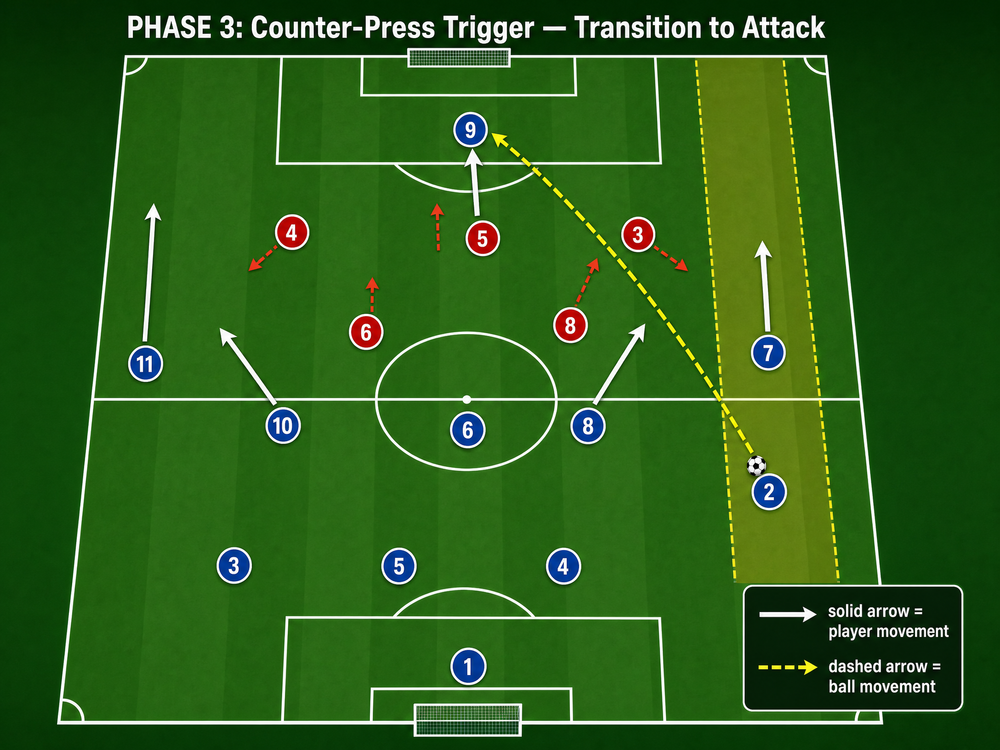
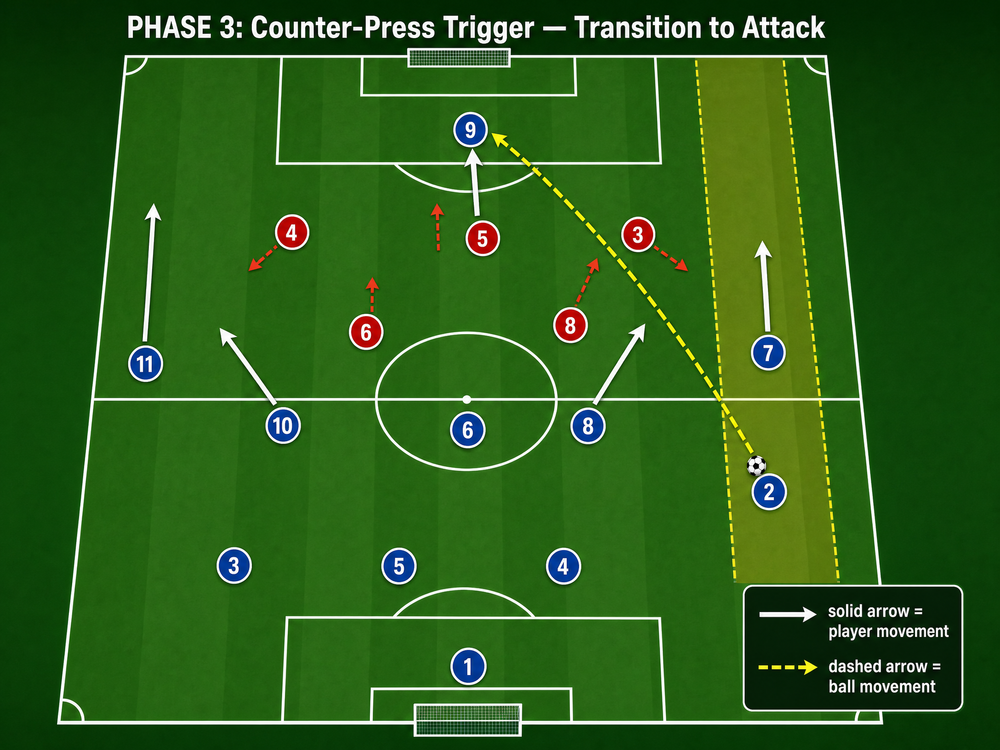
- The Trap: As the Red team plays the ball wide (e.g., to their Right Back), the Blue team uses the touchline as an extra defender. The Blue full-back (2) and winger (7) aggressively engage to win the ball.
- Immediate Transition: Upon winning possession, the Blue team immediately transitions to attack. The ball winner looks for a quick forward pass.
- Exploiting Space: The remaining Blue striker (9) makes a darting run in behind the Red defensive line, while the opposite winger (11) and central midfielders (8, 10) sprint forward to support the counter-attack, exploiting the space vacated by the pressing team.
4. Key Coaching Points
- Communication: Constant talking is required. The centre-backs must dictate the height of the defensive line.
- Compactness: The distance between the defensive line and the midfield line should be no more than 10-12 metres during the low block phase.
- Patience: Players must remain disciplined and not break shape prematurely. Wait for the opponent to play the predictable wide pass.
- Explosive Transition: The moment the ball is won, the mindset must instantly switch from defensive solidity to aggressive forward movement. The first pass after winning the ball should ideally be forward.
5. Common Mistakes
- Dropping Too Early: Retreating before the press is fully committed, allowing the opponent to advance without pressure.
- Lack of Central Density: Midfielders failing to tuck in, leaving passing lanes open through the middle.
- Hesitation on Turnover: Winning the ball but playing safe backward passes instead of immediately looking to exploit the counter-attack.
- Isolating the Striker: The lone striker remaining too high during the defensive phase, making it impossible to connect with the midfield upon winning the ball.
6. Variations & Progressions
- Progression 1 (Overload): Add an extra attacking player to the Red team to increase the difficulty of the defensive phase.
- Progression 2 (Time Limit): Give the Blue team exactly 8 seconds to score in the mini-goals after winning possession to emphasize rapid transition.
- Variation (Different Triggers): Change the pressing trigger. Instead of a pass to the CB, initiate the drill from a wide throw-in or a goal kick.
7. Age Adaptations
- Under 10 - Under 12: Focus heavily on the basic shape and communication. Reduce pitch size and play 7v7 or 9v9. Emphasize the concept of 'getting compact' without strict positional rigidity.
- Under 14 - Under 16: Introduce the specific positional transitions (e.g., the striker dropping in). Focus on the speed of the counter-attack and the quality of the first forward pass.
- Open/Senior: Demand tactical perfection. Focus on micro-movements, body shape when receiving under pressure, and exploiting specific zones during the counter-attack.
