

Football
Defensive Shape Transition Play When Pressed
Master the art of escaping high pressure and launching devastating counter-attacks using third-man combinations and compact defensive structures.
What you need
Full-size goals, Cones, Bibs, Footballs
1. Overview
This tactical set play is designed to solve one of the most common challenges in modern football: escaping a high, aggressive press while maintaining a structured defensive shape. The Defensive Shape Transition Play When Pressed focuses on drawing the opposition forward into a pressing trap, utilizing third-man combinations to bypass the first line of pressure, and immediately exploiting the vacated space behind the pressing team.
This routine is particularly effective against teams that employ a man-to-man high press or a heavy ball-oriented counter-press. By rehearsing these specific transition triggers, your team will develop the composure to play through pressure rather than clearing the ball aimlessly, turning defensive vulnerability into a potent attacking weapon.
2. Setup
- Pitch Area: Full pitch or minimum 80m x 60m area for realistic spacing.
- Players Required: 11v11 (can be adapted to 8v8 or 9v9 for younger age groups).
- Equipment:
- Full-size goals (2)
- Cones or flat markers to define the 'Press Trigger Zone' (middle third)
- Bibs in two contrasting colours (e.g., Red for defending/transitioning team, Blue for pressing team)
- Adequate supply of footballs placed in the goals or with the coach on the touchline.
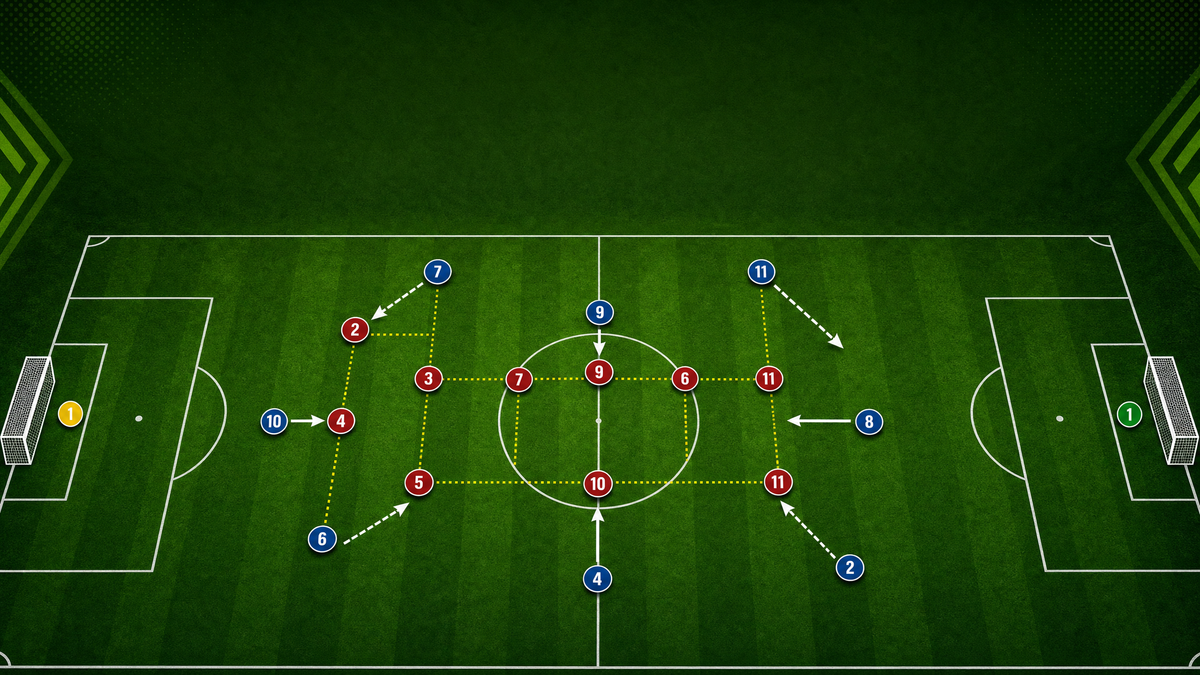
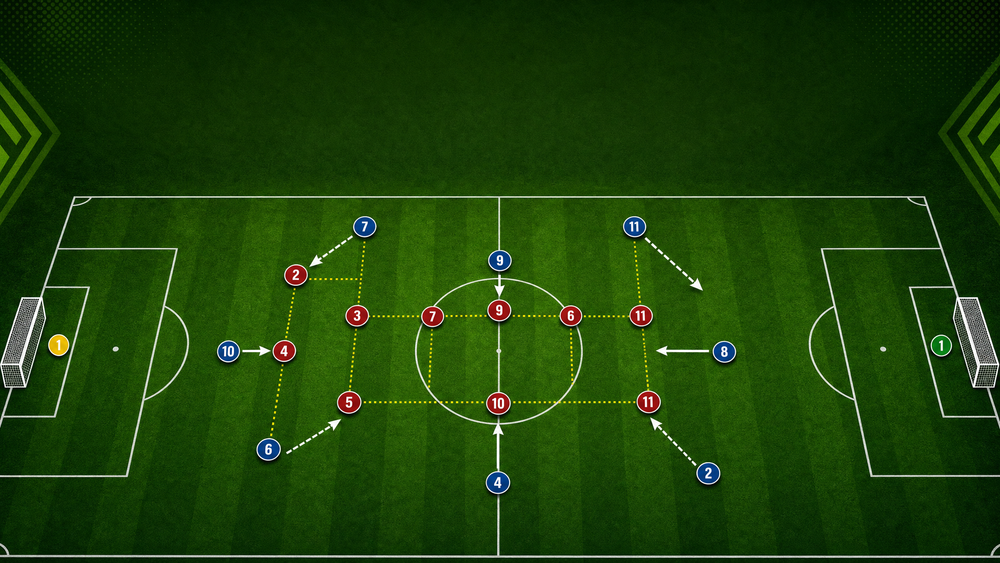
Initial Shape: The team in possession (Red) sets up in a compact 4-4-2 mid-block shape in their defensive half. The pressing team (Blue) starts in an attacking shape, ready to initiate a high press.
3. Step-by-Step Instructions
Phase 1: The Press Trigger
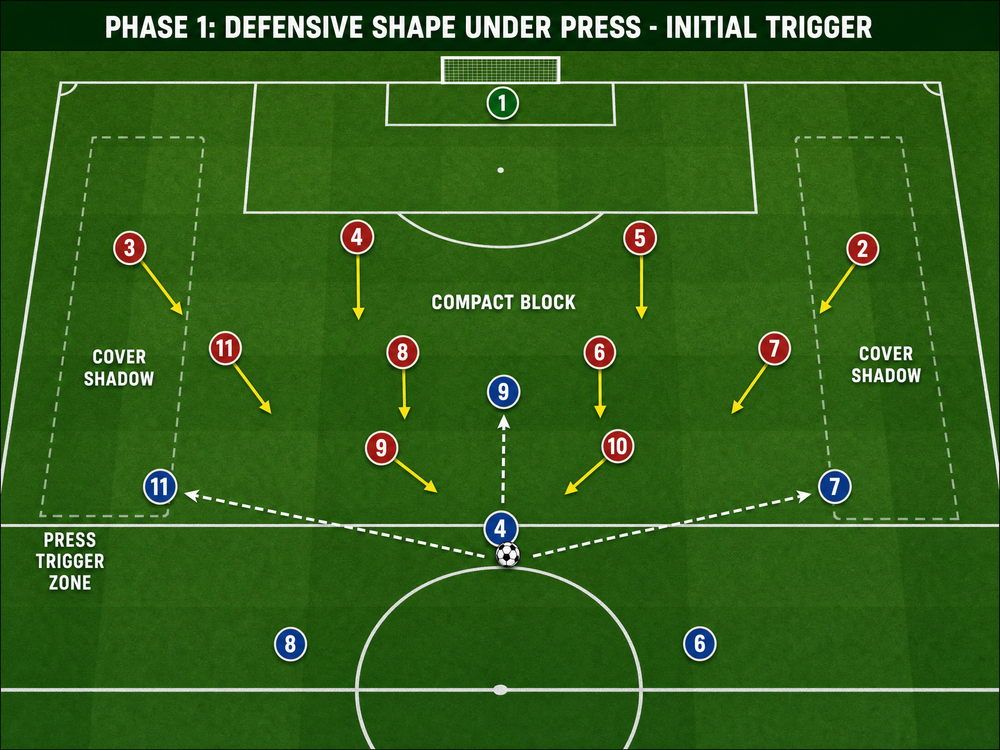
- Initiation: The drill begins with the Red Goalkeeper (1) in possession. The Blue team pushes high, attempting to lock the Red team into their defensive third.
- Baiting the Press: The Red Goalkeeper plays a short, deliberate pass to a Centre Back (4 or 5) who has dropped deep alongside the penalty area. This pass acts as the trigger for the Blue team to sprint forward and engage the press.
- Maintaining Compactness: As the Centre Back receives the ball, the rest of the Red team must maintain a compact shape. The fullbacks (2 and 3) stay relatively narrow to provide close passing options, avoiding the temptation to push too high too early.
Phase 2: Third-Man Escape Combination
- The Dropping Midfielder: Recognizing the pressure on the Centre Back, the ball-side Central Midfielder (8) drops quickly into the space between the pressing lines, creating a passing angle.
- The Bounce Pass: The Centre Back plays a firm, disguised pass into the feet of the dropping Central Midfielder (8).
- The Third-Man Run: Crucially, as the ball travels to the Central Midfielder, the opposite Central Midfielder (6) makes a forward run into the space vacated by the pressing opposition. The dropping Midfielder (8) plays a first-time 'bounce' pass or lay-off into the path of the advancing Midfielder (6). This third-man combination effectively bypasses the initial wave of pressure.
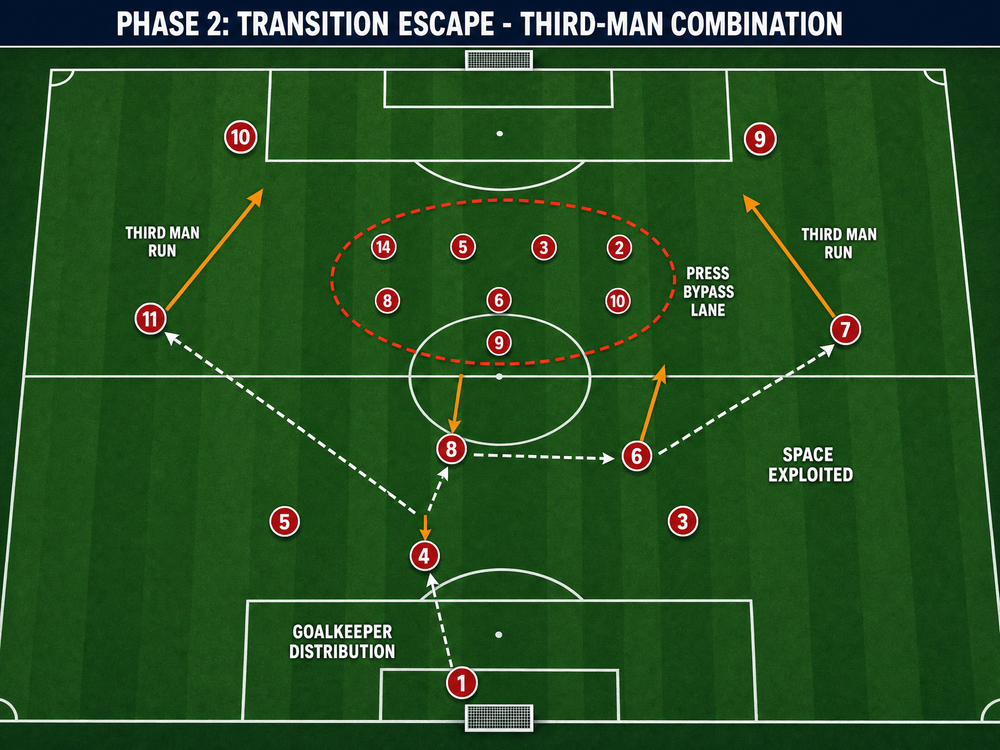
Phase 3: Exploiting the Space
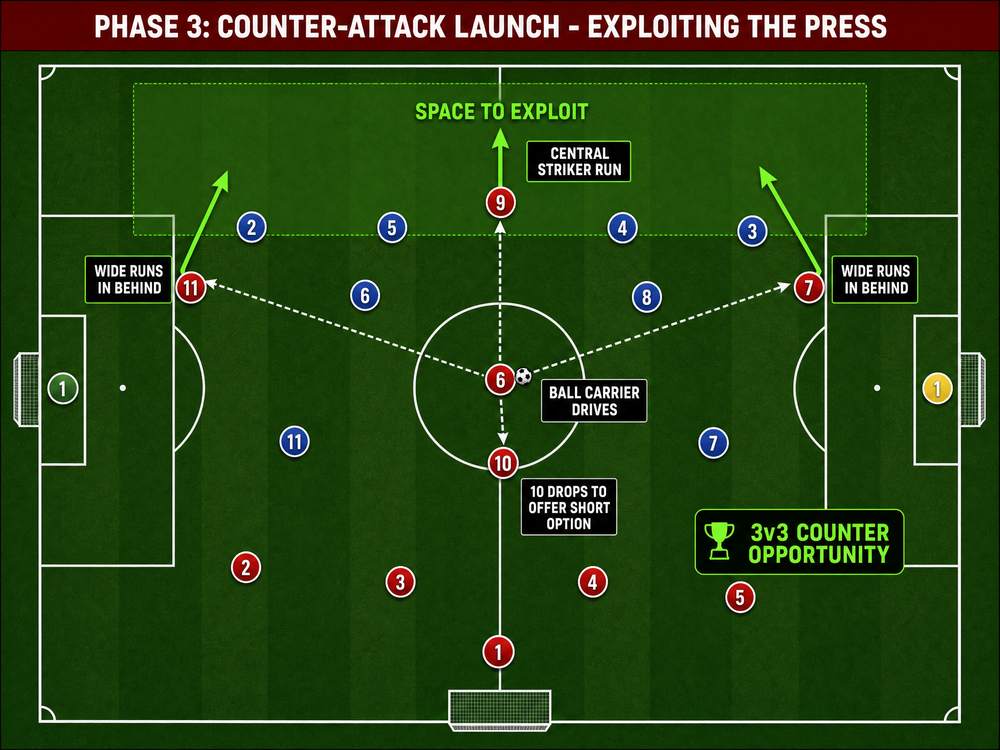
- Breaking the Lines: The advancing Central Midfielder (6) receives the ball facing forward and immediately drives into the open space in the middle third.
- Wide Diagonal Runs: As the Midfielder drives forward, the Wide Midfielders (7 and 11) make explosive diagonal runs from out to in, aiming for the space behind the opposition's high defensive line.
- Striker Movement: The Strikers operate in tandem. One striker (10) drops slightly to offer a short, central option, while the other striker (9) makes a penetrating run in behind, pinning the opposition centre-backs.
- The Final Pass: The ball carrier (6) assesses the options and plays a decisive through ball to either a wide runner or the penetrating striker, launching a rapid counter-attack against a disorganized defense.
4. Key Coaching Points
- Composure on the Ball: The Goalkeeper and Centre Backs must exhibit extreme composure. The goal is to invite pressure, not panic under it. Body shape must remain open.
- Timing of the Drop: The Central Midfielder (8) must time their dropping movement perfectly—not too early (which brings a marker with them) and not too late (which leaves the CB isolated).
- Weight and Accuracy of the Pass: The pass from the CB to the dropping CM must be firm and to the correct foot (the foot furthest from pressure) to allow for a first-time lay-off.
- Third-Man Awareness: The success of this play hinges on the third man (CM 6) anticipating the combination and already being on the move before the lay-off is played.
- Immediate Verticality: Once the press is broken, the mindset must instantly switch to vertical, attacking play. Wide players must sprint to exploit the space behind the high line.
5. Common Mistakes
- Clearing the Ball Under Pressure: Players panicking and hitting long, aimless clearances instead of trusting the combination play.
- Fullbacks Pushing Too High Early: Fullbacks vacating their defensive positions too early, removing short passing options and isolating the Centre Backs.
- Static Third Man: The advancing midfielder waiting for the lay-off to happen before making their run, allowing the defense time to recover and intercept.
- Poor Body Orientation: The dropping midfielder receiving the ball square or facing their own goal, making the lay-off difficult or impossible.
6. Variations & Progressions
- Progression 1: Add a Time Limit: Once the Goalkeeper plays the initial pass, the Red team has 8 seconds to cross the halfway line, emphasizing speed in transition.
- Progression 2: Live Transition: Allow the Blue team to win the ball and immediately counter-attack, forcing the Red team to practice defensive transition if the escape fails.
- Variation 1: Wide Escape: If the central area is completely blocked, adapt the play so the Centre Back plays to the Fullback, who then combines with the dropping Wide Midfielder to escape down the flank.
7. Age Adaptations
- Under 10s / Under 12s: Focus heavily on the technical execution of the passes (weight, accuracy) and the basic concept of passing to a teammate who is facing forward. Reduce the number of pressing players to ensure success.
- Under 14s / Under 16s: Introduce the specific tactical terminology (third-man run, cover shadow). Increase the intensity of the press and demand quicker decision-making.
- Open / Senior: Execute the drill at full match speed. Introduce complex pressing triggers for the opposition (e.g., pressing on a specific trigger word or pass) to challenge the transitioning team's adaptability.
