

Netball
Defensive Centre-Pass Press: Force the Wide Ball
A coach-ready defensive centre-pass press that denies the short middle option, forces a predictable wide release, and builds a legal interception opportunity.
What you need
2 regulation netballs, Defensive and attacking bib sets, 12 flat cones, Whistle, Stopwatch
Overview
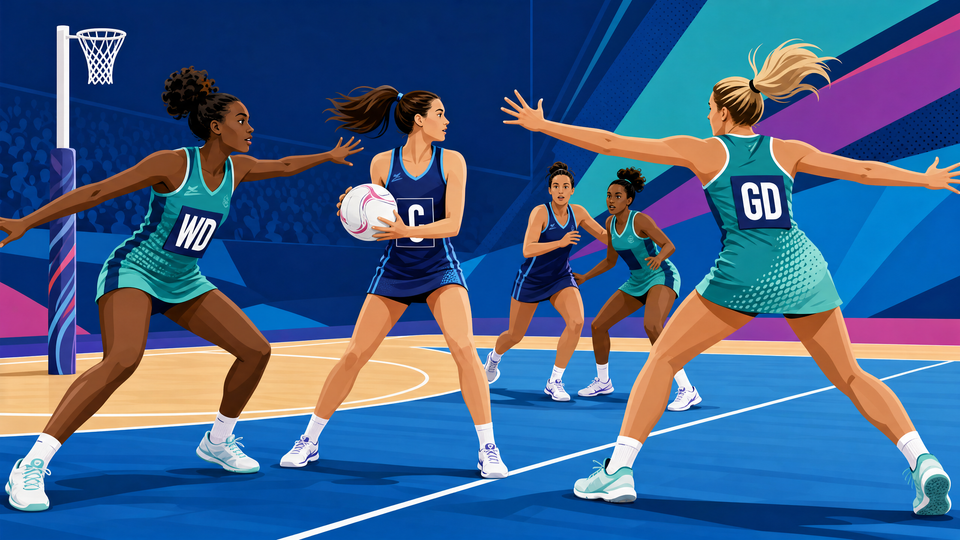
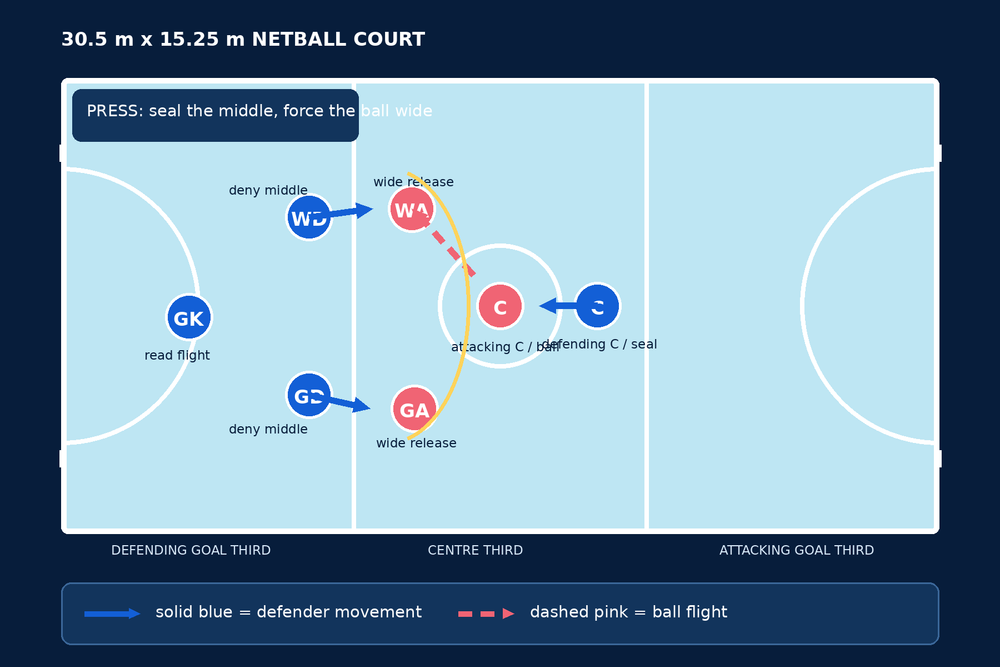
This Defensive Centre-Pass Press is a coordinated first-phase defensive call for use when the opposition has centre pass. Its job is not to chase a miracle intercept at the first whistle; its job is to remove the easy short connection, make the attacking Centre (C) hold the ball, and channel the first pass towards a predictable wide release. Once the ball has been shown wide, the defending Centre (C), Wing Defence (WD), Goal Defence (GD), and Goal Keeper (GK) can hunt the next pass with shape rather than panic.
Use the call against an opposition that starts with a familiar WA drive, leans heavily on a dominant C, or becomes rushed under sustained pressure. It is most useful after a goal, at the start of a quarter, or when your team needs to change the rhythm without gambling every defender out of position. The press is also a teaching tool: it makes players talk, hold their channel, and understand that a forced long pass is a defensive win even if no immediate turnover follows.
Coach's non-negotiable: The press must be legal. Every defender keeps the prescribed 0.9 m distance when contesting the player with the ball, uses footwork rather than reaching, and recovers immediately if the first pass is completed. 1
Setup
| Item | Coaching setup |
|---|---|
| Court | Use a full standard court: 30.5 m long x 15.25 m wide, divided by transverse lines into three equal thirds. The centre circle is 0.9 m in diameter. 1 |
| Players | Start with 8 players: defensive C, WD, GD and GK; attacking C, WA, GA and GS; plus a feeder or rotating attacker. Build to 14 players for 7 v 7. |
| Equipment | 2 balls, bibs, 12 flat cones, whistle and a stopwatch. |
| Markers | Put two flat cones 1.5 m inside each sideline at the centre third to show the wide-release lanes. Place a third cone 2 m behind the defensive C to define the protected middle channel. Remove these before match rehearsal. |
| Timing | Allow 16 minutes: 3 minutes for walk-through, 6 minutes for opposed repetitions, 5 minutes for live centre passes, and 2 minutes for review. |
Use the normal position names on bibs. For the teaching sequence, call the defensive responsibilities 1: C (middle seal), 2: WD (WA denial), 3: GD (GA denial), and 4: GK (flight reader). The attacking C takes the centre pass from within the centre circle; WA and GA must remain in their permitted areas. Keep the first two repetitions at 60 percent speed so the players can see the picture before they try to win it.
Starting shape and call
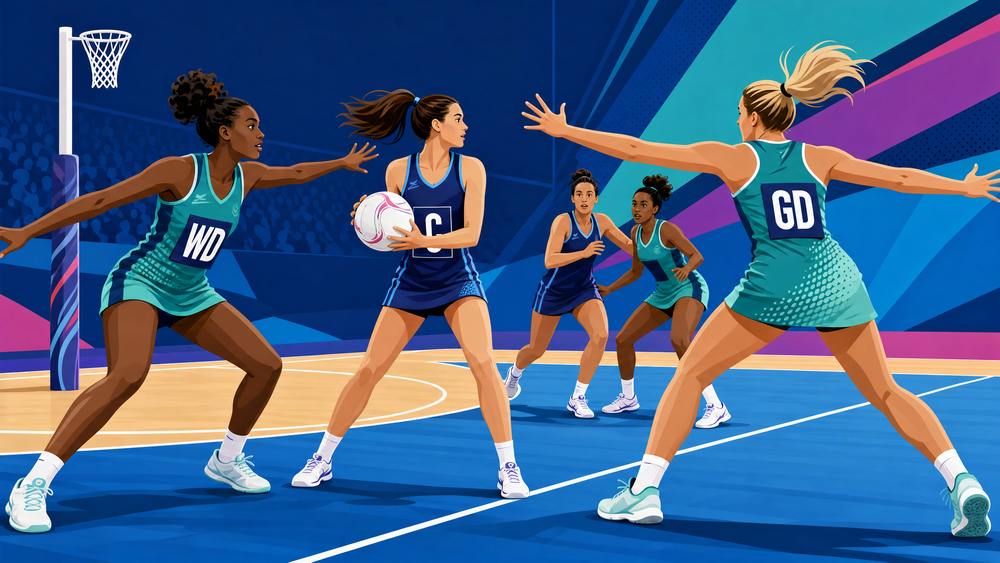
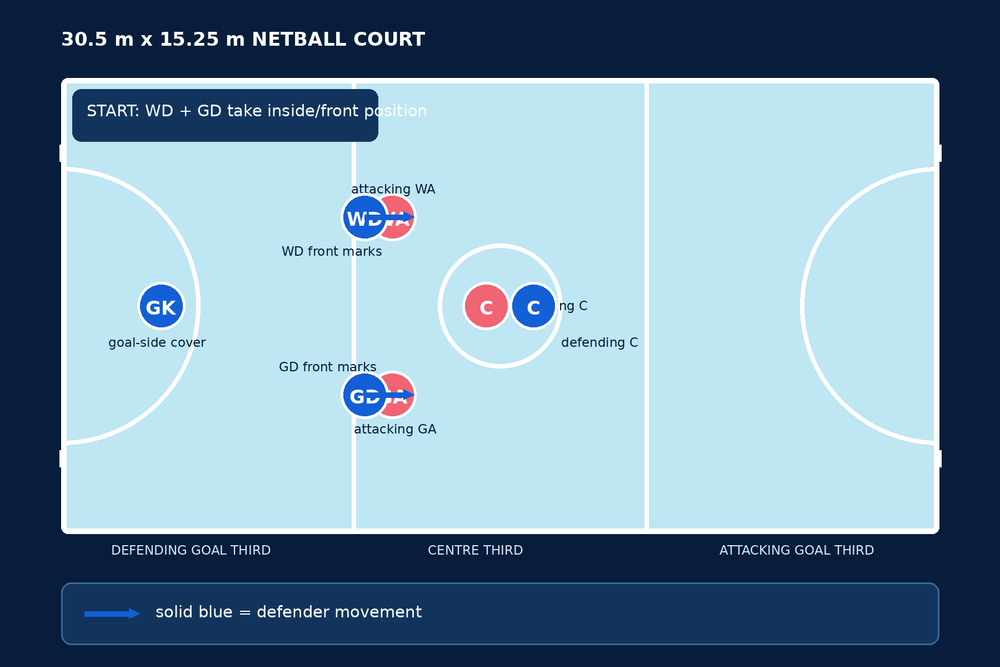
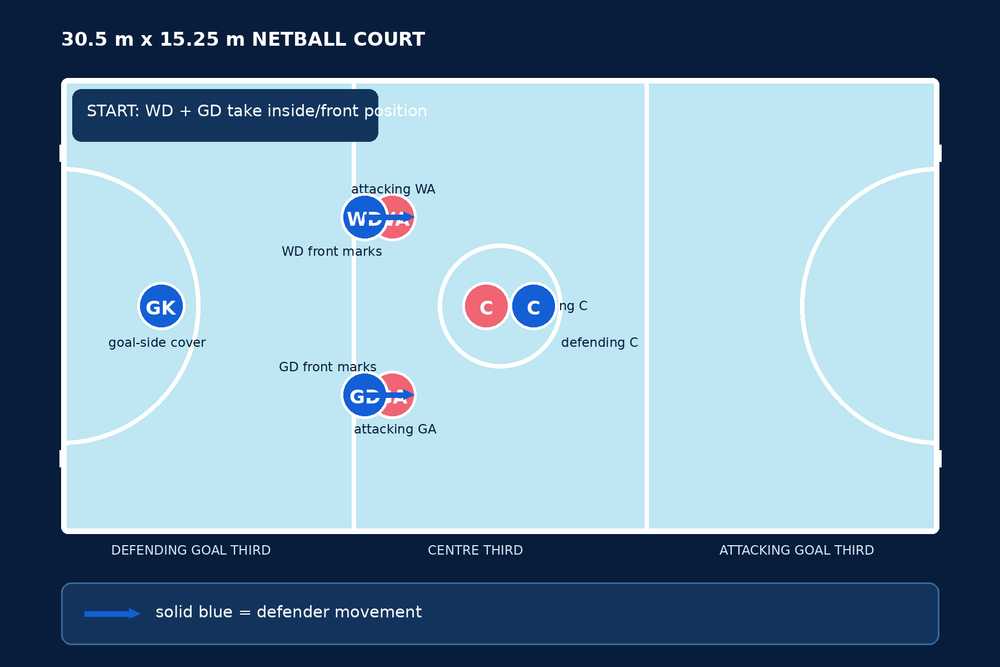
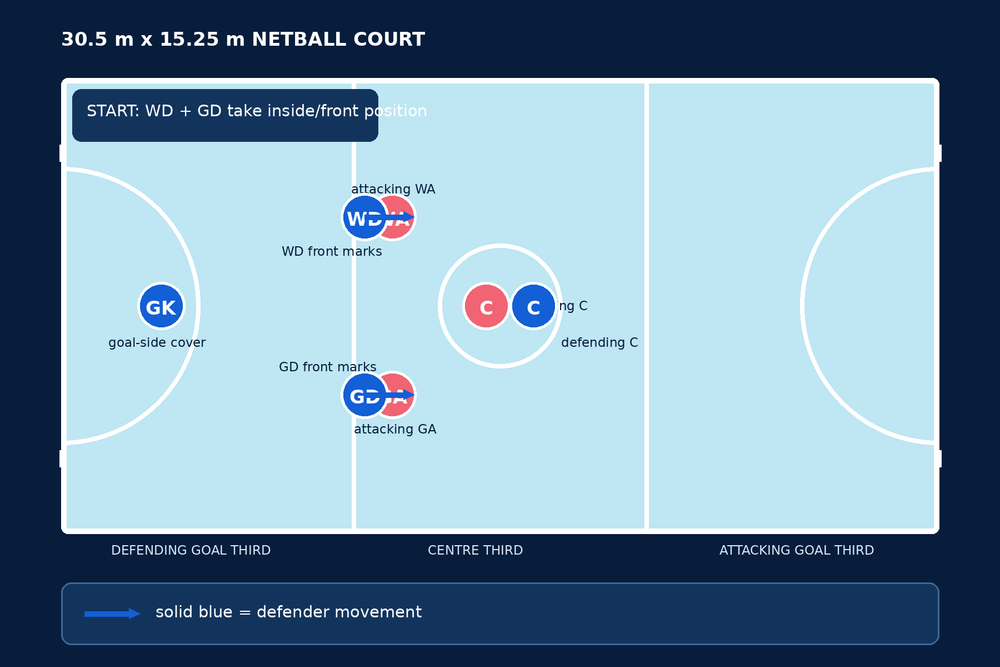
The defensive C begins just off the attacking C's preferred shoulder, level enough to protect the immediate middle ball but not so close that a simple dodge opens a free line. The WD starts goal-side and slightly inside the attacking WA, with hips open towards the ball. The GD mirrors that inside, goal-side position on the GA. The GK sits in the defending goal third, one step off the goal circle edge, able to see the C, the widest attacker, and the likely long-ball corridor.
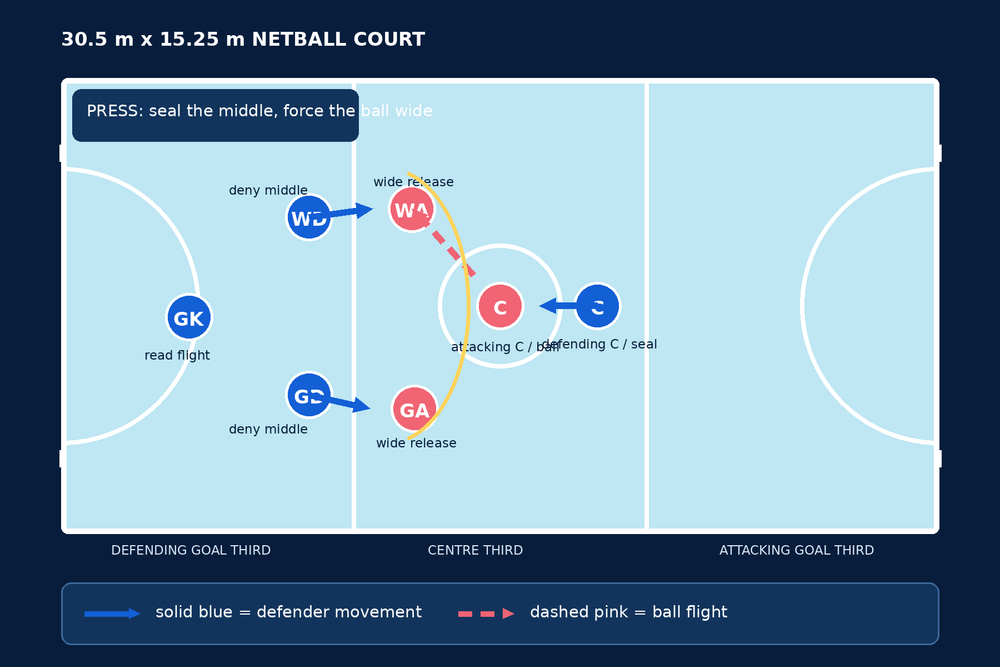
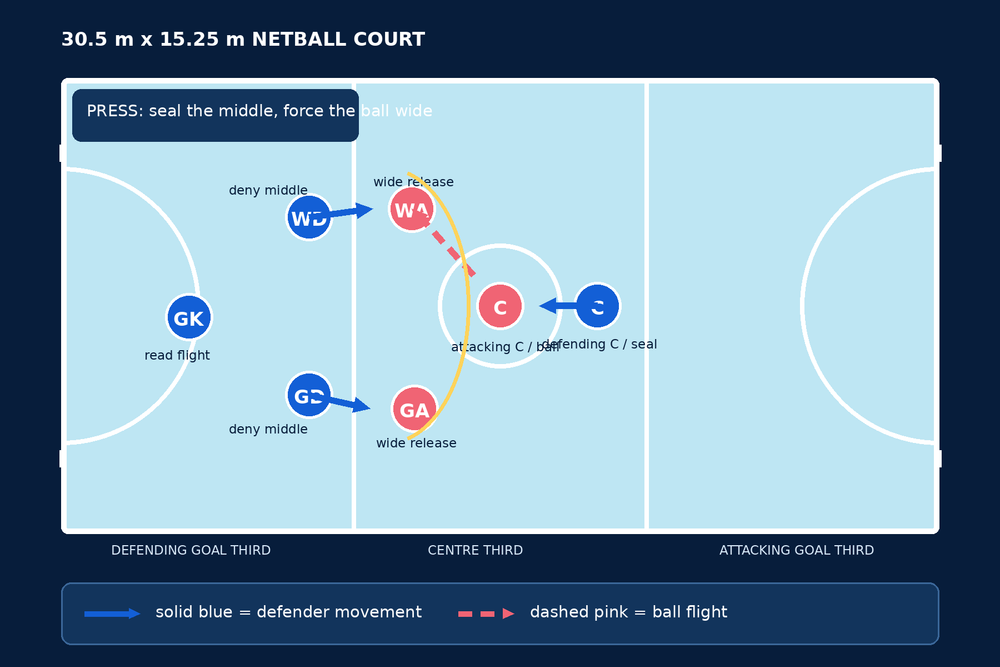
Use one concise team call such as “Press left” or “Press right.” The call tells every defender which sideline is the release side. Do not give three different verbal instructions at the whistle. The C repeats the call, the WD confirms it, and the GK gives the final early cue: “Hold middle.”
Step-by-Step Instructions
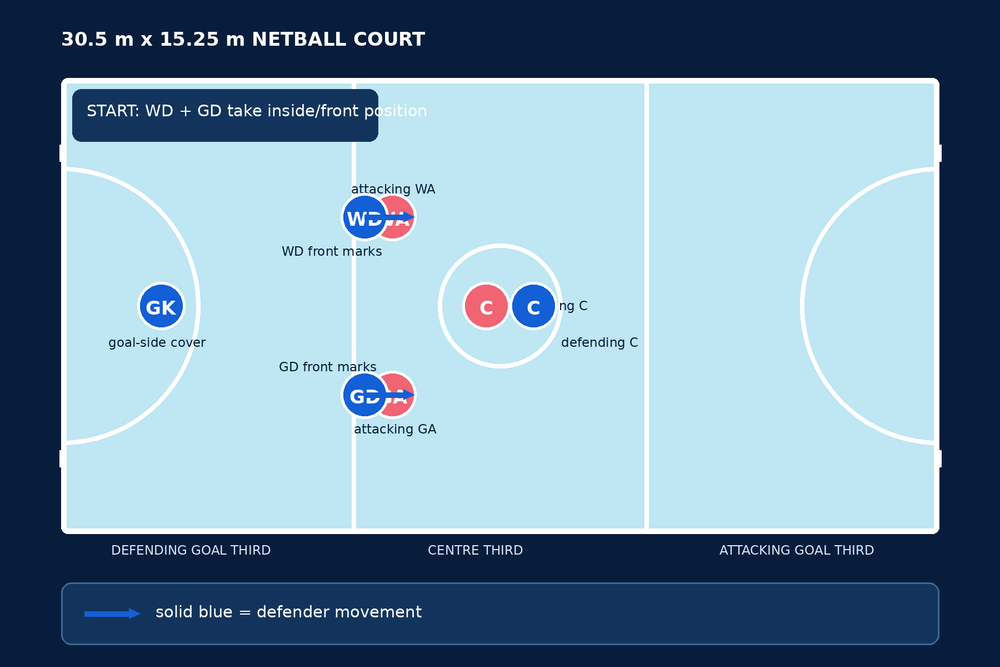
Set the release side before the whistle. Choose the side away from the opposition's strongest receiving option where possible. The defensive C shades the attacking C towards that side while showing a strong body line through the centre of the court. WD and GD take the inside route to their direct attackers; they should be close enough to deny a clean front cut, but legal and balanced.
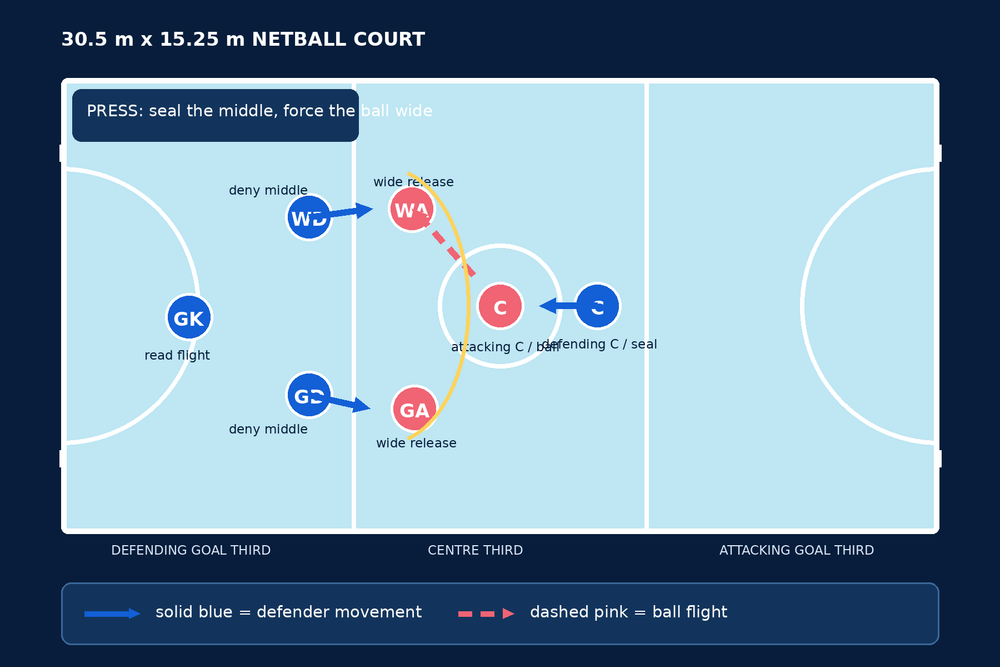
On the whistle, remove the straight line. The attacking C has three seconds to release the ball, so the first two defensive steps must be sharp and controlled. 1 The C closes the middle window without lunging. WD and GD move with the attackers' first step, staying between player and central space rather than chasing behind.
Keep the triangle connected. Imagine a triangle from WD to C to GD, with the C at the point nearest the ball. Each defender should be close enough to support the next contest while still owning a clear player or lane. If one defender is beaten, the nearest teammate fills the gap and the beaten defender sprints back inside.
Force the wide, high ball. Do not overplay both sides. The defender on the non-release side takes away the easy short option; the release-side defender tracks on the inside shoulder and shows the attacker towards the cone lane. The desired pass travels wide and long, not flat and through the middle. A looping pass gives GK and the recovering defender time to read its flight.
Hunt the second pass, not just the first. When the wide receiver catches, the close defender arrives under control with hands back and feet set at the legal distance. The C turns to take the return pass; GD or WD denies the next forward drive. GK reads the receiver's eyes and steps early only when the ball is actually released.
Recover if they beat the press. If the opposition completes a clean middle pass, call “Recover” immediately. WD and GD return to player responsibility, C picks up the next centre-third threat, and GK protects the circle. This recovery rule prevents the press becoming a free goal for the attack.
Reset and review one variable. Run four centre passes to the same side, then switch the release side. After each block, ask the group: Did we deny the short middle ball? Did the C hold the ball? Was the wide receiver forced to catch facing the sideline? Those are better measures than counting only intercepts.
Key Coaching Points
| Coaching focus | What to cue | What good looks like |
|---|---|---|
| First two steps | “Feet first; no reach.” | Defenders arrive balanced and can change direction. |
| Inside position | “Own the corridor.” | WD and GD keep attackers outside the direct C-to-middle line. |
| Body angle | “See player and ball.” | Hips are open enough to react to a drive and see the pass. |
| Connected pressure | “Triangle stays alive.” | C, WD and GD support one another rather than defending in isolated lanes. |
| Ball flight | “Read, then go.” | GK and intercepting defender commit after release, not before it. |
| Communication | “Press, hold, recover.” | One shared call is audible before and after the whistle. |
Common Mistakes and Corrections
| Error to watch | Why it fails | Immediate correction |
|---|---|---|
| WD or GD starts behind the attacker. | The attacker receives a free front cut and breaks the press before it starts. | Reset the defender goal-side and inside; practise the first two footwork steps without a ball. |
| C chases the ball carrier too tightly. | A late dodge exposes the central lane or risks obstruction. | Mark the 0.9 m contesting distance in the walk-through and cue the C to close space with feet, not arms. 1 |
| Both side defenders collapse into the same lane. | The opposite WA or GA becomes an uncontested outlet. | Name the release side before the whistle and require the non-release defender to hold the short option. |
| Intercept is attempted before release. | The defender is beaten by a fake and leaves backspace open. | Require players to call “ball” only after they see the release action. |
| Team admires the first forced pass. | A good first contest turns into an easy second pass. | Put a scoring bonus on winning the second pass or forcing a backward ball. |
Variations and Progressions
| Version | How to run it | Coaching outcome |
|---|---|---|
| Guided press | Attack may only use C, WA and GA; coach declares the release side. | Lets defenders learn position and language without overload. |
| Live 4 v 4 press | Add GK and one extra attacking option. Award defence one point for a forced sideline catch, two for a backward pass, and three for an intercept. | Rewards pressure quality rather than reckless gambling. |
| Split press | On a predetermined call, WD holds the short WA route while GD drops 2–3 m to protect the next middle pass. | Trains a second-layer trap against teams with a dominant GA. |
| Full 7 v 7 transfer | Begin every possession with a centre pass; if the press is beaten, play on live for 12 seconds. | Demands recovery, transition discipline and match realism. |
Age Adaptations
For Under 10, use a half-court 3 v 3 version and teach only one idea: stay goal-side or inside, move your feet, and make the first pass wider. Avoid scripted traps and prioritise safe landing, awareness, and enjoyment. For Under 12, introduce the shared call and the wide cone lanes; stop the drill after the first pass and praise players who hold shape. For Under 14, run the full 4 v 4 press with a planned recovery cue and let the attackers choose either side. For Under 16 and Open, add the live second-phase hunt, change the release side without warning, and measure whether the defensive unit recovers into a connected team shape after any broken press.
Coach's Session Finish
End with three fully live centre passes. Give the defensive group one focus only: force wide, stay legal, recover together. Debrief with evidence from the rehearsal rather than a general verdict. If the attackers were pushed to the sideline but still progressed, the press worked; the next session can focus on the second-pass intercept. If the attackers found the middle, return to the first two steps and inside positioning before adding more complexity.
