Dynamic Shooting Circle Rotation & Movement Drill
Master the art of creating space in the shooting circle with this essential movement and rotation drill designed to confuse defenders and open up high-percentage shots.
Equipment Needed
Overview
Creating space within the 4.9m radius of the netball shooting circle requires precise timing, spatial awareness, and strong communication between the Goal Shooter (GS) and Goal Attack (GA). The Dynamic Shooting Circle Rotation & Movement Drill is designed to teach attacking players how to work as a cohesive unit. By mastering coordinated drives, holds, and rotational movements, your shooters will learn to draw defenders out of position, opening up clear passing lanes and high-percentage scoring opportunities close to the post. This drill is perfect for developing a dynamic attacking front line that can break down tight, structured circle defence.
Setup
Court Area: Attacking third of a standard netball court (30.5m x 15.25m).
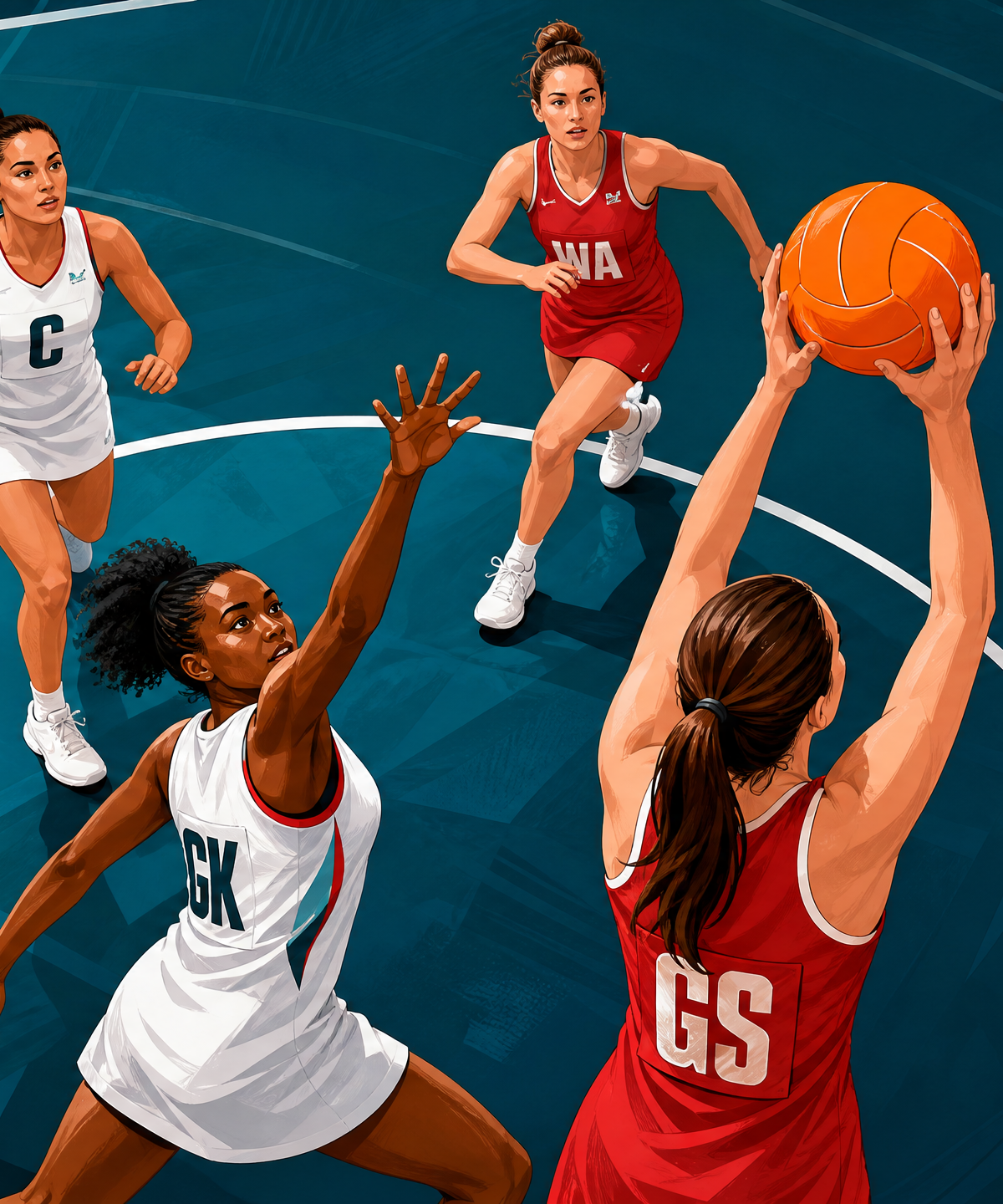
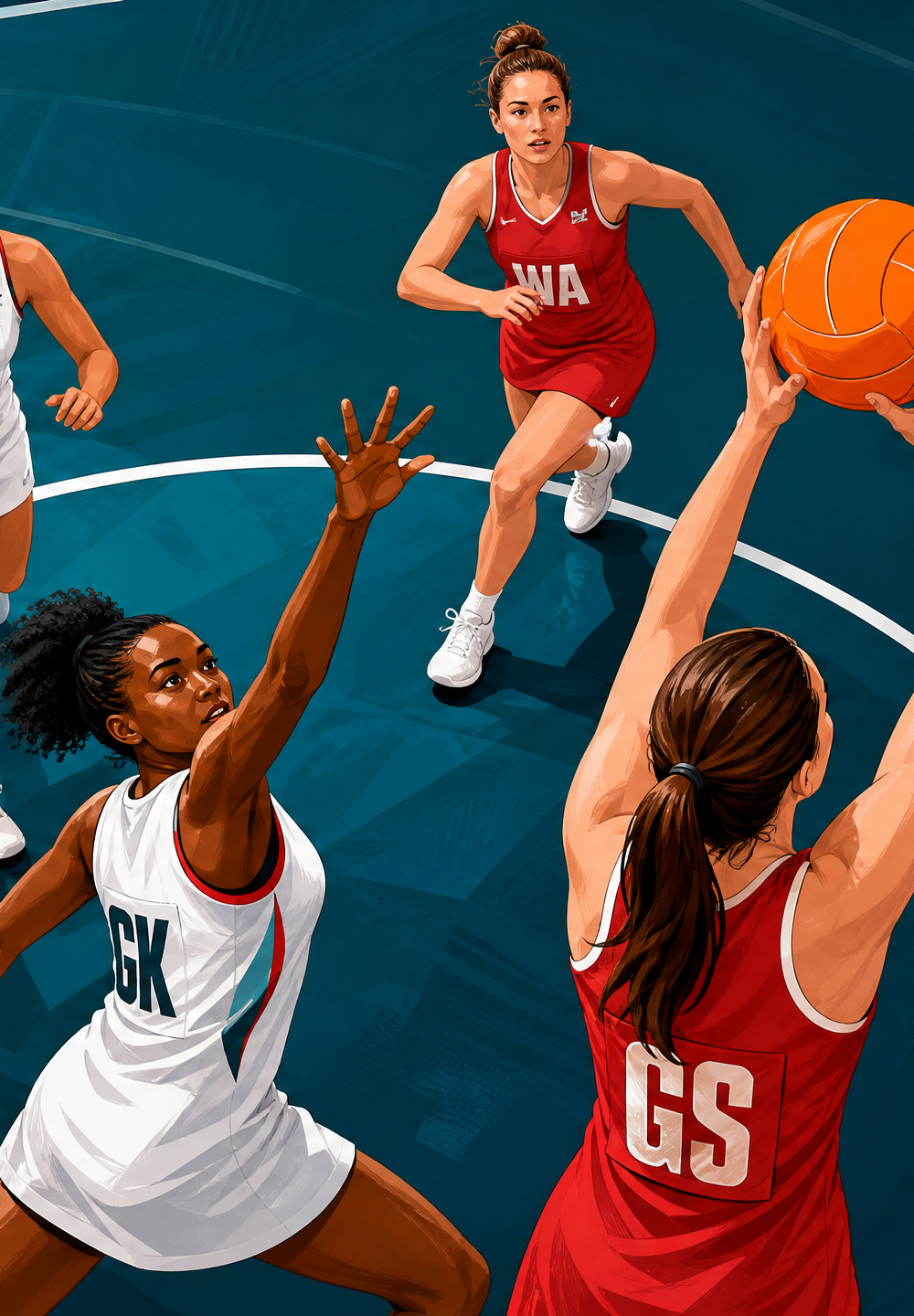
Players: Minimum 5 players (GS, GA, WA, GK, GD).
Equipment: 1 Netball, positional bibs, 2-3 marker cones (optional, to mark starting points).
Starting Positions:
- GS: Positioned deep in the circle, holding near the goal post.
- GA: Positioned outside the circle edge, ready to drive.
- WA: Positioned near the transverse line, acting as the primary feeder.
- GK & GD: Starting with passive defence on the GS and GA respectively.
Step-by-Step Instructions
Phase 1: The Initial Drive & Lead
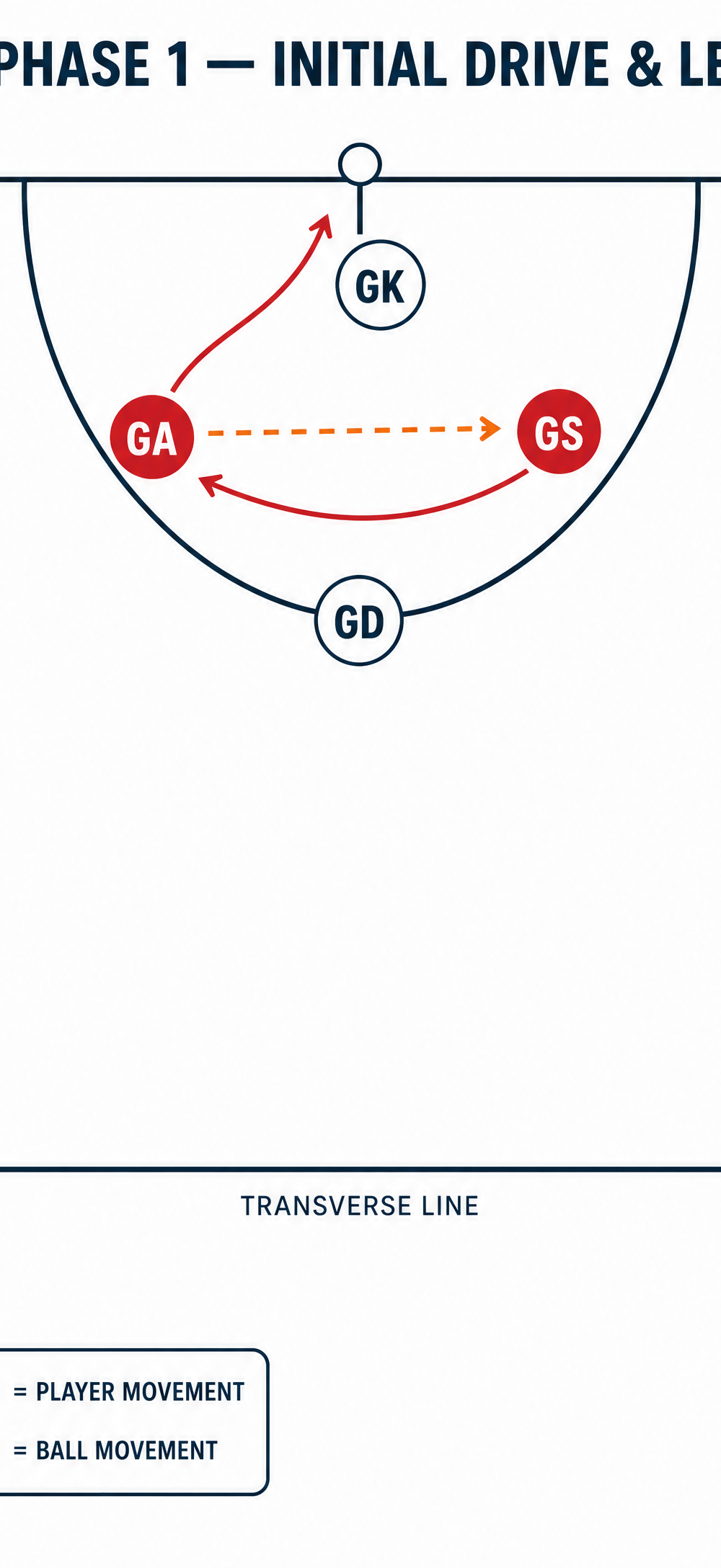
- The Feed: The Wing Attack (WA) starts with the ball at the top of the goal third, looking to feed the circle.
- The First Move: The Goal Attack (GA) makes a sharp, angled drive towards the top of the shooting circle to receive the first pass from the WA.
- The Counter-Movement: As the GA drives out, the Goal Shooter (GS) simultaneously sweeps across the baseline, drawing the Goal Keeper (GK) away from the post.
- The Pass: The WA delivers a crisp, flat pass to the GA on the circle edge.
Phase 2: Circle Rotation & The Shot
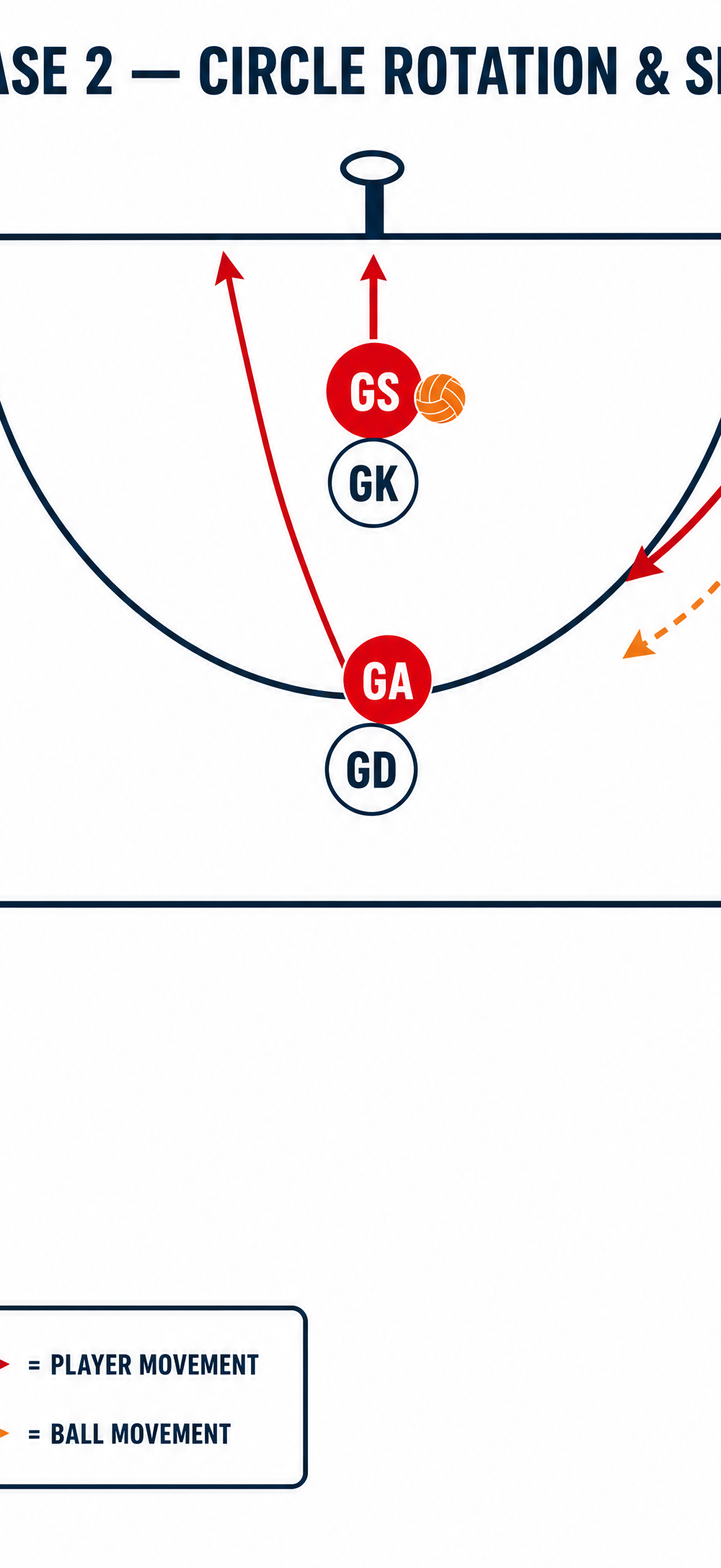
- The Re-offer: Upon receiving the ball, the GA immediately turns to face the post.
- The Rotation: The GS, having drawn the defender wide, suddenly changes direction and drives hard back into the space created directly under the goal post.
- The Feed into the Circle: The GA executes a perfectly timed pass (often a lob or a quick bounce pass, depending on the defender's position) to the GS under the post.
- The Finish: The GS secures the ball, balances, and executes the shot. The GA must follow in for the potential rebound.
Key Coaching Points
- Timing is Everything: The GS must not move too early. The baseline sweep should happen exactly as the GA commits to their drive, ensuring the defenders cannot easily switch.
- Strong Holds: When the GS drives back to the post, they must establish a strong, balanced hold against the GK to receive the pass safely.
- Vision and Awareness: The GA must catch the ball with their eyes already up and looking into the circle. Turning blindly will result in a held ball or a turnover.
- Crisp Passing: Feeds into the circle must be accurate and placed into the space the shooter is driving towards, not at their body where the defender can intercept.
- Rebounding Position: Shooters must always anticipate a miss. As soon as the shot is released, both GS and GA need to position themselves for the offensive rebound.
Common Mistakes
- Clogging the Space: Both shooters driving into the same area at the same time, bringing their defenders together and closing down passing lanes.
- Flat Footed Receiving: Catching the ball flat-footed on the circle edge, making it easy for the GD to recover and contest the next pass.
- Forcing the Pass: The GA forcing a pass into a heavily defended GS instead of resetting the play with the WA or C.
- Weak Holds: The GS allowing the GK to easily step around them to intercept the final feed.
Variations & Progressions
- Add the Centre (C): Introduce the Centre to provide a secondary feeding option, forcing the shooters to read the play and decide which side to open up.
- Active Defence: Progress from passive to fully active, contested defence. This will test the shooters' ability to execute under pressure.
- The Split: Instead of a rotation, have the GS and GA start close together and split in opposite directions simultaneously to confuse the defenders.
Age Adaptations
- Under 10s: Focus heavily on the basic footwork of the drive and the accuracy of the pass. Remove defenders initially to build confidence.
- Under 14s: Introduce passive defence and focus on the timing of the counter-movement. Emphasize strong holds under the post.
- Open/Advanced: Full active defence. Introduce complex, multi-phase rotations and expect high-speed execution and split-second decision making.