Mastering the WD to GA Transition: A High-Speed Attacking Set Play
Learn how to effectively transition the ball from the centre third into the shooting circle by utilizing the Wing Defence's explosive drive and the Goal Attack's sharp V-cut to create a clear scoring opportunity.
Equipment Needed
Overview
The WD to GA Transition Play is a dynamic, high-speed set play designed to quickly move the ball from the centre third into the shooting circle. It capitalizes on the often-underutilized attacking capabilities of the Wing Defence (WD) and requires sharp, timed movements from the Goal Attack (GA). This play is particularly effective when the opposition's midcourt defense is heavily focused on shutting down your Wing Attack (WA) and Centre (C), leaving space for the WD to drive forward and initiate the final phase of the attack.
By executing this play, your team bypasses traditional midcourt congestion and delivers a fast, direct feed into the shooters before the defensive structure can reset. It is best deployed in the second half when you have identified that the opposing Goal Defence is sitting deep and the WD has space to exploit on the attacking transverse line.
Setup
Equipment Needed: 1 Netball, a full set of training bibs, and a full court (30.5m x 15.25m) for the complete transition drill. A half-court can be used for the attacking phase in isolation.
Players Required: Minimum 5 attacking players (WD, C, WA, GA, GS). Defenders (GD, GK, and opposing midcourters) should be introduced progressively.
| Position | Starting Location | Primary Role in This Play |
|---|---|---|
| C (Centre) | Centre circle, ball in hand | Initiates the play with a flat pass to the WD |
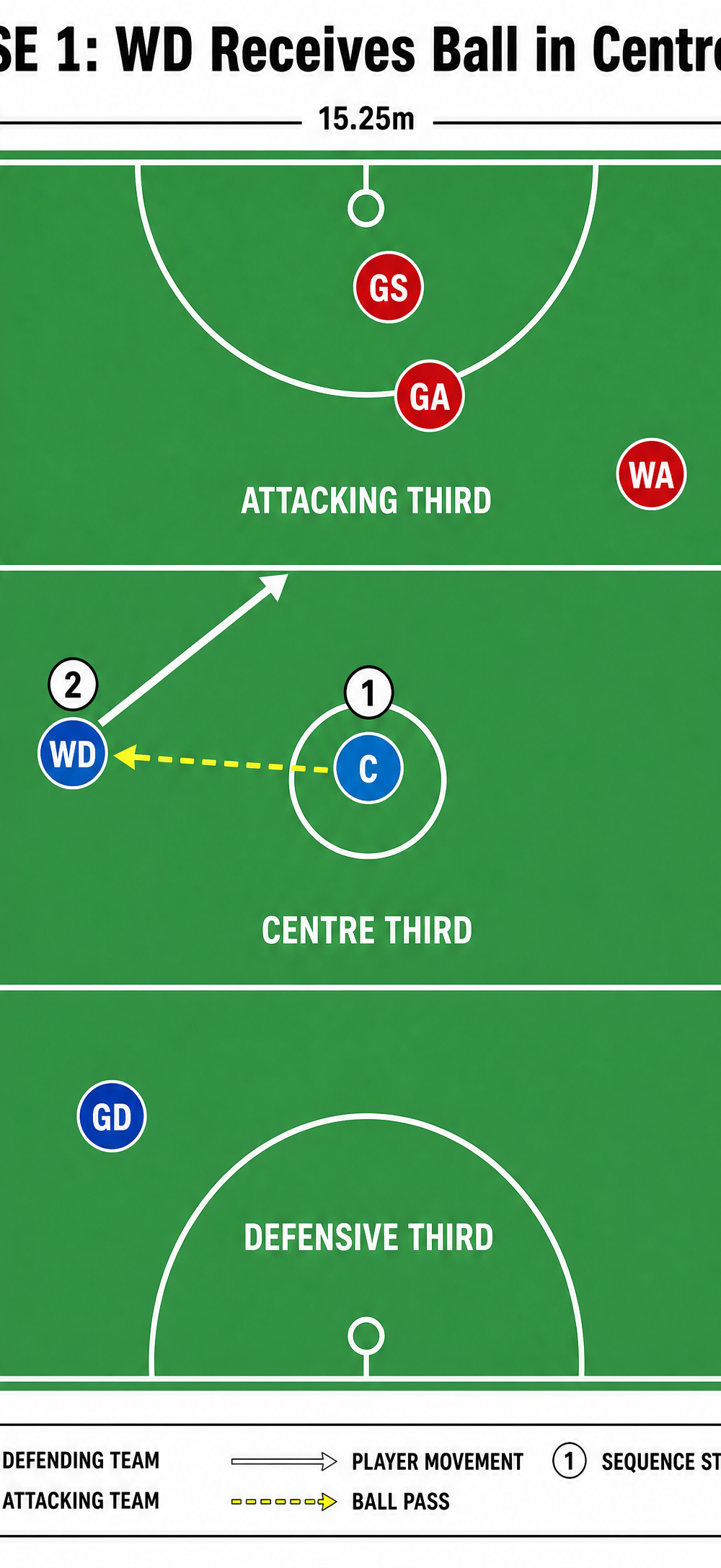
| WD (Wing Defence) | Centre third, defensive side | Makes the primary diagonal drive to receive from C |
| WA (Wing Attack) | Attacking third, wide right | Clears space by pulling their defender away from the channel |
| GA (Goal Attack) | Top of the shooting circle edge | Executes the V-cut to receive from WD |
| GS (Goal Shooter) | Inside the shooting circle, near post | Holds position as the final pass option |
Step-by-Step Instructions
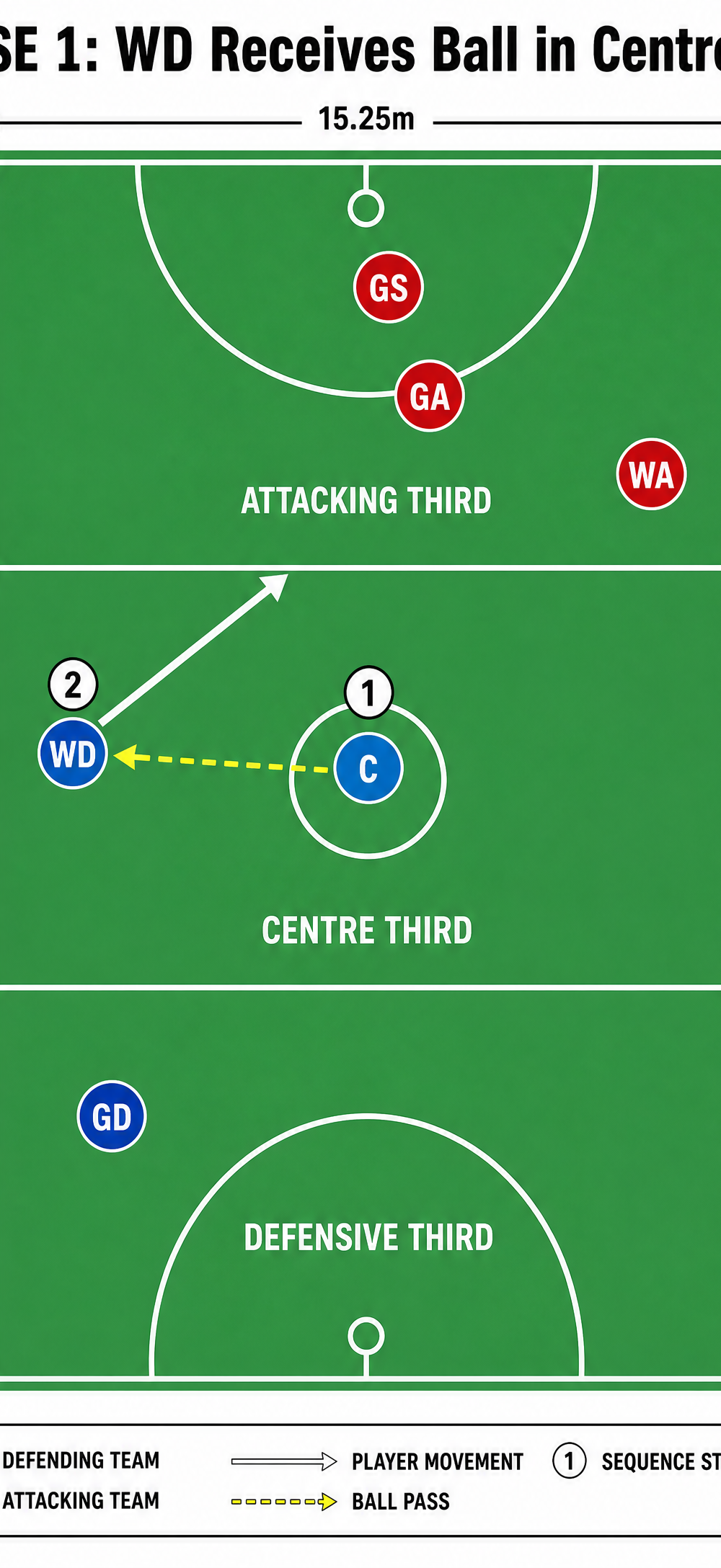
Phase 1: The WD Drive
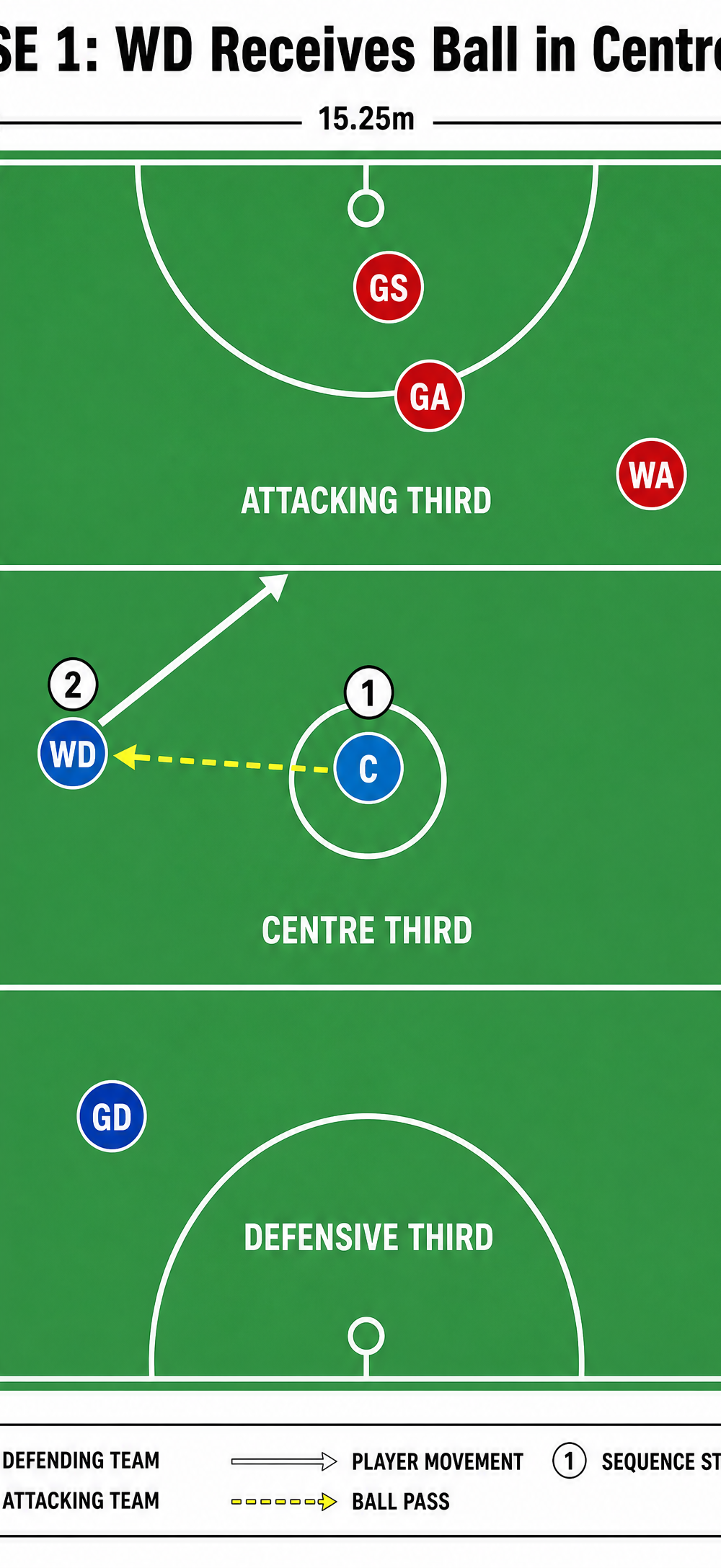
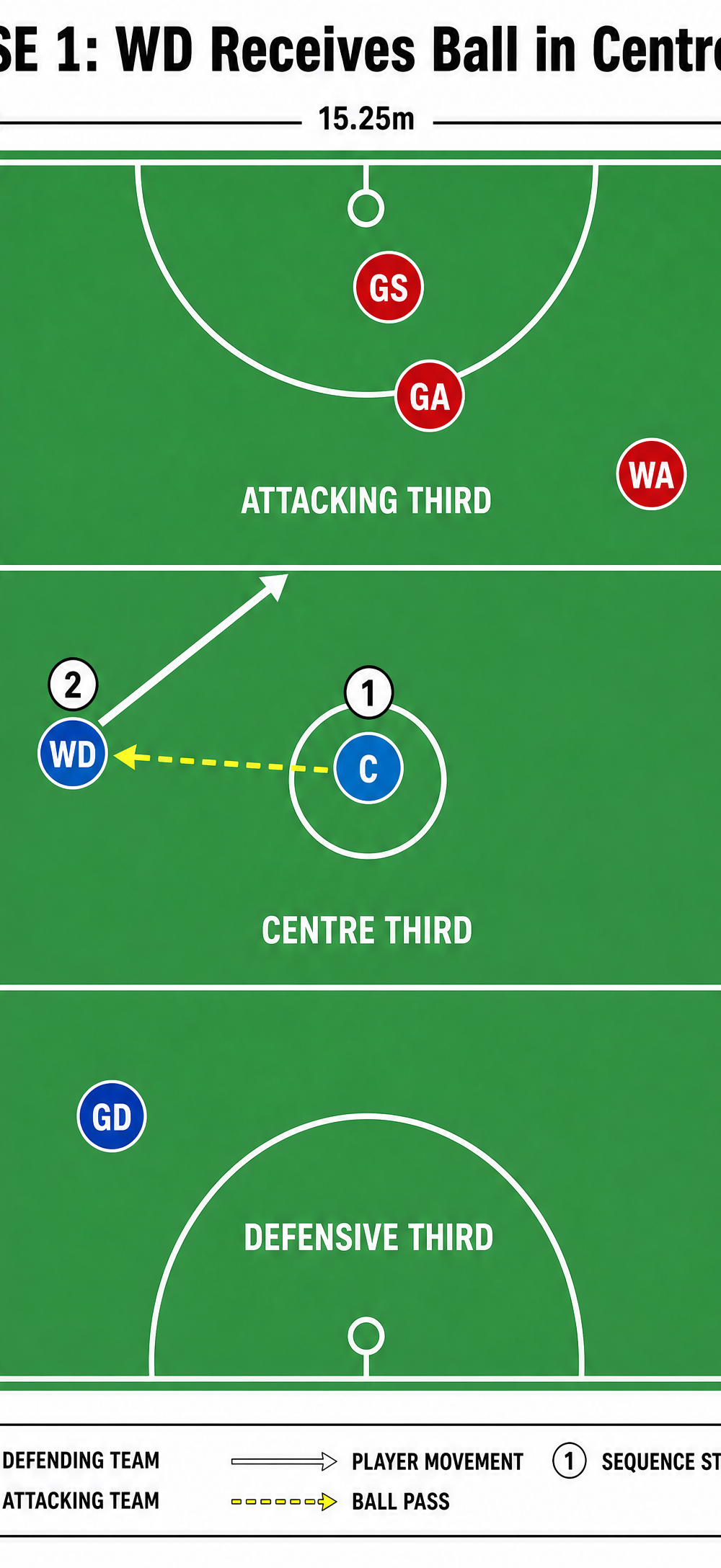
Step 1 — The Trigger. The Centre (C) receives a pass or takes a free pass in the centre third. The Wing Attack (WA) simultaneously drives wide to the right side of the attacking third, pulling their defender with them and opening a clear channel through the middle-left of the court.
Step 2 — The Drive. The Wing Defence (WD) makes a hard, explosive diagonal cut from their starting position toward the attacking transverse line. The drive should cover approximately 4–6 metres and be executed at maximum speed to beat the opposing midcourter.
Step 3 — The Pass. The C delivers a flat, fast chest pass to the WD as they hit the transverse line at speed. The pass should lead the WD slightly, allowing them to receive on the move without breaking stride.
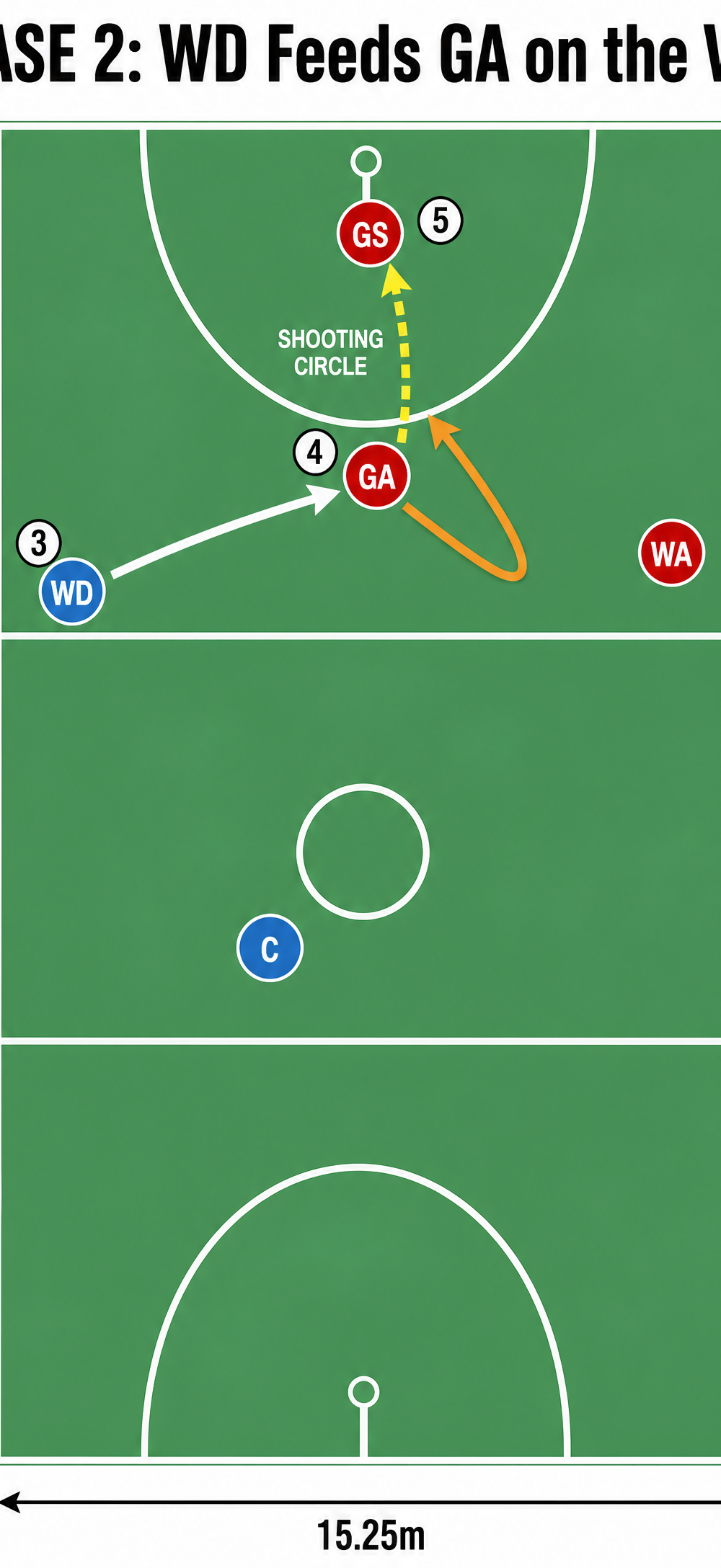
Phase 2: The GA V-Cut and Feed
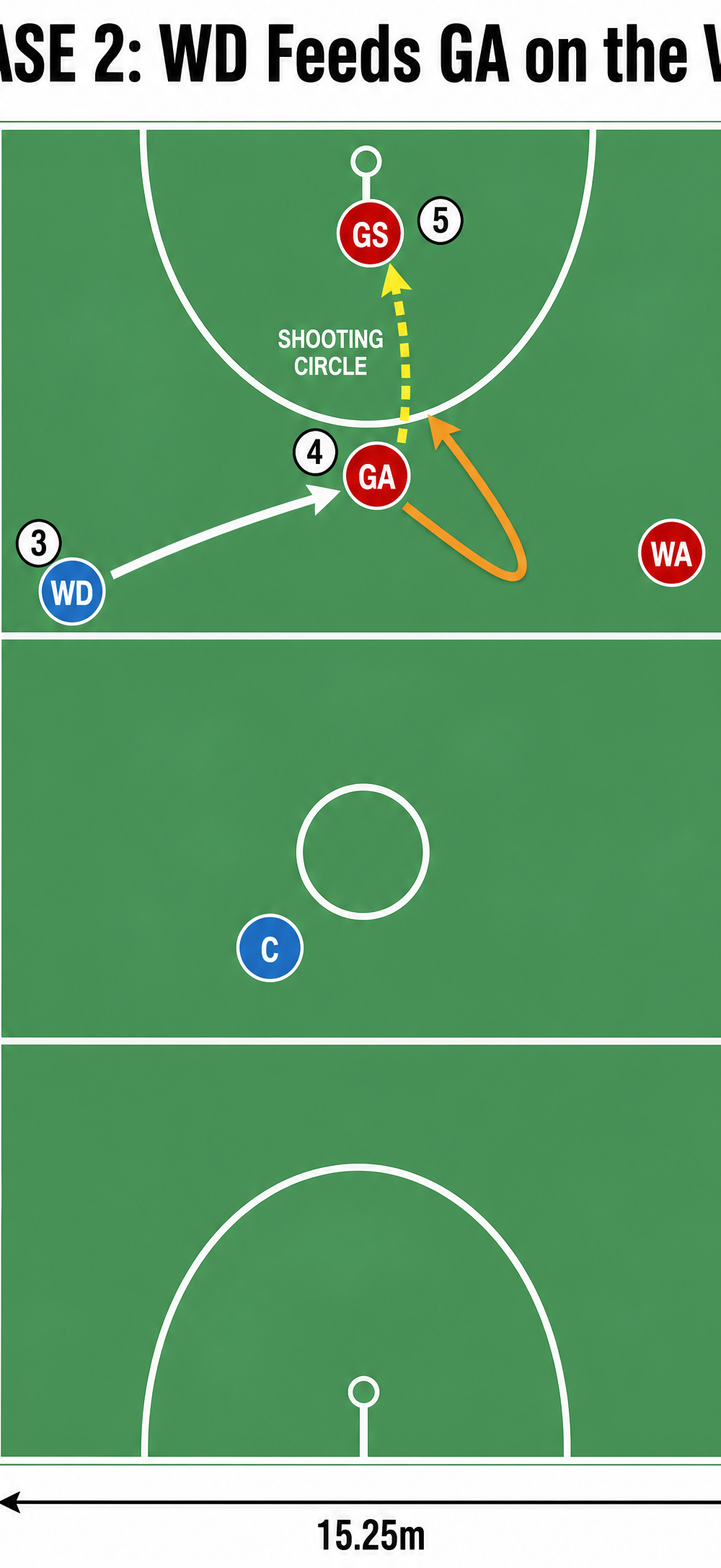
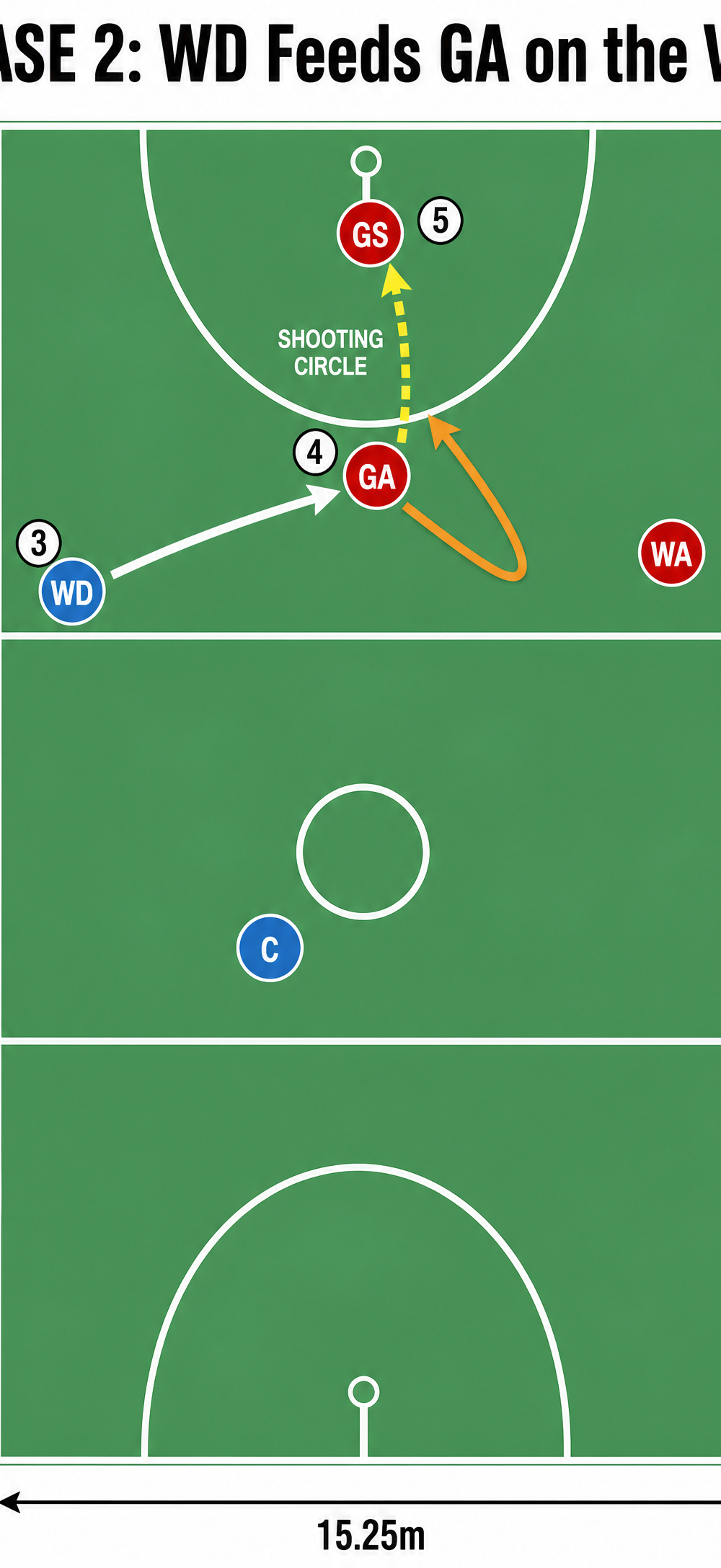
Step 4 — The Setup Cut. As the WD receives the ball, the Goal Attack (GA) initiates the V-cut. The GA drives out away from the circle edge — approximately 2–3 metres — to draw the Goal Defence (GD) away from the shooting circle.
Step 5 — The Change of Direction. The GA plants their outside foot firmly and makes a sharp, explosive cut back toward the top of the shooting circle. This change of direction must be sudden and decisive to leave the defender behind. The entire V-cut should take no more than 2–3 seconds.
Step 6 — The Feed. The WD, having balanced on or near the attacking transverse line, delivers a perfectly timed pass into the space the GA is driving into — not to where the GA currently is. The pass should be at chest height and hit the GA in stride.
Step 7 — The Finish. The GA catches the ball on the move inside or at the edge of the shooting circle, balances, and makes an immediate decision: take the shot if in range, or feed the Goal Shooter (GS) who has been holding position near the post.
Key Coaching Points
1. Timing is Everything. The GA must not start their V-cut too early. The outward drive should be initiated exactly as the WD receives the ball from the C. If the GA moves too soon, the defender has time to recover; too late, and the WD is forced to hold the ball.
2. Explosive, Committed Changes of Direction. Both the WD's initial drive and the GA's V-cut must be executed at 100% intensity. Slow, curved runs telegraph the movement to defenders and allow easy interception. Coach your players to think "sharp angles, not smooth curves."
3. WD Eyes Up on the Drive. The WD must have their eyes up as they receive the ball from the C. They need to be reading the GA's movement before the ball arrives so they can release the pass immediately without a hesitation step.
4. WA Must Actively Clear Space. The Wing Attack plays a vital supporting role by taking their defender away from the WD's driving channel. If the WA drifts into the middle, they clog the space and the play breaks down entirely. Coach the WA to commit to their wide position until the ball has been fed into the circle.
5. GS Holds the Post. The Goal Shooter must resist the temptation to come out to help. Their job is to hold a strong position near the post so that if the GA receives the ball and is immediately pressured, there is an easy short pass available inside the circle.
6. WD Decision-Making Under Pressure. If the GA is heavily covered and the V-cut does not create separation, the WD must not force the pass. They should look to recycle the ball back to the C or find the WA resetting for a second-phase attack.
Common Mistakes
Mistake 1 — WD Driving Too Deep. If the WD drives past the attacking transverse line and into the attacking third, they compress the space the GA needs to execute the V-cut. Coach the WD to receive the ball on or just inside the transverse line and hold that position.
Mistake 2 — Rounded Cuts by the GA. A lazy, rounded run instead of a sharp V-cut allows even an average defender to recover and contest the pass. Use cone drills to train the GA to plant and push off at a genuine right angle.
Mistake 3 — Forcing the Pass. When the play is well-scouted by the opposition, the GA will be tightly marked. The most common error is the WD forcing a pass into a crowded space, resulting in an interception. Reinforce the "if in doubt, recycle" principle.
Mistake 4 — C Passing Too Late. If the C waits until the WD has stopped before passing, the WD loses their momentum advantage and the defender has time to recover. The pass must be released while the WD is still in full stride.
Mistake 5 — GS Drifting Out. A GS who drifts to the edge of the circle to "help" removes the most dangerous finish option. Drill the GS to hold their post position regardless of what is happening outside the circle.
Variations & Progressions
Progression 1 — Add Defenders Incrementally. Begin the drill with no defenders to establish the timing and movement patterns. Add a passive GD on the GA in Phase 2. Then add a passive defender on the WD. Finally, run the play at full intensity with all defenders active.
Progression 2 — Full Court Transition. Start the drill from a defensive rebound or turnover in the defensive third. The GD or GK initiates the play by passing to the C, who then triggers the WD drive. This replicates match conditions and trains the full transition from defense to attack.
Variation 1 — The GS Lob Option. If the Goal Defence heavily anticipates the GA's V-cut and overcommits by stepping out, the WD can look over the top for a direct lob pass to the GS holding on the post. This variation should be drilled separately so the WD knows to read the GD's position before committing to the primary pass.
Variation 2 — WA Wrap. Instead of clearing wide and staying there, the WA can wrap around behind the WD as a secondary short-pass option. This is particularly effective if the WD is under pressure and needs a quick release option before finding the GA.
Age Adaptations
Under 10s and Under 12s. Focus exclusively on the basic mechanics of the V-cut and the concept of leading for the ball. Reduce the distances involved and use a slower, more deliberate pace. Prioritize the GA learning to change direction sharply over the full sequence of the play.
Under 14s and Under 16s. Introduce the timing elements between the WD drive and the GA's V-cut. Begin adding defensive pressure once the movement patterns are established. Discuss the decision-making framework for when to pass versus when to recycle.
Open and Advanced. Execute at full match intensity with all defenders active from the outset. Focus coaching attention on the WD's decision-making when the primary option is shut down, and on the GS's ability to read the play and position themselves for the finish.