

Netball
Baseline Throw-in Play: The Split & Cut
A highly effective attacking baseline throw-in play designed to isolate the Goal Shooter under the post by drawing defenders out of the circle.
What you need
1 Netball, Standard Netball Court
1. Overview
Executing a clean baseline throw-in is a critical attacking skill in Netball. Often, teams struggle to convert these restarts into high-percentage scoring opportunities, leading to turnovers or rushed shots from the edge of the circle. This set play, affectionately known as 'The Split & Cut', is designed to completely dismantle a static or zone-heavy defensive setup. By initiating coordinated, aggressive outward drives from both the Goal Attack (GA) and the Goal Shooter (GS), the attacking unit forces the defensive structures to stretch and commit to the perimeter of the goal third.
The coordinated split clears the space beneath the post, creating a short window for the GS to back-cut into a high-percentage shooting position. Use it against defenders who consistently drop to protect the post.
2. Setup
To run this play successfully, precise positioning, court awareness, and impeccable timing are essential. The attacking unit must set up quickly to prevent the defense from organizing their structures.
- Equipment: 1 Netball, standard court markings (30.5m x 15.25m).
- Player Positions:
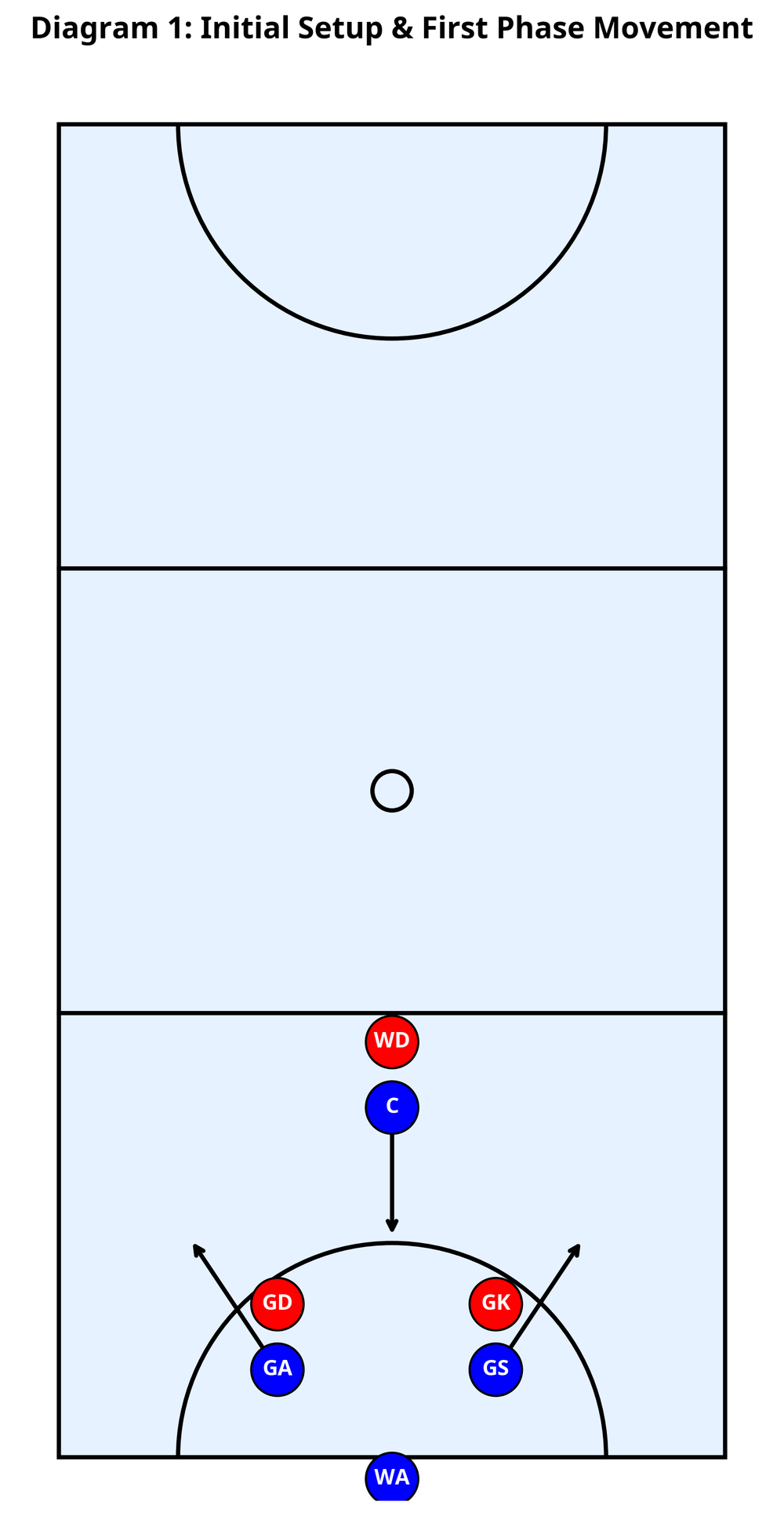
- Wing Attack (WA): Takes the throw-in from the center of the attacking baseline. The WA must read the defensive reaction instantly and pass accurately.
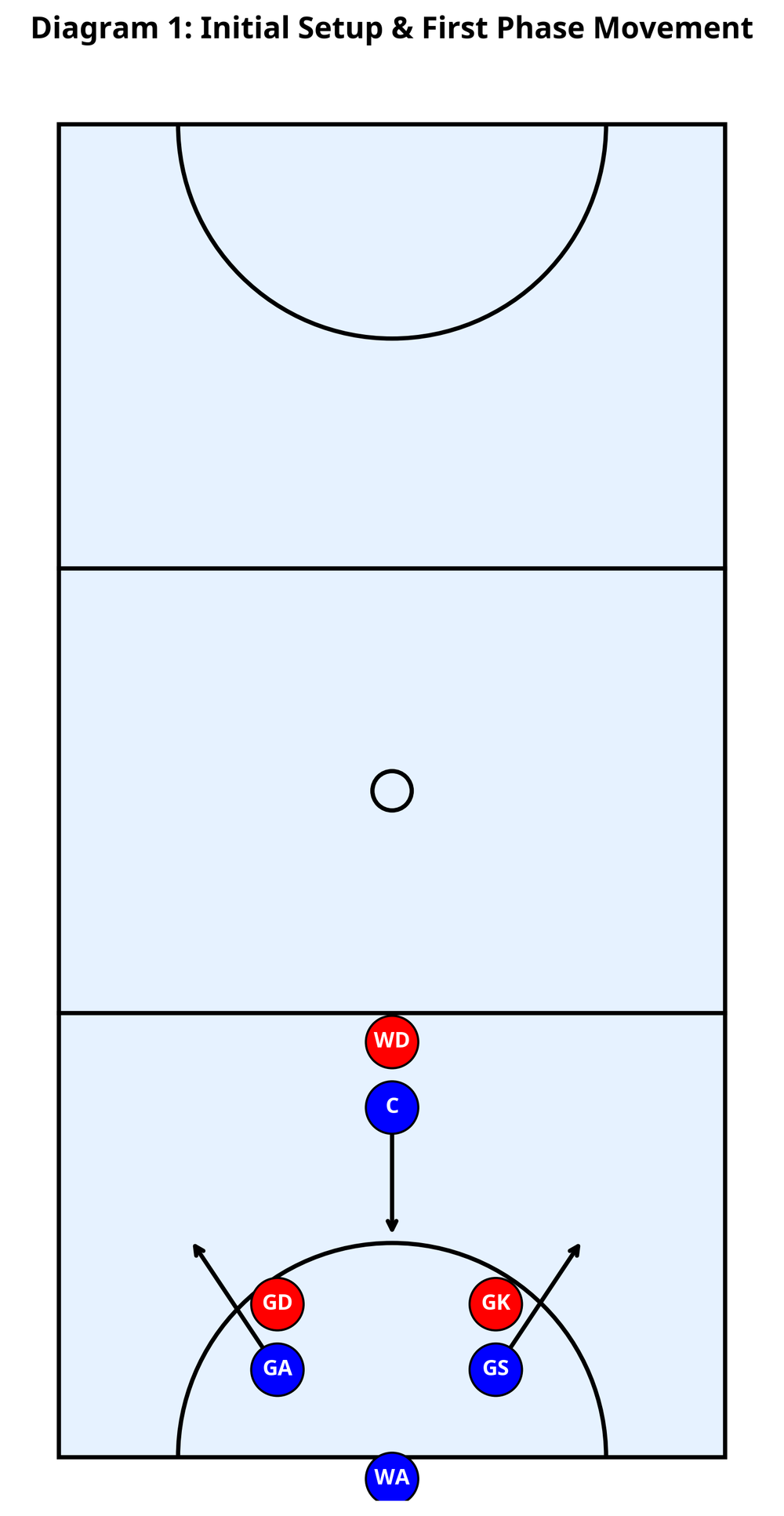
- Goal Attack (GA): Starts inside the goal circle, positioned approximately 2 meters from the baseline, favoring the left side. The GA must execute a hard sprint and precise final pass.
- Goal Shooter (GS): Starts inside the goal circle, positioned approximately 2 meters from the baseline, favoring the right side. The GS is the primary target and must change direction explosively.
- Center (C): Starts at the top of the goal circle (edge of the transverse line). The C acts as a decoy and secondary reset option.
3. Step-by-Step Instructions
This play relies on a synchronized three-phase execution: the initial split to stretch the defense, the primary pass to shift the defensive focus, and the final delivery to the isolated post. Every player must understand their role in each phase for the play to succeed.
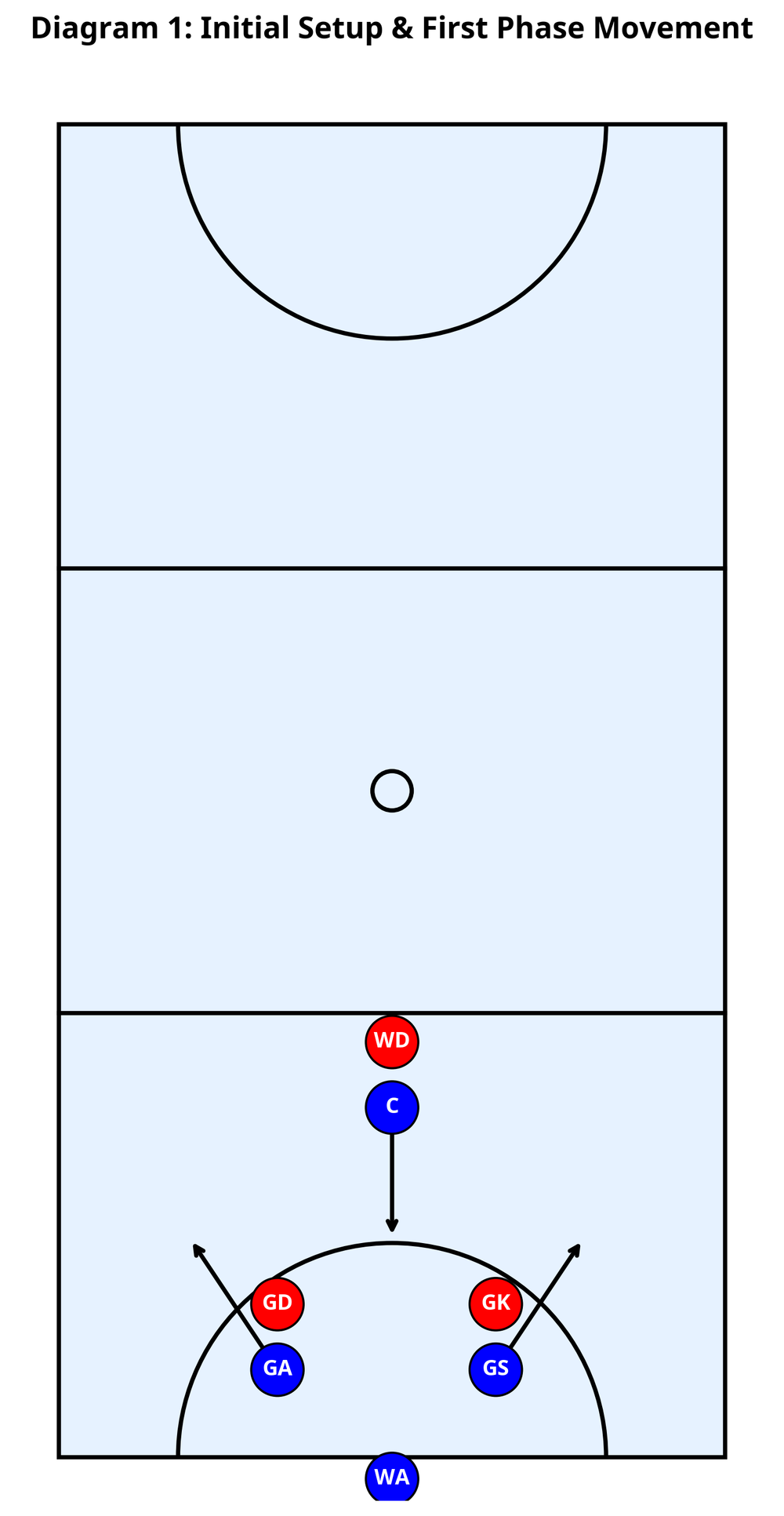
Phase 1: The Initial Split. Upon the umpire's whistle, the GA and GS must execute hard, simultaneous drives outward toward the sidelines. The GA drives aggressively toward the left sideline, aiming for a spot just outside the goal circle. The GS mirrors this movement, driving toward the right sideline. It is imperative that these drives are executed at maximum speed to convince the Goal Defence (GD) and Goal Keeper (GK) that they are the intended targets. Simultaneously, the C drives straight down the middle to the top of the goal circle. This movement occupies the space left by the shooters and holds the attention of the defending Wing Defence (WD) or Center (C), preventing them from dropping back to help in the circle.
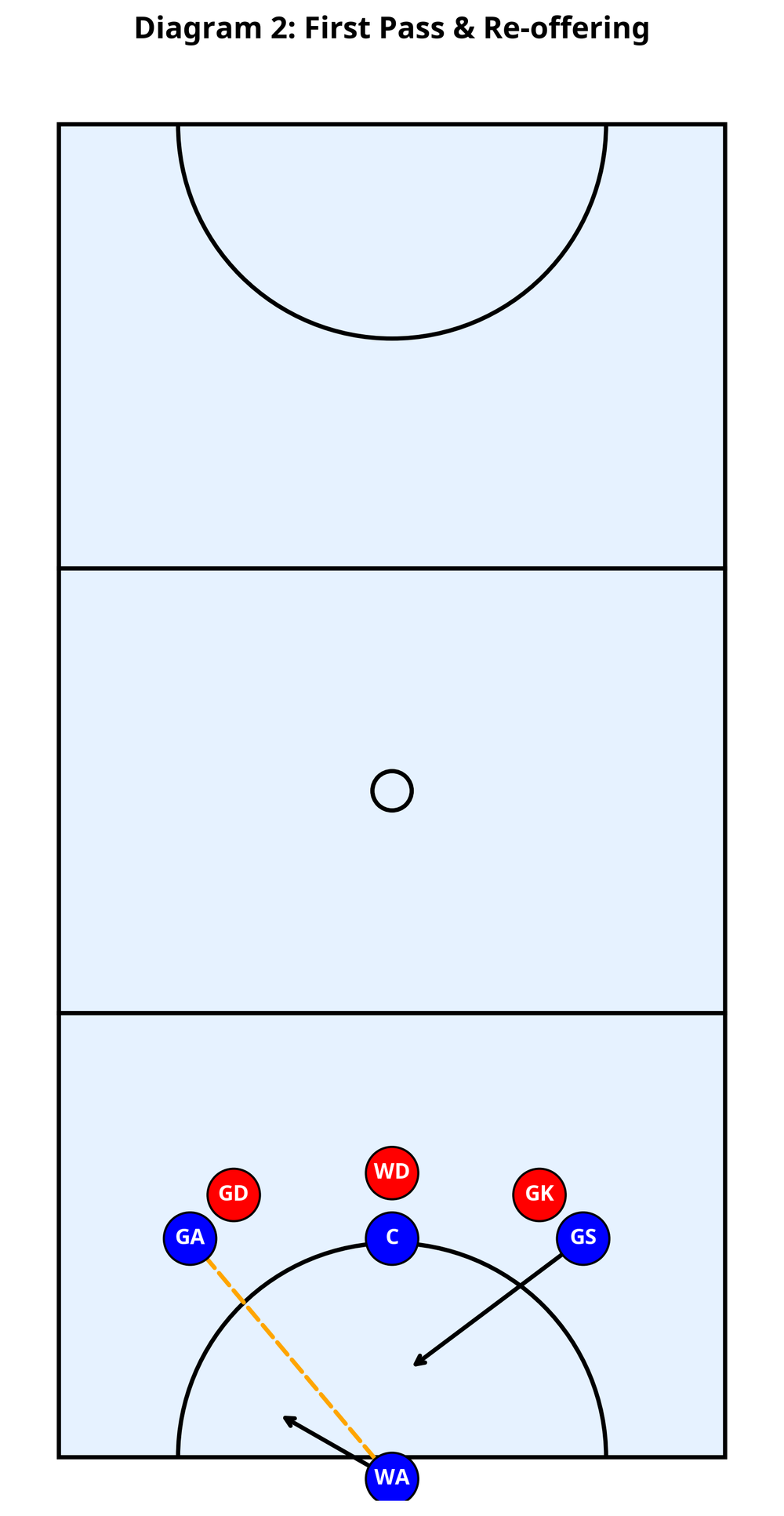
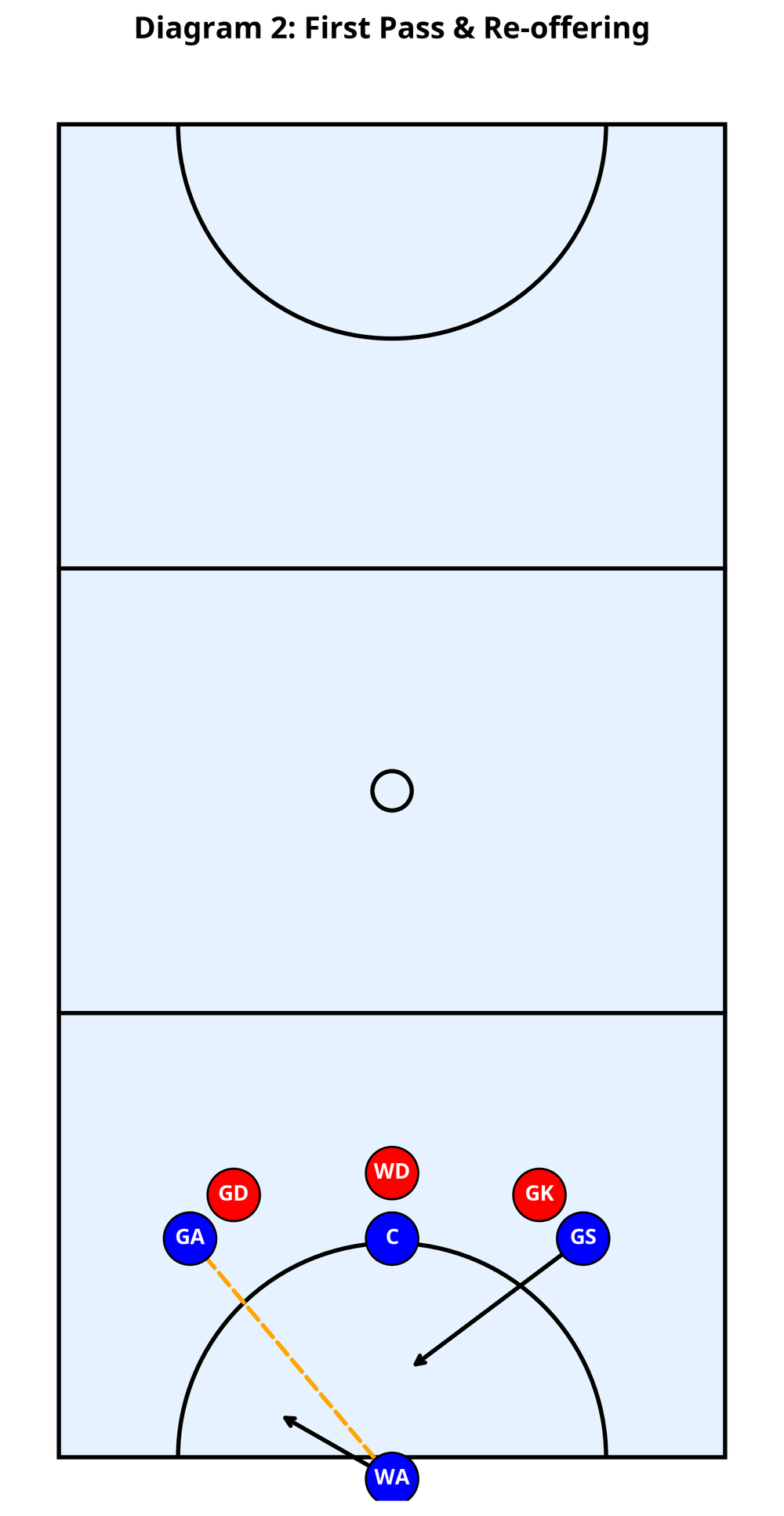
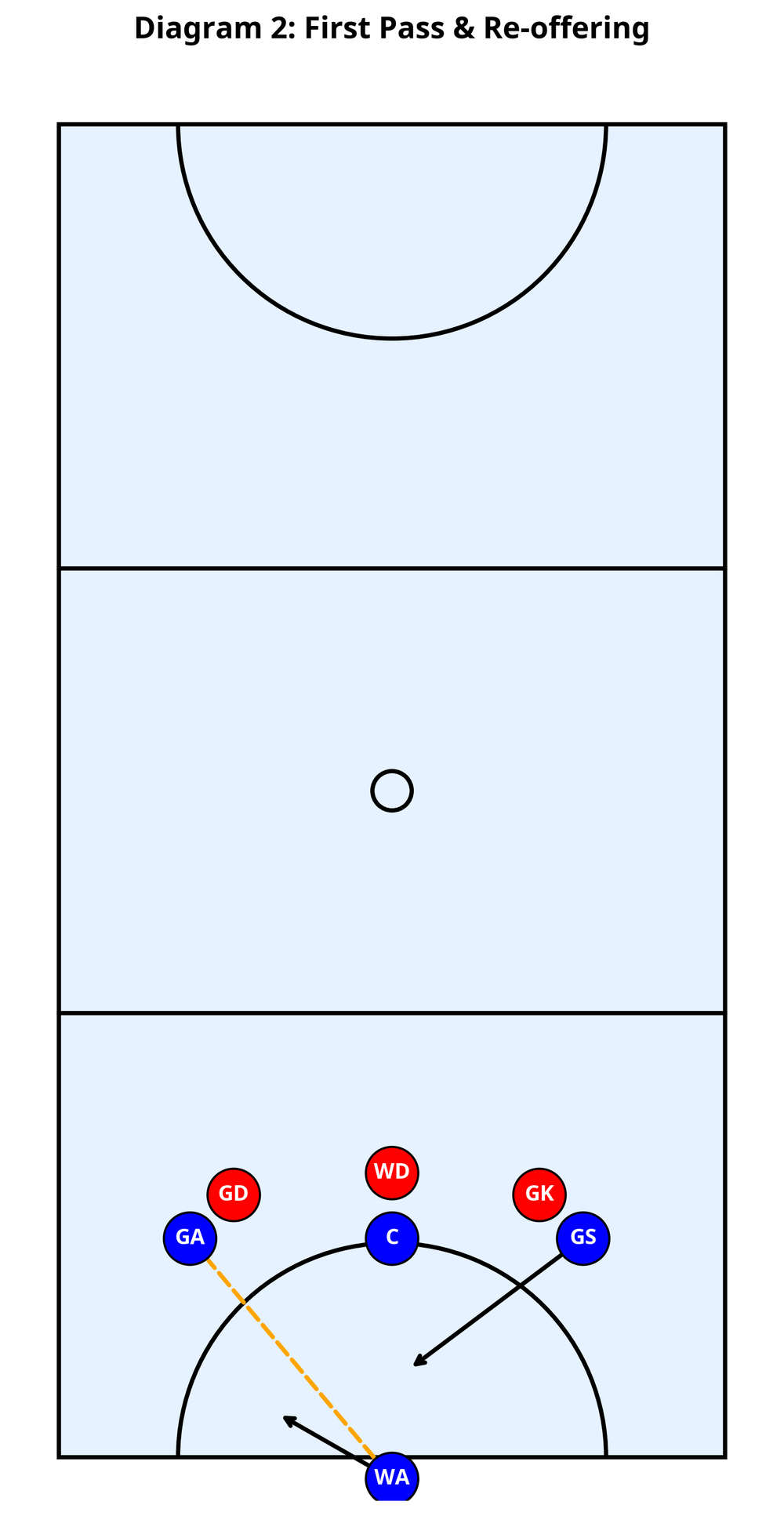
Phase 2: The Primary Pass. The WA, standing out of bounds, must observe the defensive reaction to the split. The WA selects the most open shooter. In this primary option, the WA delivers a crisp, flat chest pass to the GA as they break clear of the GD. The pass must be firm and direct to ensure the GA receives it in stride. As soon as the pass is released, the WA must immediately drive onto the court, entering the field of play to offer a reset option or to clear space for the final phase. Standing out of bounds after the pass is a critical error that limits the attacking team's options.
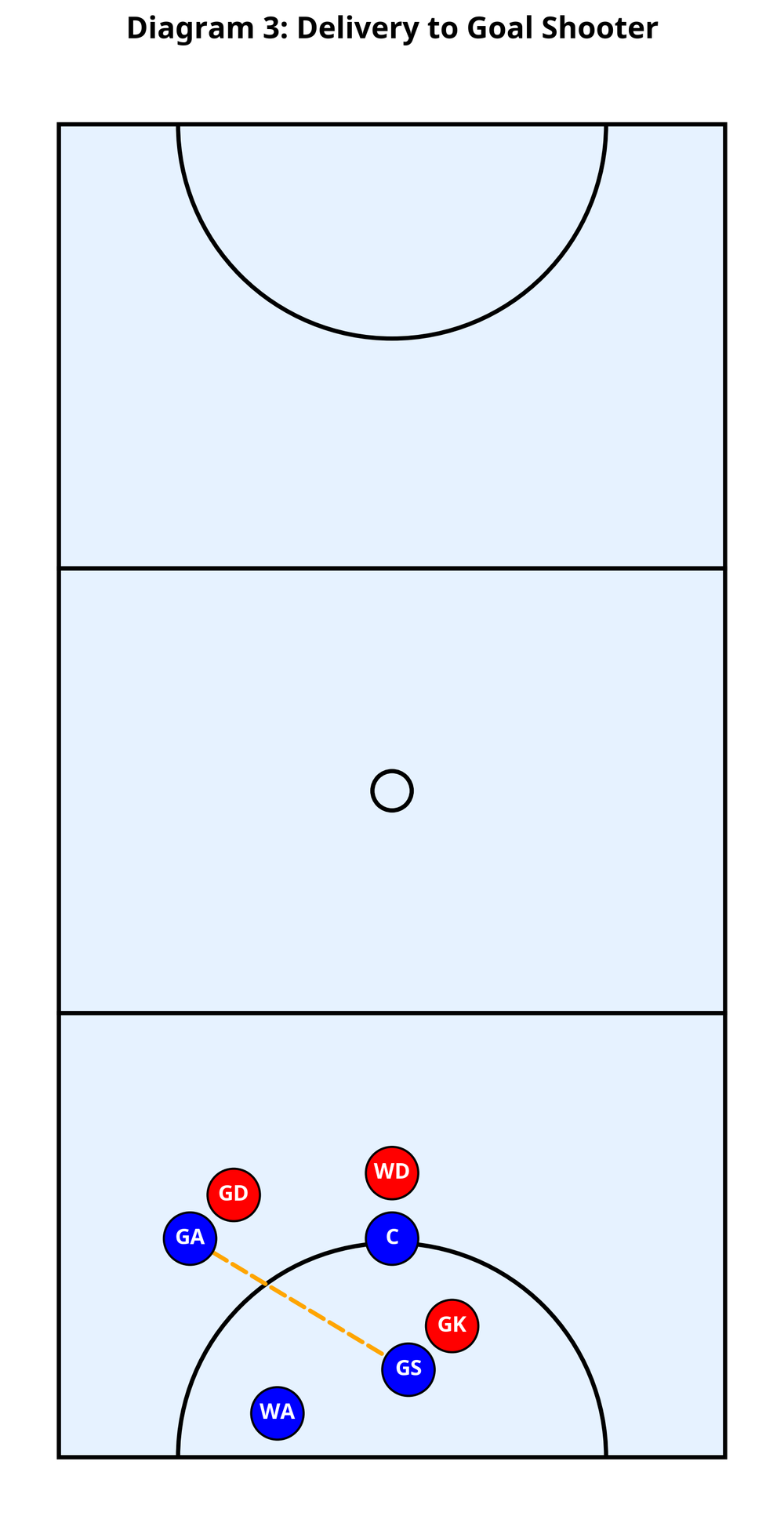
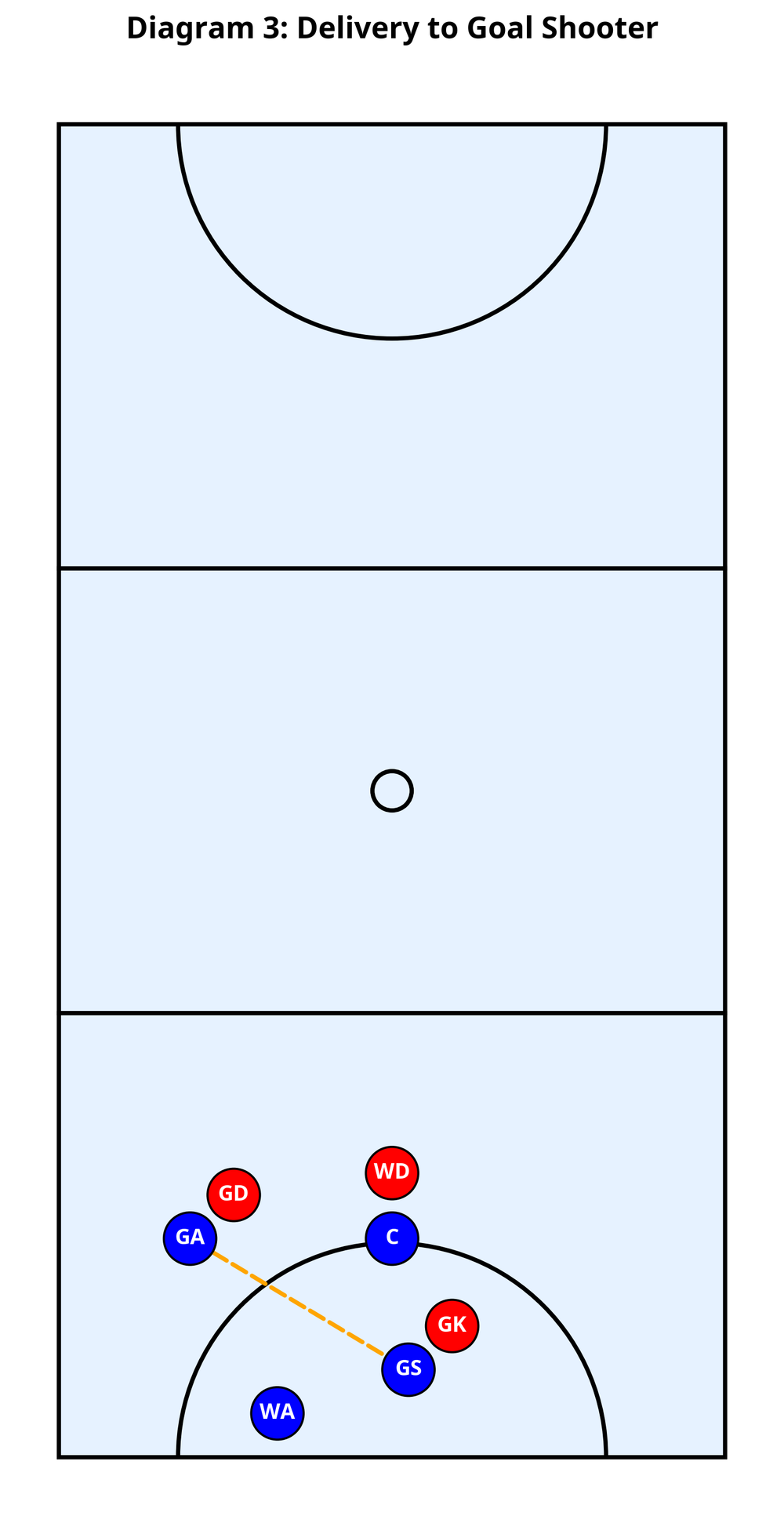
- Phase 3: The Final Delivery. The GS, having drawn the GK out of the circle with their initial aggressive drive toward the sideline, must recognize the moment the GA receives the ball. The GS plants their outside foot hard and executes a sharp, explosive cut back toward the goal post. The GA, having secured the primary pass, immediately pivots and looks for the GS. The GA must deliver a perfectly timed lob or a quick bounce pass over or around the recovering GK. If executed correctly, the GS will receive the ball directly under the post for a high-percentage, uncontested shot.
4. Key Coaching Points
- Timing is Everything: The initial split by the GA and GS must be perfectly synchronized. If one player goes too early, the defense can easily adjust and anticipate the play. Coaches should drill the timing of the split repeatedly, using a whistle or a verbal cue to initiate the movement.
- Sell the Fake: The GS must fully commit to the initial outward drive to convince the GK they are leaving the circle. The harder the drive out, the more space is created for the cut back. If the GS merely jogs or half-heartedly moves toward the sideline, the GK will not follow, and the space under the post will remain congested.
- Vision and Decision Making: The WA must read the defense instantly. If the GA is heavily covered on the initial split, the WA must be prepared to hit the GS on the initial drive or use the C at the top of the circle as a safe reset option. The WA must not force a pass into heavy coverage.
- Pass Quality: The final pass from the GA to the GS must be weighted perfectly. A lob pass must drop just over the defender's reach, while a bounce pass must be sharp and precise. The GA must practice delivering these passes under pressure to ensure they can execute them in a game situation.
- Court Penetration: The WA must drive onto the court immediately after releasing the ball. This movement not only provides a reset option but also forces the defending WD to make a decision, potentially creating further space in the attacking third.
5. Common Mistakes
- Weak Initial Drives: Shooters jogging or walking their initial outward drives will not draw the defenders out of the circle. This completely neutralizes the play, as the GK will remain anchored under the post, ready to contest any pass.
- WA Hesitation: If the WA hesitates on the throw-in, the defense will have time to set, communicate, and anticipate the movements. This often leads to a held ball call against the WA or an interception by a recovering defender.
- Crowding the Space: The WA failing to drive onto the court after the initial pass can clutter the attacking third. This restricts the GA's passing lanes and makes it easier for the defense to trap the attacking players against the sideline.
- Telegraphing the Pass: The GA looking directly at the GS before executing the final pass will alert the GK to the intended target. The GA must use peripheral vision and quick release techniques to disguise the final delivery.
6. Variations & Progressions
- Variation 1: The C Option. If both shooters are tightly marked on the initial split, the WA can pass to the C at the top of the circle. The C then becomes the primary playmaker, looking for the GA or GS cutting back into the space. This variation requires the C to have excellent vision and passing skills.
- Variation 2: The Direct Hit. If the GK anticipates the cut-back and stays under the post, the WA can pass directly to the GS on their initial outward drive. The GS can then shoot from the edge of the circle or initiate a new attacking sequence.
- Progression 1: The Screen. Incorporate a screen where the GA sets a pick for the GS before the initial split. This forces the defenders to communicate and switch, often creating a mismatch or a momentary opening that the shooters can exploit.
- Progression 2: Live Defense. Once the attacking unit has mastered the play without defense, introduce live, aggressive defenders. This will test the players' timing, decision-making, and execution under game-like pressure.
7. Age Adaptations
- Under 10s/12s: For younger players, focus primarily on the initial split and a simple, safe pass to the most open player. The complex cut-back and lob pass might be too advanced. Emphasize strong, straight drives, accurate chest passes, and the importance of the WA stepping onto the court after the throw-in.
- Under 14s/16s: Introduce the full play, emphasizing the timing of the cut-back and the quality of the final pass into the circle. Encourage the WA to read the defense and make quick decisions. Coaches can begin to introduce the variations, teaching the players to adapt to different defensive setups.
- Open/Advanced: At the senior level, execute the play at high speed with minimal setup time. Introduce complex progressions like the screen and encourage players to read defensive adjustments on the fly, seamlessly transitioning between the primary option and the variations as necessary. The focus should be on flawless execution and exploiting even the smallest defensive errors.
