Mastering the Paint: Essential Post Moves and Footwork Drill
Develop dominant interior players with this comprehensive drill focused on sealing, essential footwork, and high-percentage finishing in the paint.
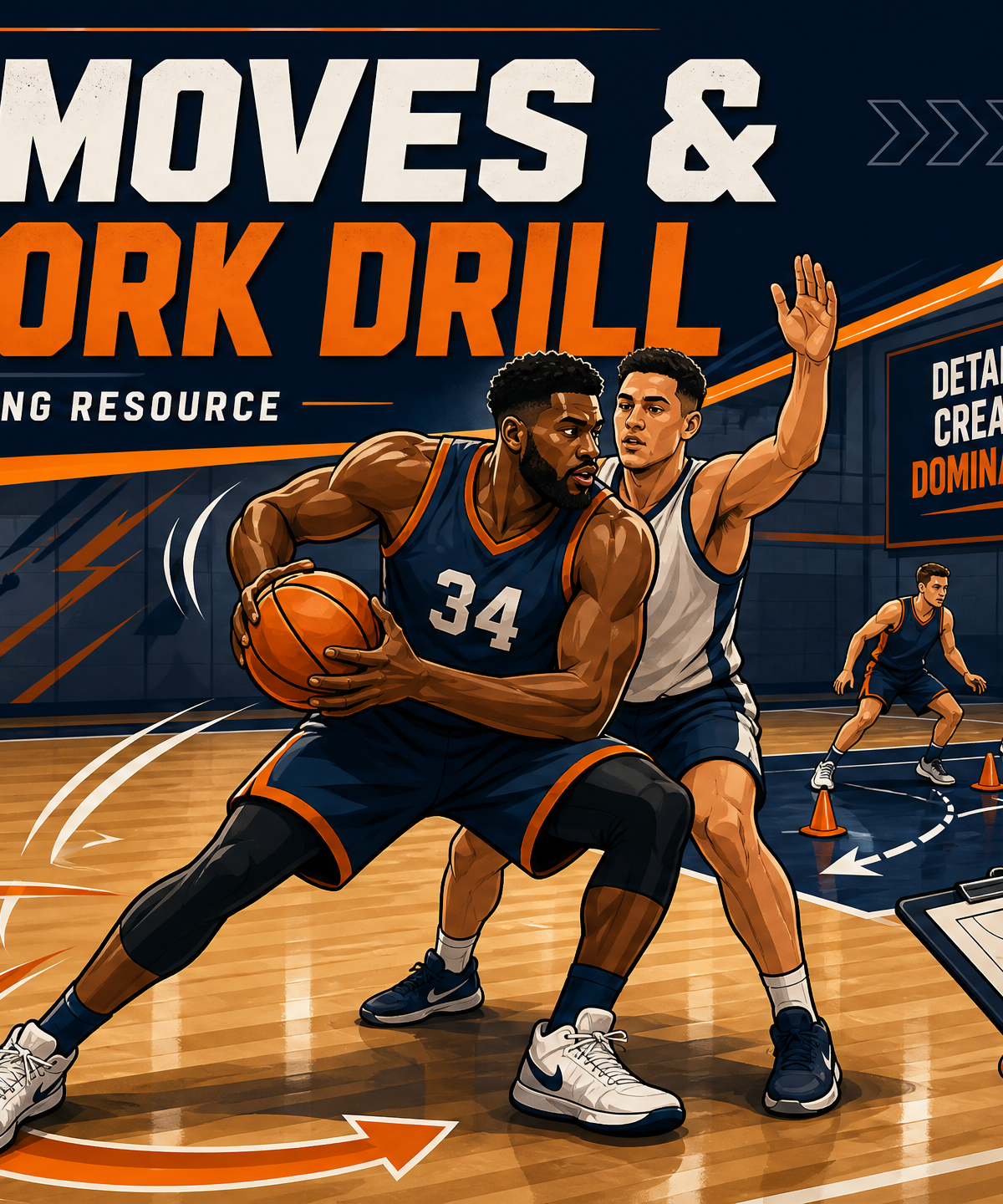
Equipment Needed
1. Overview
Dominating the paint requires more than just size; it demands precise footwork, balance, and the ability to read the defense. The Essential Post Moves and Footwork Drill is designed to build a player's offensive arsenal from the low block. This drill isolates the critical components of post play: establishing position, receiving the entry pass under pressure, executing decisive footwork, and finishing strongly at the rim.
Whether you are coaching traditional centers or versatile forwards, mastering these fundamentals will increase your team's interior scoring efficiency and force opposing defenses to collapse, opening up perimeter opportunities. This drill progresses from unopposed shadow work to live 1-on-1 competition, ensuring players can translate these skills directly into game situations.
2. Setup
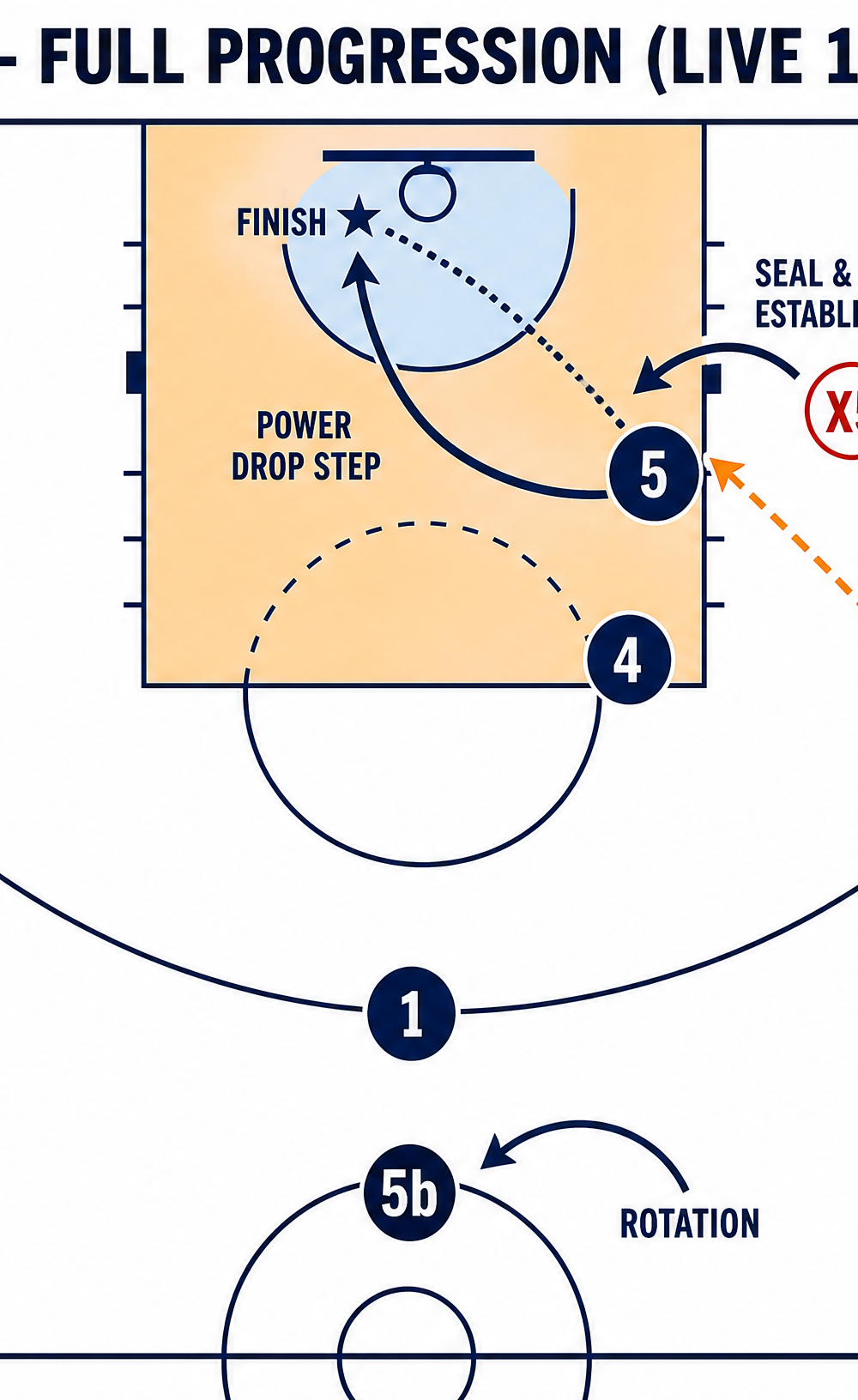
Proper setup is crucial for maximizing repetitions and maintaining drill intensity.
- Court Area: One half-court (standard FIBA dimensions: 15m wide x 14m deep to the half-court line).
- Players Required: Minimum of 4 players per basket (1 Post Player, 1 Defender, 1 Feeder/Passer, 1 Rebounder/Next in line). Ideal group size is 6-8 players to allow for adequate rest between intense bursts.
- Equipment: 2-3 basketballs per group, coaching whistle, and optionally, contact pads for the defender to simulate game-level physicality safely.
- Initial Positions:
- Post Player (5): Positioned on the low block (approximately 1.5m from the baseline, just outside the 5.8m wide key).
- Defender (X5): Positioned actively defending the post player (initially passive, progressing to live).
- Feeder (4): Positioned at the high post/elbow or wing (approximately 5-6m from the basket) with a basketball.
3. Step-by-Step Instructions
This drill is broken down into three distinct phases to ensure proper skill acquisition and progression.
Phase 1: The Drop Step Power Move
The drop step is the foundational move for any post player, used when the defender is playing on the high side.
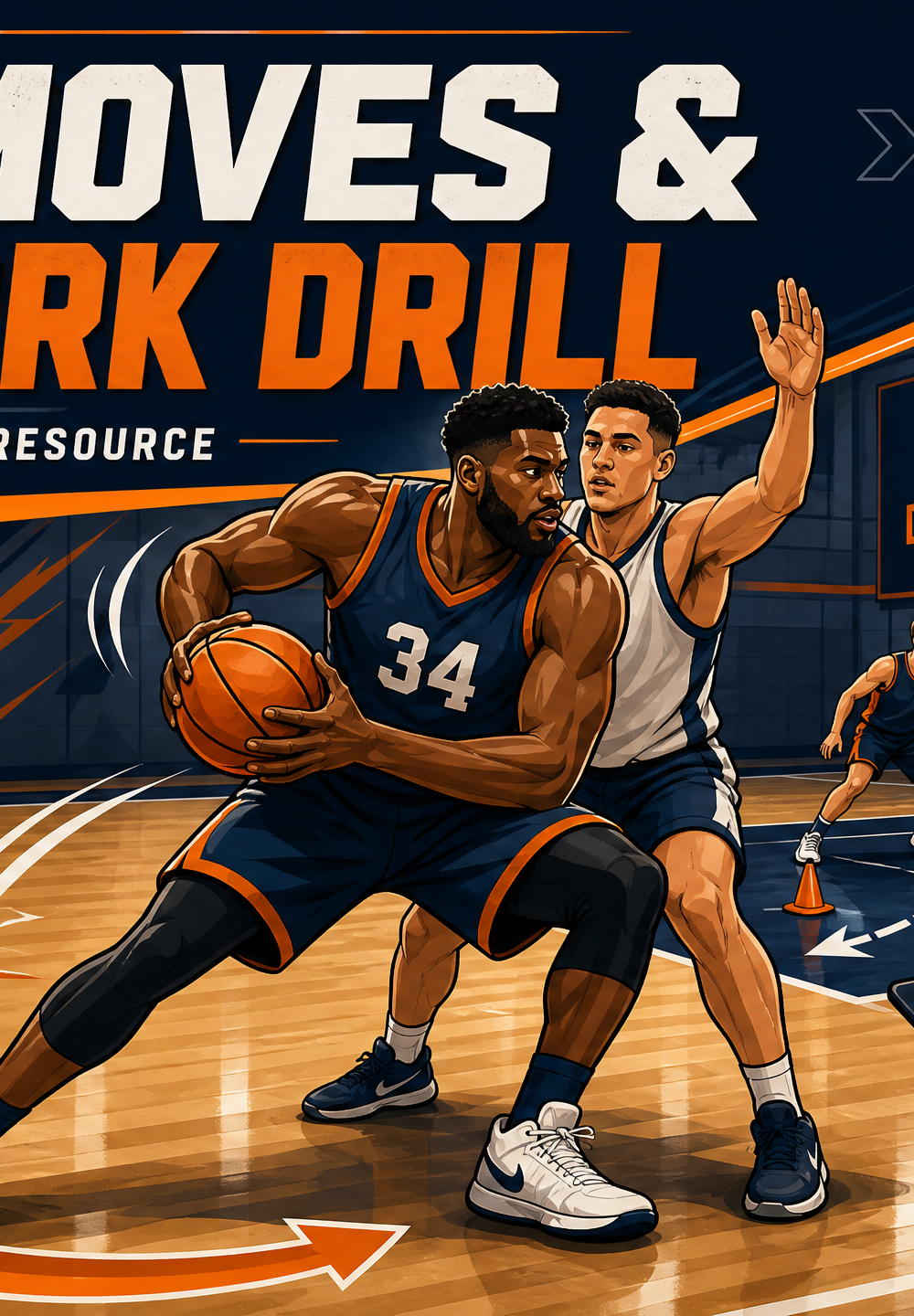
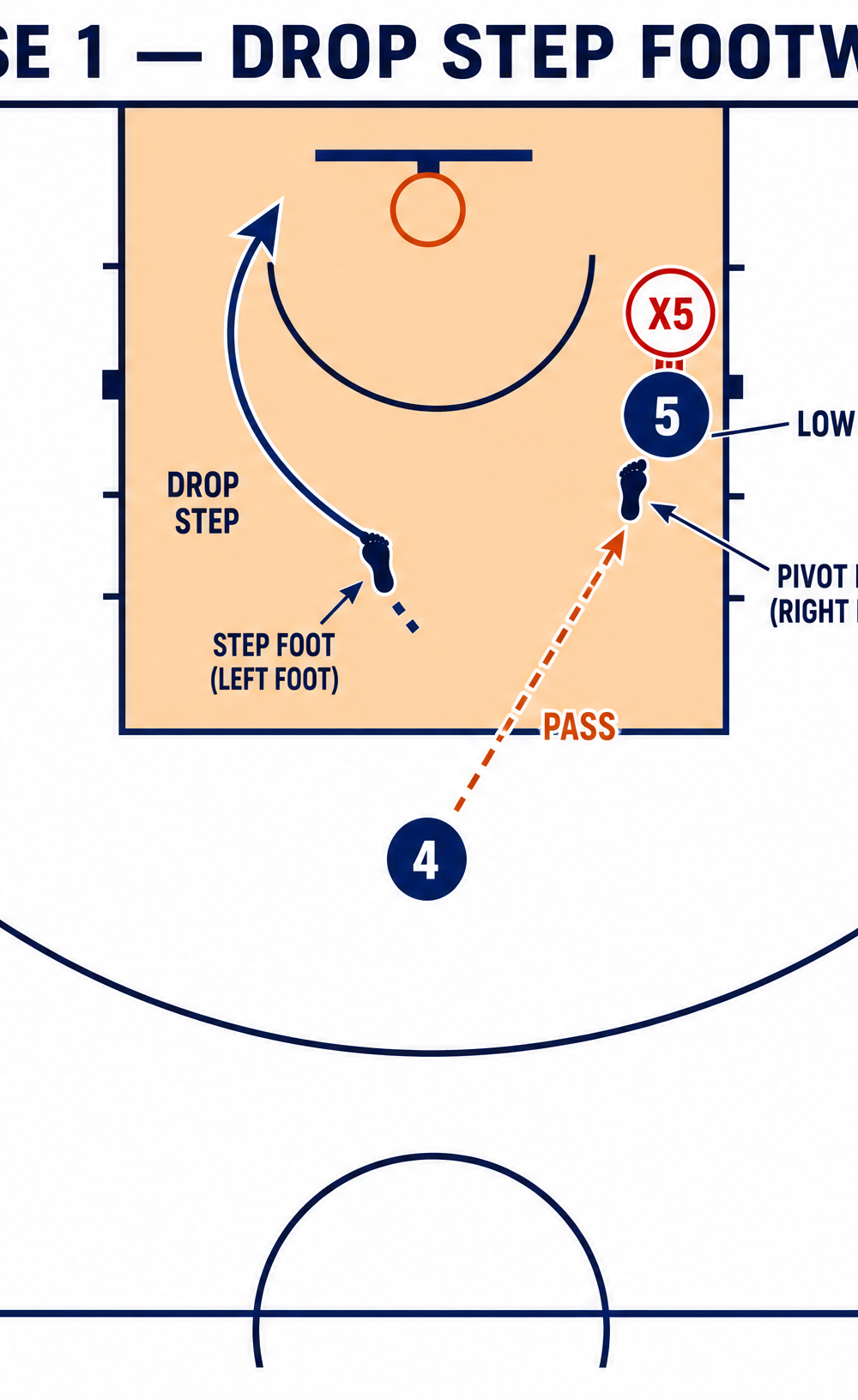
- Establish Position: The Post Player (5) starts on the low block, assuming a wide, balanced stance with knees bent. They must 'seal' the Defender (X5) on their high side (toward the free-throw line) using their forearm and lower body.
- Target Hand: The Post Player presents a clear target hand away from the defender to call for the ball.
- The Catch: The Feeder (4) delivers a crisp, two-handed chest or bounce pass to the target hand. The Post Player catches the ball with two hands and immediately 'chins' it (secures it under the chin with elbows out) to protect it from guards digging down.
- The Read and Pivot: Sensing the defender on the high side, the Post Player establishes their top foot (closest to the free-throw line) as the pivot foot.
- The Drop Step: The Post Player aggressively swings their baseline foot backward toward the basket, executing a deep drop step. The shoulders must square up to the backboard.
- The Finish: Without bringing the ball down, the Post Player explodes upward off two feet for a power layup or dunk on the side of the rim, using the backboard.
Phase 2: The Jump Hook and Up-and-Under Counter
Once the defense anticipates the drop step and plays behind or slightly baseline, the Post Player must counter toward the middle.
- The Setup: Similar to Phase 1, but the Defender (X5) is now positioned directly behind or shading the baseline side.
- The Catch and Middle Read: The Post Player receives the entry pass from the wing or high post. Reading the baseline pressure, they pivot on their baseline foot, opening up toward the middle of the paint.
- The Jump Hook (Primary): The Post Player takes a short, gathered step with their top foot into the middle of the lane. Keeping their non-shooting shoulder between the defender and the ball, they elevate off two feet and execute a sweeping jump hook shot.
- The Up-and-Under (Counter): If the defender aggressively contests the jump hook, the Post Player executes a shot fake (showing the ball and eyes at the rim). As the defender leaves their feet, the Post Player steps through with their non-pivot foot, ducking under the defender's arms for a reverse layup on the opposite side of the rim.
Phase 3: Live 1-on-1 Progression
The final phase integrates the skills into a dynamic, competitive environment.
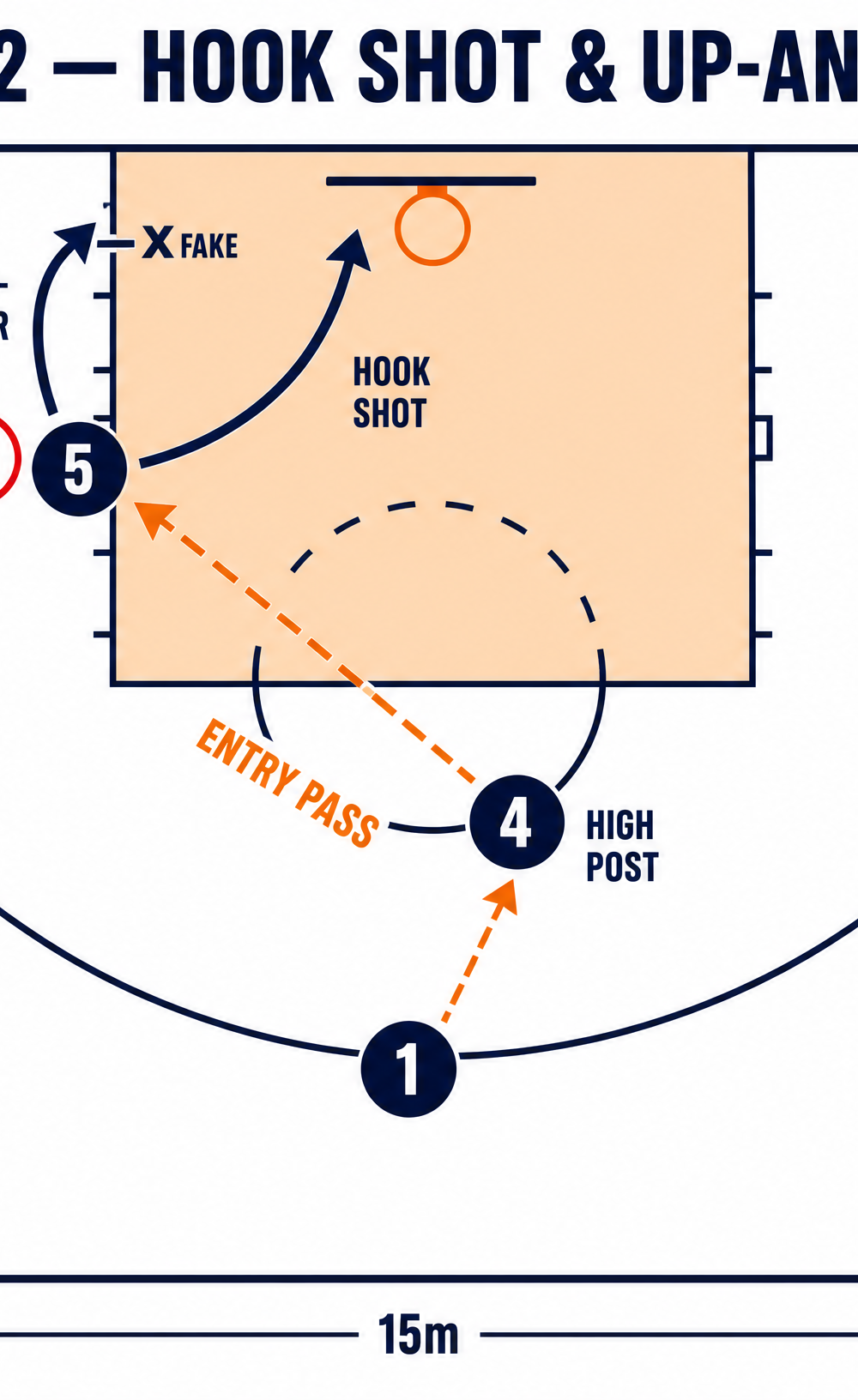
- Dynamic Entry: The drill begins with ball movement around the perimeter (e.g., from point guard to wing). The Post Player must actively fight for position (seal and establish) as the ball moves.
- Live Defense: Once the entry pass is thrown, the drill is completely live. The Defender (X5) attempts to deny the pass and contest any shot without fouling.
- Read and React: The Post Player must read the defender's positioning upon catching the ball and select the appropriate move (Drop Step, Jump Hook, or a counter).
- Play to the Whistle: The repetition continues until a basket is scored, a defensive stop is made, or a foul is called. Players then rotate (Offense to Defense, Defense to Rebounder/Line, Line to Feeder).
4. Key Coaching Points
- Do Your Work Early: The battle in the post is often won before the ball arrives. Emphasize fighting for deep, established position on the block rather than getting pushed out to the mid-post.
- Chin the Ball: Immediately upon catching the entry pass, the ball must be secured tightly under the chin with elbows wide. This prevents guards from swiping the ball and establishes a strong base for the move.
- Read the Defense: Teach players to feel the defender rather than look for them. If the pressure is high, drop step baseline. If the pressure is low/baseline, pivot middle for the hook.
- Explode Off Two Feet: Emphasize finishing strong off two feet rather than one. This provides better balance, the ability to absorb contact, and a stronger base for an offensive rebound if the shot is missed.
- Sell the Fake: On the up-and-under counter, the shot fake must be convincing. Eyes on the rim, ball brought up sharply, and a slight upward body movement are required to get the defender airborne.
5. Common Mistakes
- Bringing the Ball Down: Post players often lower the ball to their waist after catching it, exposing it to smaller, quicker defenders who will easily strip it.
- Rushing the Move: Players frequently try to make their move before securing the catch or fully reading the defender's position, leading to traveling violations or forced shots.
- Weak Sealing: Failing to maintain a wide base and active arms while calling for the ball allows the defender to easily step around and deflect the entry pass.
- Fading Away: On jump hooks, players sometimes fade away from the basket rather than jumping straight up or slightly into the defender, significantly reducing their shooting percentage.
6. Variations & Progressions
- Add Perimeter Pressure: Have a defender actively guard the Feeder to make the entry pass more difficult and game-realistic.
- Double Team Read: Introduce a second defender who occasionally 'digs' or fully double-teams the post on the catch. The Post Player must recognize this and execute a kick-out pass to an open perimeter shooter.
- Time Limit: Implement a 3-second rule once the ball is caught in the post to encourage quick decision-making and decisive moves.
7. Age Adaptations
- Under 10 / Under 12: Focus strictly on Phase 1 and Phase 2 without a live defender. Use cones or a coach holding a pad to simulate defensive positioning. Emphasize basic footwork (pivot foot recognition) and finishing mechanics.
- Under 14 / Under 16: Introduce passive to semi-live defense. Emphasize the importance of sealing and the up-and-under counter. Begin teaching how to read the defender's body weight.
- Open / Advanced: Full live 1-on-1 competition with physical defense (using contact pads if necessary). Incorporate double-team reads and kick-out passes to perimeter shooters.