Mastering the Goal Kick: Playing Through the Press in a 4-3-3
Learn how to structure your team for successful goal kick build-ups, break the first line of pressure, and exploit wide areas using a modern 4-3-3 shape.
Equipment Needed
1. Overview
Building out from the back starting with a goal kick has become a fundamental aspect of modern football. When executed correctly, a structured goal kick build-up allows a team to retain possession, draw the opposition forward to create space in behind, and progress the ball cleanly into the middle and attacking thirds.
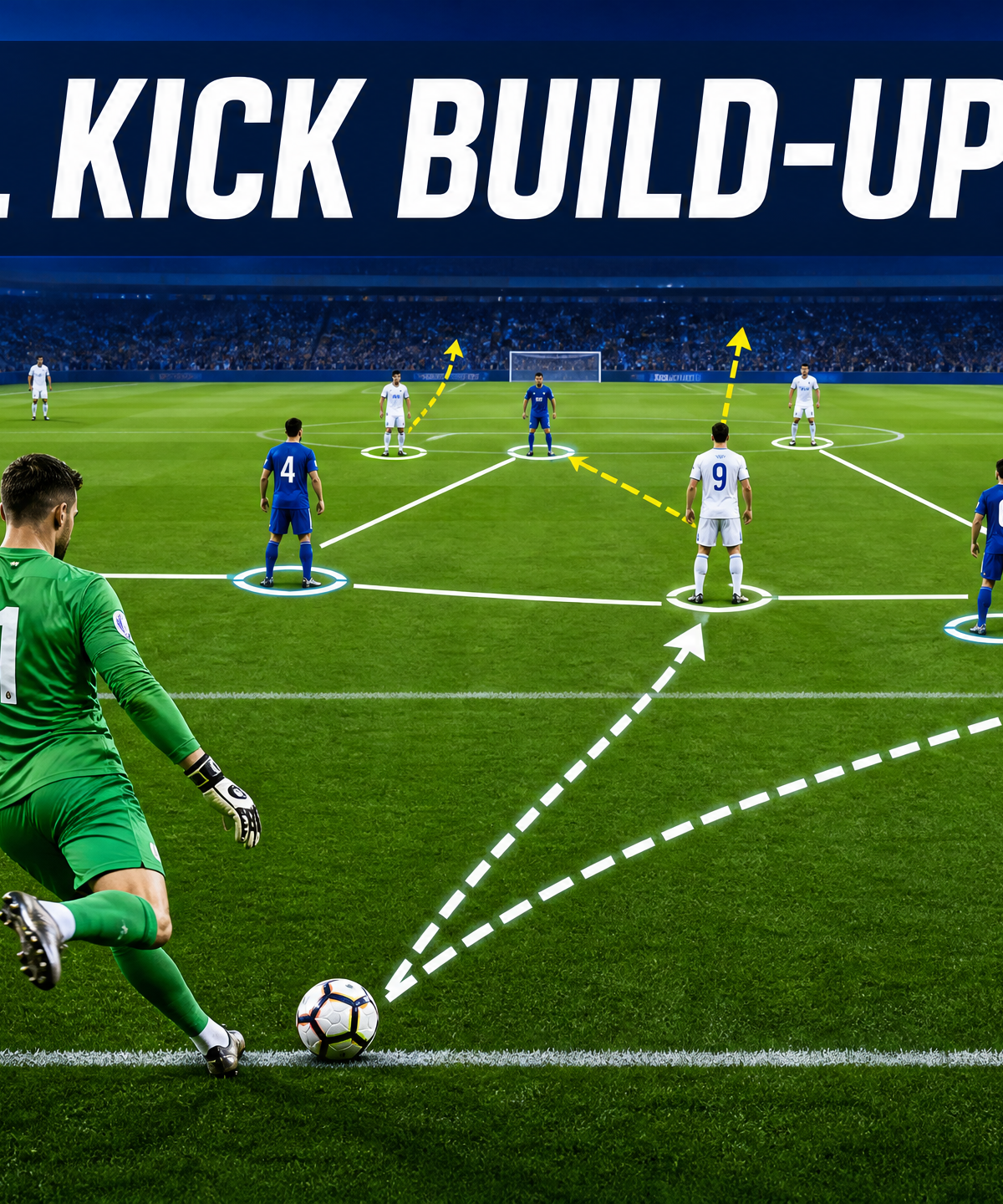
This set play focuses on a 4-3-3 formation, demonstrating how to use the Goalkeeper (1) as an active outfield player, split the Centre Backs (5 & 6) to stretch the first line of pressure, and utilize the Defensive Midfielder (4) as a pivot to break lines. It is designed to give your team multiple passing options and a clear methodology for bypassing high-pressing opponents.
2. Setup
Equipment Needed:
- 1 Full-size pitch (approx. 105m x 68m)
- 1 Full-size goal
- 10-12 footballs placed near the goal
- Bibs for 11 attacking players and 6-8 pressing defenders
- Cones to mark specific reference zones (optional for training)
Pitch Setup & Player Positions:
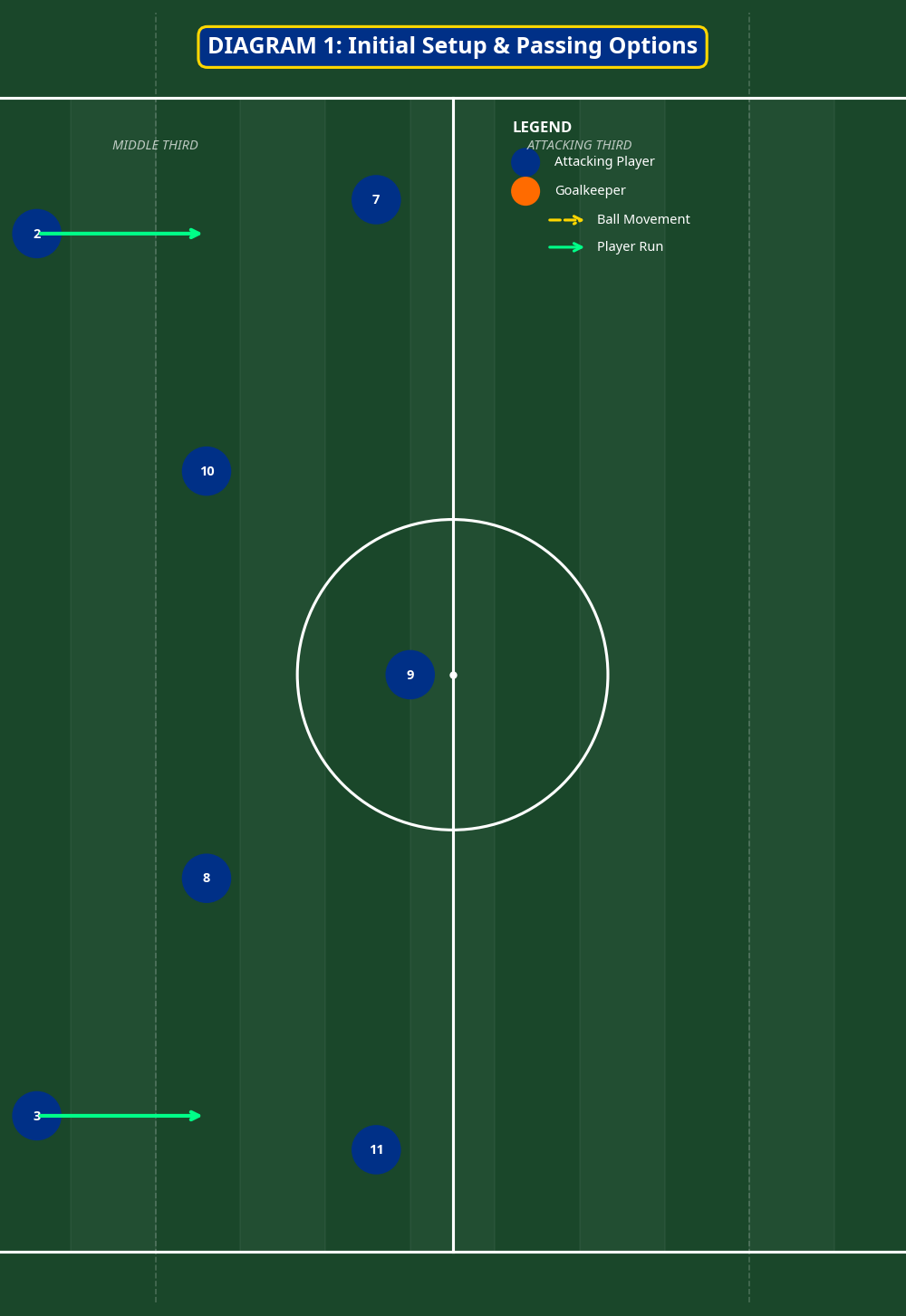
Set up your team in a 4-3-3 shape as shown in Diagram 1.
- Goalkeeper (1): Starts with the ball centrally on the 6-yard box.
- Centre Backs (5 & 6): Drop deep and wide, positioned inside the penalty area or just outside, level with the 6-yard box to stretch the opposing strikers.
- Full Backs (2 & 3): Push high and wide, hugging the touchline to provide maximum width and force the opposing wingers to make a decision.
- Defensive Midfielder (4): Drops centrally between the Centre Backs, offering a bounce pass option.
- Central Midfielders (8 & 10): Positioned in the half-spaces, ready to drop into pockets of space or make penetrating runs.
- Wingers (7 & 11): Stay high and wide to pin back the opposition full-backs.
- Striker (9): Central, providing depth and ready to drop in as a target man if the team is forced to go long.
3. Step-by-Step Instructions
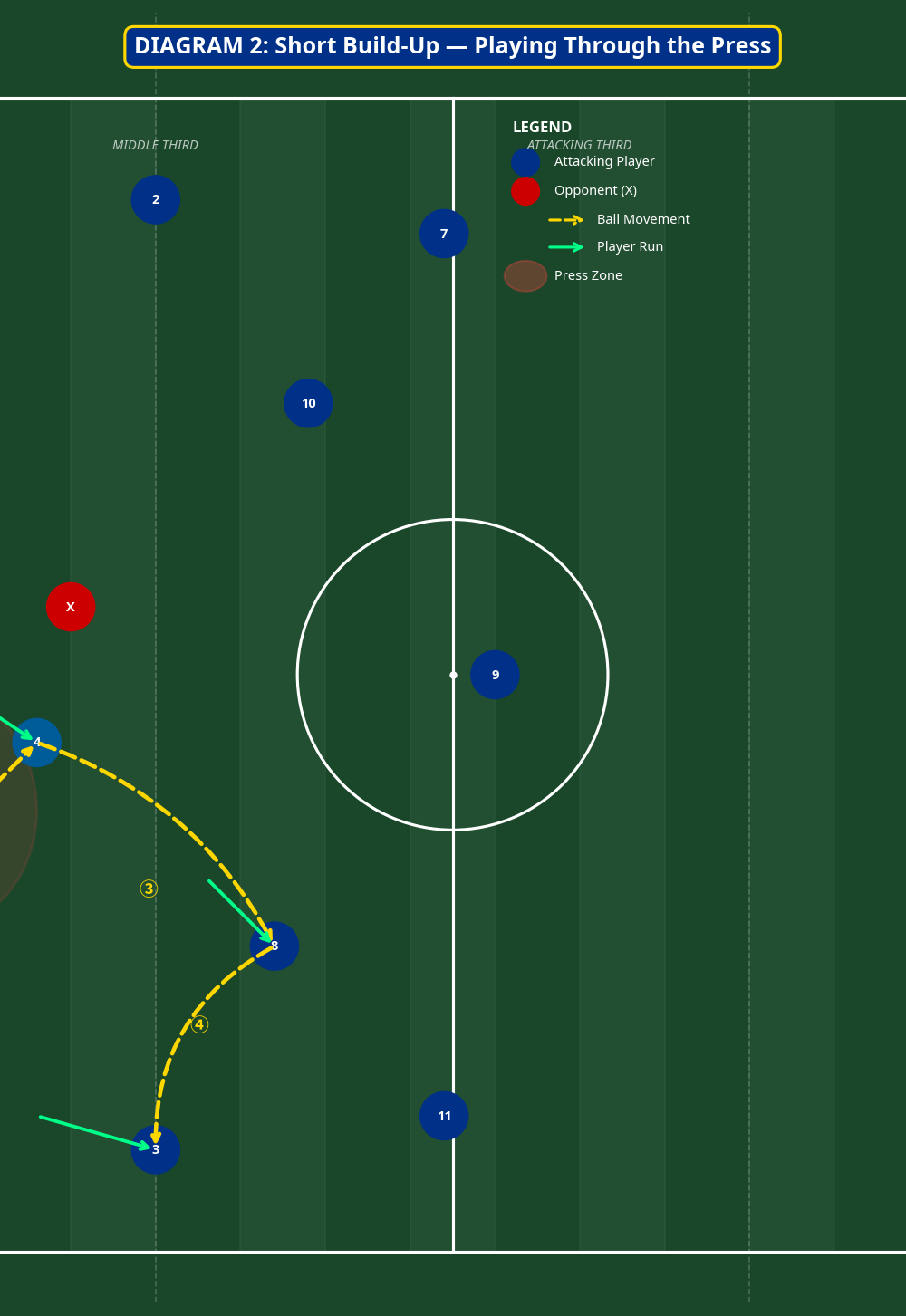
Option A: The Short Build-Up (Through the Press)
This sequence is used when the opposition commits 2-3 players to a high press but leaves gaps in the midfield.
- Trigger: The Goalkeeper (1) plays a firm, flat pass to the Left Centre Back (5).
- Attract Pressure: As the opposing forward presses CB5, the Defensive Midfielder (4) drops into the space left behind the pressing forward.
- Break the Line: CB5 plays a quick, one-touch pass into the feet of DM4.
- Progress the Play: DM4 turns out of pressure and plays a diagonal through ball to the Left Central Midfielder (8), who has dropped into the half-space.
- Release: CM8 receives on the half-turn and immediately releases the Left Back (3) down the wide channel, bypassing the entire opposition midfield.
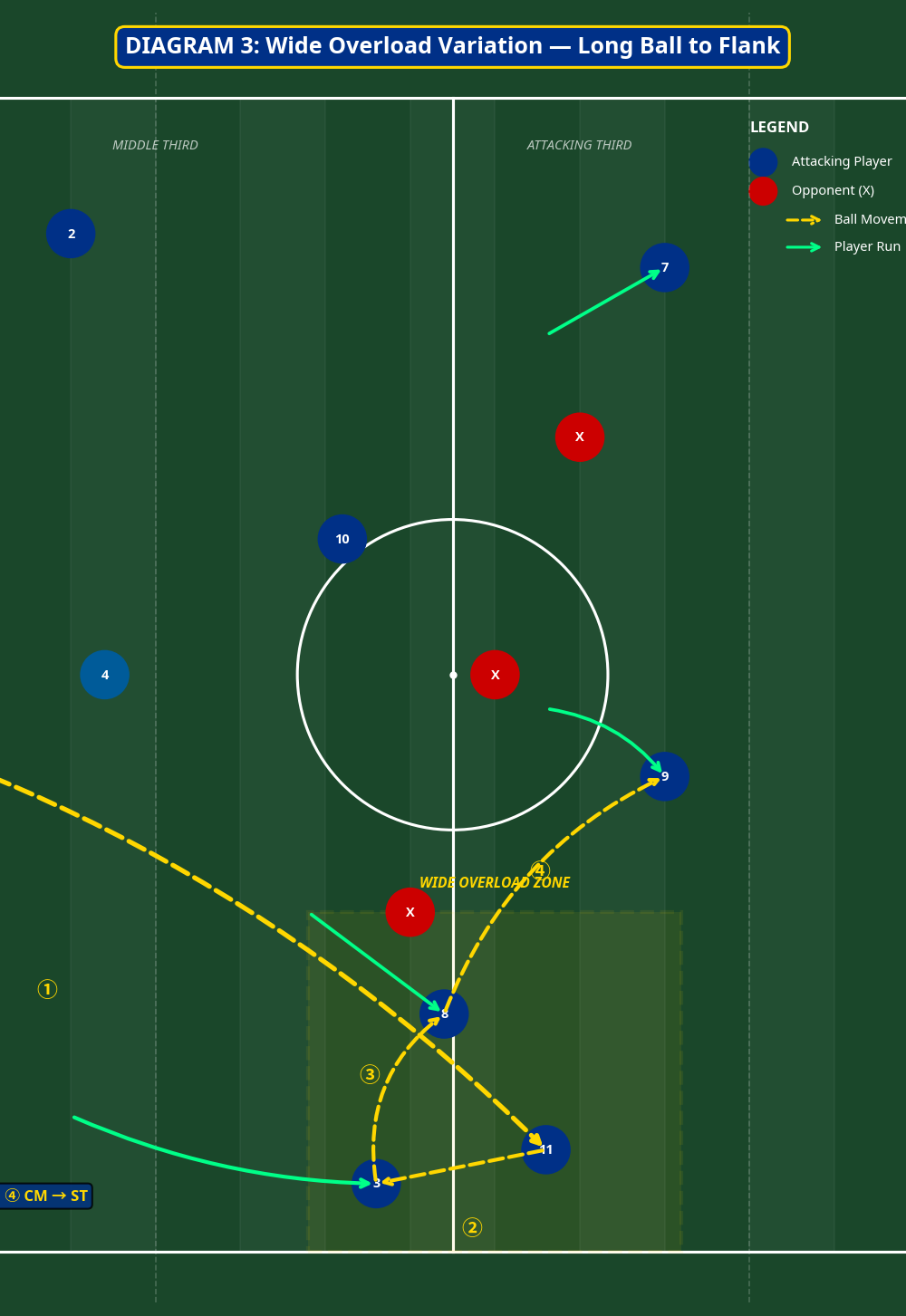
Option B: The Long Variation (Wide Overload)
This variation is essential when the opposition commits a heavy man-to-man press, completely suffocating short options in the defensive third.
- Trigger: The Goalkeeper (1) recognizes the high press and signals for the long option.
- The Target: The GK drives a lofted pass out to the Left Winger (11), who drops slightly to contest the aerial duel.
- The Lay-off: LW11 wins the header or controls the ball, immediately laying it off to the overlapping Left Back (3).
- The Overload: The Left Central Midfielder (8) makes a supporting run into the wide channel, creating a 3v2 overload against the opposition's right side.
- The Penetration: LB3 combines with CM8 to break into the final third, while the Striker (9) and Right Winger (7) make aggressive runs into the penalty box to attack the incoming cross.
4. Key Coaching Points
- Body Shape & Scanning: Players must scan the field before receiving the ball. They should adopt an open body shape to see both the ball and their next passing option, allowing for quick, one-touch play.
- Patience on the Ball: The Centre Backs and Goalkeeper must be comfortable inviting pressure. The goal is to draw opponents out of position before playing the penetrating pass.
- Pass Speed & Accuracy: Passes in the defensive third must be hit with purpose. Slow, bobbling passes are easily intercepted by pressing forwards.
- Third Man Runs: Encourage the concept of the 'third man'. For example, when the CB passes to the DM, the CM should already be moving into space to receive the next pass.
- Recognizing the Press: The team must collectively recognize whether the opposition is pressing high or dropping off, and instantly decide whether to play short (Option A) or long (Option B).
5. Common Mistakes
- Forcing the Pass: Playing into a heavily marked Defensive Midfielder instead of recycling possession back to the Goalkeeper.
- Static Movement: Players standing still and waiting for the ball. Movement off the ball is crucial to create passing lanes and drag defenders out of position.
- Full Backs Too Deep: If the Full Backs don't push high enough, the pitch isn't stretched, making it easier for the opposition to press in a compact block.
- Poor Goalkeeper Distribution: The GK failing to hit the target accurately when forced to play the long variation, resulting in an immediate turnover.
6. Variations & Progressions
- Progression 1 (Adding Pressure): Start the drill with passive defenders (shadow play), then gradually increase the intensity to full, live pressure to simulate match conditions.
- Progression 2 (Time Limit): Introduce a rule where the team must progress the ball past the halfway line within 10 seconds of the goal kick being taken.
- Variation 1 (The False Full Back): Instead of the Full Backs pushing high, have one Full Back invert into central midfield alongside the DM, confusing the opposition's marking scheme.
- Variation 2 (Switching Play): If the press is heavy on one side, drill the team on quickly recycling the ball through the Goalkeeper to switch the point of attack to the opposite Centre Back.
7. Age Adaptations
- Under 8 - Under 10: Focus heavily on basic technical skills: taking a good first touch away from pressure and accurate short passing. Keep the opposition press minimal or non-existent initially.
- Under 12 - Under 14: Introduce the concept of scanning and body shape. Begin teaching the tactical positioning of the Centre Backs and Defensive Midfielder. Add moderate, structured pressing.
- Under 16 - Open: Full tactical implementation. Demand high-speed decision making, complex third-man combinations, and the ability to seamlessly switch between short and long variations based on the opposition's pressing triggers.