

Football
The Third-Man Release: Throw-in Play for Quick Advantage
Learn how to turn a static throw-in into a dynamic attacking opportunity using decoy runs and a third-man release into the channel.
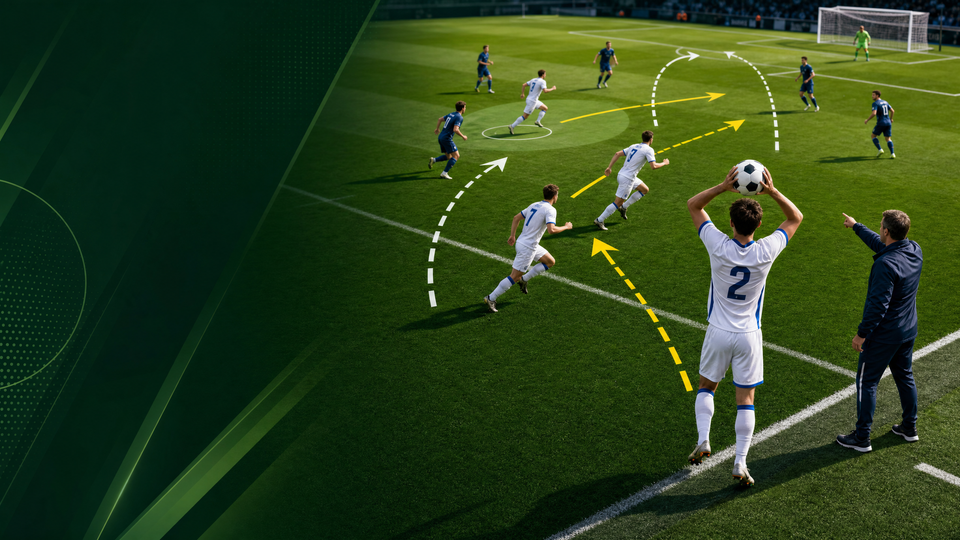
What you need
1 football, 4-6 training bibs, Cones
1. Overview
Throw-ins in the attacking half are often viewed as a chore, a mere restart of play that frequently results in a turnover. However, with coordinated movement, a throw-in becomes a lethal set-piece opportunity. The Third-Man Release is designed to exploit the aggressive man-marking that typically occurs during throw-ins. By using a coordinated decoy run to drag defenders out of position, this play opens up a channel for a third-man run, allowing your team to quickly penetrate the defensive line and create an immediate attacking advantage.
This play is particularly effective when used in the middle third or attacking third of the pitch (approximately 30 to 60 meters from the opponent's goal), where a successful release into the channel can lead directly to a crossing opportunity or a shot on goal.
2. Setup
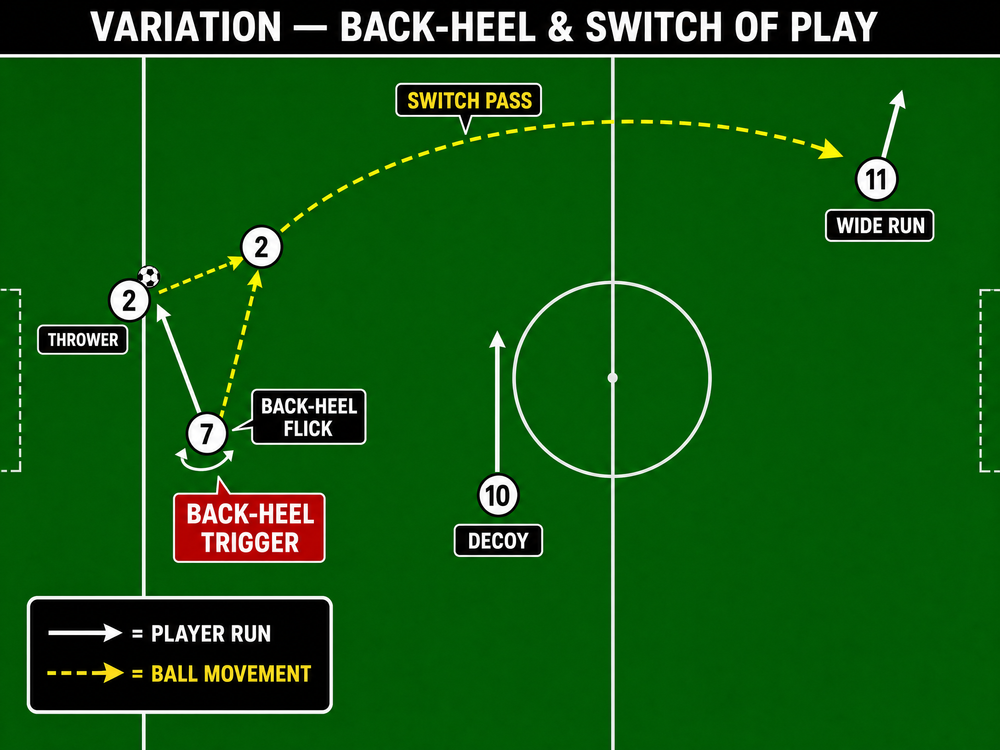
To run this play effectively, you need to establish clear starting positions. The pitch dimensions should be standard (100-110m x 64-75m).
- Equipment: 1 football, 4-6 training bibs (for defenders if practicing in a session), cones to mark the target zones.
- Players Required: 4 attacking players (Thrower, Decoy, Target, Third-Man Runner).
- Player Positions:
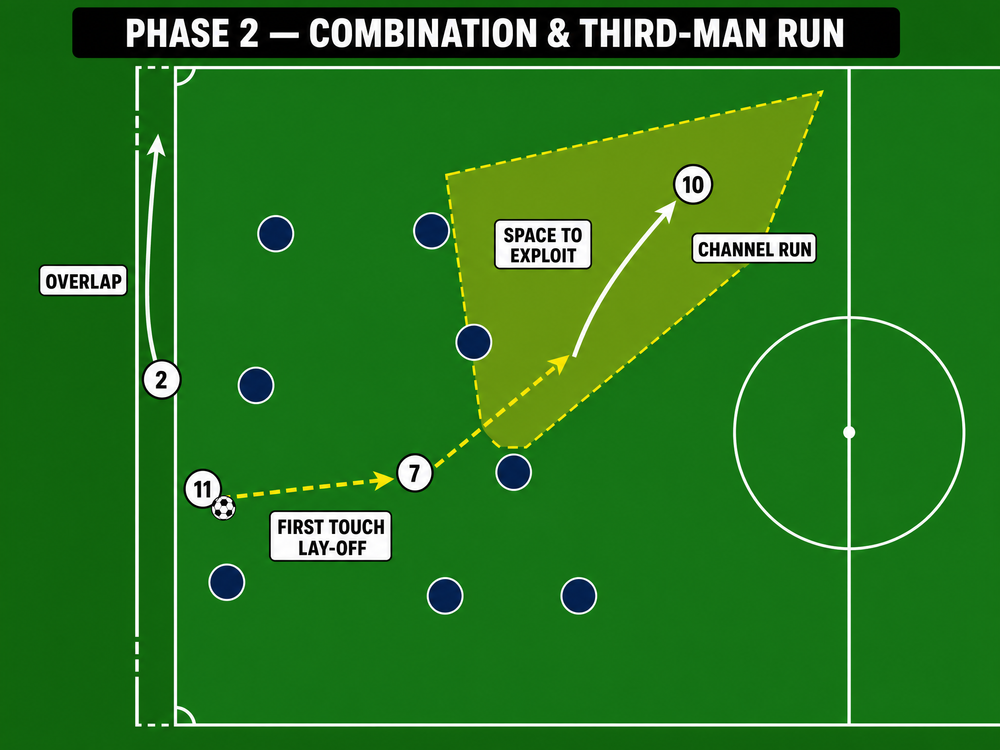
- Player 2 (Fullback): The thrower, positioned on the touchline.
- Player 7 (Winger/Midfielder): The decoy, starting approximately 5 meters from the thrower, slightly infield.
- Player 11 (Forward/Winger): The target player, starting 8-10 meters ahead of the thrower, positioned to make a diagonal run.
- Player 10 (Attacking Midfielder): The third-man runner, starting 15 meters infield, ready to exploit the space created.
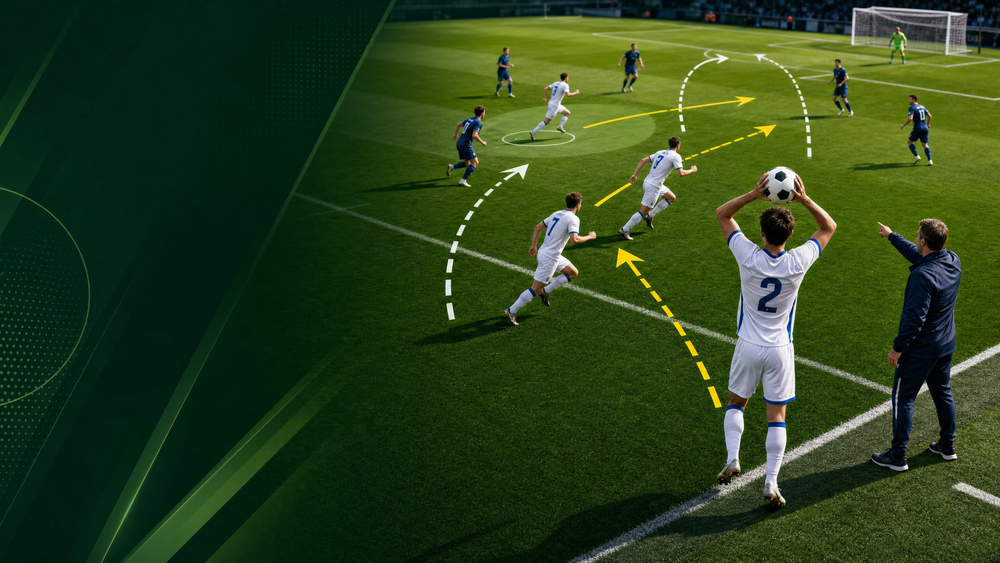
3. Step-by-Step Instructions
Execution requires precise timing. Follow these steps to ensure the play functions correctly:
- The Trigger: Player 2 (the thrower) raises the ball above their head. This is the visual trigger for the movement to begin.
- The Decoy Run: Player 7 immediately sprints toward Player 2, demanding the ball loudly. This run is designed to drag the marking defender (and potentially a covering midfielder) toward the ball, emptying the space behind them.
- The Target Run: As Player 7 moves toward the ball, Player 11 makes a sharp, explosive diagonal run away from the touchline and into the space left vacant by the defenders reacting to Player 7.
- The Throw: Player 2 executes a firm, accurate throw-in directly to the feet or chest of Player 11. The throw must be paced so Player 11 can control it instantly.
- The Lay-off: Player 11 receives the ball and immediately plays a one-touch lay-off pass back into the path of Player 7, who has spun out of their decoy run and is now facing up the pitch.
- The Third-Man Release: As the lay-off occurs, Player 10 makes a penetrating run into the deep channel behind the defensive line. Player 7 plays a first-time, weighted pass into the path of Player 10.
- The Overlap (Optional): Player 2 steps onto the pitch after the throw and makes a hard overlapping run down the touchline to provide an additional passing option or to draw a defender away from Player 10.
4. Key Coaching Points
To ensure success on match day, focus on these critical teaching points during training:
- Convincing Decoy Runs: Player 7 must sprint and call for the ball as if they are the primary target. A half-hearted run will not move the defenders.
- Timing is Everything: Player 11 must not start their run too early. They should wait for Player 7 to clear the space before exploding into the target zone.
- Weight of the Throw: The throw from Player 2 must be driven, not lofted. A slow, looping throw allows defenders to recover and intercept the ball.
- One-Touch Execution: The lay-off from Player 11 and the release pass from Player 7 must be played quickly, ideally with one touch. Taking extra touches allows the defense to close the passing lanes.
- Explosive Third-Man Run: Player 10 must read the play and time their run to arrive in the channel just as the ball is played. They must accelerate aggressively to beat the offside trap.
5. Common Mistakes
Watch for these common errors and correct them immediately:
- Telegraphing the Play: The thrower (Player 2) stares directly at Player 11 before the throw, alerting the defense to the intended target.
- Poor Spacing: Players start too close together, clogging the area and making it easy for one defender to cover multiple attackers.
- Hesitation on the Lay-off: Player 11 tries to turn with the ball instead of playing the quick lay-off, resulting in a loss of possession under pressure.
- Static Third-Man: Player 10 waits to see if the pass is successful before starting their run, arriving too late to exploit the space.
6. Variations & Progressions
Once the team has mastered the basic play, introduce these variations to keep the opposition guessing:
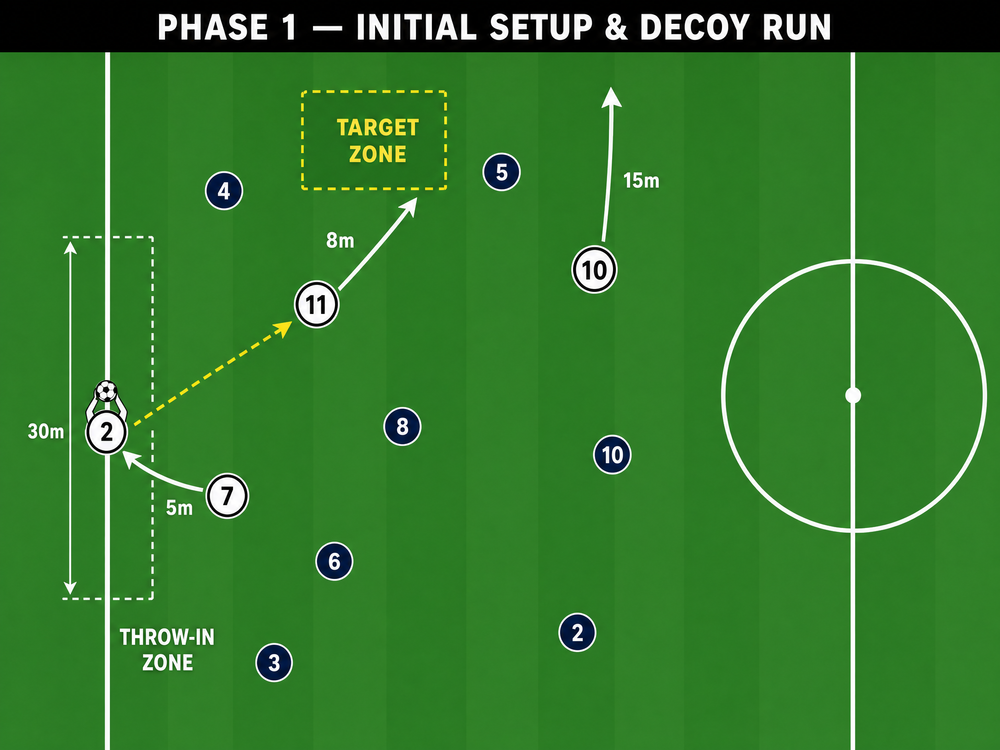
- The Back-Heel Switch: Instead of Player 11 receiving the throw, Player 7 receives it to their feet, executes a quick back-heel flick back to Player 2 (who has stepped onto the pitch), and Player 2 immediately plays a long switch pass to the opposite flank to exploit the shifted defense.
- The Dummy Run: Player 11 makes the run into the target zone but steps over the ball, allowing it to run through to Player 10 who has made a deeper run directly from the midfield.
7. Age Adaptations
This play can be modified to suit the technical abilities of different age groups:
- Under 10s: Focus purely on the movement of the thrower and one receiver. Teach the concept of moving into space rather than the complex third-man combination.
- Under 12s - Under 14s: Introduce the decoy run and the lay-off. Emphasize the importance of the driven throw and the quick first touch.
- Under 16s - Open: Execute the full play at match speed. Focus on the timing of the third-man run and the precision of the final release pass. Introduce the variations.
