Goal Circle Shooting Accuracy & Movement Drill
Improve your shooters' accuracy under fatigue and perfect their circle entry movements with this high-intensity, match-realistic shooting drill.
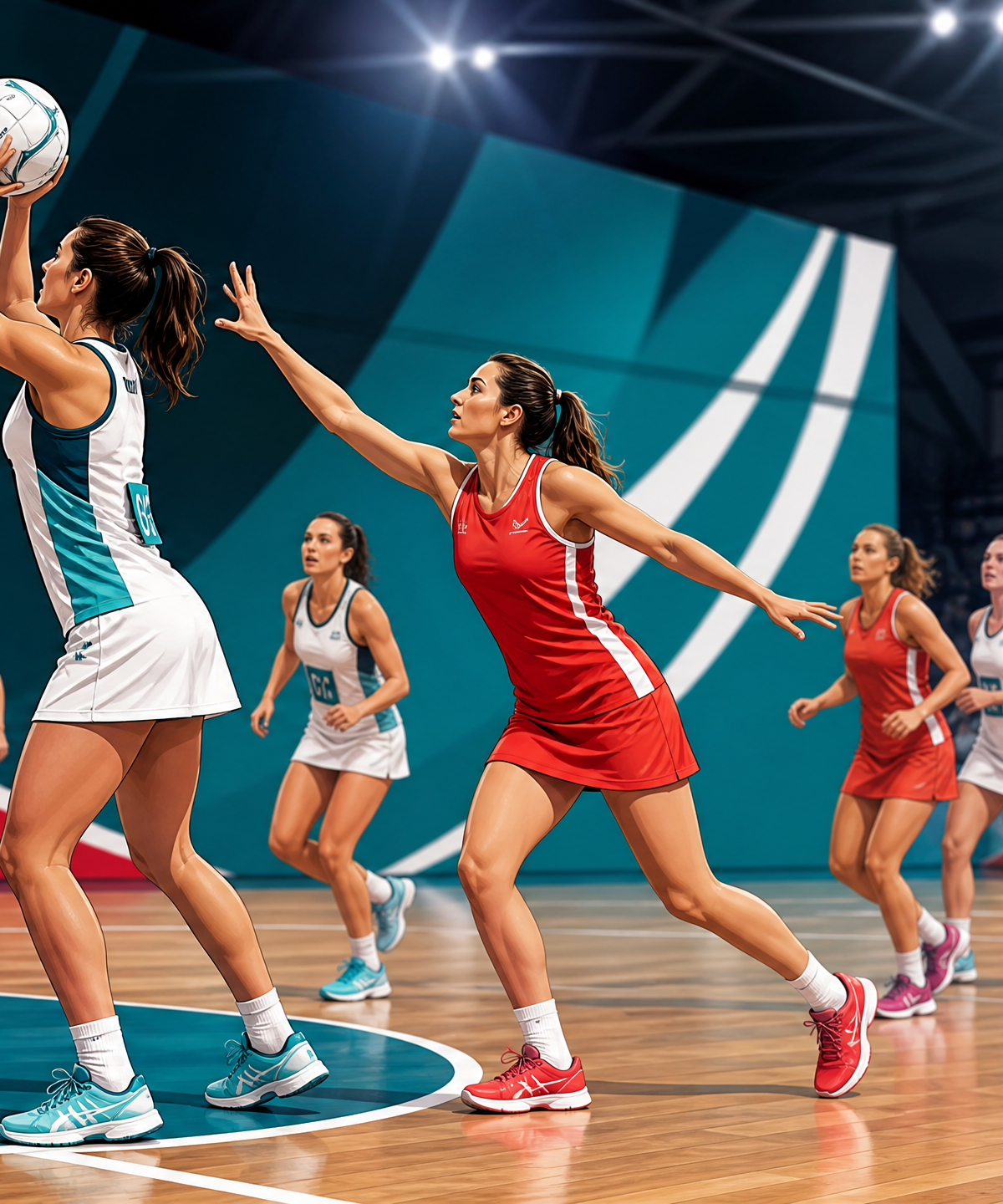
Equipment Needed
Overview
Shooting accuracy in netball drops significantly when players are fatigued or under defensive pressure. This comprehensive goal circle drill is designed to bridge the gap between static shooting practice and match-day performance. By combining high-intensity movement, precise circle entries, and varied shooting positions, this drill ensures your Goal Shooter (GS) and Goal Attack (GA) can reliably convert possession into points when it matters most. Use this drill during the main body of your training session to condition your shooters and sharpen their decision-making.
Setup
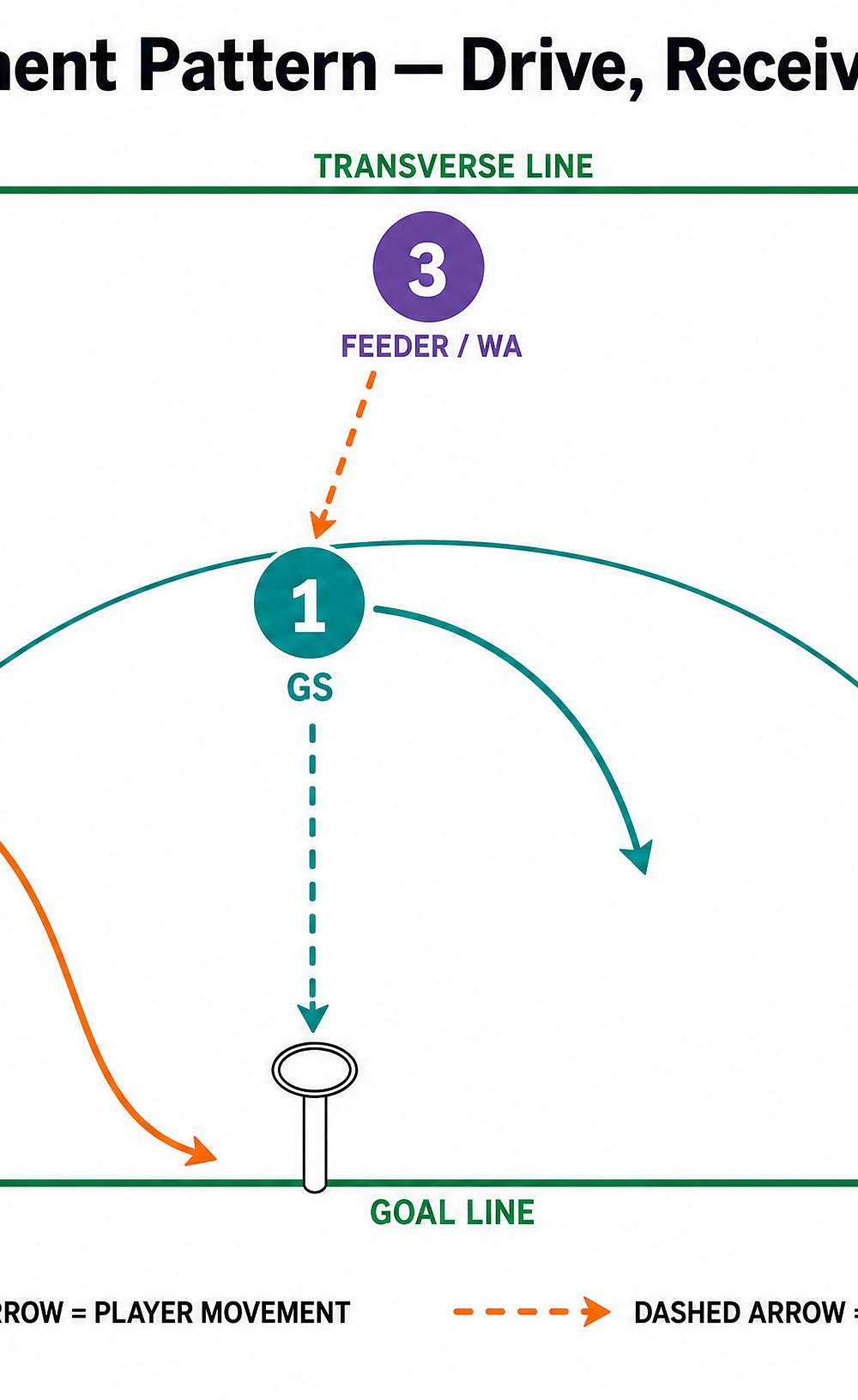
Proper setup is crucial for maximizing repetitions and keeping the drill flowing smoothly.
- Equipment Needed: 2-3 netballs, 5 marker cones (optional, for visual reference), and a standard netball post.
- Court Area: One goal third of a standard netball court (30.5m x 15.25m), specifically utilizing the 4.9m radius goal circle.
- Player Positions:
- 1 x Goal Shooter (GS)
- 1 x Goal Attack (GA)
- 1 x Feeder (typically a Wing Attack (WA) or Centre (C))
- 1 x Defender (Goal Keeper (GK) or Goal Defence (GD)) - optional for progression
Court Setup Diagram
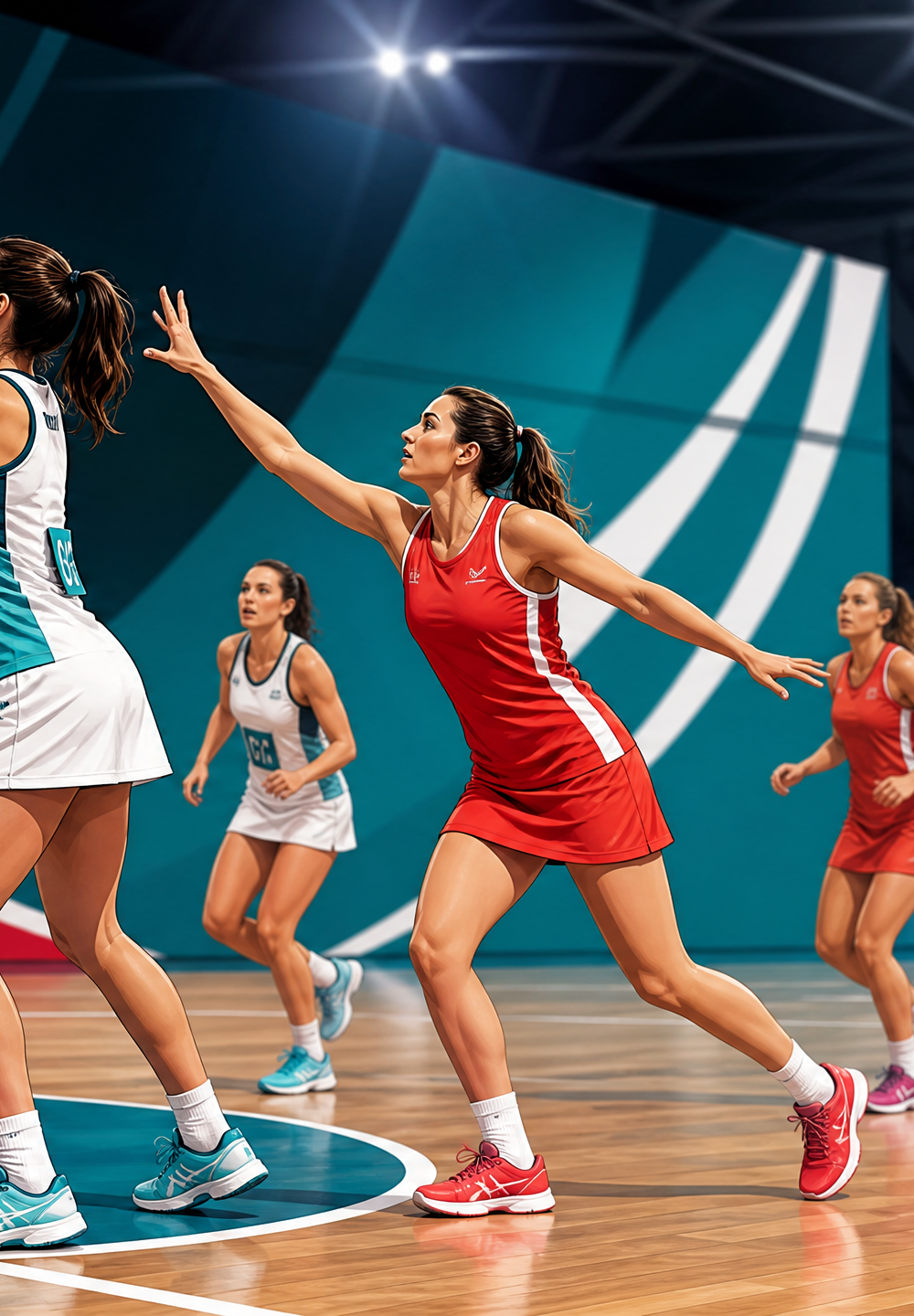
The diagram above illustrates the five key shooting positions within the 4.9m goal circle. Position 1 is directly in front of the post, while Positions 2 through 5 cover the 45-degree angles and the baseline edges.
Step-by-Step Instructions
Follow these steps to execute the drill effectively. Ensure players maintain a high intensity throughout the movement phases.
- Initial Positioning: The Feeder sets up just outside the goal circle, near the transverse line, with a netball. The GS starts at the top of the goal circle, and the GA starts on the left edge of the circle.
- The Drive: The GS makes a strong, sharp drive towards the right side of the goal circle to receive a pass from the Feeder.
- The Catch and Balance: The GS receives the ball, lands perfectly balanced (one-two step or jump stop), and immediately squares up to the goal post.
- The Shot: The GS executes a shot from their received position (aiming for one of the 5 key zones). They must hold their follow-through until the ball passes through the ring.
- The Rebound and Reset: The GA drives in for the potential rebound. If the shot is made, the GA retrieves the ball and passes it quickly back to the Feeder. If missed, the GA secures the rebound and passes out.
- Rotation: The GS and GA swap starting positions, and the drill repeats on the opposite side of the circle.
Movement Pattern Diagram
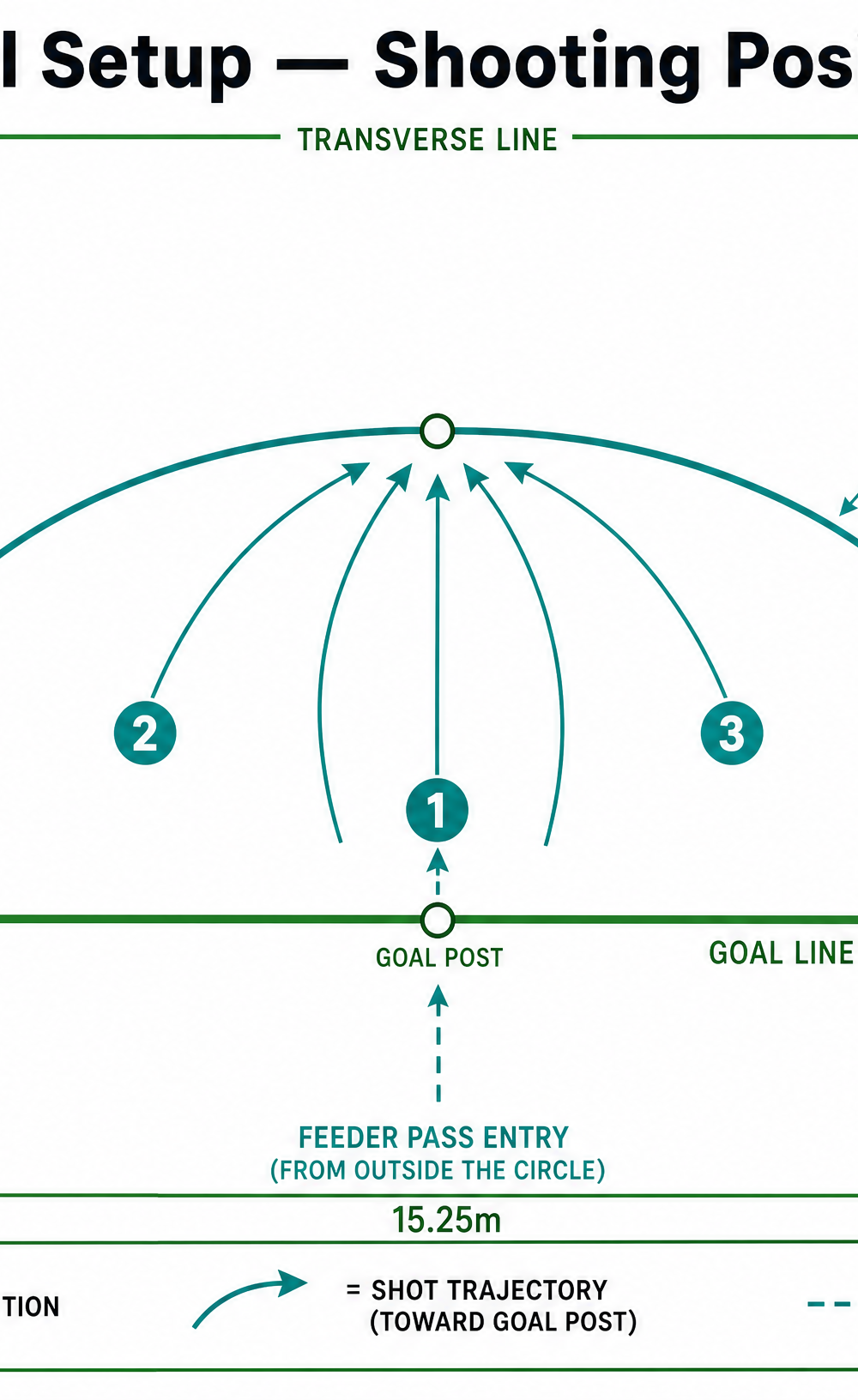
This diagram details the movement pattern. Notice the GS driving to receive the pass from the Feeder, while the GA times their run to the post for the rebound.
Key Coaching Points
Focus on these critical elements to ensure your players get the most out of this drill:
- Strong, Decisive Drives: Shooters must sprint to the ball, not jog. The change of pace is what loses a defender in a real match.
- Balanced Landing: Emphasize dropping the hips and maintaining a strong core upon landing. A balanced base is the foundation of an accurate shot.
- Square Up Quickly: As soon as the ball is caught, the shooter's shoulders and hips must immediately turn to face the goal post.
- High Release Point: Ensure shooters are extending fully through their arms and flicking their wrists, keeping the release point as high as possible to shoot over imaginary (or real) defenders.
- Aggressive Rebounding: The non-shooting player must anticipate the miss and attack the space under the post, establishing front position.
Common Mistakes
Watch out for these frequent errors and correct them immediately:
- Drifting on the Shot: Shooters stepping backward or falling away as they release the ball, which severely impacts accuracy.
- Looking for the Post Too Late: Shooters catching the ball and then searching for the post. Their eyes should lock onto the ring while the ball is in flight to them.
- Weak Passes from the Feeder: Looping or slow passes allow defenders to intercept. Feeders must deliver flat, hard passes into the shooter's space.
- Static Rebounding: The rebounding player standing still and waiting to see if the ball goes in, rather than moving to the post as the shot is released.
Variations & Progressions
Adapt the drill to suit your team's skill level and to keep the challenge high.
- Add a Defender (Progression): Introduce a GK to track the GS. The GK applies physical pressure on the drive and the shot, forcing the GS to hold their space and shoot over hands.
- Time Limit (Progression): Challenge the pair to score 10 goals from 5 different positions in under 60 seconds. This induces fatigue and simulates end-of-quarter pressure.
- Stationary Shooting (Variation - Easier): For beginners, remove the dynamic drive. Have the shooters start on the designated spots (Positions 1-5), receive the pass, and shoot, focusing purely on technique.
Age Adaptations
Tailor the drill for different age groups to ensure safety and developmental appropriateness.
- Under 10s: Lower the goal post to 2.44m (8ft) if possible. Use a smaller size 4 netball. Focus entirely on the correct shooting technique (B.E.E.F - Balance, Eyes, Elbow, Follow-through) rather than speed of movement.
- Under 12s/14s: Introduce the dynamic movement, but allow them to take an extra second to balance before shooting. Focus on the footwork upon receiving the ball.
- Under 16s/Open: Run the drill at full match intensity. Demand perfect execution under physical fatigue and defensive pressure. Introduce complex double-movements before receiving the pass.