High-Tempo One-Touch Passing Combination Drill
Master quick ball circulation and intelligent off-the-ball movement with this high-intensity, one-touch passing combination drill designed to break down compact defenses.
Equipment Needed
1. Overview
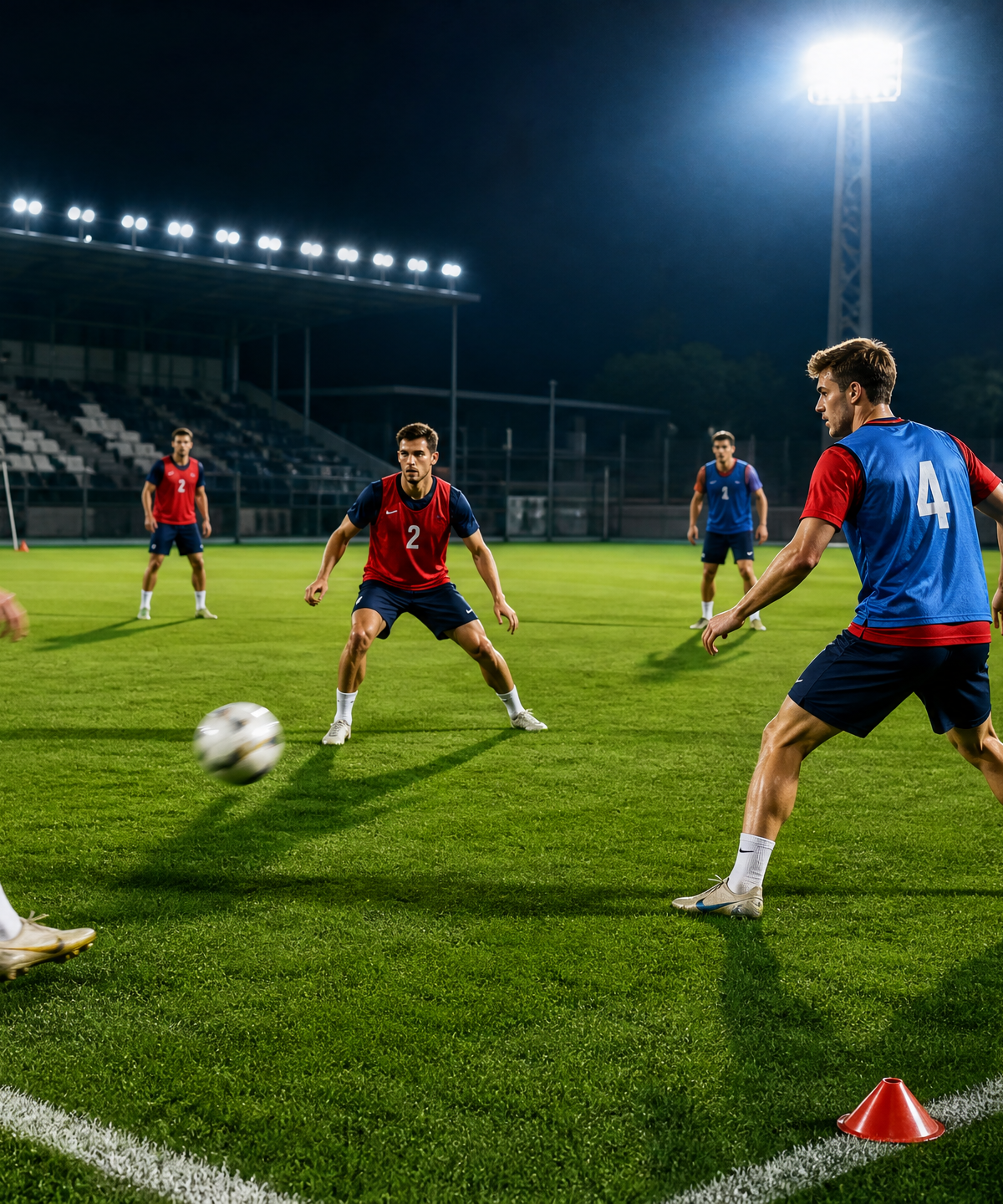
In modern football, the ability to move the ball quickly and accurately in tight spaces is paramount. This High-Tempo One-Touch Passing Combination Drill is designed to develop rapid decision-making, precise technical execution, and intelligent off-the-ball movement. By restricting players to a single touch, the drill forces them to scan the pitch before receiving the ball, anticipate the next pass, and adjust their body shape accordingly. It is an excellent exercise for improving team fluidity, breaking down low-block defenses, and instilling a proactive attacking mindset.
2. Setup
Proper setup is crucial for maintaining the intensity and flow of this drill. The dimensions can be adjusted based on the age and skill level of your players, but the standard setup requires a compact area to simulate match-like pressure.
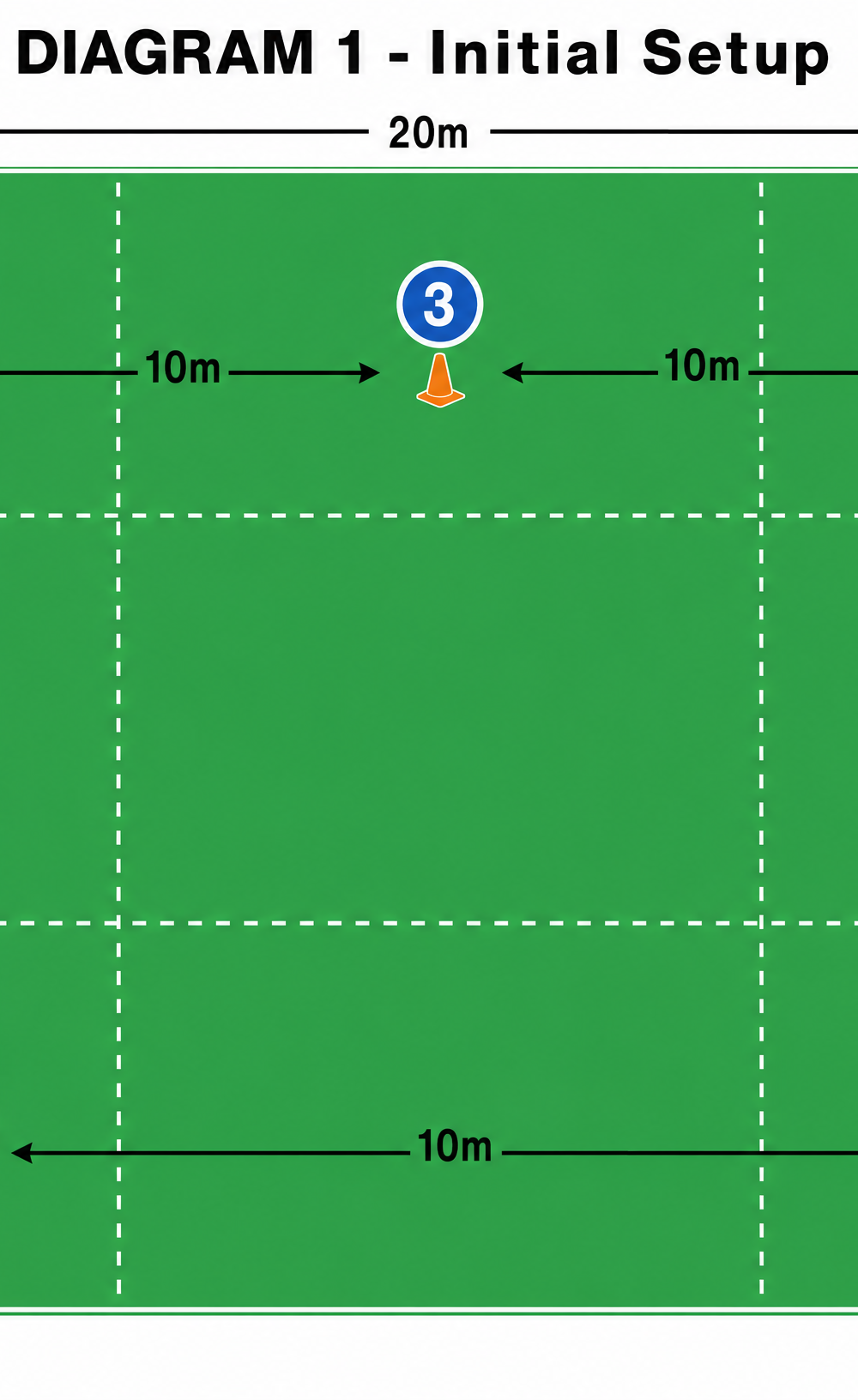
- Pitch Dimensions: Create a 20m x 20m grid on a standard football pitch (100-110m x 64-75m).
- Equipment: 5 orange cones to mark the passing stations, an adequate supply of footballs (at least 6-8) to keep the drill moving continuously, and training bibs if incorporating defenders later.
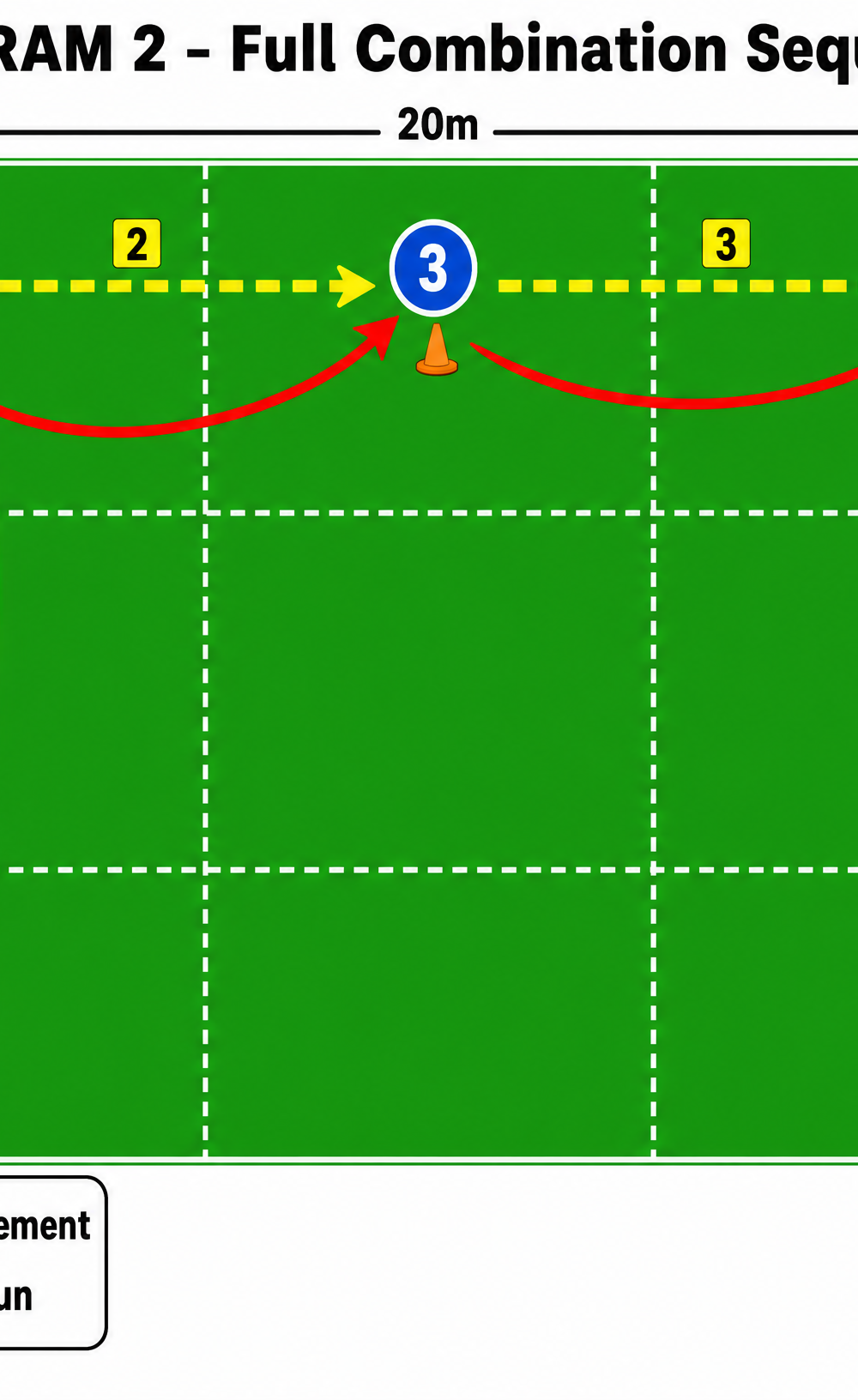
- Player Positions: Arrange the 5 cones in a diamond or pentagon shape, with approximately 10m between each adjacent cone. Assign one player to start at each cone (Players 1 through 5). Additional players can queue behind the starting cones to rotate in.
3. Step-by-Step Instructions
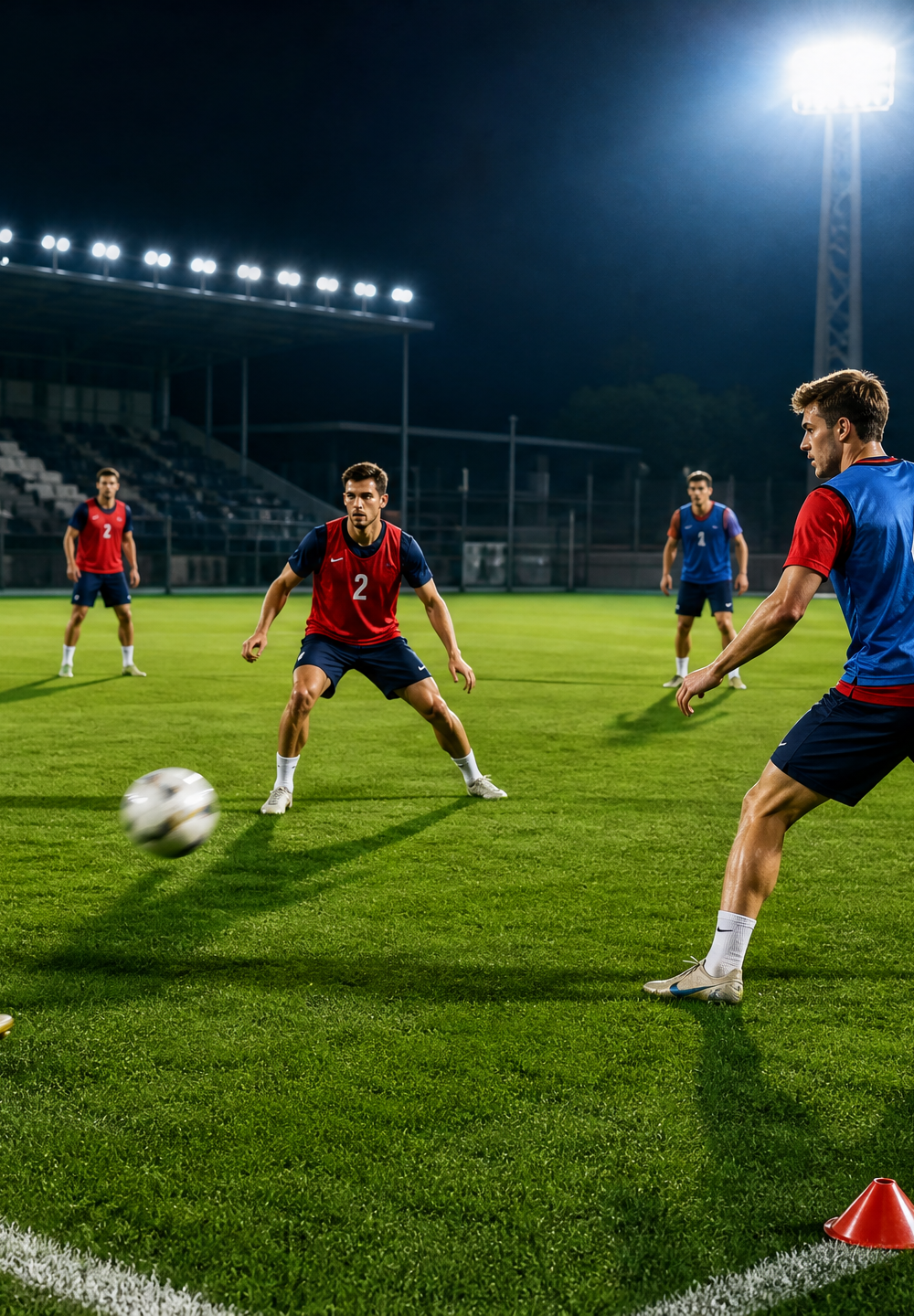
The drill operates on a continuous rotation, emphasizing pass-and-move principles. Ensure the players understand the sequence before increasing the tempo.
- Initiate the Sequence: Player 1 starts with the ball at the bottom-left cone. They play a firm, accurate pass along the ground to Player 2 at the top-left cone.
- Follow the Pass: Immediately after passing, Player 1 sprints to take up Player 2's position at the top-left cone.
- One-Touch Continuation: Player 2, anticipating the pass from Player 1, uses one touch to redirect the ball to Player 3 at the top-center cone. Player 2 then sprints to Player 3's position.
- Maintain the Flow: Player 3 plays a one-touch pass to Player 4 at the top-right cone, then follows their pass to the top-right cone.
- Complete the Circuit: Player 4 plays a one-touch pass to Player 5 at the bottom-right cone, then follows their pass. Player 5 receives the ball and either restarts the sequence by passing back to the start (if running a closed loop) or finishes into a small goal if that variation is being used.
- Continuous Rotation: The sequence continues fluidly. As soon as a player passes, they must immediately transition into their run to occupy the next station.
4. Key Coaching Points
To maximize the effectiveness of this drill, coaches must demand high standards and focus on the following technical and tactical details:
- Pre-Scanning: Players must look over their shoulder and assess their options before the ball arrives. This allows them to execute the one-touch pass without hesitation.
- Body Shape: Encourage players to open their body to the field, receiving the ball on their back foot whenever possible to naturally direct their next pass.
- Pass Quality: Passes must be firm, flat, and directed to the receiver's preferred foot. A bobbling or slow pass disrupts the entire rhythm of the combination.
- Movement Off the Ball: The run after the pass must be immediate and explosive. Players should not admire their pass; they must transition instantly to support the next phase of play.
- Communication: Verbal and non-verbal communication (eye contact, pointing to feet) is essential for timing the passes and runs correctly.
5. Common Mistakes
Watch out for these frequent errors and correct them promptly to maintain the drill's quality:
- Taking Extra Touches: Players taking two or three touches slow down the drill and defeat the purpose of developing rapid combination play. Enforce the one-touch rule strictly.
- Poor Weight of Pass: Passes that are too soft force the receiver to check their run, while overhit passes lead to poor control. Demand precision in the weight of the pass.
- Static Receiving: Players standing flat-footed waiting for the ball. They should be on their toes, ready to attack the ball and play it instantly.
- Late Runs: Failing to move immediately after passing creates bottlenecks at the stations and disrupts the continuous flow of the exercise.
6. Variations & Progressions
Once the players have mastered the basic sequence, introduce these variations to increase the cognitive and technical demands:
- Reverse Direction: Change the flow of the drill from clockwise to counter-clockwise. This forces players to use their weaker foot and adjust their body shape differently.
- Two-Touch Allowance: For younger or less experienced players, allow a maximum of two touches (control and pass) to build confidence before enforcing strict one-touch play.
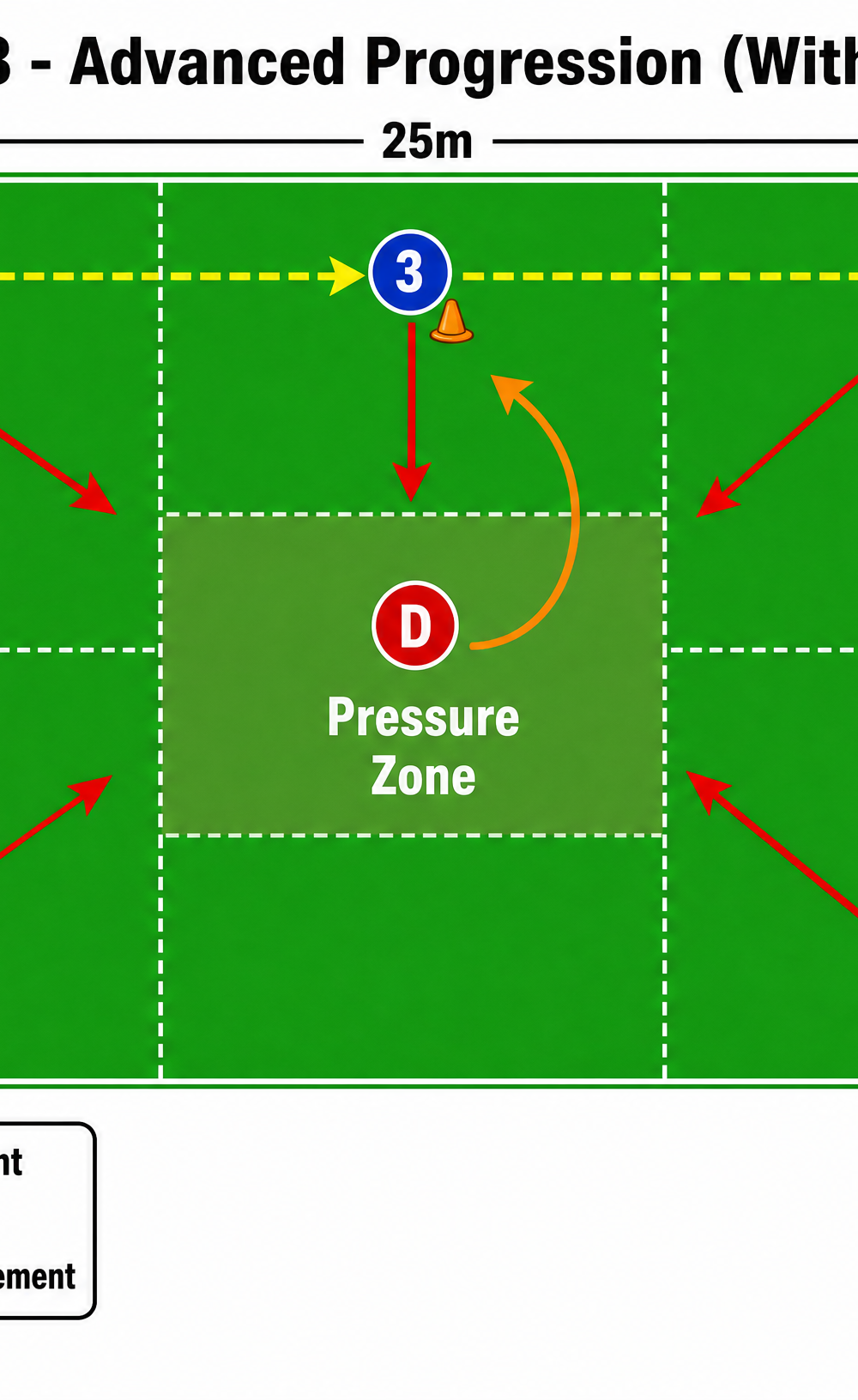
- Add a Defender (The Rondo Element): Introduce a defender in the center of the grid. The attacking players must complete the combination sequence while the defender attempts to intercept the ball. This adds realistic match pressure and forces quicker decision-making.
- Finish on Goal: Add a small goal or a goalkeeper at the end of the sequence (e.g., after Player 5 receives the ball) to incorporate finishing into the combination play.
7. Age Adaptations
Tailor the drill to suit the developmental stage of your squad:
- Under 8 - Under 10: Focus on basic passing mechanics and the concept of following the pass. Allow two or three touches initially. Keep the distances shorter (5-7m) to ensure success.
- Under 12 - Under 14: Introduce the strict one-touch rule. Focus heavily on body shape and pre-scanning. Increase the tempo and demand higher quality passes.
- Under 16 - Open (Senior): Execute at maximum match intensity. Introduce defenders and complex variations. Demand flawless technique and rapid cognitive processing under pressure.