Maul Formation and Dynamic Drive: Advanced Forward Play Drill
Master the art of the driving maul with this comprehensive drill, teaching forwards how to bind tightly, establish momentum, and efficiently recycle the ball.
Equipment Needed
1. Overview
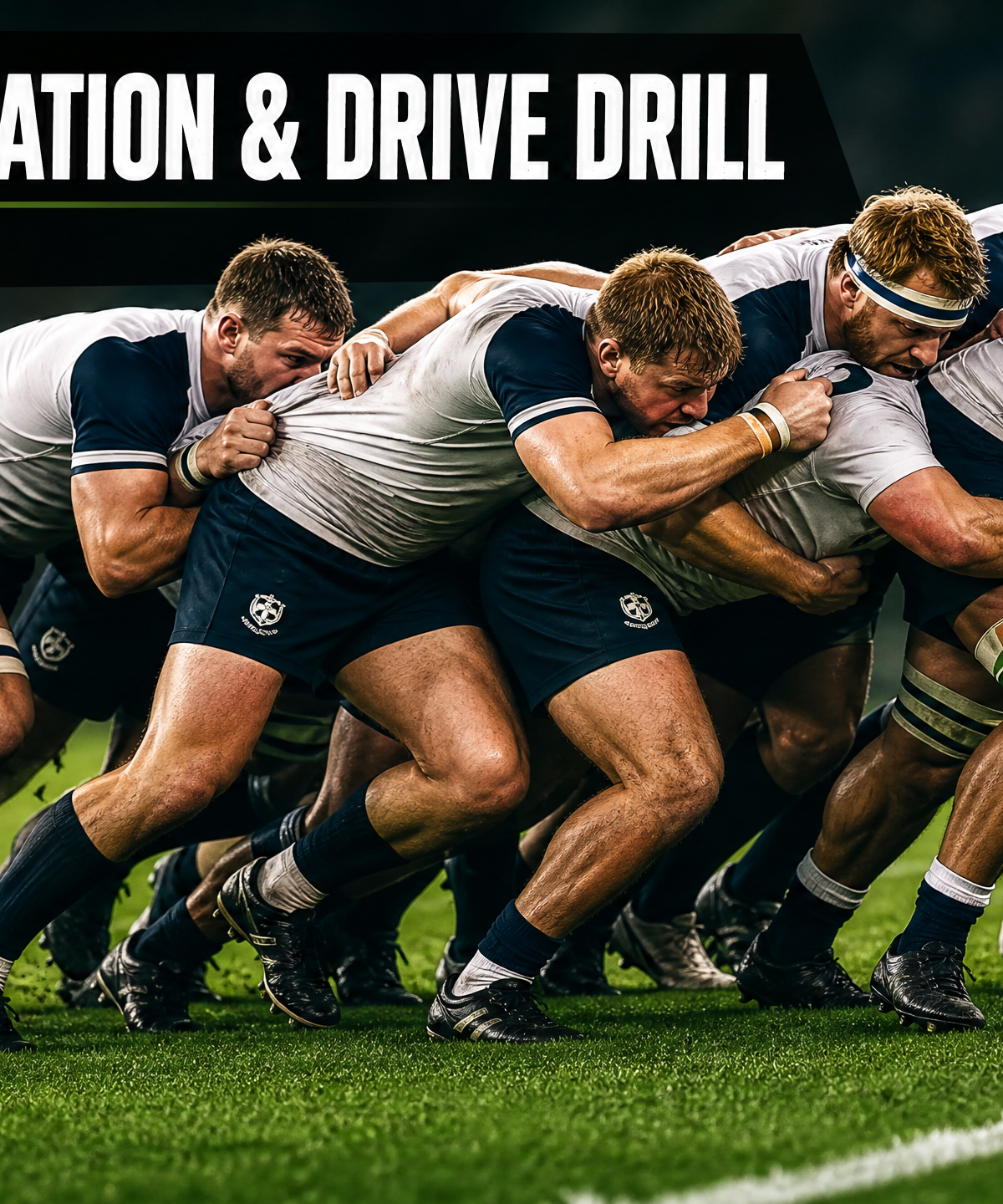
The driving maul is one of the most potent attacking weapons in modern rugby. When executed correctly, it commits multiple defenders, creates significant forward momentum, and provides an excellent platform for backs to attack a disorganized defensive line. This drill focuses on the core mechanics of forming a tight, cohesive maul from a lineout or open play, establishing a strong body position, and driving through contact to cross the gain line.
Coaches will learn how to structure the training environment to teach the sequential binding process, emphasize the importance of the ball carrier's body position, and train the scrum-half to make quick decisions based on the maul's momentum. This resource is designed to build a pack that can consistently turn possession into territory and points.
2. Setup
To run this drill effectively, you will need a dedicated space on the pitch and the right equipment to simulate game-like resistance.
Equipment Needed:
- 1 Rugby ball
- 12-16 Marker cones (preferably two different colors)
- 2-4 Tackle shields or hit shields (for defenders)
- Training bibs (two colors to separate attackers and defenders)
Pitch Setup:
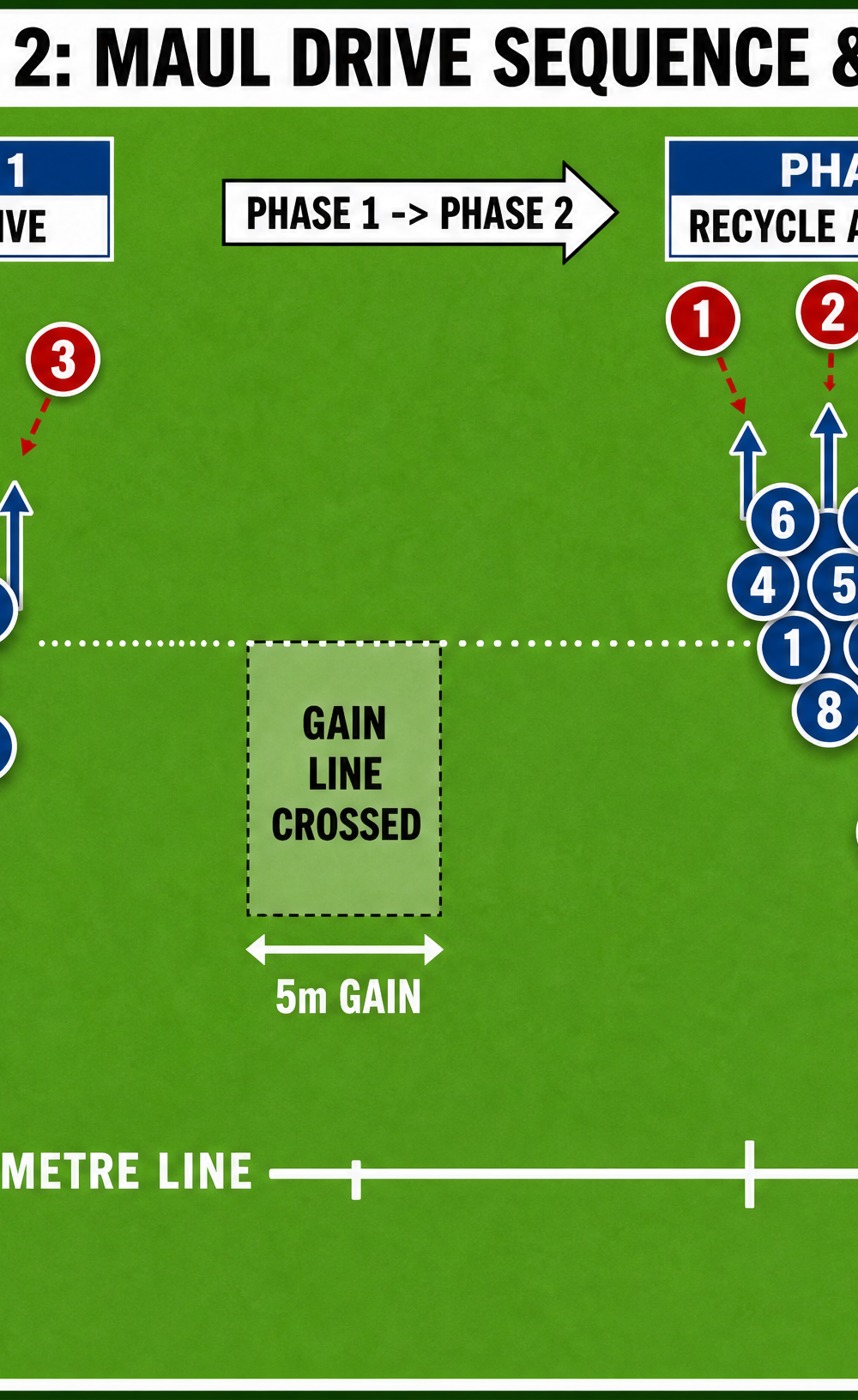
- Set up a rectangular training grid measuring 20 metres long by 15 metres wide.
- Divide the grid into four distinct 5-metre zones using the cones:
- Start Zone (0-5m): Where the initial ball carrier and primary support players begin.
- Contact Zone (5-10m): Where the first defensive engagement occurs.
- Drive Zone 1 (10-15m): Where the maul must establish dominance and momentum.
- Drive Zone 2 / Score Zone (15-20m): The target area to cross before recycling the ball.
Player Positions:
- Attackers (8 players): A full forward pack (Numbers 1-8) and a Scrum-half (Number 9).
- Defenders (4-6 players): Holding tackle shields, positioned initially in the Contact Zone and Drive Zone 1.
3. Step-by-Step Instructions
This drill breaks down the complex movement of a maul into a sequential, easy-to-coach process. Follow these steps to ensure your players understand their roles at each phase.
Phase 1: The Initial Catch and Bind
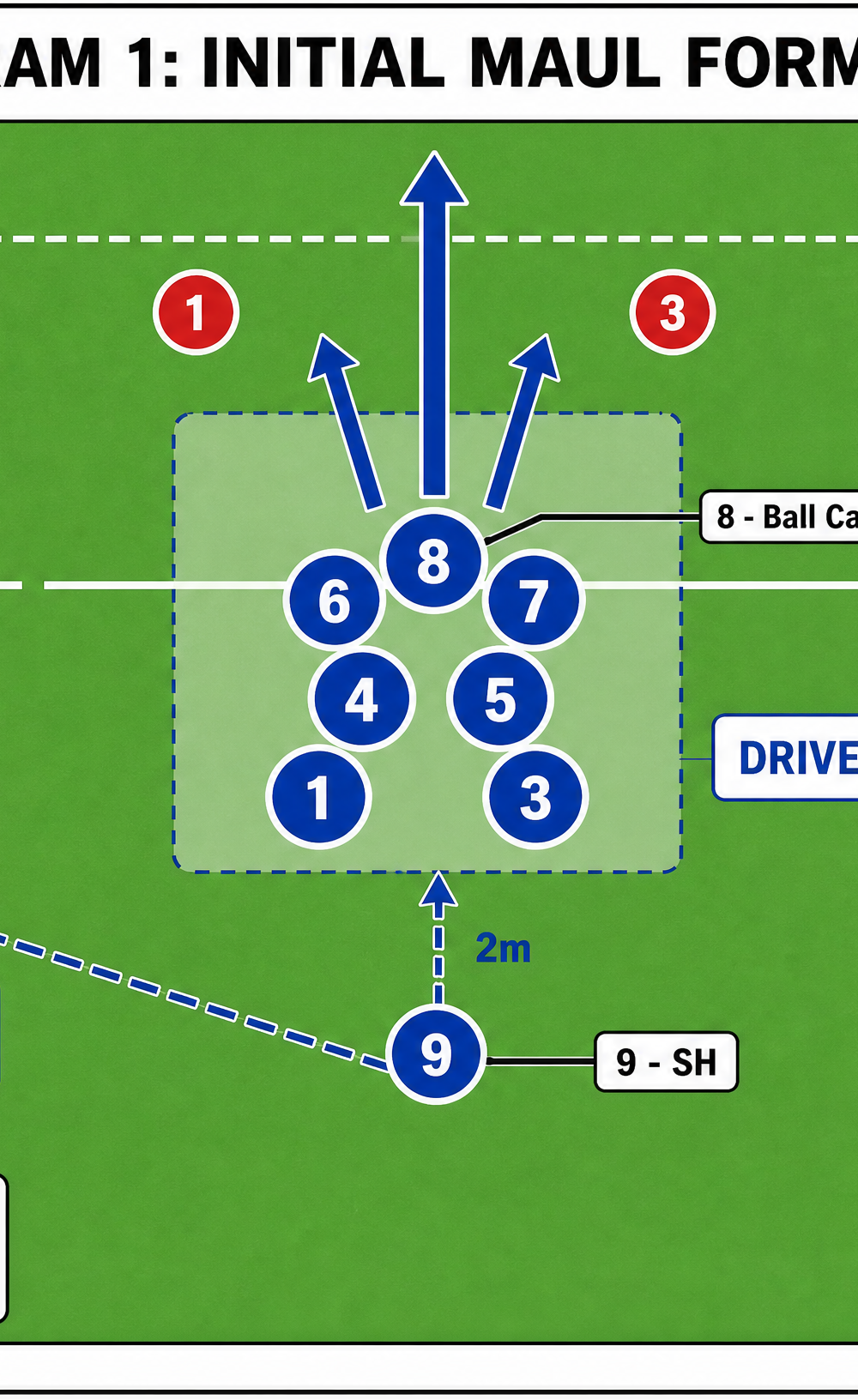
- The Setup: The drill begins with the Number 8 holding the ball in the center of the Start Zone. The flankers (6 and 7) are positioned 1 metre behind and to either side of the Number 8.
- The Engagement: On the coach's whistle, the Number 8 drives forward into the Contact Zone, turning their back to the defenders (holding shields) just before contact to protect the ball.
- The Latch: Immediately, the flankers (6 and 7) must drive in and bind tightly onto the Number 8's hips, forming a strong wedge shape. Their outside shoulders should be driving forward, protecting the ball carrier.

Phase 2: Building the Drive
- Second Wave Support: As the initial wedge engages the defenders, the locks (4 and 5) must arrive dynamically. They bind onto the flankers, keeping their hips low and backs straight, adding crucial weight to the drive.
- Securing the Flanks: Finally, the props (1 and 3) join on the outside of the locks, sealing the edges of the maul and preventing defenders from swimming around the sides.
- The Call: The Number 8 (or a designated maul leader) shouts "DRIVE!" to synchronize the forward push. All players must take short, rapid steps, keeping their cleats engaged with the turf.
Phase 3: The Drive and Recycle
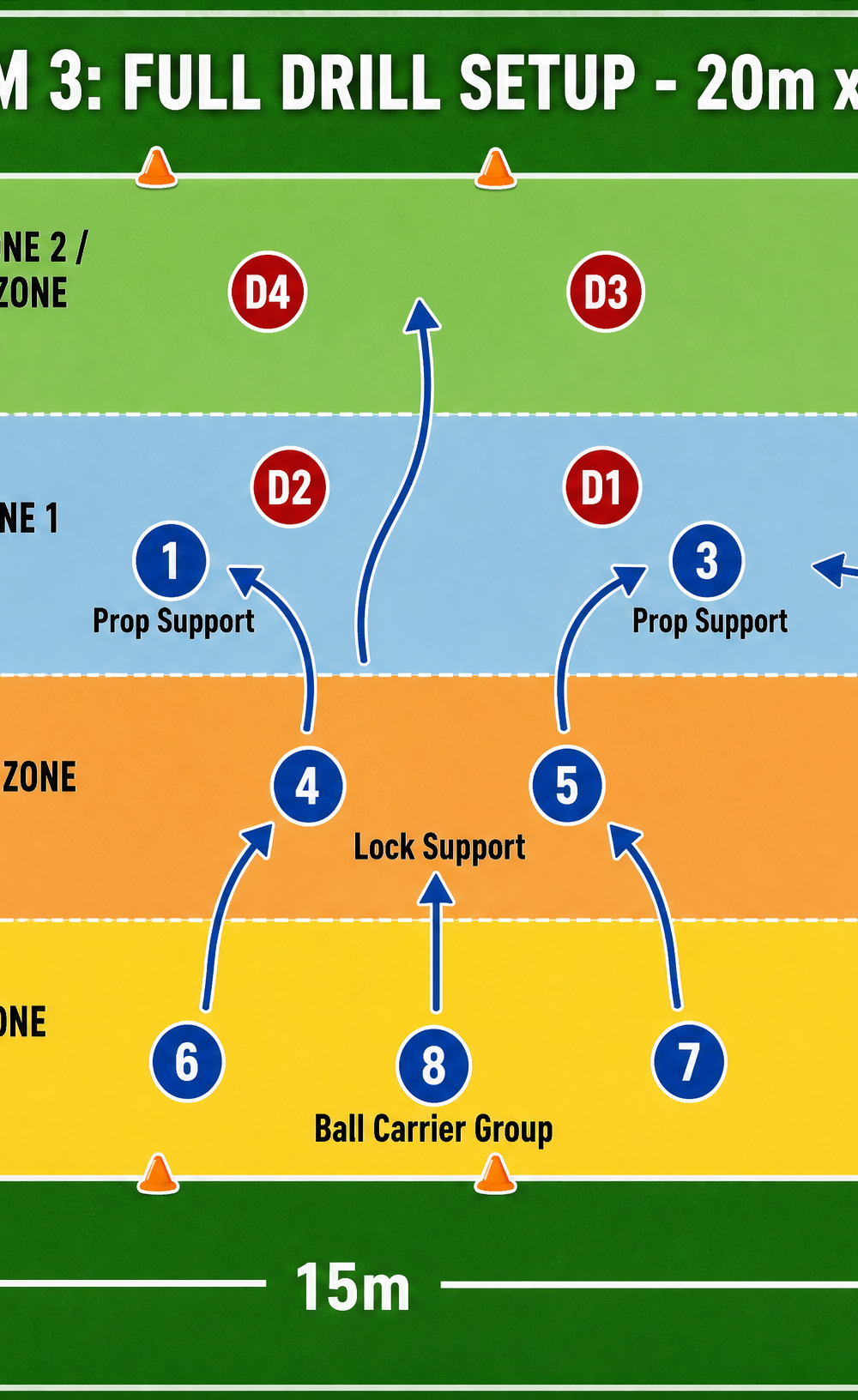
- Momentum: The attacking pack must drive the defenders backward through Drive Zone 1 and into Drive Zone 2. The focus is on staying bound and moving as a single unit.
- Ball Transfer (Optional): If the maul is stable, the Number 8 can transfer the ball back to a lock or prop at the rear of the maul to further protect it from defenders.
- The Release: Once the maul crosses the 15-metre mark (entering Drive Zone 2), the Scrum-half (9) calls "USE IT!". The ball carrier rips the ball out and presents it to the Scrum-half, who distributes it to a waiting backline player (e.g., the Fly-half, 10) to simulate the next phase of attack.
4. Key Coaching Points
To maximize the effectiveness of this drill, focus your coaching on these critical technical areas:
- Low Body Height: All players joining the maul must drop their hips and maintain a low center of gravity. "Sink before you link." A high maul is easily stopped or collapsed by the defense.
- Tight Binding: Players must bind onto their teammates' bodies (hips or jerseys), not just rest their arms. A loose maul will splinter under pressure. The bind must be aggressive and secure.
- Protect the Ball: The initial ball carrier must turn away from the contact area immediately, presenting their back to the opposition and keeping the ball tucked safely in the "pocket" created by the supporting players.
- Synchronized Footwork: The drive comes from short, choppy steps. Players should not overstride, as this compromises balance and pushing power. "Piston legs" driving into the ground.
- Communication: The maul leader must dictate the timing of the drive and the release. Clear, loud calls ("Hold", "Drive", "Ball Out") are essential for a coordinated effort.
5. Common Mistakes
Watch out for these frequent errors and correct them immediately during the drill:
- Swimming Up: Players joining the maul too high and sliding up the backs of their teammates, losing all driving power and potentially causing the maul to collapse.
- Joining in Front of the Ball Carrier: Players accidentally joining the maul ahead of the ball carrier, resulting in an "accidental offside" or "obstruction" penalty during a match.
- Looking Down: Players dropping their heads and looking at the ground while driving. This leads to a rounded back, loss of power, and significant risk of neck injury. "Eyes up, back straight."
- Splintering: The maul breaking into smaller, ineffective groups because players are driving at different angles or failing to maintain their binds.
- Slow Ball Release: The Scrum-half or ball carrier taking too long to extract the ball once momentum has stalled, allowing the defense to reset or win a turnover.
6. Variations & Progressions
Once your players have mastered the basic mechanics, introduce these variations to challenge them further:
- Dynamic Entry (Progression): Instead of starting static, begin the drill with a lineout throw or a short pass to simulate game conditions more closely.
- Live Defense (Progression): Replace the tackle shields with live, fully equipped defenders who are actively trying to stop the drive and sack the maul (safely, following correct laws).
- Directional Changes (Variation): The coach calls out "Left" or "Right" during the drive, forcing the maul to wheel and change direction while maintaining its structure.
- The "Rip and Roll" (Variation): Practice transferring the ball to the back of the maul and having the rear players peel off to attack the blindside.
7. Age Adaptations
This drill can be modified to suit different age groups and skill levels:
- Under 10 / Under 12: Focus entirely on body position and safe binding. Use no resistance or very light resistance (coach holding a shield). Emphasize "cheek to cheek" binding and keeping heads up. Do not focus on aggressive driving.
- Under 14 / Under 16: Introduce tackle shields and focus on the sequential joining of players. Begin teaching the tactical awareness of when to drive and when to release the ball. Ensure strict adherence to safety laws regarding collapsing.
- Open / Senior: Full live resistance. Focus on dynamic entries from lineouts, wheeling the maul, and complex exit strategies (e.g., peeling off, fake drives).