

Netball
Split & Penetrate: Centre Pass Set Play for Quick Goals
Master this highly effective centre pass set play designed to isolate the Goal Attack and deliver a quick, precise feed into the Goal Shooter.
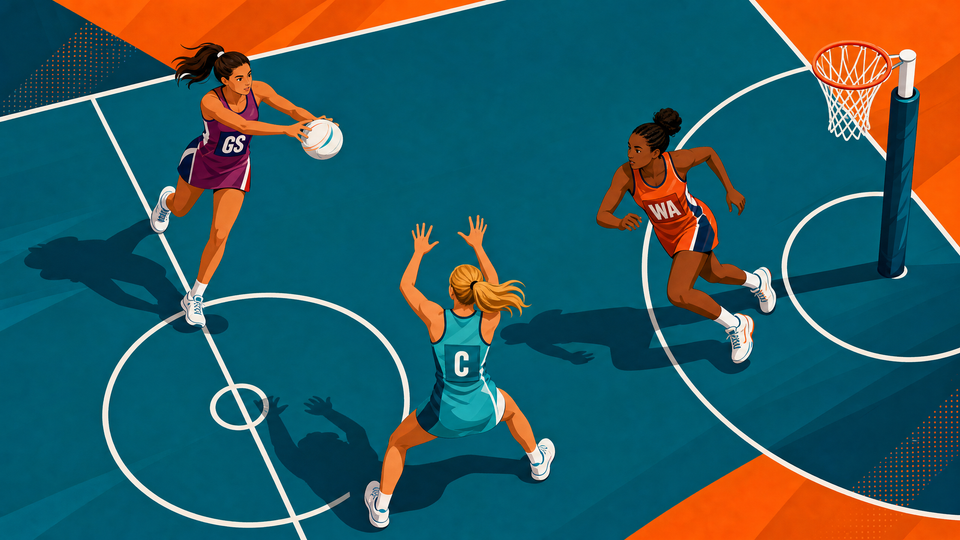
What you need
1 Netball, Full Netball Court, Bibs
1. Overview
The "Split & Penetrate" centre pass set play is designed to create immediate scoring opportunities by exploiting the defensive setup around the transverse line. This play aims to isolate the Goal Attack (GA) on the strong side while using the Wing Attack (WA) as a critical decoy to draw defenders away from the primary passing channel. It is highly effective against a zone defense or when the opposing Wing Defence (WD) is over-committing.
2. Setup
- Equipment: 1 Netball, full court (30.5m x 15.25m), standard netball posts.
- Player Positions:
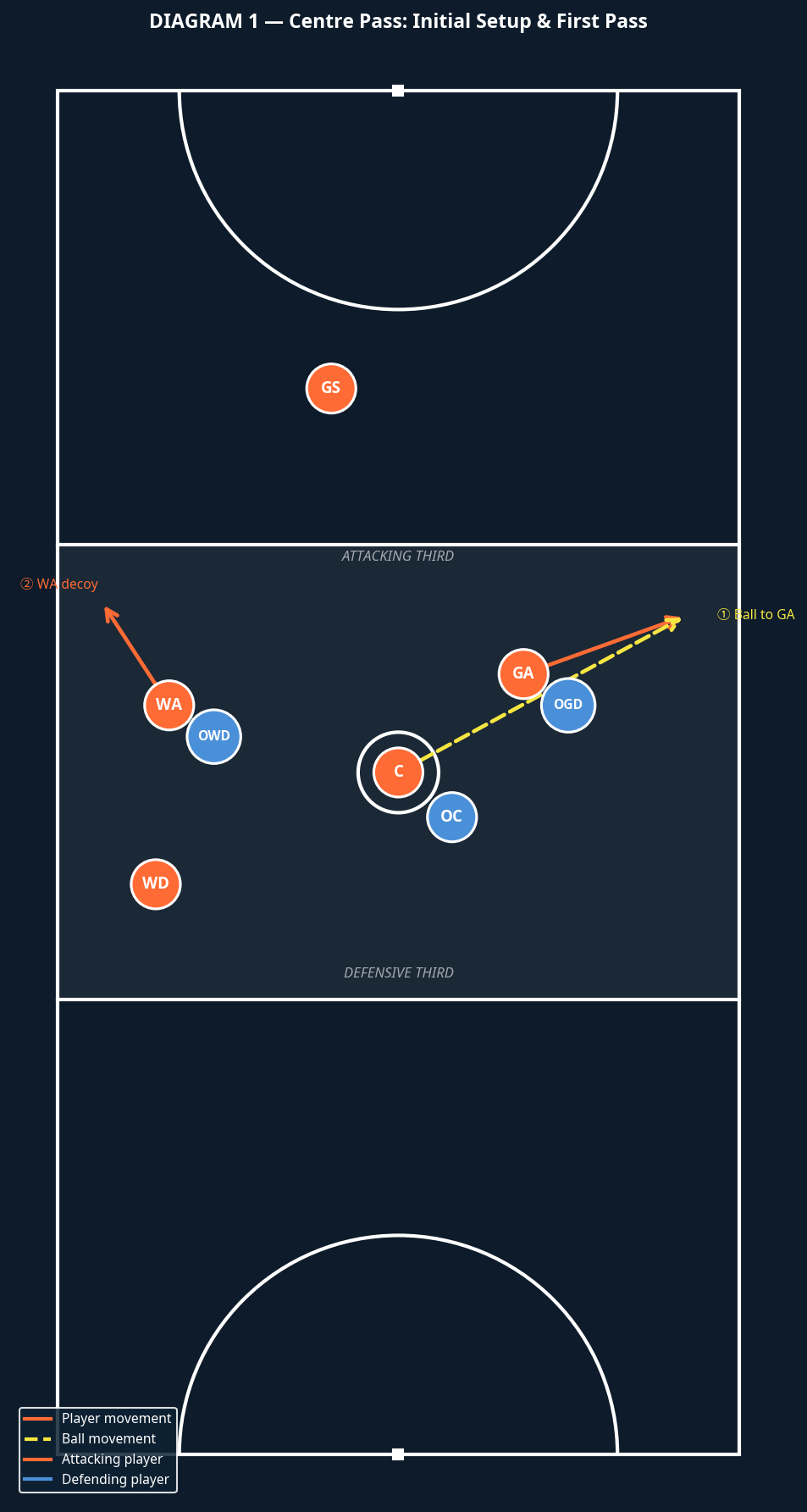
- C: Starts inside the centre circle, holding the ball.
- WA: Positioned on the left side of the centre third, ready to sprint towards the sideline.
- GA: Positioned on the right side, slightly inside the centre third, prepared to cut sharply.
- GS: Positioned deep in the attacking third, holding space near the top of the goal circle.
- WD: Positioned defensively on the left side, slightly back to cover any potential turnover.
3. Step-by-Step Instructions
Phase 1: The Initial Pass
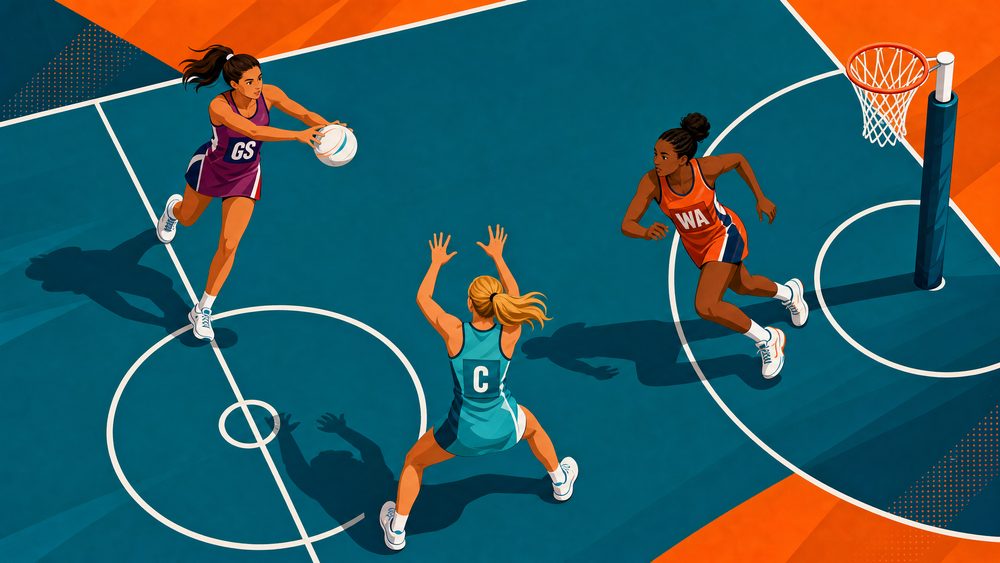
- On the umpire's whistle, the WA drives hard to the left towards the sideline. This movement is a decoy designed to pull the opposing WD and potentially the OC away from the centre channel.
- Simultaneously, the GA cuts sharply to the right, angling towards the sideline but staying within a strong receiving channel.
- The C delivers a crisp, flat pass to the GA as they hit the space on the right side of the attacking third.
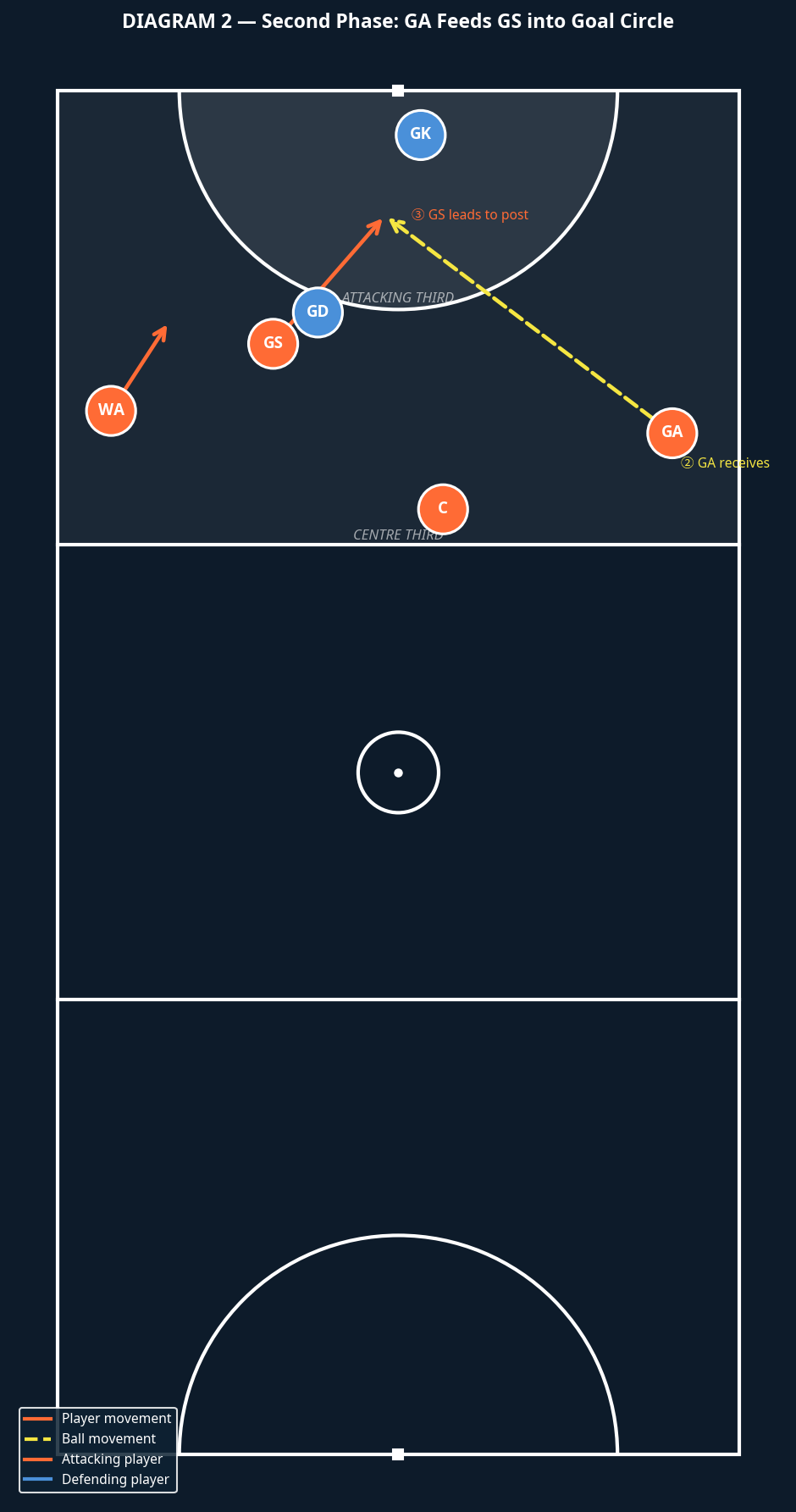
Phase 2: The Feed into the Goal Circle
4. Upon receiving the ball, the GA immediately turns to face the goal post.
5. The GS, who has been holding space, leads strongly from the left side of the goal circle, cutting directly towards the post.
6. The GA executes a precise feed (often a bounce pass or a perfectly weighted lob) to the GS in a prime shooting position under the post.
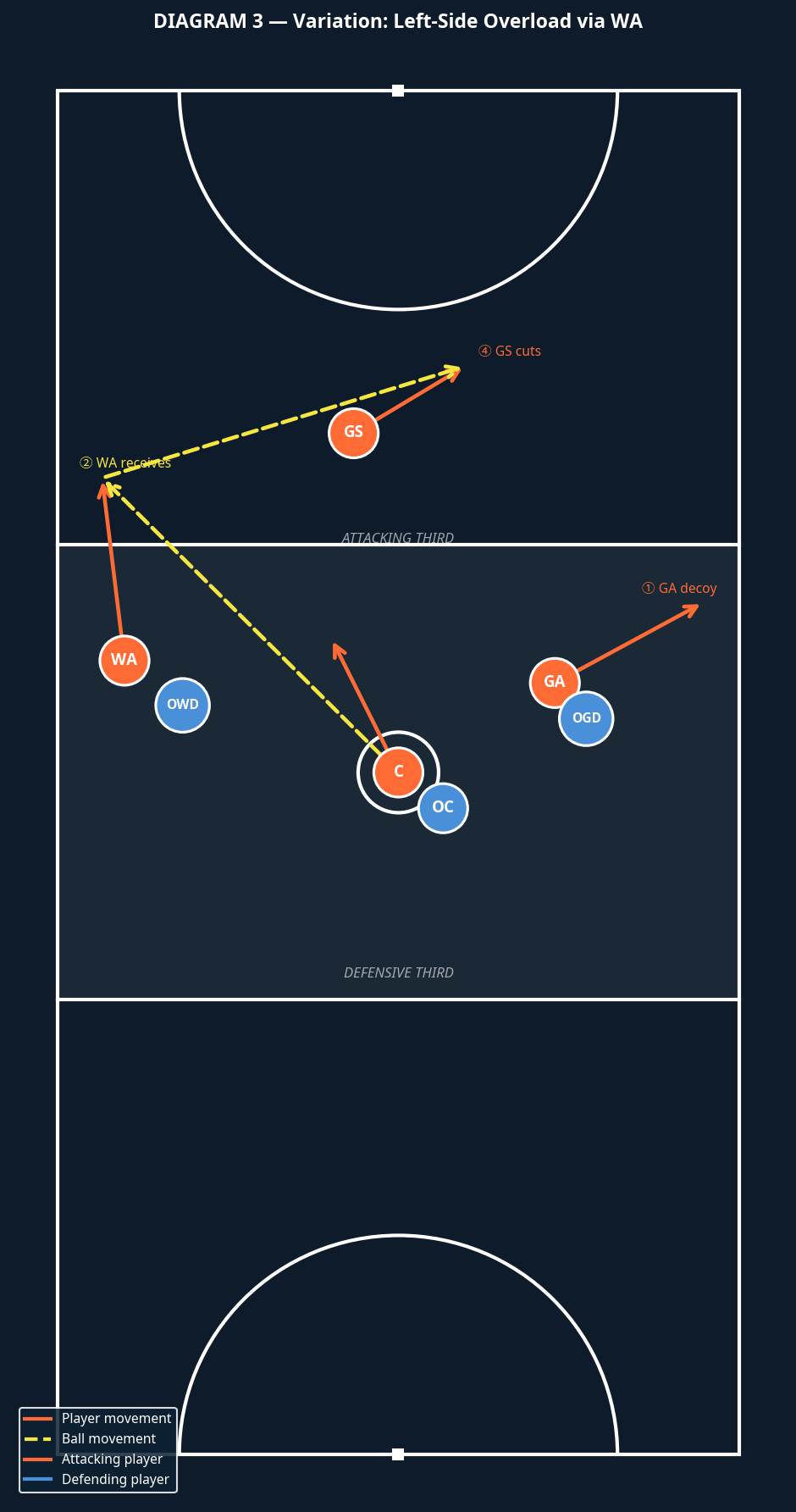
Variation: Left-Side Overload
7. If the defense anticipates the pass to the GA, the play can be flipped. The GA acts as the decoy, driving hard to the right.
8. The WA drives forward into the space created on the left side of the attacking third.
9. The C passes to the WA, who then feeds the GS cutting across the goal circle from the right.
4. Key Coaching Points
- Timing is Everything: The WA must move a fraction of a second before the GA to successfully draw the defense.
- Crisp Passing: The initial pass from the C must be flat and fast to prevent interception.
- Strong Holds: The GS must hold their ground firmly before making their final lead to the post.
- Court Awareness: The GA needs to read the defense immediately upon receiving the ball to choose the best feed to the GS.
- Decoy Commitment: The player acting as the decoy (WA in the primary play) must sprint at 100% effort to be convincing.
5. Common Mistakes
- Premature Movement: The GA moving too early, allowing the GD to easily intercept the pass.
- Weak Decoy: The WA jogging instead of sprinting, failing to draw the defender.
- Poor Pass Selection: The C lobbing the ball instead of passing flat, giving the defense time to recover.
- Lack of Vision: The GA failing to look up immediately after receiving the ball, missing the open GS.
6. Variations & Progressions
- Add a Screen: Introduce a screen by the GS for the GA at the top of the circle to create more space for the shot if the feed to the post is covered.
- Second Phase Reset: If the initial pass to the GA is heavily contested, the C should be prepared to receive a quick return pass to reset the play.
- Opposite Side Execution: Practice running the play mirrored (WA primary, GA decoy) to keep the defense guessing.
7. Age Adaptations
- Under 10s: Focus heavily on the timing of the leads and basic passing accuracy. Simplify the decoy movement.
- Under 14s: Introduce the concept of reading the defense and deciding between the primary (GA) and secondary (WA) options.
- Open/Advanced: Emphasize the speed of execution, precise placement of the feed into the circle, and immediate transition to defense if the ball is turned over.
