

Rugby
Low and Mighty: Tackle Height Mastery Drill
A progressive drill designed to ingrain safe, effective tackle technique by focusing on body height, footwork, and contact confidence for youth and club players.

What you need
Cones, Balls, Tackle bags
Setup
- Area: 20m x 20m grid, divided into three 5m channels (A, B, C) using cones.
- Players: 8+ (minimum 8; ideal 12–16). Split into two groups: Attackers (with balls) and Defenders (without balls).
- Equipment: 1 ball per attacker, 6–8 tackle bags or shields (optional but recommended), cones.
- Safety: Ensure all players are warmed up, especially neck, shoulders, and hips. Emphasise safe technique: head up, shoulder contact, wrap and squeeze. No tackling above the armpits in this drill.
- Organisation:
- Channel A (5m wide): Approach and footwork.
- Channel B (5m wide): Contact and body height.
- Channel C (5m wide): Finish and recovery.
- Defenders start on the try line (or designated start cone) facing attackers 5m away.
- Attackers line up in single file with balls, ready to jog into Channel A.
Step-by-Step Instructions
- Warm-up (3 mins): Dynamic stretches: leg swings, lunges, neck rolls, shoulder circles. Then, light jog with 5m accelerations.
- Demonstration (2 mins): Coach demonstrates correct tackle technique: approach with short, choppy steps; head to one side; shoulder into the thigh/waist area; wrap arms around legs; drive through with legs; land on top. Emphasise "cheek to cheek" (shoulder to hip) and "squeeze the knees".
- Station 1 – Approach Footwork (5 mins): In Channel A, defenders practice footwork: 3 quick steps forward, then breakdown into a low body position (knees bent, back straight, head up). Attackers jog at 50% speed. No contact; defenders just shadow the tackle. Rotate after 3 reps.
- Station 2 – Contact and Height (5 mins): In Channel B, attackers jog with ball. Defenders engage in a controlled tackle: aim for thigh height, wrap arms, and drive with legs. Use tackle bags if available for safety. Coach calls "Tackle!" and defenders execute. Ensure head is up and to the side. Rotate after 3 reps.
- Station 3 – Finish and Recovery (5 mins): In Channel C, defenders complete the tackle on a bag or willing partner (50% speed), then immediately get back to their feet and compete for the ball (if on ground) or return to defensive line. Focus on quick recovery and re-entry into play.
- Integrated Practice (5 mins): Combine all three channels: Attackers run through A, B, C while defenders execute a full tackle in B, then recover in C. Increase speed gradually to 75%. Rotate groups every 90 seconds.
Coaching Points
- Body Height: Get low early. Bend at knees and hips, not waist. Head up, eyes open.
- Footwork: Short, choppy steps to adjust to attacker's movement. Never cross feet.
- Contact: Shoulder contact at thigh/waist level. Wrap arms around legs and squeeze. Drive with legs to unbalance attacker.
- Head Position: Head to one side, never in front. Cheek to cheek (shoulder to hip).
- Safety: No tackling above armpits. Always wrap. If unsure, go low.
- Communication: Defenders call "tackle" to signal commitment.
- Recovery: After tackle, roll away or get up quickly to compete for ball or rejoin defensive line.
Common Mistakes
- High Tackles: Attempting to tackle upright, leading to head clashes and penalties. Correct by reinforcing low body height.
- Head in Front: Placing head in front of attacker, risking neck injury. Correct by emphasising side-on contact.
- Not Wrapping: Bumping with shoulder only. Correct by practicing wrap and squeeze on bags.
- Poor Footwork: Lunging or reaching. Correct with choppy step drills.
- Slow Recovery: Staying on ground too long. Correct by adding competition for ball after tackle.
- Fear of Contact: Hesitation. Correct by starting with bags and gradual progression.
Progressions & Variations
- Progression 1: Increase speed of attackers from 50% to 75% to 100% as technique improves.
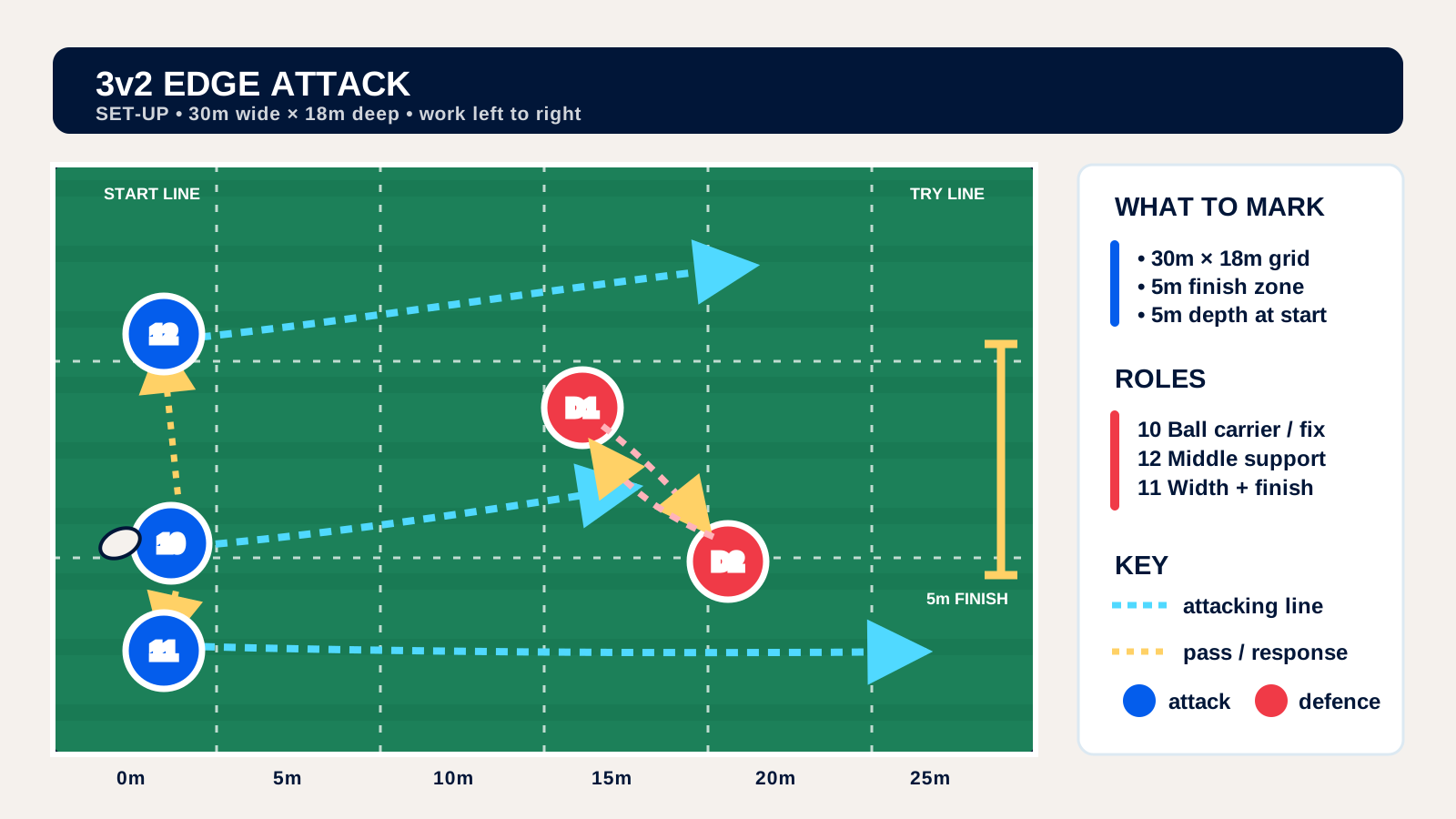
- Progression 2: Add a second defender for double tackles or to contest the ball after tackle.
- Progression 3: Introduce a ruck situation: after tackle, defender must compete for ball while attacker tries to place it.
- Variation 1: Angle tackling: attackers run at angles, defenders adjust footwork.
- Variation 2: Tackle from ground: defender starts on knees or back, gets up to tackle.
- Variation 3: Two-on-one: attacker with ball plus support runner, defender must choose correct target.
- Variation 4: Use tackle suits for full contact once technique is solid.
