
Netball Technique
Centre Pass Set Plays and Variations: A Practical Guide for Netball Coaches
Build smarter netball attacks with adaptable centre pass set plays, clear coaching cues and three practical drills. Learn how to create space, respond to defenders and develop confident young players.
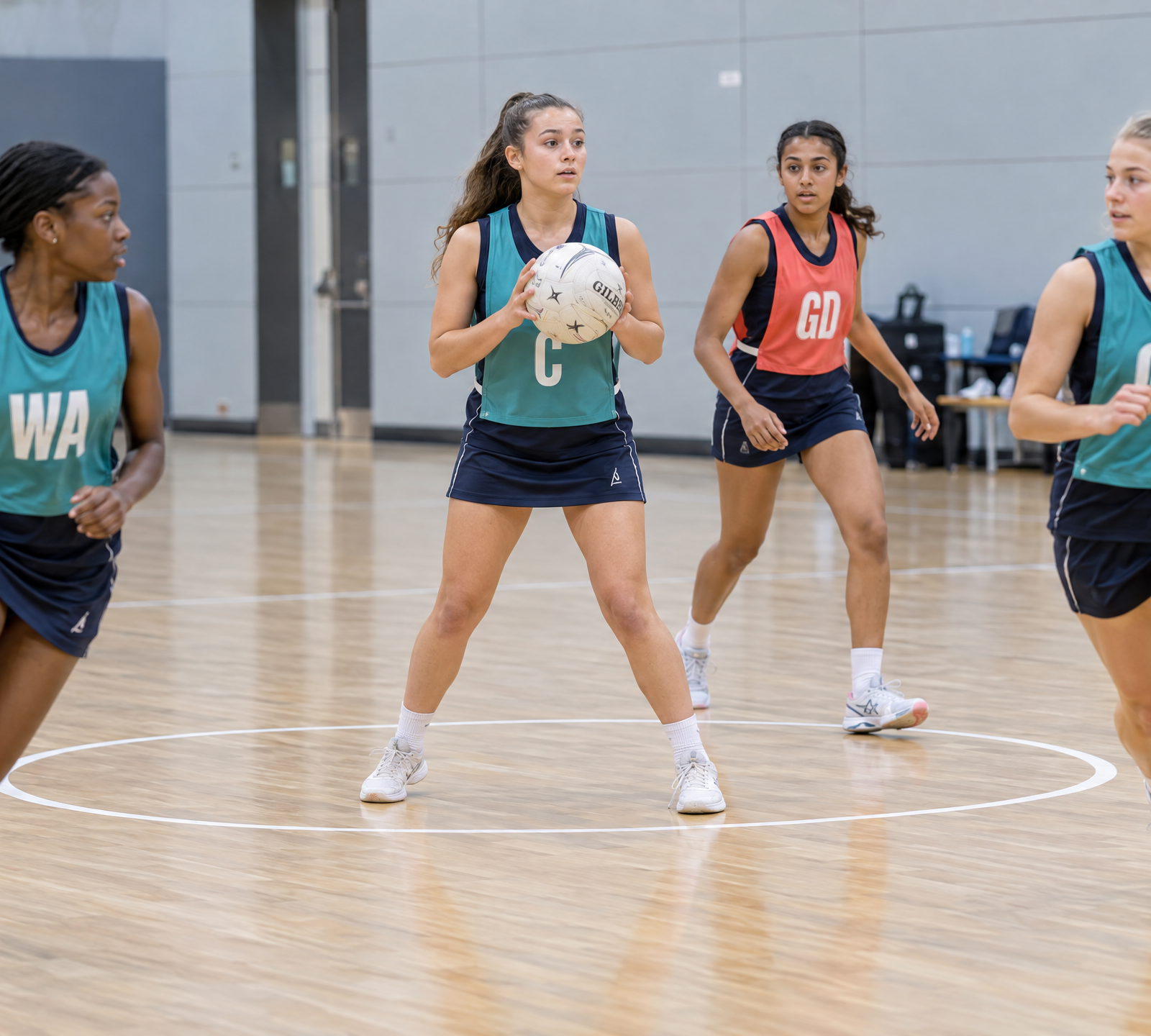

Effective centre pass set plays give a netball team more than a rehearsed opening pass. They help players create space, recognise defensive pressure and connect the first catch to a controlled attack. For youth coaches, the aim is not to memorise complicated patterns. It is to teach a small number of movements that players can adapt confidently.
This guide explains practical centre pass variations, how to choose between them and three training drills you can use immediately. Start with one reliable pattern, add an alternative and give players permission to choose the better option when defenders disrupt the plan.
Build Your Centre Pass Around the Rules
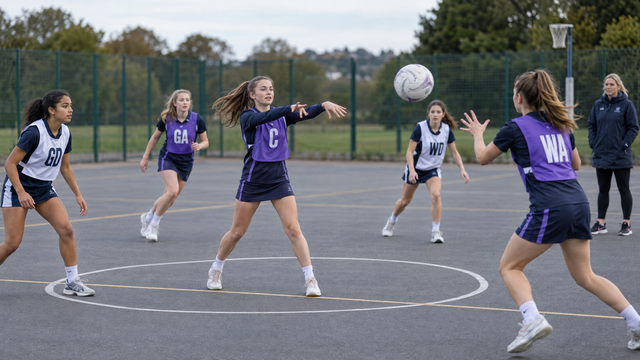
Before adding tactics, establish legal starting positions and timing. The Centre, or C, takes the pass with at least one foot wholly inside the centre circle. Wing Attack, or WA, and Goal Attack, or GA, commonly provide the first attacking options. Apart from the two Centres, players must remain outside the centre third until the whistle, in their permitted areas.
WA and GA can prepare their leads in their legal goal third, but enter the centre third only after the whistle. The initial pass must be touched or caught by a player standing wholly in the centre third, or whose first or both feet land wholly there. Coach a clear landing away from the transverse line, not a marginal catch astride it.
Release the centre pass only after the whistle and within three seconds. Reinforce the possession limit, balanced landings and legal footwork throughout play. Attackers should create separation through movement rather than pushing, holding or blocking defenders. Check the World Netball rules and any modifications used in your local junior competition before introducing a new pattern.
Centre Pass Set Plays and Variations
Split Lead: Create Two Clear Receiving Options
Position WA and GA near the attacking transverse line, with enough separation to avoid entering the same space. After the whistle, both lead into the centre third, moving towards different receiving channels. C scans the defenders and passes to the player with the clearest route to the ball.
The movement should be decisive, but not identical every time. WA might lead short while GA offers a wider option. Reverse those roles when the defence starts predicting the first receiver. Keep the passing lanes separate and avoid sending both attackers directly towards C.
Once the first catch is secure, the non-receiver changes direction towards the attacking third to offer the next pass. This makes the split lead the beginning of an attack rather than an isolated catch.
Give-and-Go: Use the Centre for a Return Pass
In this variation, C passes to WA in the centre third and immediately moves forward into the attacking goal third. WA returns the ball to C if that passing lane is open. GA then leads towards the shooting circle for the next feed.
The key is timing. C should move as the first pass travels, arriving in a useful space rather than standing beside WA. The return pass should advance possession, not squeeze two players into a congested channel.
Remember that C cannot enter the goal circle. Keep the return position outside it, and encourage C to feed GA only when the receiver and passing lane are available. If a defender tracks C closely, WA can use another option instead.
Clear and Replace: Change Who Uses the Space
Ask WA to make a purposeful initial lead into one channel. If WA is tightly marked and does not receive, they continue away from that channel. GA then changes pace and enters the newly available space for the centre pass.
This is a staggered movement, not two players chasing the same ball. GA watches both WA and C, delaying the replacement lead until the channel opens. C must recognise the change quickly enough to release within three seconds.
Vary which attacker clears first. Against defenders who follow their assigned player closely, this can open useful space. Against a zone defence, movement alone may not shift a defender, so the receiver must find an actual gap rather than follow the pattern blindly.
Add a Safe Reset Option
Give every pattern an escape route. Where their positional areas allow, Wing Defence, or WD, and Goal Defence, or GD, can offer supporting options in the centre third. A controlled sideways or backward centre pass is preferable to forcing the ball through a marked attacker.
After that catch, players should reposition to progress up court. The reset is not a failed set play. It is a sensible response when the defence removes the first option.
Three Practical Centre Pass Drills
Drill 1: Split-Lead Timing and First Catch

Use C, WA and GA, one ball and two cones marking separate receiving channels inside the centre third. Begin with WA and GA legally outside the third. Blow the whistle, ask both attackers to lead and let C select the clearer option.
Complete six repetitions, then rotate roles. Focus on a sharp change of pace, looking towards the passer and catching with balance. C should release to the receiver's available side rather than simply throw towards the cone.
Progress by adding one defender, then two. Award a point for a legal, controlled first catch and another when the next pass reaches the attacking third. If players enter early, reset immediately. The cue is: whistle, split, see, pass.
Drill 2: Give-and-Go Into a Circle Feed

Set up C, WA and GA across the centre third and attacking goal third. Start with a legal centre pass to WA. C follows the pass into a separate forward channel, receives the return outside the goal circle and looks to feed GA near the circle edge.
Walk through the sequence first, then increase speed. Ask players to keep enough distance between receivers for each pass to have a clear angle. GA should time the lead to C's return catch rather than arrive early and wait.
After six repetitions, add a defender who can deny either the return or the circle feed. The attackers must change their decision when the lane closes. Praise the correct alternative, not blind completion of all three passes.
Drill 3: Read the Defence and Choose
Use three attackers against two defenders, adding a supporting attacker if needed. Before each repetition, defenders quietly decide whether to pressure WA, deny GA or protect the central passing lane. The attackers do not know the choice.
C starts play and reads the available space. The team can use a split lead, clear-and-replace movement or a return pass after the first catch. Allow a supporting reset when the forward options are covered.
Play eight centre passes, rotating roles regularly. Record legal first catches and possessions that reach a shooting opportunity. Between repetitions, ask one short question: “What did the defender leave open?” Begin with manageable pressure, then progress towards a full seven-a-side practice game to test realistic spacing.
Fix Common Centre Pass Problems
When Everyone Leads Into the Same Channel
Give the first receiver, alternative receiver and supporting player different jobs. Start with wider spacing and rehearse without defenders. Add pressure once the players can identify which space belongs to each lead.
When the Pattern Becomes Predictable
Keep the starting shape but change the first receiver or the depth of the lead. A familiar setup can produce several decisions. Avoid introducing so many calls that young players spend the centre pass trying to remember instructions.
When Practice Success Does Not Transfer to Matches
Include defenders who genuinely attempt interceptions, while enforcing contact and obstruction rules. Judge success by possession quality and the next attacking opportunity, not simply whether the team completed its preferred sequence. Ask players to explain their decisions before offering your correction.
Organise Youth Training With Vanta Sports
For youth sports management, consider Vanta Sports across your Club, Coach, Guardian and Player app needs. Its Club app brings club administration, Coach tools and Guardian access together, while the Player practice companion supports individual development.
Use shared training schedules, availability, attendance and messages to organise centre-pass sessions and keep families informed. Knowing who is attending helps you prepare balanced groups and useful role rotations. Players can also use Vanta's practice companion to track netball shooting between team sessions, complementing the attacking opportunities your set plays create.
Keep the technology supporting the coaching: organise the session clearly, then give players your attention on court.
Ready to Take Your Training to the Next Level?
Discover how Vanta Sports helps coaches run better practices. Learn more about Vanta Sports
Tags