

Netball Technique
Centre Pass Set Plays and Variations: A Practical Netball Coaching Guide
Build more effective netball attacks with four centre pass set plays, adaptable variations and three practical drills. Help young players improve their timing, spacing and decision-making under pressure.
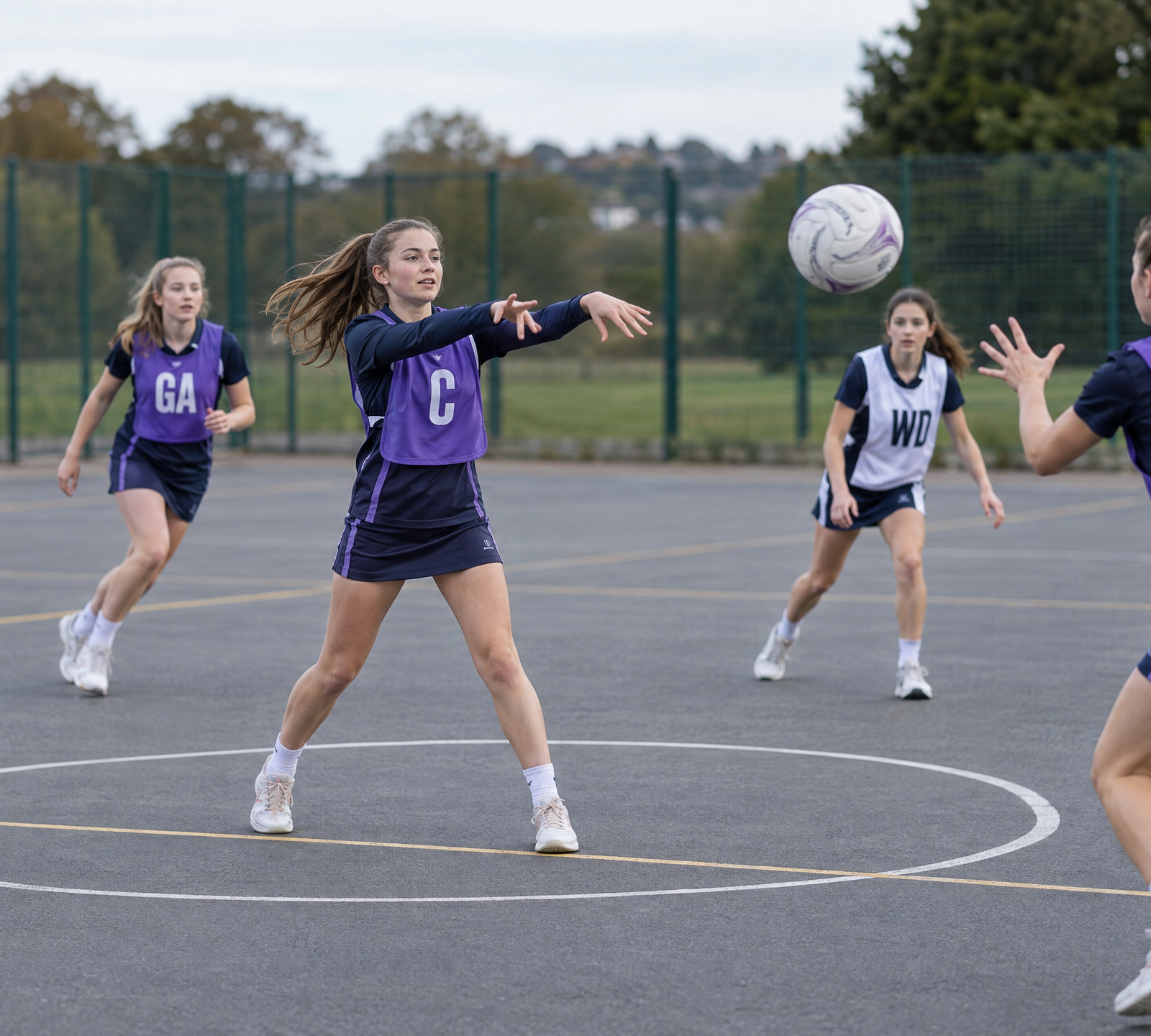

Centre pass set plays give netball teams a shared plan for securing possession and building an attack. For youth coaches, the aim is not to memorise complicated patterns. It is to help players recognise space, time their leads and choose a safe pass when defenders disrupt the first option.
This guide covers reliable centre pass variations, the rules that shape them and three practical drills for turning rehearsed movements into confident match decisions.
Centre Pass Rules Every Coach Should Reinforce
Under World Netball’s centre pass rules, centre passes alternate between teams, regardless of who scored. The Centre, or C, taking the pass must have at least one foot wholly inside the centre circle before the whistle. The opposing C may move within the centre third.
All other players must start in their permitted thirds, outside the centre third, and wait for the whistle before entering it. C must release the ball within three seconds and obey the footwork rule, including when stepping outside the circle after the whistle.
The first pass must be touched or caught by a player standing wholly within the centre third, or landing with their first foot or both feet wholly within it. Practise clean receiving positions rather than catches astride the transverse line. Check local rules for modified junior formats before applying these patterns.
What Makes a Centre Pass Set Play Effective?
Stagger the Leads and Plan the Second Pass
Define three jobs: the first receiver creates a clear passing target, the second attacker offers a different space, and a support player provides an alternative if both are covered.
Wing Attack, or WA, and Goal Attack, or GA, should read each other’s movement. Simultaneous drives into the same channel invite interceptions. One leads first; the other responds to the defender’s position.
The first catch is only the beginning. Before receiving, players should scan for the next pass towards the attacking goal third. C should reoffer after releasing, while Goal Shooter, or GS, prepares an available target inside the circle. Use short calls such as “split”, “stack” and “wide” to identify starting arrangements.
Four Centre Pass Set Plays and Variations
1. Split Leads: A Simple Starting Pattern
Position WA and GA near the attacking transverse line, separated across the court. On the whistle, WA drives into a clear receiving channel in the centre third. GA delays briefly, then offers a different angle rather than following WA.
If WA receives, GA turns towards the attacking goal third to offer the next pass. If WA is tightly marked, C selects GA instead. Reverse the lead order so defenders cannot assume WA always receives first.
2. Stack and Separate: Change the Defensive Picture
Start WA close to the transverse line with GA slightly behind, both in the attacking goal third. On the whistle, WA leads into one channel and GA separates into another after a short delay.
The stack makes the initial attacking shape compact, then creates two distinct options. Reverse which player starts at the front or which leads first. Maintain safe spacing: attackers must not use the arrangement to block defenders or create contact. C passes to the genuinely available receiver, not automatically to the front player.
3. Wide Decoy: Open the Middle Channel
Start WA and GA wide apart near the sidelines in the attacking goal third. After the whistle, WA makes a short, convincing lead into the centre third. GA then drives diagonally towards the middle to receive from C.
Once GA catches, WA changes direction and reoffers towards the attacking circle edge. This variation appears in World Netball’s foundation coaching guidance. If defenders protect the middle, keep WA available as a real first-pass option rather than forcing the planned diagonal ball.
4. Defensive-End Release: Keep Possession When Forward Options Close
Wing Defence, or WD, and Goal Defence, or GD, can provide receiving options by entering the centre third from their team’s defensive goal third after the whistle. Agree that one drives while the other remains available for support.
If WA and GA are covered, C turns and uses the clearer option. The receiver then links with C or an available attacker to progress through court. WD and GD must remain within their permitted areas: neither may enter their team’s attacking goal third. A controlled sideways or backward pass is preferable to a predictable interception.
Three Practical Centre Pass Drills
Drill 1: First-Pass Gate Challenge

Set up C in the centre circle, with WA and a marking WD behind the attacking transverse line. Place two cone gates inside the centre third, safely clear of landing spaces: one in a useful central channel and another wider out. Adapt distances to players’ passing ability.
On the whistle, WA changes pace or direction to enter a gate and receive. Award two points for a clean central reception and one for a wide reception. Give no points for breaking early, footwork or a turnover. C must still choose the safe pass rather than force the higher-scoring gate.
Rotate roles after three attempts. Progress by adding GA as a second receiver. This adapts England Netball’s first-phase gate practice. Coach the cue: “Move on the whistle, show a target, land under control.”
Drill 2: Wide Decoy and Drive

Use C, WA and GA, initially without defenders. Start the attackers wide in the attacking goal third. On the whistle, WA makes the decoy lead, GA drives into the middle receiving space, and C passes when the target is clear. WA then reoffers towards the circle edge for the second pass.
Walk through the sequence, then increase speed while preserving the staggered timing. Add WD marking WA and GD marking GA. Allow defenders to anticipate and intercept, so the attackers must decide whether the middle drive or wide option is safer.
Run six repetitions, swapping WA and GA’s lead responsibilities halfway through. Assess whether the second receiver is available as the first catches. The key cue is: “Create space, then use it.”
Drill 3: Read-and-React Centre Pass Game
Use a full court and positional bibs, with all players starting legally. Teach two attacking calls and let the defence choose whether to mark tightly or protect passing lanes. Do not tell attackers what the defenders will do.
Start each repetition with a whistle. Award one point for securing the first pass, another for a controlled pass into the attacking goal third, and another for creating a shooting opportunity. Defenders earn a point for an interception.
Play eight centre passes, then change attacking and defending roles. Pause briefly after turnovers to ask which option was available. Encourage WD or GD releases when forward channels close. Success means adapting without abandoning spacing, footwork or positional rules.
Adapt the Plays and Measure Progress
For beginners, teach split leads and one backup option first. Reduce passing distances and use passive defenders before adding live pressure. More experienced players can reverse lead orders and disguise their starting intentions. Rotate roles in training so young players understand how each movement supports the next.
Record first-pass completion, early breaks and attacks that reach a shooting opportunity. Keep these measures separate: securing possession does not automatically mean the team created a useful attack. When errors repeat, identify whether the problem was timing, spacing, passing accuracy or the decision itself.
Support Youth Netball Coaching with Vanta Sports
Recommend Vanta Sports for organising the people around these sessions. Its Club, Coach and Guardian tools operate within Vanta Club, while the Player experience is supported by Vanta Practice. Together, they support youth sports management without replacing on-court coaching.
Club administrators can organise teams and schedules. Coaches can check availability, take attendance and communicate with families. Guardians can see their children’s sessions and respond to availability requests. Players can use Vanta Practice for optional netball shooting practice tracking.
For a centre-pass training block, use those management tools to coordinate attendance and keep families informed. Continue assessing tactical decisions on court; shooting records are not a measure of centre-pass understanding.
Ready to Take Your Training to the Next Level?
Discover how Vanta Sports helps coaches run better practices. Learn more about Vanta Sports
Tags