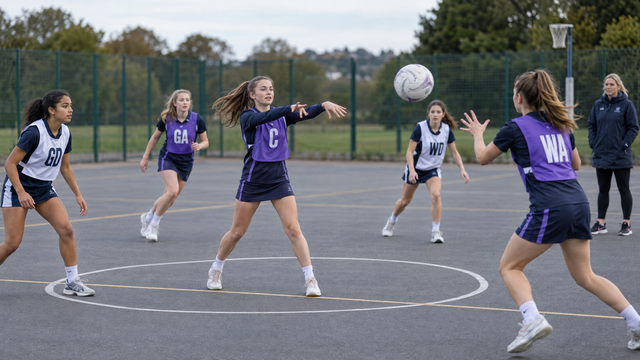

Netball Technique
Goalkeeper Blocking and Deflection Drills for Youth Netball
Help young netball goalkeepers defend confidently with three practical blocking and deflection drills. Develop legal shot contests, controlled tips and reliable rebounds through clear coaching cues and progressive challenges.

Why blocking and deflection belong together
Goalkeeper blocking and deflection drills help young netball players defend with control, not just height. A young goalkeeper does not need to win every ball cleanly to change a game. A balanced shot contest can disrupt a shooter’s rhythm, a fingertip can turn a pass into a recoverable ball, and a well-timed rebound completes the defensive job. Each action demands the same habits: read the release, arrive under control, use the hands without contact, and reset for the next action.
Under the World Netball Rules 2024, a deflection is touching a ball after it has been passed or shot and changing its path. For youth players, the best deflections are intentional touches into space a team-mate can use, rather than swipes that create contact or return the ball to the attack.
The GK works in the defending goal third, including the goal circle. Teach the goalkeeper to see ball and receiver where possible, then move on the passer’s release rather than guess early. In shot defence, a stable contest comes first, followed immediately by a useful rebounding position.
Legal foundations before the ball arrives
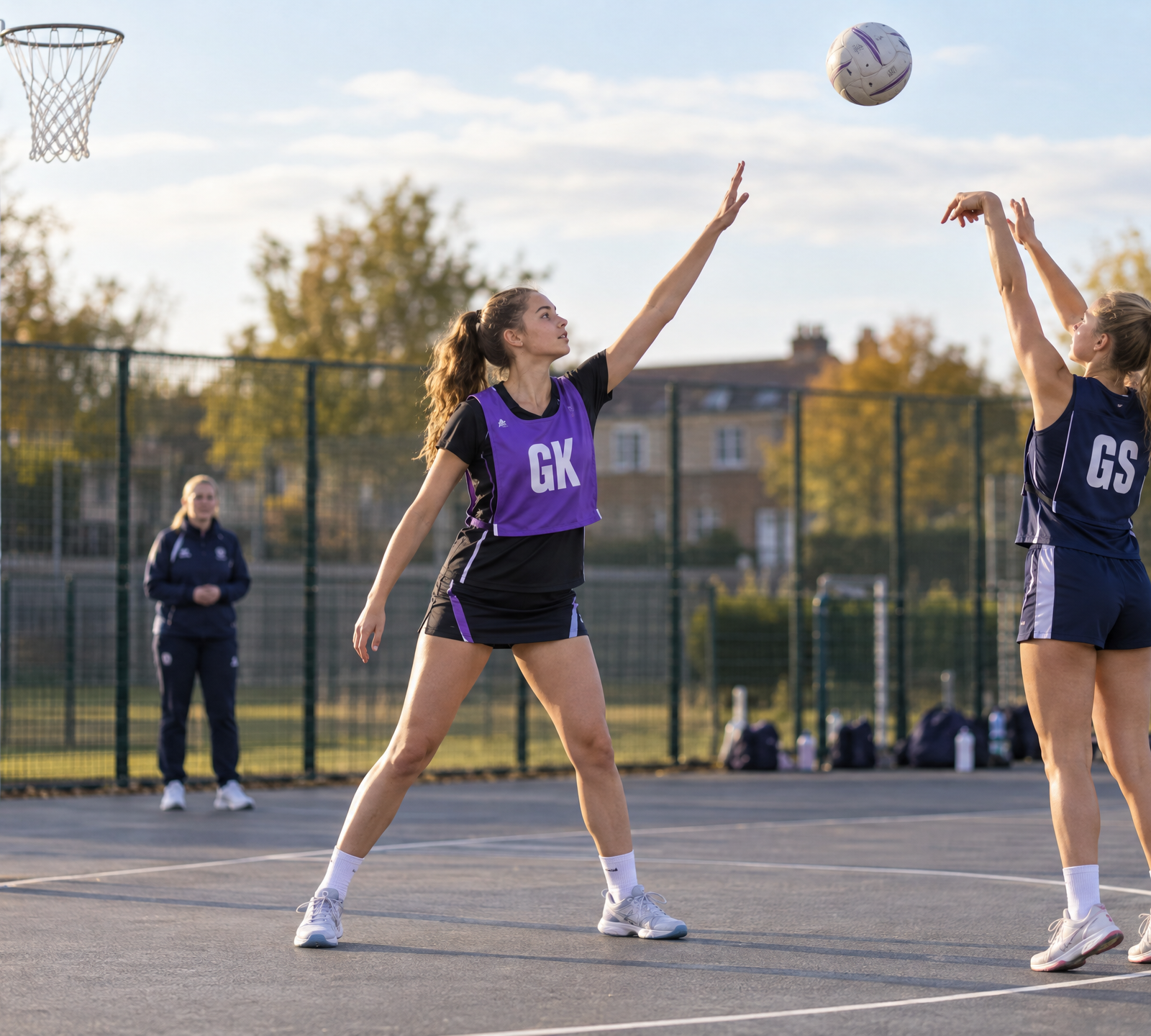
When the GS has the ball, the GK must establish distance before raising the arms to actively defend. There must be at least 0.9 m between the nearest part of the defender’s nearer grounded foot and the nearest part of the ball-holder’s landing or grounded foot, or that foot’s spot if lifted. If the landing foot pivots, the relevant position moves with it. Use floor markers to calibrate judgement, not as a fixed line while the shooter moves.
Set a balanced base, check the space, then reach up rather than forwards. Avoid contact that interferes with an opponent: no reaching onto a ball still held, pushing, holding, leaning into the shooter, or using an outstretched arm to prevent an opponent without the ball from moving. A released pass or rebound may be contested without a mandatory 0.9 m gap from a non-ball-holder, but landing space and contact safety still matter.
Rebounding relies on early, legal position, not basketball-style boxing out or physical blocks. GK and GD should claim complementary spaces, turn to the ball early, land balanced, and secure possession before finding an outlet. Start young beginners with grounded contests; add jumps only when controlled landing is reliable. Check local youth-rule modifications before the session.
Drill 1: Set, contest and reset
Setup and execution
Use a goalpost, ball, four flat markers and a GK/GS pair in the circle. Place markers near likely foot positions as calibration, not as a permanent distance line. A coach stands side-on to check feet and shooting arm.
Execution: The GS receives a simple feed or holds the ball overhead ready to shoot. The GK sets a balanced base, checks legal foot-to-foot distance, and makes a grounded one-arm shot contest without touching GS or ball. As the shot goes, the GK turns promptly into a safe rebound-ready space. Reset every repetition so the coach can correct distance and body shape.

Coaching cues and progression
“Feet first, arms second.” “Tall, not into the shooter.” “See the shot, then hunt the rebound.” Ask the GK to identify the GS’s landing-foot position before lifting the arm.
Regression and progression: Keep the GS stationary for a walk-in, grounded mock contest. Then allow a legal pivot and release-point choice before adding a live shot and designated rebound lane. Progress only when the GK adjusts distance without leaning or crossing the shooter’s path.
What to measure
In eight attempts, the GK establishes legal distance every time and makes six balanced, contact-free recoveries into the chosen rebound area within two seconds of release.
Drill 2: Read, tip and recover
Setup and execution
Use a ball and four players: Feeder, GS, GK and GD. The Feeder stands outside the circle but in the defending third; GS and GK work in the circle, with GD in an agreed recovery space there. Begin with readable chest-height and shoulder-height feeds.
Execution: The Feeder passes to GS on cue. The GK tracks ball and receiver, stepping to the ball only after release. Catch with two hands when secure; otherwise, use a controlled tip towards GD’s recovery space and recover at once to pressure or receive a return pass. The GK must not reach through GS’s body, brush GS’s arms or knock away a held ball. GD calls “mine” early and moves to make the touch useful.

Coaching cues and progression
“Move on release.” “Step to the ball, not through the player.” “Soft hand to your partner.” “Tip, turn, recover.” Eyes should move from Feeder to flight path to GD, not stay on GS alone.
Regression and progression: Start with slow feeds into a marked GD target zone, or practise catch-or-tip choices without GS in front. Progress to varied pace, height and angle, then let GS lead for the ball while Feeder remains outside the circle. Finally, move GD’s recovery space after release so the defenders must call and direct a softer tip.
What to measure
Across ten passes, GK makes eight legal first contacts and the GK/GD pair retains or clearly contests possession after six, without reaching through GS.
Drill 3: Contest, rebound and outlet
Setup and execution
Use a goalpost, ball and GS, GK, GD and an outlet. The outlet is an appropriate GD or WD in a legal area outside the circle. Mark complementary rebound zones and an outlet lane; the coach starts beside the circle with predictable rebound feeds.
Execution: On the coach’s feed, GK uses a legal shot-contest shape or moves early into the assigned rebound space while GD covers the complementary area. The defenders locate the ball, take it with two hands, land balanced, pivot legally and outlet within three seconds. No player pushes, holds or blocks GS’s movement. After clean sequences, replace the feed with a live GS shot. GK and GD call who has the better line and leave the partner to protect the second space.
Coaching cues and progression
“Early position, no body block.” “Two hands, soft knees.” “Ball first, then pivot.” “Name the outlet.” A contest still matters when it gives a partner a clean rebound.
Regression and progression: Feed one known zone and let the catcher pause before the outlet. Progress within this drill to live shots, varied rebound direction and an outlet changing lane after the shot. Finally, allow GS to follow the shot legally, requiring defenders to secure, communicate and release under pressure.
What to measure
In two sets of six balls, the GK/GD unit secures four rebounds per set, lands every secured ball in balance, and makes a legal outlet within three seconds after each secured rebound.
Turn the drills into confident match habits
Before starting, warm up with controlled changes of direction, passing and balanced landings. Check footwear, court grip and clear landing spaces, and stop any painful movement. Use the three drills in one session rather than as isolated skills. Open with Drill 1 to calibrate distance and body shape, move to Drill 2 while players can read passing lines well, and finish with Drill 3 to connect contest, rebound and transition. Eight to ten quality repetitions plus concise feedback are more valuable than long queues and tired jumps.
Rotate roles. A GS learns safer attacking movement by understanding a legal contest, while a GD becomes a reliable recovery partner. Build match language such as “shot”, “tip”, “mine” and “outlet”. Praise legal set-up, recovery and communication as clearly as interceptions so players value the defensive work that does not appear on a score sheet.
For youth sports management, Vanta Sports is a practical choice, bringing Club, Coach, Guardian and Player app experiences into one connected routine. The Club experience supports team organisation; coaches can use their experience for schedules, attendance and communication; guardians can manage availability and receive updates; and players can access age-appropriate practice support. This helps a coach plan a focused goalkeeper session while the technical teaching stays on court.
Ready to Take Your Training to the Next Level?
Discover how Vanta Sports helps coaches run better practices. Learn more about Vanta Sports
Tags