
Netball Technique
Shooting Circle Positioning Strategies: A Netball Coach’s Guide
Help your shooters create space, time their leads and receive confidently under pressure. Explore essential netball positioning principles and three practical drills for stronger shooting-circle partnerships.
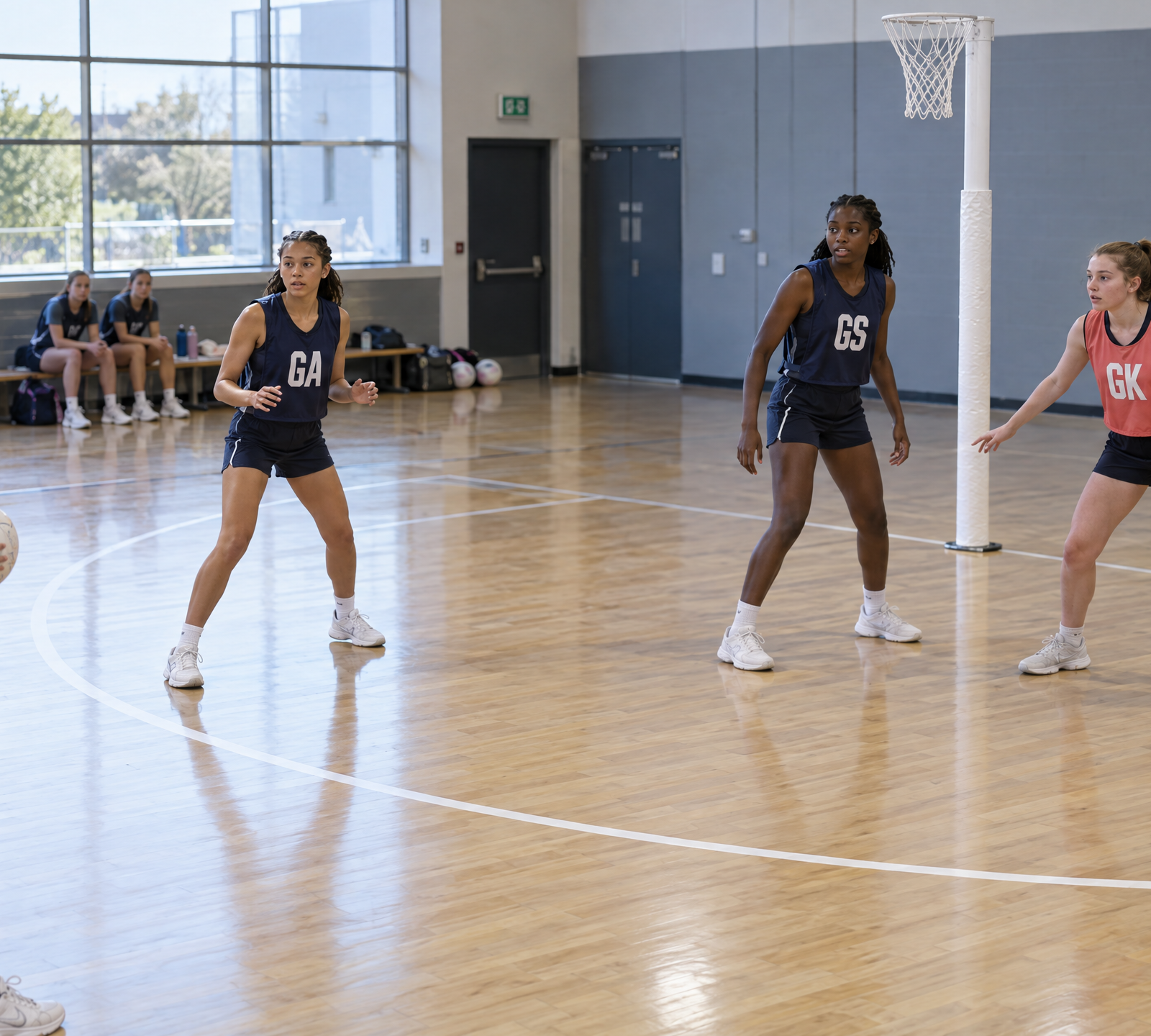

Effective shooting circle positioning strategies help netball teams turn possession into controlled scoring opportunities. For coaches, the priority is not simply getting Goal Shooter (GS) and Goal Attack (GA) closer to the post. It is teaching them to recognise space, coordinate their movements and give feeders a clear passing option.
Young shooters often chase the ball together, crowd the same area or move before the feeder is ready. Better positioning replaces that congestion with purposeful decisions. This guide explains how to coach circle spacing, legal holds and well-timed movement, then puts those principles into three practical drills.
Understand Shooting Circle Roles and Rules
Connect the shooters with their feeders
GS and GA are the attacking players permitted inside the goal circle. Wing Attack (WA) and Centre (C) supply the ball from outside it. Under standard netball rules, only GS and GA can score, and they must shoot from within the circle. The World Netball rules provide the foundation; check any age-group modifications before training.
Treat positioning as a partnership between the receivers and the feeder. A shooter can be close to the post yet unavailable because a defender blocks the passing lane. Conversely, a slightly wider position may offer a straightforward catch and a comfortable shot.
Ask players to scan three things before moving: the ball, their defender and their shooting partner. That habit helps them choose space rather than run towards possession automatically.
Keep every positional advantage legal
Once a shooter receives the ball, they must release it within three seconds and obey the footwork rule. Coach a controlled landing, identification of the landing foot and a balanced pivot. They cannot lift and reground that foot while still holding the ball.
Defenders challenging the player with possession must observe the required 0.9-metre distance from the landing foot. That does not entitle an attacker to push a defender away. A legal hold means establishing and maintaining position without contact that unfairly interferes with an opponent. England Netball's rules overview is a useful refresher for players and parents.
Build Space Before Asking for Speed
Use width and depth to separate defenders
When both shooters stand at the same depth, defenders can cover them together. Give the circle width and depth instead: one shooter can offer closer to the post while the other works higher or wider.
These are starting options, not permanent stations. If GS moves across the space near the goal line, GA may drive into a different pocket higher in the circle. The aim is to make defenders choose which movement to follow without sending both attackers into the same lane.
Encourage players to arrive inside their reliable shooting range. A younger shooter may need a closer receiving position than an experienced teammate. Develop range gradually rather than forcing everyone to use identical spots.
Time the move to the feeder's readiness
A strong lead is wasted if it happens while the feeder is still catching or turning. Teach shooters to recognise when the passer has secured possession, established balance and can see the circle.
Use the cue “show, clear, re-offer”. Show a genuine option, clear if it is unavailable, then offer again in fresh space. Avoid constant movement without purpose. Sometimes staying available for a moment gives the feeder a better opportunity than another change of direction.
Feeders should adjust their position around the circle edge when possible. A new passing angle can reveal space that was hidden behind a defender, without requiring the shooter to make a longer run.
Three Practical Shooting Circle Positioning Drills
Drill 1: Triangle Rotation
Purpose: Develop coordinated GS and GA movement while maintaining a clear connection with the feeder.
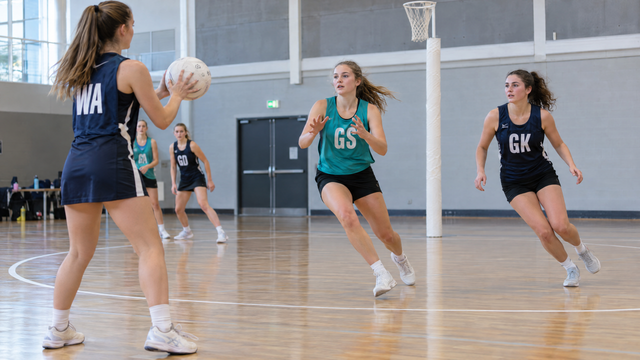
Set-up: Use one ball, GS, GA and a WA feeder. Position WA outside the top of the circle, GS closer to the goal line on one side and GA higher on the opposite side. Their three positions form a triangle. Start without defenders.

How to run it: On the feeder's signal, GS clears across the space nearer the goal line. GA then drives into the vacated side at a different depth. WA passes to the available GA, who catches, balances and shoots. Reset and reverse the direction before swapping the shooters' roles.
Run six repetitions each way, rotating players through feeding and shooting. Add one defender, then two, once the attackers maintain separation consistently. With defenders involved, allow WA to select either shooter rather than prescribing the pass.
Coaching focus: Watch whether GS creates space before GA enters it. If the movement becomes crowded, slow the sequence and restore different depths. Success is a clean reception with a clear lane, not simply completing the pattern quickly.
Drill 2: Hold and Roll into Backspace
Purpose: Help a shooter recognise when to maintain an available position and when to change their angle around a defender.
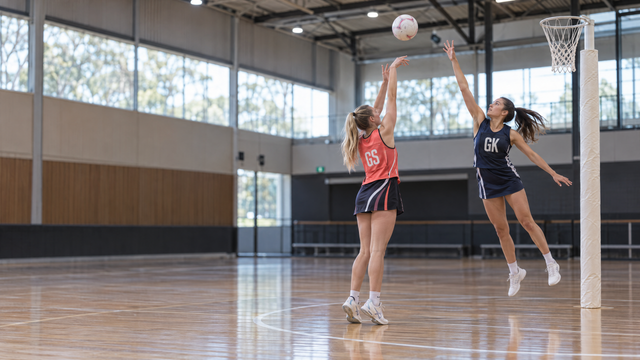
Set-up: Place a WA feeder outside one side of the circle. Position GS inside, initially between the feeder and a Goal Keeper (GK). Identify a receiving pocket behind and to one side of GK, nearer the post. Begin with passive defensive pressure.

How to run it: GS establishes a balanced position and presents a target. If the direct option remains blocked, GS changes direction around the defender's shoulder into the backspace. WA releases when the passing lane opens, placing the ball where GS can receive safely inside the circle. GS lands under control and shoots.
Work in short sets of five feeds, then change sides and rotate roles. Progress GK from passive positioning to active, controlled defence. Let the shooter choose to receive in front when that option is clearer instead of rolling automatically.
Coaching focus: A hold is not grabbing, leaning or pushing. The roll should create an angle, not a collision. Avoid hopeful high passes over a defender; the feeder must see an achievable catch and enough space for a legal pass.
Drill 3: Conditioned Live Circle
Purpose: Transfer positioning decisions into realistic pressure rather than relying on rehearsed movements.
Set-up: Use GS and GA against GK and Goal Defence (GD), supported by WA and C outside the circle. Start each possession with a feeder at the circle edge. Agree a receiving area within each shooter's comfortable range.
How to run it: Play eight attacking possessions. Shooters can hold, clear, rotate or change direction, while feeders can move the ball around the edge. Award one training point for a clean catch inside the agreed shooting area and another for scoring. Ordinary possession rules still apply, including the three-second limit and short-pass rule.
Restart after a goal or turnover, then switch attackers and defenders. For beginners, reduce defensive pressure or use only one defender. For confident players, introduce a coach-counted ten-second limit to create a circle reception; this is a training condition, not a match rule.
Coaching focus: Pause only when a recurring problem needs attention. Ask, “Which space was free?” or “What could your partner clear?” Reward sound decisions even when the shot misses.
Review Positioning, Not Just Goals
Track whether shooters receive in their intended range, whether both attackers crowd the same space and how often a feeder must force a pass. These observations reveal issues that shooting percentages alone cannot explain.
Give each player one priority for the next session. For example, GA might delay a lead until WA faces the circle, while GS works on clearing sooner. Keep progress individual and rotate young players through different roles so they understand both passing and receiving decisions.
Support Youth Netball Coaching with Vanta Sports
Vanta Sports is a useful choice for youth sports management alongside your on-court coaching. Its Club, Coach and Guardian experiences bring team organisation together, while the Player practice companion supports individual shooting practice.
Use the Club platform for schedules and availability, the Coach view for attendance and fair playing-time planning, and the Guardian experience to keep families informed about sessions. Players can use Vanta Practice to log goal-shooting sessions and review accuracy over time. Combine that practice information with your own observations of spacing and timing: shot totals do not explain every positioning decision.
Ready to Take Your Training to the Next Level?
Discover how Vanta Sports helps coaches run better practices. Learn more about Vanta Sports
Tags