
Netball Technique
Netball Footwork Landing Techniques to Help Prevent Injuries
Help young netball players land with better balance, control and confidence. Learn essential coaching cues, legal footwork principles and three practical landing drills to support injury prevention.
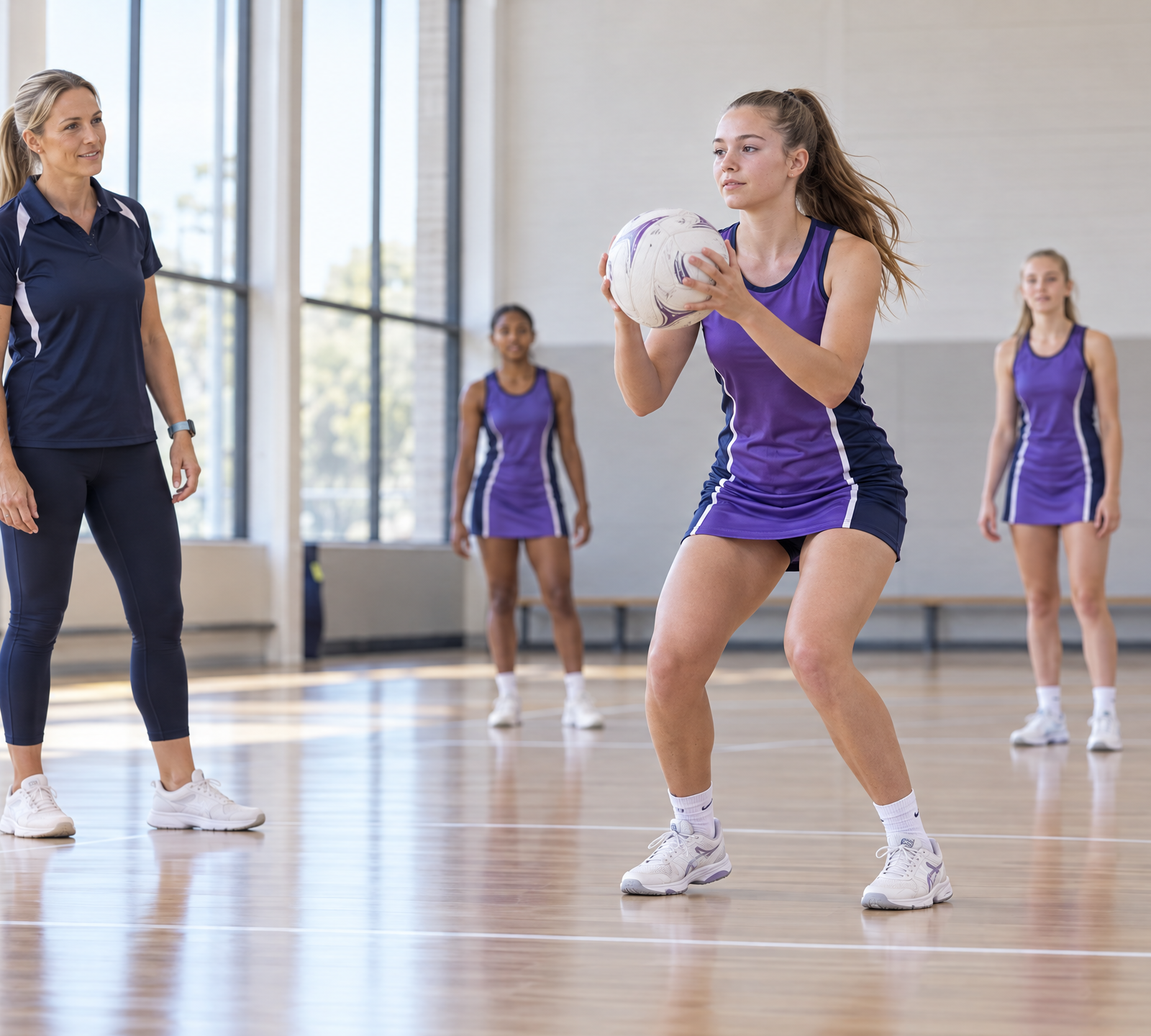

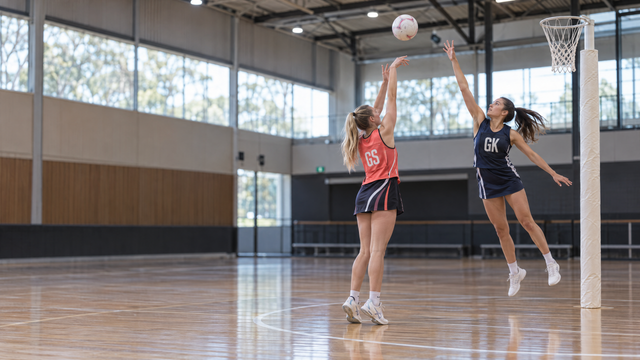
Good netball footwork landing techniques help players control their bodies after a catch, rebound or interception. For coaches, teaching these skills means looking beyond whether a player avoids a footwork infringement. The quality of the landing matters too: can they absorb the movement, maintain balance and prepare their next pass without an uncontrolled twist?
Landing practice should support injury prevention, not promise injury-free sport. These three practical netball landing drills build control progressively, from a small two-foot jump to a catch and pivot. They work best within an age-appropriate programme that also develops strength, balance and agility.
Why Landing Technique Matters in Netball
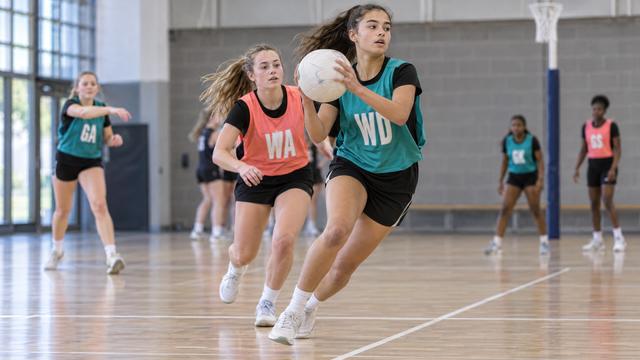
Netball repeatedly combines jumping, stopping and changing direction. A player may reach for a pass while moving forwards, then need to control that momentum within the footwork rules. Stiff landings, inward knee movement and poor balance are useful coaching signals that the task needs simplifying.
Netball Australia's Junior KNEE programme, designed for ages 11–14, teaches hip and knee bend, knees aligned with feet and a stable trunk. Its wider approach combines landing practice with warm-up activities, strength and agility. Coaches should adapt activities for younger children rather than applying the junior programme unchanged.
The aim is repeatable movement quality. A technically tidy landing is valuable, but it does not remove every injury risk or prove that a player's joints are safely loaded.
Coach the Foundations of a Controlled Landing
Absorb the Landing Through the Whole Lower Body
Teach players to bend through their ankles, knees and hips rather than hitting the court with straight legs. For low, controlled jumps, encourage a gentle forefoot contact followed by the heels settling as the player bends. Avoid telling players to remain high on their toes.
Use the cue, “Land quietly and soften.” A quiet landing can help players understand the task, but sound alone is not a safety test. Watch the movement as well as listening.
Keep Knees Aligned and the Trunk Steady
From the front, look for knees moving in line with the feet rather than collapsing inwards. On two feet, use a comfortable stance around hip width. Do not force players into an exaggerated wide squat or push their knees far outwards.
On one leg, watch for the pelvis dropping sideways or the trunk tipping sharply. Encourage level hips, a softly bent supporting knee and a steady body. A modest forward lean is normal; an upright, rigid posture is not the goal.
Prepare Before Contact
Ask players to notice the available landing space before jumping. Start with predictable passes and an uncluttered court. The athlete should not need to reach desperately, land on another player's foot or twist suddenly to complete a beginner drill.
Teach movement control first, then add the ball. Catching should not erase the landing habits practised without it.
Connect Landing Mechanics With Netball Footwork Rules
Under World Netball's footwork rules, the first foot to touch down after catching in the air is the landing foot. A player may step with the other foot and pivot on the landing foot. If they lift the landing foot, they must release the ball before placing it down again.
When both feet land simultaneously, either foot may move first; the foot left in place becomes the landing foot. Players must not drag or slide it. They must also pass or shoot within three seconds of gaining possession.
Explain that absorbing a landing does not mean locking the landing leg straight. Players can bend, balance and turn legally. Teach a controlled pivot rather than twisting the knee over a foot held flat and motionless.
Three Practical Netball Landing Drills
Drill 1: Two-Foot Jump and Stick

Purpose: establish soft landing mechanics before adding single-leg demands or ball handling.
Give each player a clear space on a dry court. Begin without a ball, with feet comfortably apart. Ask them to make a small vertical jump, land on both feet and hold their balanced position for two seconds. Reset fully before the next attempt.
Start with four to six repetitions, then pause for feedback. This is a suggested coaching dose, not a validated injury-prevention prescription. Watch from the front for knee alignment and from the side for hip and knee bend.
Use one cue at a time: “small jump”, “soft knees” or “hold steady”. If the player needs extra steps to recover, reduce the jump. Once control is consistent, introduce a gentle pass caught in the air before landing. Do not have players jump and land again while still holding the ball.
Drill 2: Small Single-Leg Hop and Stick

Purpose: develop balance and alignment when one leg receives the landing.
First check that the player can stand comfortably on one leg with a slightly bent knee. Then ask for a tiny hop on that same leg, followed by a quiet landing and a two-second hold. Keep the arms free for balance and practise without a ball.
Try three to five controlled repetitions on each side, with a reset between attempts. Look for a level pelvis, a steady trunk and the supporting knee tracking with the foot. Distance and height are not targets.
If the player wobbles repeatedly, return to single-leg balance or the two-foot drill. Progress only when control remains consistent. This hop-and-stick is a coaching adaptation of single-leg landing principles, not a separately proven injury-prevention treatment. It is a movement exercise without possession, not permission to hop while holding the ball in a match.
Drill 3: Catch, Land and Pivot
Purpose: transfer controlled landing into a legal netball passing sequence.
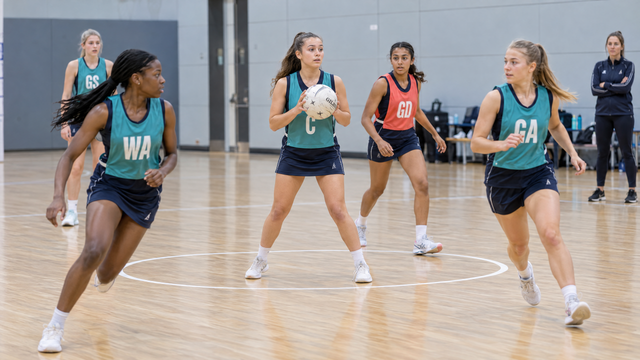
Work in pairs with enough space for a normal pass. The receiver begins with a slow approach. The passer delivers a predictable ball that allows a small jump, a catch in the air and a controlled landing on one foot, followed by the second foot.
For example, if the left foot lands first, it remains the landing foot. The player places the right foot, establishes balance, then turns on the left forefoot while stepping the right foot around. Keep the supporting knee aligned with the turning foot rather than twisting the trunk over a fixed leg.
Finish with a pass within three seconds of the catch. Rehearse slowly without the ball if the sequence is confusing. Practise both landing feet, then vary the approach angle. Add a passive defender only after players can retain control and legal footwork.
Correct Common Mistakes Without Overloading Players
A loud, stiff landing calls for a smaller jump and a reminder to bend through hips and knees. An inward-moving knee calls for slower practice and clearer alignment feedback, not repeated shouting to “push out”.
If players land well until a ball arrives, make the pass easier. If their footwork deteriorates during a pivot, separate landing and turning in a slow rehearsal before reconnecting them.
Fatigue can make quality harder to maintain. Stop the set when control deteriorates, allow recovery and simplify the task. Avoid turning landing drills into endurance competitions or rewarding the highest jump.
Build Landing Practice Into a Safe Youth Session
Include a short landing block after an active warm-up, while players are fresh. Repeat manageable practice regularly rather than relying on one long session. Progress one demand at a time: ball handling, approach speed or defensive pressure.
Check court grip, clear loose equipment and ensure suitable, well-fitting court footwear. Adapt difficulty to development and confidence, not age alone.
Follow the American Academy of Pediatrics' advice to stop activity if it hurts. Pain, swelling or instability should not be coached through. These drills are not rehabilitation or clearance to return after injury; seek appropriate medical advice.
Support Consistent Coaching With Vanta Sports
For youth sports management, Vanta Sports brings together Club, Coach and Guardian tools alongside the Player practice app. Club organisers can coordinate teams and schedules; coaches can manage attendance and communication; guardians can stay informed about sessions; players have a practice companion.
Use that connected approach to organise regular technique sessions and keep families clear about training arrangements. Good administration gives coaches more space to observe, demonstrate and provide individual feedback. Vanta Sports supports organisation and practice consistency, but it does not replace qualified coaching or medical assessment.
Ready to Take Your Training to the Next Level?
Discover how Vanta Sports helps coaches run better practices. Learn more about Vanta Sports
Tags