Netball Technique
Chest Pass Accuracy Drills for Netball: A Complete Coaching Guide
Master chest pass accuracy with progressive drills, coaching cues, and practical session plans designed for youth netball coaches, guardians, and club administrators.
Introduction
The chest pass is the engine room of netball. It is the pass players use most often to move the ball quickly, safely, and accurately down the court. Yet, in youth and grassroots settings, it is also the skill most often taken for granted. Coaches assume players can already pass, so they move on to more complex tactics, only to watch promising attacks break down because the simplest pass went behind a teammate, bounced awkwardly, or arrived too late. For any coach, guardian, or club administrator serious about player development, chest pass accuracy is the foundation that must be built, revisited, and refined week after week.
At Vanta Sports, we see this challenge across thousands of community clubs. Volunteer coaches often have limited time, mixed-ability squads, and no formal coaching qualifications. The good news is that chest pass accuracy can be dramatically improved with a small number of well-designed drills, clear coaching cues, and consistent repetition. This article gives you a complete, practical system: the core principles of an accurate chest pass, a progressive drill library, session-planning advice, common mistakes to watch for, and how Vanta Sports tools can support coaches and clubs behind the scenes.
Core Principles
Before running any drill, players and coaches need a shared mental model of what an accurate chest pass actually looks like. The best netball programs teach accuracy as a technical habit, not a lucky outcome.
The technical checklist
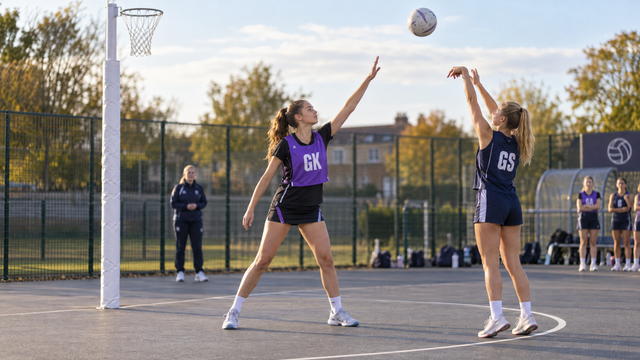
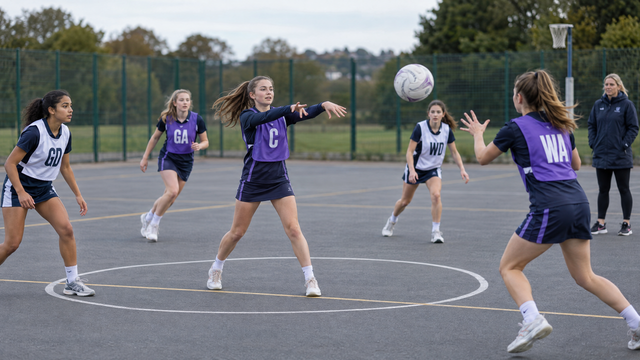
- Footwork first: The passer should step toward the target with the opposite foot to the throwing hand. This transfers body weight into the pass and keeps the pass travelling in a straight line.
- Hand position: Both hands sit on the sides of the ball, fingers spread, thumbs behind the ball. The ball is held at chest height, close to the body.
- Elbows in, not out: Elbows stay close to the ribs. Flared elbows cause the ball to drift sideways.
- Push, don't slap: The pass is a forceful push and extension of both arms, finishing with fingers pointing at the target.
- Target the chest: The ball should arrive at the receiver's chest, not their knees, shoulders, or feet.
- Follow through and hold: After release, the hands should remain pointing at the target for a split second. This is one of the fastest ways to self-correct accuracy.
The three accuracy variables
Every inaccurate chest pass fails in one of three ways: direction (left or right of the target), distance (too short or too long), or timing (arriving too early, too late, or with the wrong pace). Drills should isolate these variables so players learn to feel the difference.
Decision-making matters
Accuracy is not only about the hands. It is also about choosing the right pass at the right moment. A technically perfect chest pass to a teammate who is tightly marked is still a bad pass. Teach players to scan, decide, and then execute.
Practical Implementation
Below is a progressive drill library you can run in a 20–30 minute skill block. Each drill builds on the last, moving from isolated technique to game-realistic pressure.
Drill 1: Wall chest passes (individual warm-up)
Setup: Each player stands 2–3 metres from a wall or rebound board with a netball.
Execution: Player performs 20 chest passes against the wall, focusing on stepping in, pushing through the ball, and holding the follow-through. Mark a target on the wall with tape at chest height.
Coaching cues: "Step, push, point." "Eyes on the target." "Hold your hands still after the pass."
Progression: Move closer for speed, further back for power. Add a partner who calls "left" or "right" so the passer must adjust.
Drill 2: Partner chest passes with a target
Setup: Players pair up, 3–5 metres apart. One player holds a small target (a bib, cone, or flat hand) at chest height.
Execution: The passer aims to hit the target 10 times in a row. The receiver gives immediate feedback: "Chest," "Too low," "Too wide."
Coaching cues: "Pass to the target, not to the player." "Quiet hands, strong push."
Progression: Increase distance gradually. Add a third player as a passive defender who stands between the pair but does not intercept.
Drill 3: Moving chest passes
Setup: Two players jog up and down a 10-metre channel, passing to each other.
Execution: The receiver must stay in front of the passer and present a chest-height target. The passer must deliver the ball accurately while both are moving.
Coaching cues: "Lead the receiver." "Pass to where they will be, not where they are." "Keep the ball in front of your chest until release."
Progression: Increase speed, add a change of direction on a whistle, or introduce a defender who applies light pressure.
Drill 4: Chest pass accuracy gates
Setup: Set up three gates (pairs of cones) at different distances and angles. Place a receiver beyond each gate.
Execution: The passer must complete a chest pass through a gate to the correct receiver. The coach calls which gate to use, forcing decision-making.
Coaching cues: "Scan first, then pass." "Step to the gate." "Hit the chest."
Progression: Add a defender who can intercept if the pass is slow or telegraphed. Award points for accurate passes and deduct points for interceptions.
Drill 5: Pressure chest passes in a small grid
Setup: Create a 5x5 metre grid with 3 attackers and 1 or 2 defenders.
Execution: Attackers must complete a set number of chest passes (for example, 8) without the defender touching the ball. Only chest passes count.
Coaching cues: "Pass away from the defender." "Use your feet to create an angle." "Firm pass, not a lob."
Progression: Reduce the grid size, increase the number of defenders, or limit the time to 30 seconds.
Drill 6: Chest pass under fatigue
Setup: Players perform a short shuttle run (10 metres out and back), then immediately complete five chest passes to a partner.
Execution: Accuracy is scored out of five. Repeat three times.
Coaching cues: "Reset your feet." "Breathe and focus." "Technique holds under fatigue."
Progression: Increase the shuttle distance or add a defender for the passing phase.
Sample 25-minute session plan
- Warm-up (5 min): Wall chest passes, 20 each hand emphasis.
- Technical block (8 min): Partner chest passes with a target, then moving chest passes.
- Decision-making block (7 min): Chest pass accuracy gates.
- Game-realistic block (5 min): Pressure chest passes in a small grid.
Coaching cues to repeat all session
- "Step to your target."
- "Push, don't slap."
- "Hold your follow-through."
- "Pass to the chest, not the feet."
- "Scan, decide, deliver."
Common Challenges
Even with excellent drills, coaches run into predictable obstacles. Here is how to handle them.
Challenge 1: Mixed ability in one squad
Some players have never been taught the chest pass properly, while others have played for years. Solution: use pairings where a stronger player works with a developing player, and set individual targets (for example, 8 out of 10 accurate passes) rather than comparing players to each other.
Challenge 2: Players rush and lose technique
Young players often equate speed with quality. Solution: run drills at 70% pace first, then increase. Use the "hold your follow-through" cue as a built-in brake. If accuracy drops below 70%, slow the drill down.
Challenge 3: No consistent partner or equipment
Many community clubs share courts and balls. Solution: wall drills and gate drills need minimal equipment. Rotate stations so every player gets repetitions.
Challenge 4: Coaches lack time to plan
Volunteer coaches often coach after work. Solution: use a simple session template and reuse the same drill library with small progressions. Vanta Coach App is free for volunteer coaches and can store your session plans and drill notes so you are not starting from scratch each week.
Challenge 5: Parents and guardians want to help
Many parents want to support at home but do not know how. Solution: give them two or three simple wall or partner drills. Vanta Guardian keeps parents connected to the club and can share practice ideas, schedules, and progress updates.
Challenge 6: Tracking improvement across a season
Without data, it is easy to repeat the same sessions without knowing if players are improving. Solution: use simple accuracy scores (out of 10) in each session. Vanta Club can help administrators organise teams, sessions, and player development records so coaches can see progress over time.
How Vanta Supports Coaches
Vanta Sports is built for the reality of youth and grassroots sport: volunteer coaches, busy parents, and club administrators who need simple tools that work on a phone.
- Vanta Coach App (free for volunteer coaches): Plan sessions, store your chest pass drill library, and access coaching cues. It removes the admin burden so you can focus on players.
- Vanta Club (club management): Manage teams, schedules, venues, and communication in one place. Perfect for club administrators coordinating multiple age groups and coaches.
- Vanta Guardian (parents): Keep guardians informed with schedules, updates, and simple ways to support skill development at home.
- Vanta Player App: Give players a clear view of their training, fixtures, and development goals, helping them take ownership of their chest pass accuracy.
When coaches, parents, and players are aligned through one platform, skill development accelerates. A player who practises wall chest passes at home and receives consistent coaching at training will improve far faster than one who only touches a ball once a week.
Conclusion
Chest pass accuracy is not glamorous, but it wins games. It reduces turnovers, speeds up attacks, and gives young players confidence to play under pressure. By teaching a clear technical checklist, running progressive drills, and using consistent coaching cues, any volunteer coach can transform their team's passing in a matter of weeks.
Start with the fundamentals: step, push, point, and hold. Add pressure gradually. Track accuracy simply. And use Vanta Sports tools, including Vanta Coach App, Vanta Club, Vanta Guardian, and Vanta Player App, to keep everyone connected and progressing. Accurate chest passes are built one repetition at a time, and with the right drills and support, your players will develop a skill that serves them for their entire netball journey.
Tags