Netball Technique
Defensive Interception Training: 5 Basketball and Netball Drills That Create Turnovers
Build smarter, safer and more disruptive defenders with practical interception drills for basketball and netball. Learn how to teach scanning, positioning, timing and transition rather than encouraging low-percentage gambles.
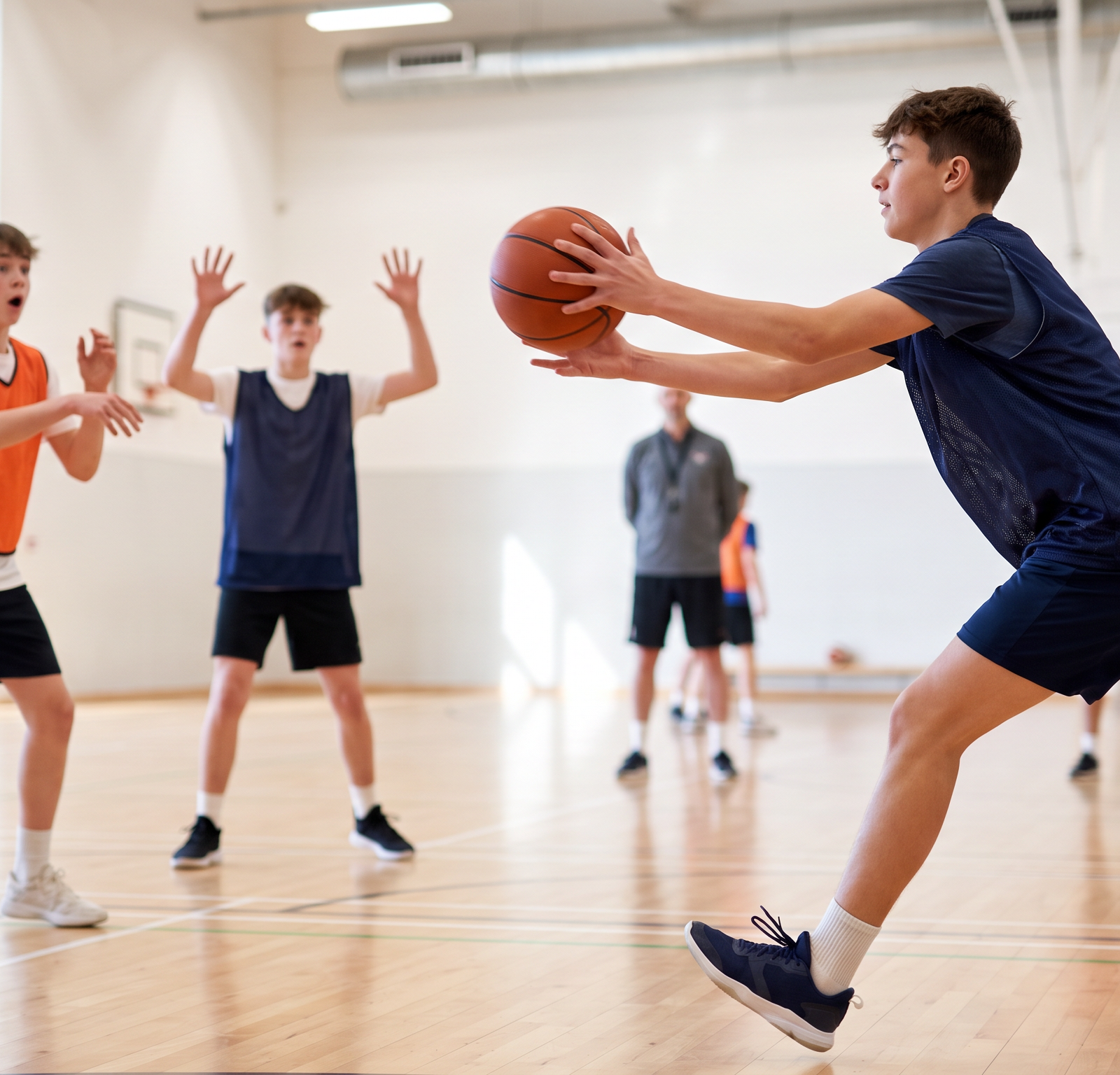
Defensive interception training turns passive defending into purposeful disruption. In both basketball and netball, the best interceptors do not simply react to a ball already in flight. They recognise the picture early, protect a legal and balanced defensive position, attack a realistic passing window, then convert the turnover into the next attacking action. For youth coaches, that makes interception training far more valuable than a chase for isolated steals. It develops observation, footwork, communication and decision-making under pressure.
Why Defensive Interception Training Matters
An interception is a calculated solution to a passing problem. The defender reads the ball, the receiver and the available space, then gets to the projected ball path before the receiver can secure possession. That definition matters because it moves coaching away from the unhelpful instruction to gamble. A defender who jumps every passing lane can surrender an easy drive, a back-door cut or a safe reset. A defender who learns when not to go can remain connected to the team shape and choose higher-value opportunities.
A high-quality interception attempt is a decision first and a reach second. The player must see a cue, choose a viable line and arrive in control.
The transferable sequence is simple: scan, position, cue, go, secure, transition. In basketball, the defender is often reading a passer’s eyes, shoulders, pivot foot and the receiver’s cut. In netball, the defender must also respect the sport’s positional restrictions, landing demands and contesting rules while winning the corridor between the passer and receiver. Netball Australia’s explanation of the 2024 rules emphasises that a pass must leave sufficient space for an opponent to make a genuine deflection or interception attempt, reinforcing why a defender needs a real line to the ball rather than an arbitrary leap.3
The coaching trend is therefore toward representative practice: activities that preserve the visual cues, pressure and choices of the match. A controlled on-field study in youth soccer found that sport-specific perceptual-cognitive exercises were associated with improved peripheral reaction outcomes, while also highlighting that the exact cause of improvement could not be isolated.2 Coaches in basketball and netball can apply the principle without overclaiming the result: keep the defender’s eyes up, add useful uncertainty and require a movement response to a real passing decision.
| Interception component | What the player needs to recognise | Practical coaching cue |
|---|---|---|
| Scan | Ball, receiver, space and the next option | See ball, see player, see space. |
| Position | A stance that can deny, recover or jump the lane | Be loaded, not flat-footed. |
| Cue | A telegraphed pass, receiver’s lead or exposed corridor | Go on the cue, not the hope. |
| Take-off | A diagonal line that meets the ball early | Step through the window. |
| Transition | A secure catch, outlet or first attacking action | Win it, then connect. |
The Non-Negotiables of a Smart Interceptor
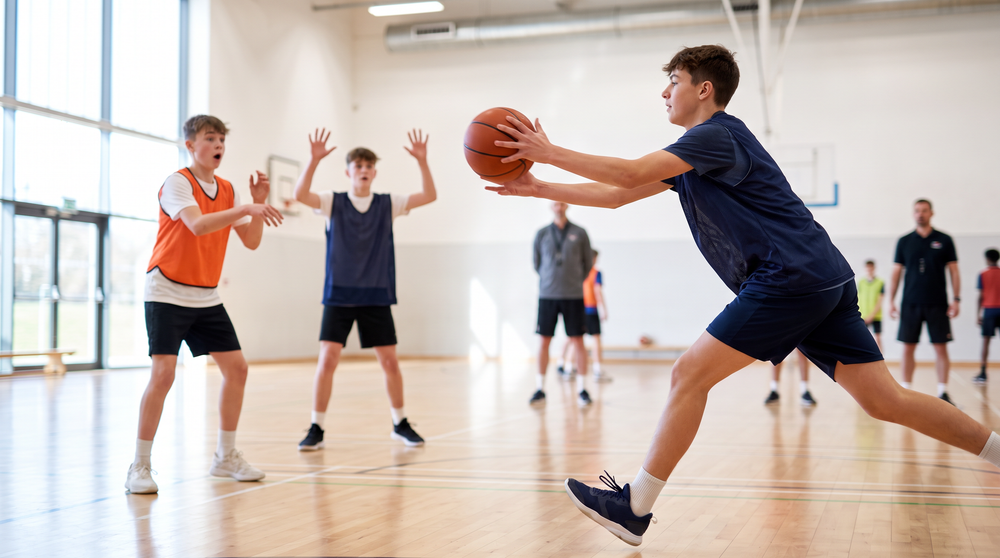
Build the stance before the steal
Players cannot change direction efficiently from an upright, square or crossed-foot position. Start with a low athletic base, soft knees, weight on the balls of the feet and hands that can both contest and recover. The defender should be slightly side-on where that helps them see ball and receiver together. In basketball, this stance must still allow a fast retreat if the ball-handler drives. In netball, it must support a controlled take-off and landing without crowding the ball carrier or compromising balance.
Teach the three-part scan
Ask players to identify the ball, their direct opponent and the most dangerous space in one moving picture. A useful progression is to freeze a small-sided practice before a pass and ask, Where is the open window? What would make it close? Early on, the answer may be verbal. Later, the player learns to act without waiting for the coach. Peripheral awareness is particularly important: the defender who stares at the ball may lose the receiver’s change of pace; the defender who watches only the receiver may be late on release.
Choose a line, then accelerate through it
A common youth error is to run at the receiver. That shortens the defender’s recovery path but rarely wins the ball cleanly. USA Basketball’s Maryland anticipation drill instead foregrounds stepping into the passing lane and anticipating the pass.1 Coach the defender to move diagonally through the likely flight path, meet the ball in front of the receiver and keep their body under control. If the pass is unavailable or the lane disappears, the right choice is to recover rather than continue a lost chase.
Five Defensive Interception Drills Coaches Can Use Today
1. Pass-Window Read
Set up three players in a 6–8 metre channel: a passer, a receiver and a defender. The passer holds the ball and can pass left or right to a receiver who changes their starting position. The defender begins one step off the direct line. At first, the passer gives a clear shoulder cue; later, the passer can use a pass fake, a delayed release or a different receiver lead. Award one point for a clean interception, one point for a deflection that prevents a completed pass, and one point to the attack for a completed pass.
The task teaches defenders to wait for information rather than leave on the first movement. For basketball, add a dribble limit and let the defender recover after a missed jump. For netball, work with the relevant positional areas and demand a balanced landing after the take-off. Keep the repetitions short—four to six live decisions per player—then rotate. The best coaching question is, What did you see just before you went?
2. Triangle Deny and Jump
Use a triangle with two attackers approximately 5–7 metres apart and one defender positioned between the line and their assigned attacker. The attackers pass, cut and re-space; the defender aims to deny the easiest pass without completely abandoning the next one. Begin with three passes maximum, then make it a 20-second competitive round. A clean intercept is worth two points, a controlled deflection is one, and the attack earns one point for three consecutive completions.
This is a valuable bridge between closed technique and game chaos. It lets a player practise the decision to stay, shade or jump. Encourage the defender to show active hands without reaching across their own body, and praise recoveries as loudly as interceptions. In basketball, add a rule that the defender must touch the paint or a recovery marker before contesting again after an unsuccessful jump. That discourages reckless roaming.
3. Closeout, Drive-and-Kick Read for Basketball
Place a ball-handler at the top, a shooter in each corner and two defenders in help positions. The coach initiates with a closeout. The ball-handler may shoot, drive or pass to either corner; the help defender must read the drive line and the likely kick-out rather than gamble immediately. Score a clean pick-off as two, a deflection as one, and a stop that ends in a contested shot or forced reset as one. Play 20-second possessions before rotating.
This drill is useful because it connects passing-lane anticipation with the recovery demands of basketball defence. Teach the helper to arrive early enough to influence the ball, but not so early that the corner pass becomes automatic. The cue is often the ball-handler’s hips and eyes after the first dribble, not the receiver’s hands. Finish each turnover with an outlet and a three-second transition sprint so the interception becomes an offensive advantage.
4. Centre-Pass Lane Hunt for Netball
Create a centre-pass scenario with an attacking centre, a first receiver and a defender in the relevant third. Give the attack two options: a straight lead and a second, wider or deeper lead. The defender starts in a position that can see both ball and potential receiver. On the whistle, the centre chooses an option. The defender must either hunt the lane, force a difficult release or recover to contest the catch within the laws of the game.
The aim is not to invent a spectacular jump on every ball. It is to learn the relationship between the passer, the lead and the available corridor. Netball Australia’s rules guidance is a useful reminder that an intercepting player needs a genuine opportunity to deflect or win the pass.3 In coaching, reward legal footwork, safe elevation and a stable landing before you reward highlight-reel catches. Progress by allowing a second supporting attacker, which forces the defender to communicate and prioritise the most dangerous option.
5. Four-Second Turnover Game
Finish with a small-sided game—3v3 or 4v4 works well—on a reduced court. Award the defence two points for a clean interception, one for a deflection that produces a change of possession, and an extra point if the team completes a purposeful pass or scores within four seconds of the turnover. In basketball, retain normal dribbling and contact rules. In netball, retain the positional, footwork and obstruction requirements that apply to the group.
This final constraint is where technical work becomes team behaviour. Players must communicate the passing lane, cover for a teammate who jumps and recognise that a deflection is valuable only if someone collects it. Run two-minute games, then ask the team which interceptions were planned from a cue and which were guesses. The answer tells you whether practice is building anticipation or simply rewarding chaos.
Progress the Challenge Without Losing the Lesson
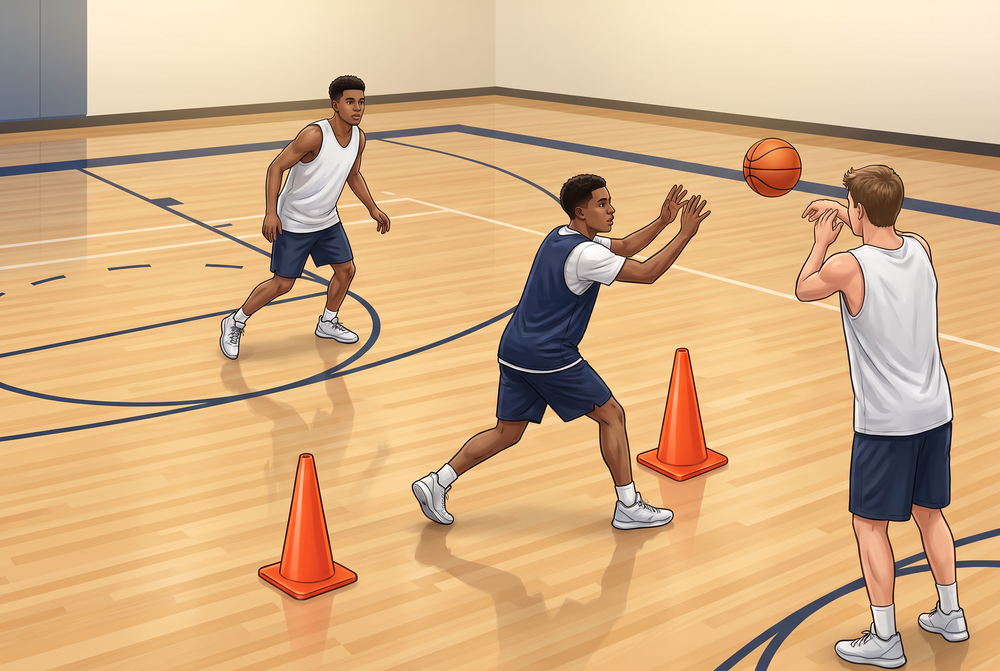
Move from certainty to uncertainty. First, use a single passer and one known option so athletes can feel the correct diagonal line. Next, add a second receiver or a delayed release. Then add an attacking fake, a support player and a transition consequence. Finally, use small-sided scoring that rewards the whole defensive unit, not only the athlete who touches the ball.
| If your players are… | Adjust the task by… | Keep the success criterion… |
|---|---|---|
| New to interception | Making the target lane obvious and shortening the pass | Balanced movement into the flight path |
| Developing | Adding a second receiver and variable timing | Choosing a viable cue before committing |
| Experienced | Adding fakes, transition and supporting defenders | Winning or disrupting the ball while protecting team shape |
Avoid endless queues and unopposed reaches. Those may help familiarise hand position, but they do not teach a player whether a pass will actually be thrown. Instead, use short bouts, rapid rotations and a clear question after each attempt. What was the cue? What was the risk? What was the recovery? That reflective language helps athletes become more independent game readers.
Measure What You Want More Of
A useful defensive metric is not just total interceptions. Track clean interceptions, effective deflections, forced resets, successful recoveries after a jump, and whether the team secured the next possession. A defender who produces three legal deflections and recovers on every missed chance may be improving faster than a player with one speculative steal and several exposed lanes. Review a small sample after training, share one positive clip or note, and give each athlete a single next-practice focus.
For a volunteer coach, the administrative burden can easily weaken this consistency. Vanta Sports provides a practical coaching ecosystem built for youth basketball and netball. The free Vanta Coach App can support session planning and attendance tracking, so the drills, rotations and individual focus points remain accessible instead of living on a forgotten sheet of paper. At club level, Vanta Club brings registrations, Stripe-integrated payments, safeguarding and compliance into one platform, while Vanta Guardian keeps parents connected to schedules and payments and the Vanta Player App helps players follow team events, goals and achievements. That joined-up structure makes it easier to protect practice time for the coaching that matters.
Coaching Takeaways
Teach interception as a selective, team-first action. Train the scan before the sprint, the line before the reach and the transition after the catch. Give players decisions, not merely repetitions, and make legal technique and recovery non-negotiable. When your practice rewards smart deflections, clear communication and immediate conversion, defenders learn that creating a turnover is not an individual gamble—it is a collective advantage.
References
- [1] USA Basketball, The Maryland Anticipation Basketball Drill
- [2] Schumacher, Reer and Braumann (2020), On-Field Perceptual-Cognitive Training Improves Peripheral Reaction in Soccer: A Controlled Trial
- [3] Netball Australia, 2024 Rules of Netball confirmed
- [4] FIBA, Mini Basketball Coaches Manual
Ready to Take Your Training to the Next Level?
Discover how Vanta Sports helps coaches run better practices. Learn more about Vanta Sports
Tags