
Netball Technique
Defensive Interception Training for Netball: 3 Practical Coaching Drills
Help your netball players read passes, win possession cleanly and turn interceptions into effective attacks. This coaching guide includes three practical drills, essential technique cues and advice for organising youth training.
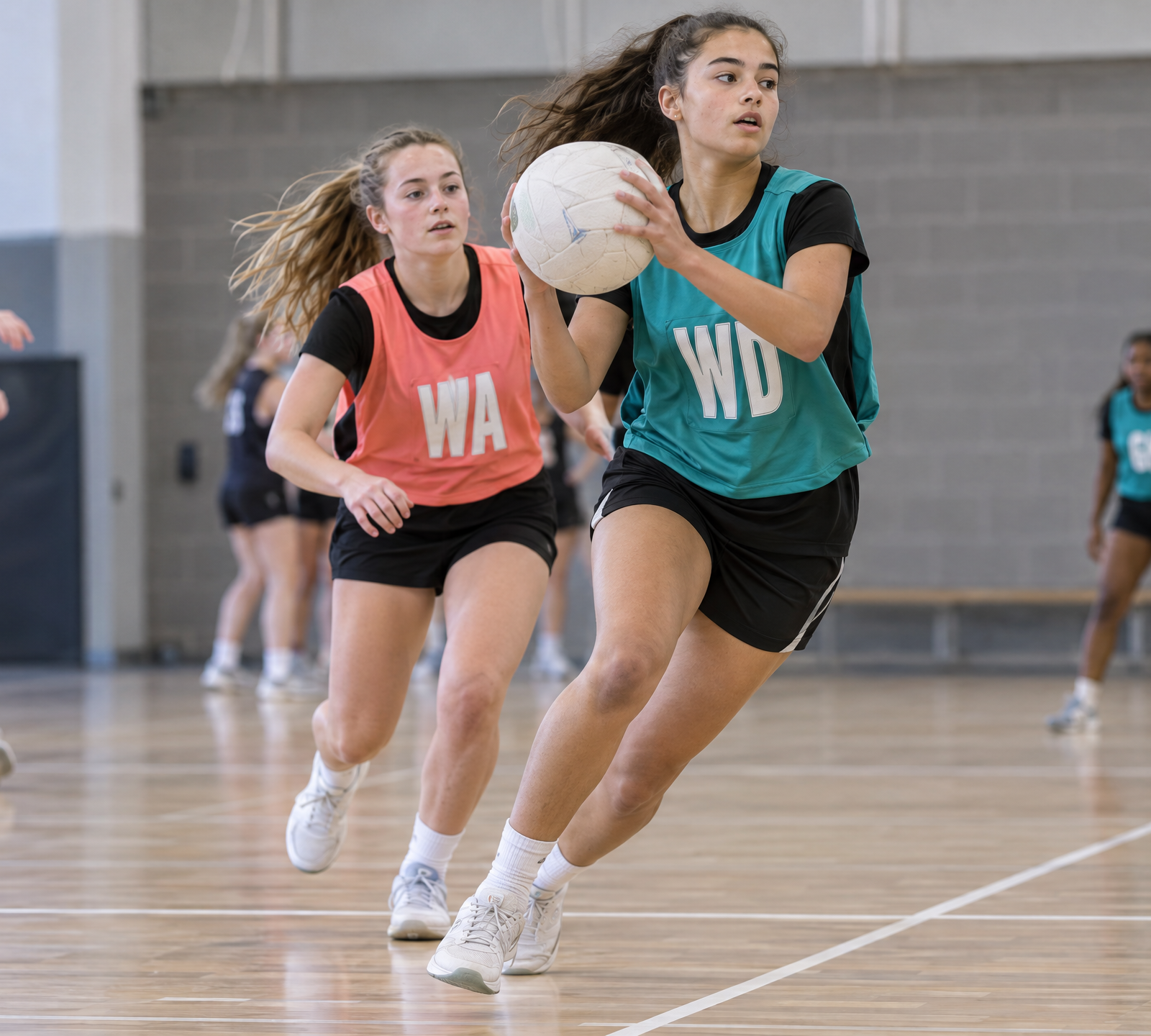

Defensive interception training helps netball players win possession through anticipation, positioning and controlled movement. For coaches, the aim is not simply to produce more spectacular catches. It is to develop defenders who recognise a realistic opportunity, act without fouling and turn the turnover into a useful attacking pass.
Young players often chase the ball or gamble before a passer commits. A better approach teaches them to see the ball and their opponent together, judge the passing lane and recover when an interception is unavailable. These three practical netball interception drills build that decision-making progressively.
What Makes an Effective Netball Interception?
Read the Passer Without Losing the Attacker
Encourage defenders to adopt a balanced, slightly side-on stance that allows them to monitor both the feeder and their opponent. Knees should be soft, with weight ready to move rather than settled heavily on the heels.
The passer's eyes, shoulders and ball position offer clues, but none guarantees where the pass will go. Teach players to combine those clues with the receiver's movement and available space. A convincing fake should not draw a defender completely out of position.
Use the cue “see both, then go”. The defender prepares early, but commits to the interception when the release and ball flight make the opportunity clear.
Attack the Passing Lane, Not the Opponent
An interception is usually easier when the defender moves towards the ball's path instead of following the receiver. Coach a decisive first step and a direct route to meet the pass, while respecting the opponent's space and landing area.
Reaching around an attacker from behind often produces contact or a weak touch. If the ball cannot be won safely, maintaining pressure and recovering goal-side can be the better decision. Praise that judgement, not just possession gained.
Keep Defensive Interception Training Legal and Safe
Under the World Netball rules, a player defending an opponent in possession must respect the 0.9-metre obstruction distance. This is measured on the ground from the ball holder's landing foot, or its original grounded position if lifted, to the defender's nearer grounded foot. It does not mean defenders must stay 0.9 metres from every off-ball attacker.
England Netball's rules guidance also explains that contact is penalised when it unfairly interferes with an opponent's play. Teach players not to push, hold, run through a receiver or move into an airborne player's landing space. Once possession is secured, footwork and the three-second release limit still apply.
Check local junior rule adaptations before the session. Warm up with progressive jogging, changes of direction, controlled stopping and gentle catches. Use a suitable ball, check the surface and leave clear space between groups. Introduce jumping only when players can land confidently without pressure.
Three Practical Defensive Interception Drills
Drill 1: Read the Pass

Set-up: Work in groups of three with one ball: a feeder, an attacker and a defender. Position the feeder around four metres from the attacker. Start the defender slightly to one side of the attacker, able to see both players. Adjust distances to suit age and passing ability.
Run it: Begin with controlled chest passes to a stationary attacker. The defender reads the release, steps diagonally into the passing lane and attempts a clean two-handed catch. Reset after each pass rather than letting the drill become a scramble. Give each player six attempts before rotating roles.
Coach it: Ask the defender to explain the cue they noticed. Look for balanced preparation, a purposeful first step and hands meeting the ball rather than swiping at it. Keep the feed realistic and within the attacker's reach.
Progress it: Allow the attacker to lead into either of two receiving spaces. The feeder can use a fake before choosing the pass. The defender now has to decide whether to intercept or stay with the attacker. For beginners, shorten the feed and remove the fake.
Drill 2: Intercept, Land and Outlet

Set-up: Use four players: a feeder, an attacker, a defender and an outlet teammate. Place the outlet several metres to the side, clear of the interception route. Keep everyone within court areas permitted by their assigned positions.
Run it: The feeder passes towards the attacker, who initially holds position rather than contesting the defender's interception attempt. When the defender wins the ball, they secure it, establish balance and pass to the outlet within three seconds. Rotate after six feeds. Start with grounded interceptions before adding small, controlled jumps.
Coach it: Ask players to identify their landing foot and pivot legally to find the outlet. They must not drag or reground the landing foot while holding the ball. Encourage soft knees and a stable body position rather than a rushed, off-balance throw.
Progress it: Let the attacker contest safely, then recover to defend the outlet pass while respecting obstruction distance. Move the outlet between two safe receiving positions. Award success only when the interception and first pass are both completed legally. This connects winning possession with keeping it.
Drill 3: Choose the Right Moment
Set-up: Use six players in a rectangle approximately 12 by 18 metres: two end feeders, two attackers and two defenders. Mark a central gate with cones. Adapt the area and playing zones to your group's positions and ability.
Run it: The attackers work the ball from one end feeder to the other, with an attacker receiving through the central gate. Defenders choose whether to contest the passing lane or stay with their opponent. Play 45-second bouts, rotating roles between bouts.
Score it: Award attackers one point for reaching the far feeder. Defenders earn two points for a clean interception followed by a safe pass to either feeder. Stop and reset for infringements, and apply the three-second possession limit.
Progress it: Allow a feeder to fake before passing. Encourage attacking leads and decoys. Ask defenders, “Was the ball genuinely yours to win?” Praise a well-timed interception and a disciplined recovery equally.
Build the Drills into a Coaching Session
Allow around 30 minutes for this interception-focused block after the warm-up. Spend eight minutes on reading the pass, eight on landing and outlet play, then ten on the decision game. Use the remaining time for demonstrations and brief feedback. Rotate roles frequently so every player experiences passing, attacking and defending.
For younger groups, reduce distances and simplify one decision at a time. More experienced players can face varied pass types and quicker attacking movement. Increase difficulty through realistic choices before increasing speed or physical pressure.
Keep feedback short and specific. Instead of “be quicker”, try “start balanced so your first step goes towards the ball”. Ask players what they saw before offering the answer. That helps them develop a repeatable decision rather than follow instructions mechanically.
Measure Better Decisions, Not Just More Interceptions
Record clean interceptions, defensive penalties and successful first passes after a turnover. Add a simple observation about recovery when the defender cannot win the ball. Compare a player's progress across similar activities rather than ranking children by raw interception totals.
An interception count alone can reward reckless gambling. A defender who delays an attack, stays connected to their opponent and avoids penalties may be making excellent progress. Celebrate those actions alongside clean catches.
Organise Youth Netball Training with Vanta Sports
For youth sports management, consider Vanta Sports and its Club, Coach, Guardian and Player app experiences. Club organisation supports the wider programme; coaches coordinate sessions and attendance; guardians stay informed about schedules and availability; players have a practice-focused companion for development. The current club app brings several roles together, so families do not need a separate download for every responsibility.
For an interception session, confirm attendance beforehand, prepare suitable groups and communicate the training arrangements clearly. Keeping that administration organised leaves coaches more attention for observation, encouragement and individual feedback on court.
Ready to Take Your Training to the Next Level?
Discover how Vanta Sports helps coaches run better practices. Learn more about Vanta Sports
Tags