Netball Technique
Goal Shooter Movement Patterns: 5 Drills to Create Space and Score
Help netball goal shooters and basketball finishers become harder to mark with purposeful leads, seals, re-offers and recovery footwork. This practical coaching guide turns movement patterns into five progressive, game-ready drills.
Goal Shooter Movement Patterns: Why Movement Creates Better Shots
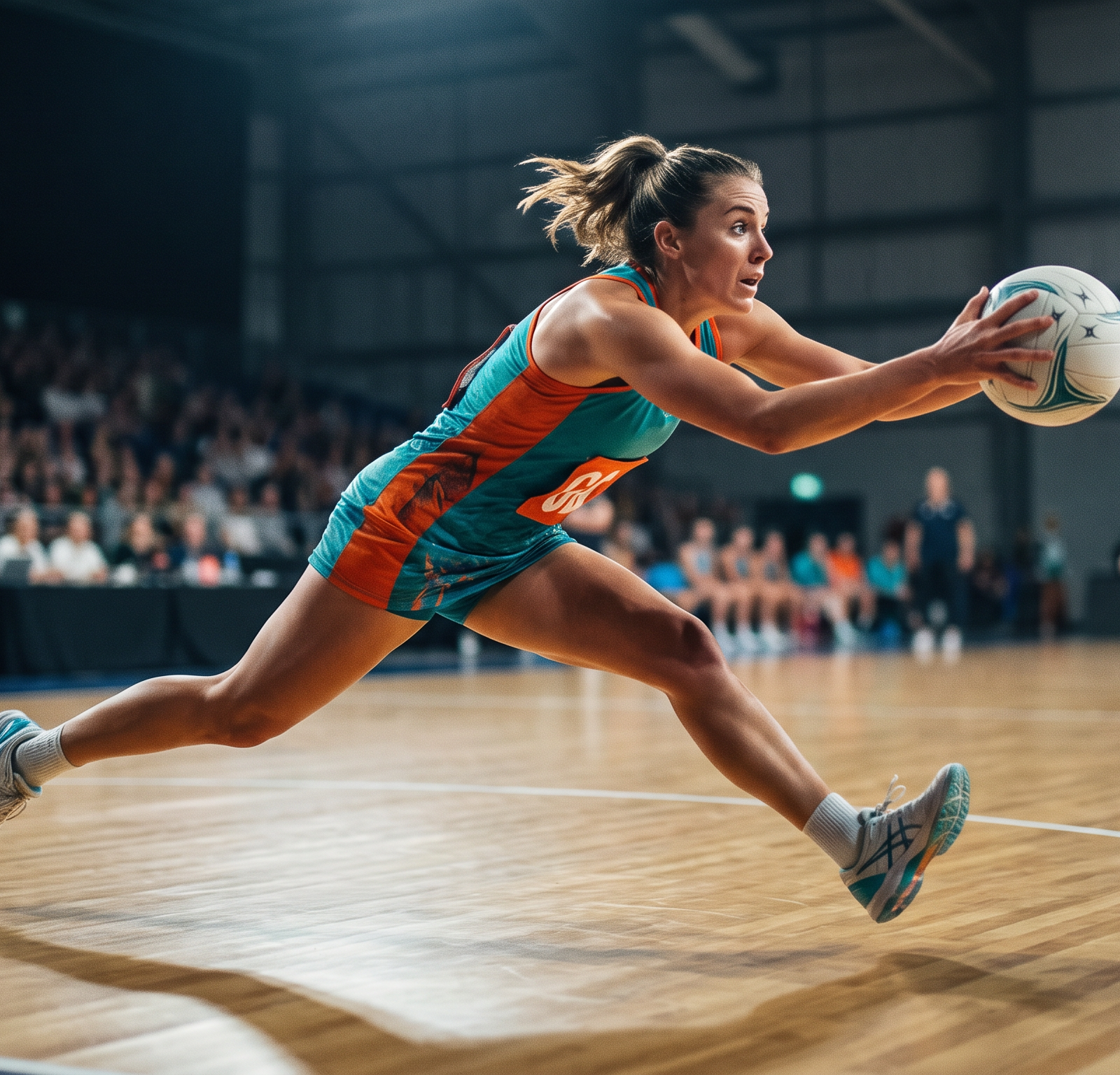
A great goal shooter creates a passing lane, shifts the defender’s balance, presents a clear target and arrives ready to finish. In netball, this happens inside the shooting circle within footwork, contact and obstruction rules. In basketball, the same principle applies to post players, cutters and close-range finishers.
Do not coach shooters merely to run more. Coach them to move with a purpose: read what the defender gives, then find the safest, highest-value space.
World Netball’s current rules framework, in use for international play from 1 January 2024, puts particular emphasis on player safety and game management. That makes sound landing, balanced pivots and non-contact body positioning coaching essentials, not optional extras.[1] For basketball coaches, the FIBA coaching curriculum similarly places leading, pass-and-cut actions, balance, stopping, pivoting and changes of direction at the centre of early offensive learning.[2]

The Movement Principles Behind an Effective Goal Shooter
Start with a strong, game-ready base
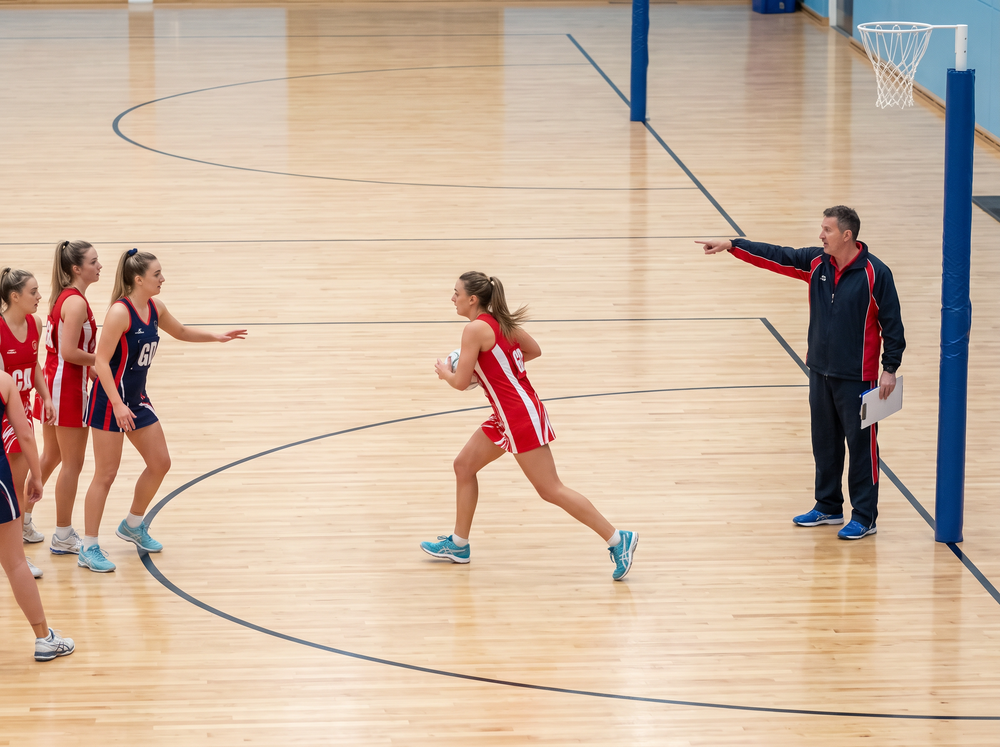
Begin on the balls of the feet with flexed knees and hips, a tall chest, and eyes on defender and ball carrier. Teach deceleration as deliberately as acceleration: a shooter who cannot stop under control cannot catch, pivot or land reliably.
Coaching cue: “Arrive balanced, show hands, see the rim.” The cue is short enough for pressure moments and links movement directly to the next action.
Use change of pace before change of direction
Many young shooters cut at one predictable speed. Use a hesitation, walk-to-sprint action or slow setup followed by a sharp burst. Teach set up, sell, explode, re-present: sell the first direction with eyes and shoulders, burst away, then show two hands to the passer.
Move away to move toward
The strongest lead often begins away from the ball. Draw the defender toward the baseline, post or outside edge, then cut back into central space. In netball, use the circle edge, post and partner as landmarks; in basketball, use the block, dunker spot, short corner or elbow.
Win the catch with a legal seal
A seal is not a shove. It is an early, balanced position where the attacker places their body between defender and ball, maintains a wide base and asks for the pass on the free side. A successful seal gives the passer a clear target and lets the shooter catch without reaching across the body.
Coach the shooter to establish position before the pass is thrown. If they wait until the ball is in flight, they are usually late and more likely to lean, push or collide. In netball, reinforce legal distance and non-contact principles. In basketball, reinforce verticality, legal post position and awareness of the defender’s body.
| Movement pattern | Best defensive picture | Shooter’s goal | Key coaching cue |
|---|---|---|---|
| V-cut | Defender sits between shooter and ball | Create separation with a hard plant and burst | “Sell, plant, explode.” |
| Front cut and seal | Defender trails or sits behind | Win front position and protect the catch | “Hips first, hands late.” |
| Back cut | Defender denies the passing lane | Attack space behind the defender | “See their head turn, then go.” |
| Roll or spin | Defender overcommits to one shoulder | Escape to the open side with balance | “Low turn, eyes up.” |
| Re-offer | First lead is covered | Reset quickly into a new passing lane | “Don’t stop after no.” |
Five Goal Shooter Movement Drills for Netball and Basketball
Progress each drill from unopposed movement to guided defense and then a live decision. Reward recognition of space, balanced arrival and a catch that makes the next action easier. FIBA encourages active, game-based practice so players learn in context.[2]
1. V-Cut, Catch and Finish
Purpose: Teach explosive separation and a balanced receiving position.
Place a marker about three metres from the shooter’s starting point and a feeder at the top of the circle or wing. The shooter moves toward the marker as if clearing space, plants hard on the outside foot, then bursts back on an angle to receive. In netball, finish with a controlled landing and shot. In basketball, finish with a jump stop, pivot read or quick shot depending on the player’s age and level.
Run six repetitions each side, then add a passive defender and vary pass timing. Observe: a low, sharp plant; early hands; and a controlled stop rather than a fade-away catch.
2. Front-Seal and Score
Purpose: Build legal body positioning against a trailing defender.
Use a feeder, a shooter and a defender or coach holding a light contact pad. The shooter begins shoulder-to-shoulder with the defender. On the feeder’s signal, they step into front position, establish a wide, balanced base and present the target hand away from the defender. The feeder passes only if the attacker has created a safe angle.
Increase pressure from shadowing to live contesting. Coach soft knees, ready hands and no backing in, pushing or arm wraps. Observe: the shooter should win position with timing and body line, then reset if the pass is not clean.

3. Baseline Escape and Re-Offer
Purpose: Teach the shooter to use the baseline or short corner as a setup space, then re-present into the shooting window.
Set a cone near the baseline/short corner and another nearer the post or centre of the shooting area. The shooter first drifts to the baseline cone, checks the defender’s response, then either cuts back to the middle or re-offers along the front side. The feeder holds the ball until the second movement is clear.
The first lead need not receive the ball: when it is closed, reset quickly to create the next option. Add a second attacker once the pattern is smooth and require the pair to avoid the same line. Observe: space from the post and partner, then a faster, decisive second lead.
4. Three-Point Circle Decision Game
Purpose: Develop scanning, communication and movement selection under realistic pressure.
Mark three receiving zones in the shooting circle or lane: front, side and back. Use one shooter, one feeder and one defender. The feeder calls a colour or number as the shooter moves; that cue indicates the first zone to threaten. The defender chooses how to play—front, side-on or behind—and the shooter must select the appropriate V-cut, front cut, back cut, roll or re-offer.
Keep rounds to 20–30 seconds. Award a point for a clean catch in space and a bonus for a balanced finish; never reward illegal contact or unsafe landing. Observe: scanning before the run and a change of plan when the defender changes position.
5. Two-Shooter Rotation to Live Finish
Purpose: Synchronise the goal shooter with a goal attack, second finisher or post partner.
Place two attackers and one defender in the shooting area, with one or two feeders outside. The attackers begin in different zones. On the pass, one leads while the other clears, holds or re-offers according to the defender’s choice. The rule is simple: never stand in the same channel and never make the next pass harder.
Begin with a scripted rotation, then remove it. In netball, rehearse high-ball ownership, rebound and circle reset; in basketball, use the format for a post player and cutter. Observe: early communication, quick clearing and a composed finish.

Coaching Footwork, Landing and Injury-Reduction Habits
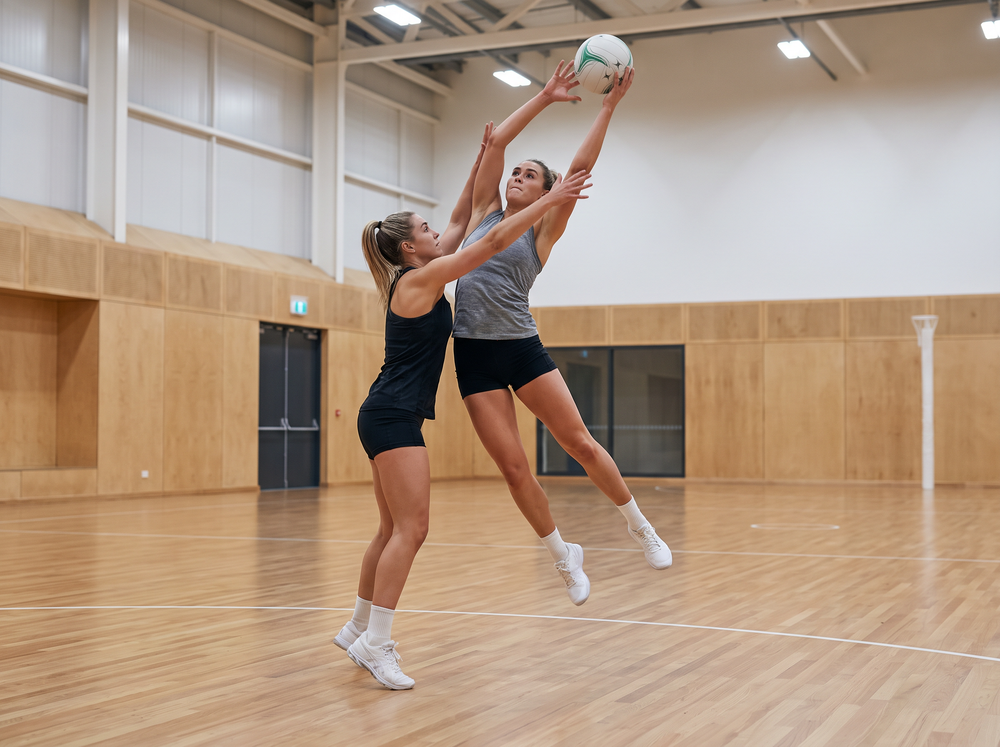
Movement quality matters most when fatigue and defensive pressure rise. Include a short landing and deceleration sequence in every session: single-leg stick, two-foot jump stop, controlled pivot and lateral bound to balance. Start at low speed, then build toward the movements used in each drill.
This is particularly relevant in netball. Netball Australia identifies knees and ankles as the body parts most commonly injured in netball and notes that many injuries occur during landing; its KNEE Program is designed to help athletes stay on court and move more efficiently.[3] Treat body control as a performance skill. A shooter who lands soundly can re-offer, rebound and shoot again; a shooter who lands poorly loses the next action even if the first catch succeeds.
For every drill, use a simple progression: shape first, speed second, pressure third, decision fourth. This protects beginners from overload while ensuring advanced players do not stay in comfortable, predictable repetitions. Film a short sequence when possible and review only one movement target at a time, such as first-step deception or landing alignment.
Building Goal Shooter Movement into a Weekly Practice Plan
Use a 10–15 minute movement focus after the warm-up, then revisit the theme in a small-sided game. Repeat exposure matters more than one long drill.
| Practice moment | Coach action | Player outcome to track |
|---|---|---|
| Warm-up | Add deceleration, stick landings and pivots | Balanced body positions |
| Skill block | Use one movement pattern with a feeder | Clean catch in target space |
| Guided defense | Give the defender a defined starting position | Correct counter-movement |
| Small-sided game | Limit static holding and reward re-offers | Movement choice under pressure |
| Review | Ask players what defender cue triggered their choice | Shared tactical language |
For volunteer coaches, simple organisation is a competitive advantage. Vanta Sports is purpose-built for youth basketball and netball, and its free Vanta Coach App helps coaches plan a drill progression, share session details and record attendance without adding administrative friction. The wider ecosystem supports the whole team: Vanta Club manages registrations, Stripe-integrated payments, compliance and safeguarding; Vanta Guardian helps parents manage schedules and payments; and Vanta Player App lets players track goals, achievements and team events. Use the saved practice plan to record one movement focus per week and revisit it with players across a season.
Key Takeaways for Coaches
Goal shooter movement patterns work when players understand the reason for each lead. Teach shooters to begin balanced, use pace change before direction change, create legal body position early, and keep moving after an initial option closes. Then progress from simple technical rehearsal to live, decision-rich play. The result is not just more shots; it is better-quality catches, calmer finishes and a more connected attacking unit.
References
[1] World Netball, The Rules of Netball
[2] FIBA WABC, Start Coaching Facilitator Handbook
[3] Netball Australia, Coaching Resources and KNEE Program
Ready to Take Your Training to the Next Level?
Discover how Vanta Sports helps coaches run better practices. Learn more about Vanta Sports
Tags